THE BITTER TRUTH

Saturday, February 22, 2020

Shivratri 2020

Shivratri 2020

0
Android App
Facebook147TwitterWhatsAppEmail
Copy Link
Srinagar
Kashmiri Pandits living across Kashmir celebrated Hehrath, the Shivratri festival on Friday. Unlike the rest of the mainland, the festival is strictly personal and rituals take place at home and Temples. Pandit families living all over Kashmir received their relatives and friends who had come to congratulate them for the festival.
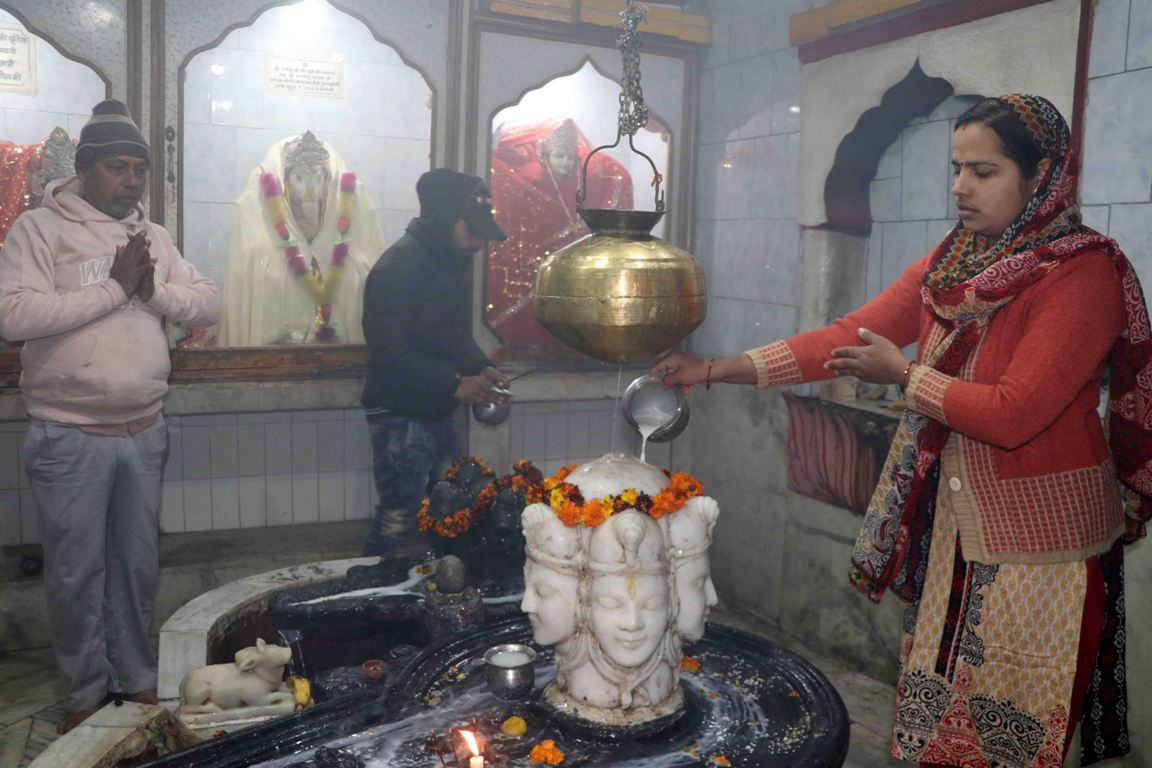
Devotees pouring milk at Lord Shiva’s idol, KL photo by Bilal Bahadur
Temples wore a festive look as devotees made a beeline to participate in the special prayers. The festival holds an important place among Kashmiri Pandits who celebrate it to mark the wedding of Shiva and Parvati by cooking traditional Kashmiri food, especially fish. The occurrence of rain or snowfall on this day is considered to be a good omen.
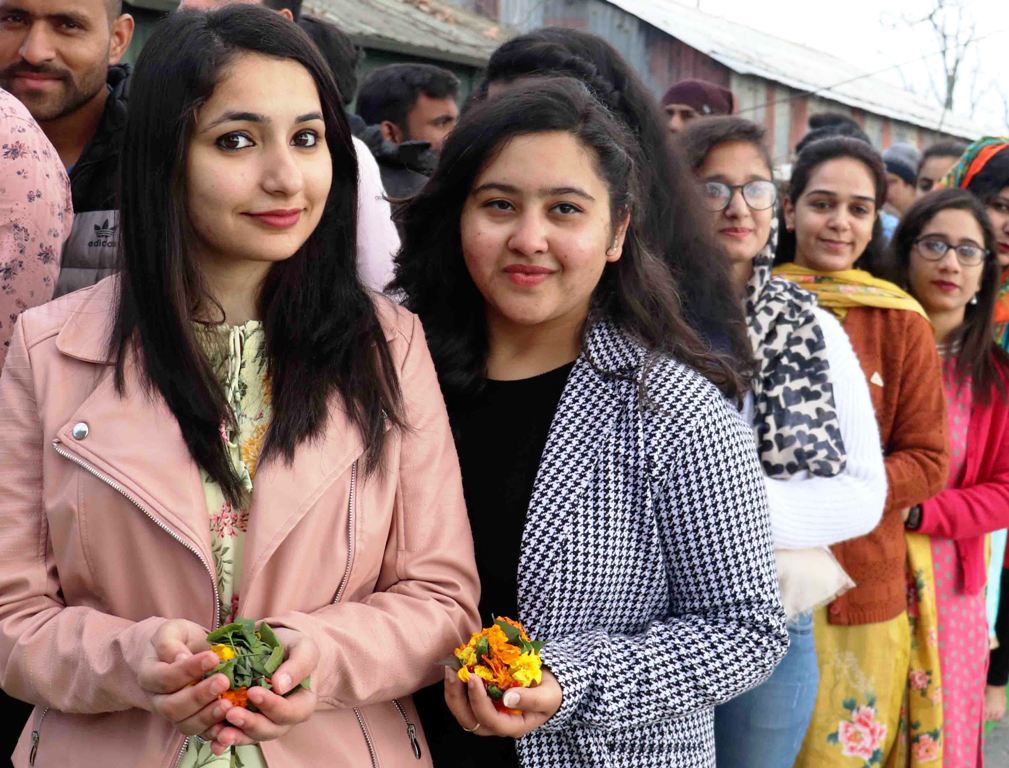
Devotees wait in a queue to offer prayers at Temple on the Maha Shivratri in Srinagar on Friday, February 21, 2020. KL Image by Bilal Bahadur
The biggest gathering of the festival usually takes place at Shankaracharya Temple, Dal Lake. Hundreds of devotees also throng Khir Bhawani temple at Tullamulla in district Ganderbal. The temple authorities at Ganpatyar and Hanuman Mandir at Amira Kadal also hold special Poojas throughout the day followed by celebrations in the evening.
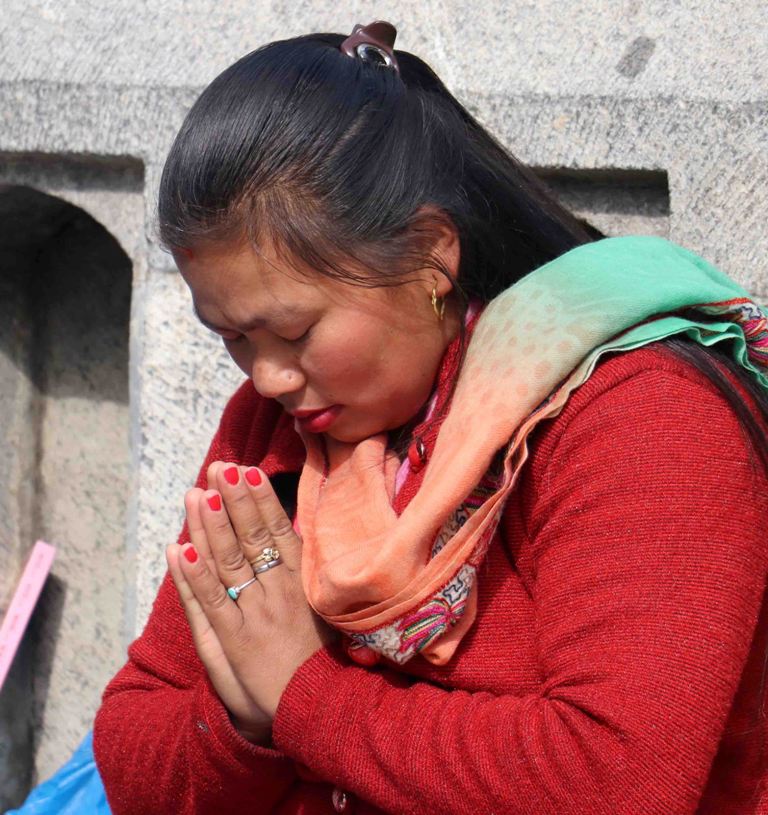
A female devotee praying at Temple on the Maha Shivratri in Srinagar on Friday, February 21, 2020. KL Image by Bilal Bahadur
Many devotees especially visit Srinagar from across India to pray at the Shankracharya temple.
Among the devotees at the temple were Mohan Kumar from Bihar and Shri Ram from Hyderabad.
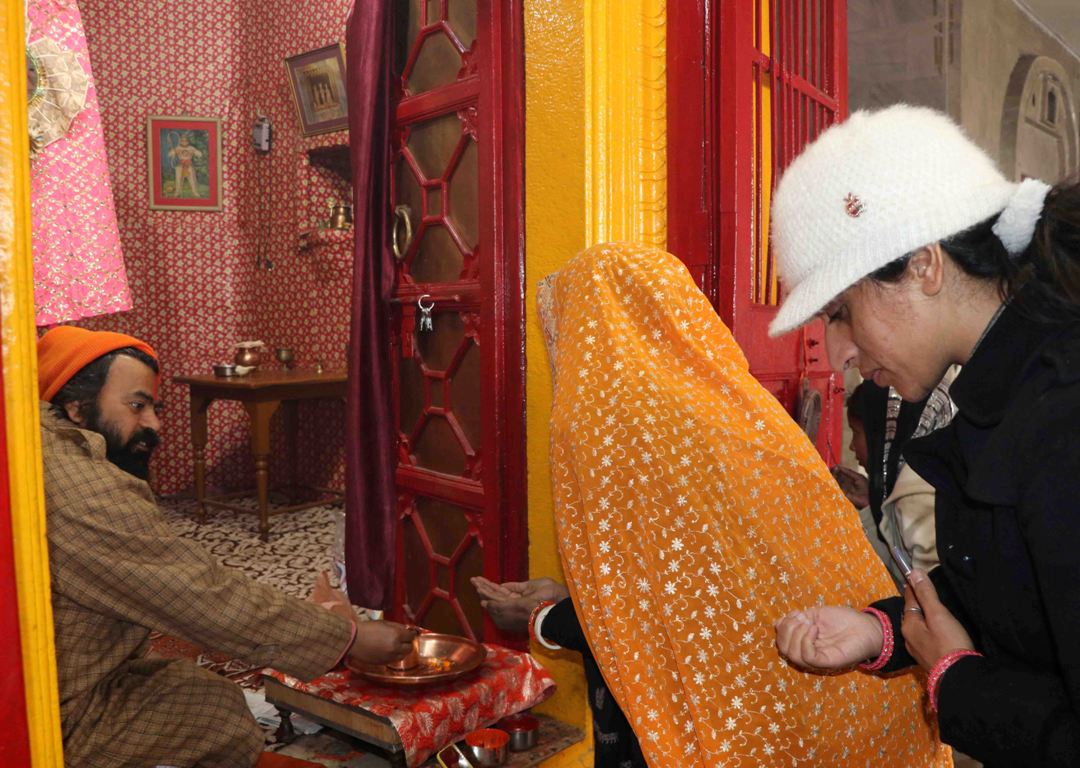
Devotees performing Puja at the Temple in Srinagar on Friday, February 21, 2020. KL Image by Bilal Bahadur
“I have come from Bihar especially to participate in the special prayers at the Shankracharya temple; a visit to the temple on Mahashivratri is considered very auspicious,” news agency IANS quoted Mohan Kumar as having said.
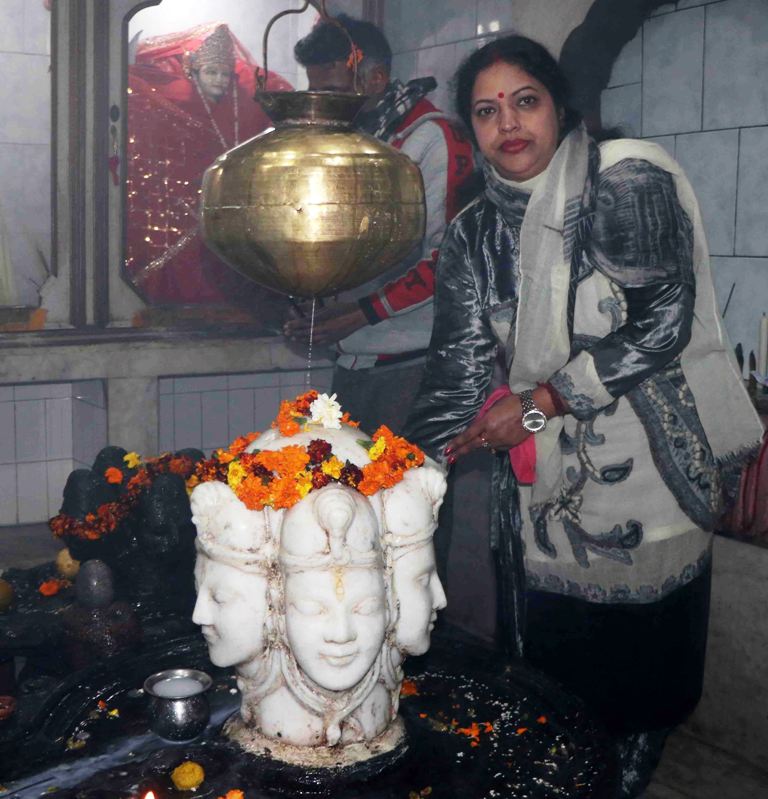
A female devotee posing for a photograph with Lord Shiva’s idol on the Maha Shivratri in Srinagar on Friday, February 21, 2020. KL Image by Bilal Bahadur
“I am feeling really good on visiting the temple. It was a one-hour trek from the nearest road-head to the temple on the hillock, but I felt very good. I always wished to visit Kashmir on this holy day — today my dream has come true,” IANS quoted Ram as saying.
The temples in other parts of the Valley are also holding prayers to invoke the blessings of Lord Shiva.
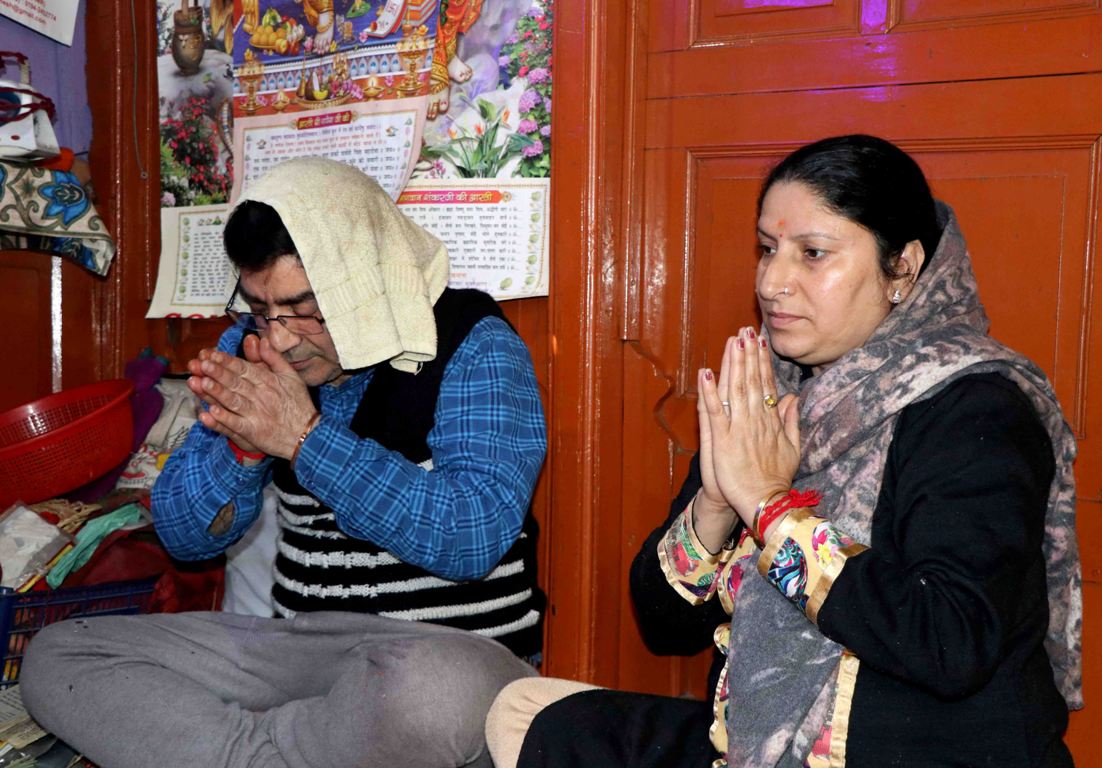
Kashmiri Pandit couple performing puja at home in Srinagar on February 21, 2020. KL Image by Bilal Bahadur
“We are holding special prayers for peace in Jammu and Kashmir; we wish the problems in Kashmir and elsewhere in the country come to an end and brotherhood and harmony prevails,” Rakesh Kumar, a priest at the Shankaracharya temple, said.
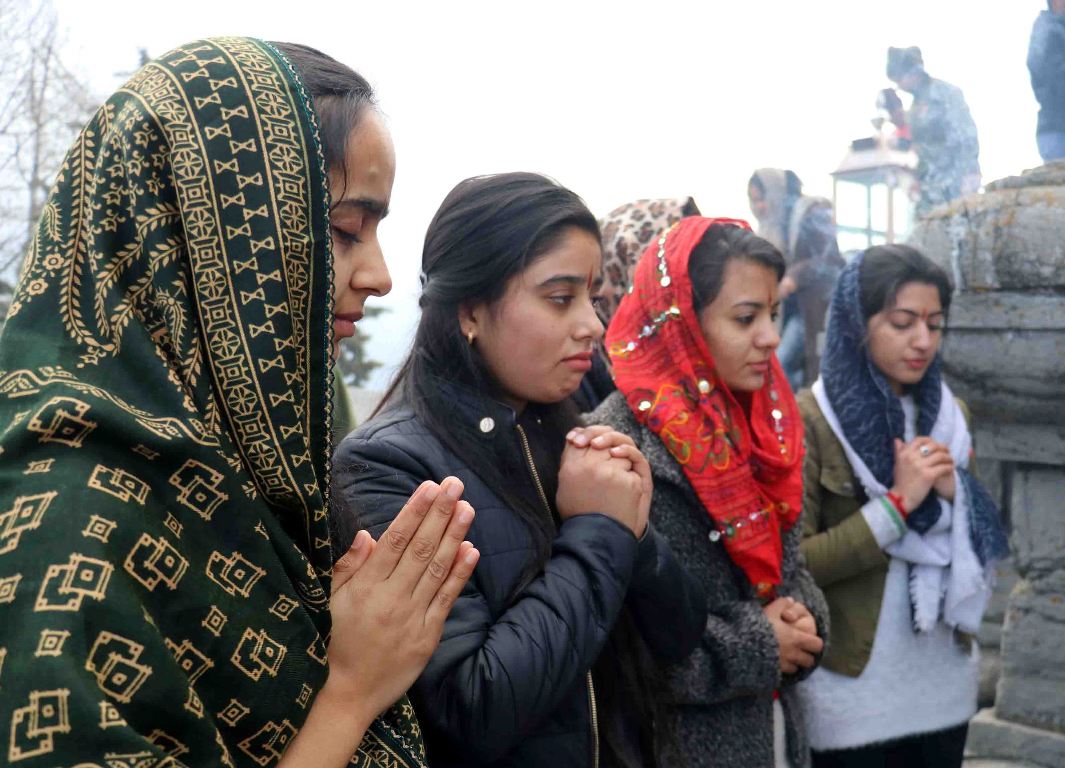
Devotees pray at the Temple in Srinagar on Friday, February 21, 2020. KL Image by Bilal Bahadur
Mahashivratri marks the culmination of a three-day festival for the Kashmiri Pandit community. Special prayers are held on the first two days, with a feast on the third day, in which their relatives, as well as members from the Muslim community, participate.
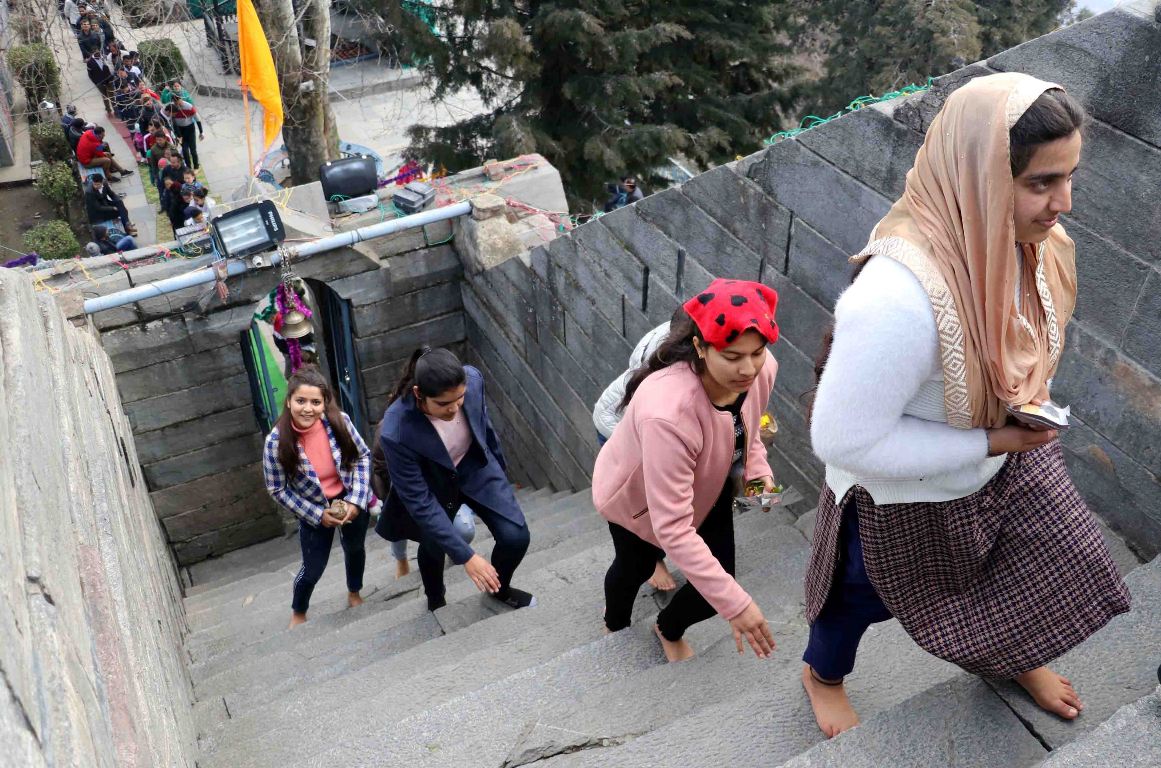
Devotees climbing stairs to reach the Shankaracharya temple in Srinagar on Friday, February 21, 2020. KL Image by Bilal Bahadur
Posted by ashokkoul at 2:08 AM No comments:
Email ThisBlogThis!Share to XShare to FacebookShare to Pinterest

Wednesday, February 19, 2020

Know The Difference Between Jyotirlinga And Shivlinga


Maha Shivratri Know The Difference Between Jyotirlinga And Shivlinga


Lord Shiva who is popularly known as Mahadev (the supreme God) is widely worshipped among the Hindus. Devotees of Lord Shiva have immense faith in him and therefore, they are often seen worshipping Shivlinga, the mystic form of Lord Shiva. In addition to worshipping the Shivlinga, devotees also worship Jyotirlinga, the pillar of light and often pay a visit to it throughout the year, especially during Maha Shivratri. This year Maha Shivratri will be celebrated on 21 February 2020.
Devotees believe that worshipping Shivlinga will bring wealth, health, eternal peace and it purifies their soul. Whereas it is also believed that worshipping Jyotirlinga brings prosperity, good fortune and blessings in many other forms.
Also read: Maha Shivratri 2020: Worship Lord Shiva According To Your Zodiac Sign
There are a total of 12 Jyotirlingas present all over the country. However, one may find numerous Shivlingas across the country. Devotees worship both mystic forms of Lord Shiva with equal dedication and faith.
But do you know the difference between a Jyotirlinga and a Shivlinga?

Difference Between Jyotirlinga And Shivlinga

The meaning of 'Linga' means the symbol and gender which is associated with Lord Shiva. Jyotirlinga is the manifestation of Lord Shiva which is 'Swayambhu' (the one occurring on its own). The 12 Jyotirlinga came into existence on their own. According to mythological stories in Shiva Purana wherever Lord Shiva appeared in the form of light and was pleased by his devotees, he manifested himself as a Jyotirlinga in that place. Hence, Lord Shiva manifested himself in the form of Jyotirlinga at 12 different places in India. These 12 Jyotirlingas rule the 12 different zodiac signs.
Whereas a Shivlinga is the mystic idol of Lord Shiva that is either man-made or appears on its own. There are numerous Shivlinga across the country and people worship them with utmost devotion.
Also read: Here's The Reason Why You Must Not Offer Turmeric To Lord Shiva

Story Of Jyotirlinga

According to a mythological story in Shiva Purana, once Lord Brahma, the creator of Universe and Lord Vishnu, the nurturer of the Universe had a debate on who among them is the greatest. They started discussing like anything and this worried the other Gods. In order to stop the discussion between the Lord Brahma and Lord Vishnu, the other Gods approached Lord Shiva.
Lord Shiva hence appeared in the form of a pillar of light. Lord Vishnu and Brahma were amazed by the Jyoti (light) Pillar but were unable to find the source and the end of the light. Hence, both of them decided that the one who will first reach either end will be the greatest of the two. Both of them went on to search the source and end of the light but were unable to find so. This is when Lord Shiva came into his original form and explained that none of the trio i.e., Brahma, Vishnu and Mahesh (Shiva) was greater than each other. But together, the trio's collective energy makes them greatest of all.
The Jyoti Pillar later came to be known as the 'Jyotirlinga' as Lord Shiva appeared in the form of a pillar of light.
The 12 Jyotirlingas are as follows:
1. Somanath Jyotirlinga: This Jyotirlinga is considered to be the first-ever Jyotirlinga of Lord Shiva and is situated in Gujarat.
2. Mallikarjuna Jyotirlinga: This is situated in Andhra Pradesh and is the only Jyotirlinga which symbolises both Lord Shiva and his wife Goddess Parvati. It is also known as the 'Kailash of South India'.
3. Mahakaleshwar: This Jyotirlinga is present in the Ujjain district of Madhya Pradesh. During ancient times, it was also known as Avantika.
4. Omkareshwar Jyotirlinga: This Jyotirlinga is also situated in the Madhya Pradesh on the banks of the Narmada River.
5. Kedarnath Jyotirlinga: This great Jyotirlinga resides on Kedar Mountain in Uttarakhand.
6. Bheemashankar Jyotirlinga: This Jyotirlinga is situated on the banks of the Bheema river in Maharashtra.
7. Kashi Vishwanath Jyotirlinga: It is situated in Varanasi, Uttar Pradesh and has held a great significance among the Hindus. This Jyotirlinga is also known as Shri Vishwanath or Shri Vishweshwar. It is considered to be 7th Jyotirlinga of Lord Shiva.
8. Trayambakeshwar Jyotirlinga: This is the eight Jyotirlinga of Lord Shiva and is situated near the Godavari river, in Nasik, Maharashtra.
9. Vaidyanath Jyotirlinga: This is another most important Jyotirlinga and is situated in Deoghar, Jharkhand. Devotees also call it as Baijnath Baba.
10. Nageshwar Jyotirlinga: This is another Jyotirlinga which is situated in Gujarat near the banks of the Gomti river.
11. Rameshwaram Jyotirlinga: This is the Jyotirlinga that came into existence when Lord Rama was heading towards Lanka to rescue his wife, Goddess Sita. This Jyotirlinga is situated in Tamil Nadu.
12. Ghrishneshwar Jyotirlinga: This is situated in Aurangabad, Maharashtra and is considered to be the form of Lord Shiva that blesses the devotees with eternal peace and fortune.

Posted by ashokkoul at 4:24 AM No comments:
Email ThisBlogThis!Share to XShare to FacebookShare to Pinterest

Sunday, February 16, 2020

THE FLAVOUR OF KASHMIR - FESTIVALS AND RITUALS


THE FLAVOUR OF KASHMIR - FESTIVALS AND RITUALS

Anju Munshi


All festivals apart from their religious and communal connotations have one more thought behind them. That is to unite the people with a thread of oneness and bind the people morally and spiritually, in an attempt to transfer the ethos of a community from one generation to another. Another very important aspect of these festivals is to ensure a full presence at one's home, by way of some rituals that necessitate the members to take part in the activities, and thus celebrate the auspicious days with the entire family. The same holds true of the Kashmiri festivals, the spirit reigns high and the general mood is upbeat, there is gaiety and fervour that penetrates the sensibilities of young and old alike.
The most important festivals that are celebrated with a zeal are 'Maha-Shivratri', 'Janamashtami', 'Jyesht Ashtami' and 'Navreh'. This is talking about a few ones that have stood the onslaught of time. These four festivals are a collection of various rituals and myths, reading and knowing of which becomes quite interesting. In its real essence, these festivals inculcate certain disciplines, that are instrumental in getting the whole family together and also paving the way for an opportunity for the youngsters to imbibe some important traits like comradeship, obedience and also a sense of tradition.
SHIVRATRI
Generally most of the people in Kashmir take 'Herath' as the marriage day of Lord Shiva with 'Uma' while outside Kashmir it is taken as the day when Lord Shiva manifested in His human form on the earth to bless His devotees and redeem them. Shivratri in Kashmir is popularly known as 'Herath'. All through the ages people have given various meanings to 'Herath'. Some trace it back to the times of the Pathan occupation of the valley, when alien rulers forced the people to celebrate the festival in the summer month of 'Asada', instead of 'Phalguna'. The forced alteration in the timings of these celebrations brought a lot of misery upon the valley. There were inexplicable changes, snowfall in the summer months that resulted in crop failure and consequent famine. The Pathans called it 'Hairath', a Persian word for utter surprise. The word has ever since clung on to the memories of the Kashmiri people.
The main important festival. It starts from the first day of 'Phalgun', dark fortnight [Hur Okdoh] and ends on 'Tela ashtami', lunar fortnight of Phalgun, which as the common belief goes, the cold and wintry days are on way to bid goodbye and are heralding the approach of summers. From this day i.e. the first day, the entire house is cleaned and washed - the walls, the floors, linen, utensils, everything receives a face lift and is made to look wonderfully perfect. On 'Hur Ashtami' that comes in-between, on the eighth day people organise religious kirtans, jagran originally at 'Hari Parvat', 'Pokhribal' and 'Khirbhawani'. Fish is a very important item to be cooked on all these days of fun and merrymaking. On 'Dyara Daham' the day of the Laxmi, the new krides come wearing new clothes and bring with them 'Herath' Bhog' [Shivratri Kharcha] i.e. presents-in kind and cash for her inlaws. Besides the new brides, all ladies who come back from their parent's homes bring presents and 'Atagat', and also 'Kangri', symbolic of goodluck and prosperity. This small gesture pleasantly enough still carries on and is treated as a very good omen.
'Gad Kah' comes soon after on the eleventh day. This day fish is bought home and cleaned and fried for the main day, followed by 'Wager Bah', the day when new earthenware, specially prepared for the occasion is installed in the 'Puja room'. This marks the beginning of 'Herath'. Walnuts have a very important role to play in this festival. The shape represents the universe. They are filled in earthen pots covered with water up to the top. This water has to be changed every day. The 'Watuk' consists of a big earthen pitcher, two small ones and two smaller ones, one elephant trunk shaped figure, seven bowls decorated with flowers and 'Sindoor'. They represent Shiva Parvati, Ram Brahmin, Seven Rishis, Ganesa and some other Rishis. These walnuts are washed and placed into the pitchers of and seven bowls. Then these are filled with water and some milk and Mishri is poured into each one of them. Pooja is started at 'Pradosh Kala' [dusk] and all the family members take part in it and the same carries on till late in the night. The fast is broken and boiled rice with a variety of cooked vegetables is taken. The Shivratri comes to a close in the evening of 'Amavasya'. The walnuts in the pitchers are taken out and washed. Pooja is once again performed, signifying the culmination of the Festival. The 'Samgri' and the flowers used are immersed in the river. Walnuts are used as Prashad and distributed amongst the neighbours and friends.
NAVREH [NAVSAMVATSARA]
According to the lunar calendar, it is the first day of the New Year. It is also the beginning of Navratras. As per the custom, a thali is filled with rice, and some articles are placed on top of rice - like milk-pot, flowers, walnut, pen, coins or a currency note, Jantri [panchang of the new lunar calendar], boiled rice, sugar, salt, baked rice flour bread or any bread, and pictures of Vishnu and Parvati. This plate is filled on the eve of 'Navreh'. Early in the morning the grandnZother or any elderly lady or the mother gets up and brings this Thali for darshan to every member of the family. It is considered a good omen for the New Year. The rice of the Thali is cooked into 'tahar'. Navratras are celebrated with great devotion and faith. New clothes are worn on this day and people generally make merry. People in Kashmir used to go to 'Hari-Parbat' for a picnic, usually to the Mughal gardens.
JANAMASHTAMI
Lord Krishna's birthday is celebrated on the eighth day of Bhadrapada with great devotion and faith. Fast is kept and broken at the rise of the moon. This festival is important in case of a recent wedding at home. The new bride gets gifts in kind and cash for her in-laws. The gift hamper usually consists of seasonal fruits and sweetmeats. Because of the perishable nature of these goodies, the modern gifts have undergone a slight change in the sense that dry fruits have slowly replaced the tradition of fresh fruits. Temples are decorated and people in large numbers perform Pooja.
JYESHTA ASHTAMI
The day of the goddess sees many people fasting and praying, and seeking her blessings. Back home, people visit the holy shrine at Khirbhawani. The entire day is spent in prayers and for the children it is a sort of a picnic. People coming to the holy place from long distance would come a day before, with an idea to grab the vantage places, well shaded by the mighty Chinar trees and close to the sacred spring. A scene of total devotion and a spirit of a gay abandon prevailed.
MAHANAVMI
In olden days, arms and ammunition were I worshipped, along with Goddess Durga. Now the practice of worshipping arms and ammunitions is gone and only Goddess Durga is worshipped at 'Hari Parvat', 'Durganag' and 'Akingam'.
CHAITRA NAVMI
What is celebrated as Ramnavmi in Northern India is the ninth bright day of Chaitra, when Goddess Bhadrakali is worshipped. Navratras come to an end on this day and fast is also kept. Bhadra Kali is a famous temple on a hilltop in Kupwara district. There is a statue of Bhadra Kali which is worshipped on Chaitra Navmi.
VASTA POOJA
Another auspicious day in the month of Chaitra, when 'Graha-devta' [god of the house] is worshipped and offerings are made to him for the well-being and protection of the whole family. Today this festival is celebrated only on Tuesdays or Saturdays, in the month of 'Pausha'. 'Gaddabatta', i.e. fish cooked with rice is offered to the house deity after performing Pooja.
KHICH-MAWAS
This falls on the fifteenth day of the moon's waning in Poh, and it is a day for the propitiation of evil spirits, who are conciliated by an offering of rice and pulses.
Apart from these main days of festivity, there are some rituals that have overtones of a festive spirit and cannot just be left out. Some rituals like 'Marghashirsha Poornima', a day when rice boiled with turmeric along with Pooja is offered to the house deity, 'Kah Nethar', 'Mekhal' or the thread ceremony, marriage rituals and as a grand finale to everything, 'Tile Dwadashi' - when Shradh of the dead is performed with oil and sesame seeds, 'Shradha Paksha' etc.
The observance of these rituals and festivals speaks of a highly civilised and cultured Kashmiri society. Nilmata Purana describes in detail which rituals and festivals are to be celebrated on a particular day of the year. Both men and women participated in them. They kept fasts and prayed to different Gods and Goddesses. In fact these festivals were started for the need to have an outlet by way of providing some days of fun and frolic and eventually lead to prosperity, health and happiness of the people. Mr. Walter R. Lawrence, the then settlement commissioner of Jammu and Kashmir in the British period has given a lucid detail of the rituals and ceremonies of Kashmiri Pandits in the state. In one of the references, he talks about the ritual cycle of a Kashmiri Pandit right from the day of his birth to his end moments and also the Shradh ceremonies.
A JOURNEY OF LIFE AND DEATH - BEGINNING TO END
A Hindu child is ushered in to this world by noting down the exact time of the birth, a job done by the astrologer. The mother is known as a 'rosa' and if this is her first child, then she is called a 'sadh piai'. On the ninth day after the birth, called 'sunder' the mother and the child are bathed at an auspicious hour and after bathing, seven vessels either of clay or bronze are filled with food. These vessels represent seven deities, and as some are flesh eating deities and some vegetarian, the food chosen has to be selected with care. Seven women of the household must be present to represent the seven deities. After the food has been made holy, the midwife lights a torch of birch bark and waves it around the heads of the mother and child and finally flings it into an earthen bowl filled with water. When a child is a month old, the day is celebrated in the name of 'mas-nethar' and in the third year the ceremony of shaving the child's head takes place - 'zar-kasay', a very joyous occasion. The food on this occasion is known as 'wari' end for her services the paternal aunt receives congratulatory gifts - 'zany' of rice, salt and cash and all the relatives and friends feast heartily on the 'warts'. In the case of the girl, there is no shaving of the head and the hair of the boy is buried carefully under a tree. When the boy has attained the age of seven years as per the ancient Kashmiri belief, and before he reaches his thirteenth year, he must become a true Brahmin - the Yagneopavit ceremony. On the day, after the ritual of the sacred thread being put around the boy's neck, coins and shells are thrown over his head, and he is then carried in state down to the river to perform his first prayer ceremonies.
Then the next important thing in the life of the boy is his marriage. 'Mehendiraat' and 'Devgon' are performed and decked out in the same brave fashion as the groom is another boy - 'the pot maharaja' or the best man. Before the bridegroom is allowed to enter his house, he must pay money to his maternal and paternal aunt or sister who bars the door. The gifts to the bride from her father are numerous but noteworthy are two - 'Dijhuru', and the 'Chandanhar'. The 'Dijhuru' are ear ornaments of pure gold, of a mystic shape and the 'Chandanhaar' is a gold ornament worn around the neck, and it is given to the bride by her father-in-law. Overall, marriage in a Kashmiri society is a joyous ceremony.
Death has its own ways, by way of rituals that are observed quite rigidly. When a person breathes his last, his body is laid on the straw bed, and a lamp is kept alight by his head, day and night. Near it is placed a tray full of sesame seeds with a coin. The son of the deceased lights the funeral pyre, but the work of cremation is done by the Musalmans called Kawji. For ten days the house where the death has taken place is unclean and no one eats food cooked in there, and for ten days, while the soul of the deceased is on its journey, rites for the dead are performed on the river bank.
We are indebted to our ancestors for laying out the rules so clearly before us. There is more freedom when you know your limits, and to set the boundaries is a mammoth job which is already done.
 
Kashmiri Overseas Association
Posted by ashokkoul at 4:34 AM No comments:
Email ThisBlogThis!Share to XShare to FacebookShare to Pinterest

Saturday, February 15, 2020

BEAUTIES OF INDIA


                                               BEAUTIES OF INDIA ...............BABY  VIDU
Posted by ashokkoul at 6:33 AM No comments:
Email ThisBlogThis!Share to XShare to FacebookShare to Pinterest

Sunday, February 9, 2020

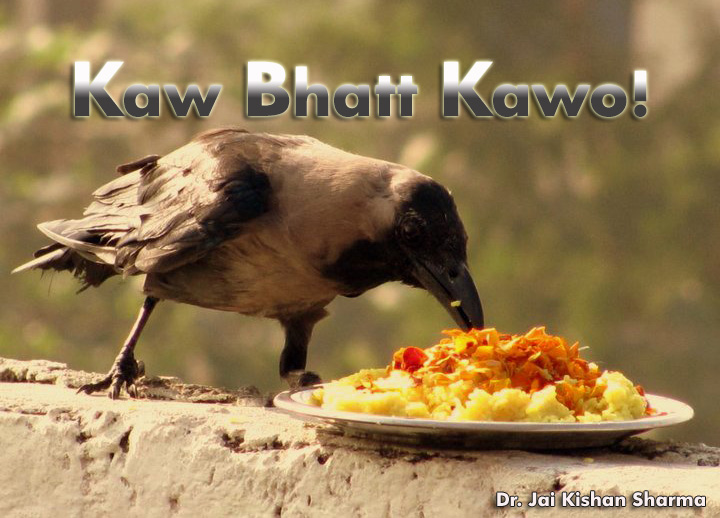
Kaw Bhatt Kawo!


Image courtesy: Vishal Raina
aw Punim is one of the unique festivals of the Kashmiri Hindus i.e. Kashmiri Pandits. This year, ‘Kaw Punim’ is being observed today, 25th of February. This festival is austere, simple and indigenous in character. Unlike other festivals, there is no ostentation on this occasion. It is not being celebrated in the same fashion as it once used to be when Kashmiri Pandits lived in the Kashmir valley. Many such festivals are celebrated with less fervor and enthusiasm or forgotten now due to detachment from community’s cultural roots.

Before the exodus from the valley, Kashmiri Pandits used to celebrate ‘Kaw Punim’ every year. There was special kind of charm associated with ‘Kaw Punim’. Children used to wait anxiously for this occasion. They would make ‘Kaw Potul’ (a hand type ladle/spoon made of a long stick and hay) for pious offerings to crows from the window of upper storey or balcony of their respective houses. While offering the food, the children would chant -

 
Kaw Bhatt Kawo,
Khechrey Kawo.
Gangabala Sharana Karith,
Gurey Mechey Tyoka Karith.
Walbha Saney Larey Pyeth,
Dal Bata Khyene.
 
It means, “O erudite crow! O Khichri (a mixture of rice and moong dal cooked together) eater! After having a dip in river Ganga, put tilak (of clay) on your forehead and come to our house to have dal and rice.”

In Kashmir, the women of each and every Kashmiri Pandit family used to offer fresh cooked food to crows every day before serving it to the family members. She would not even taste it to confirm the quality of dish. A ‘Kaw Paet’ (smooth wooden piece) hanging on the front wall of a house signified that that particular house belongs to Kashmiri Pandit.

Many myths are attached with crow in Hindu mythology. One of the myths is of Kak-Bhushandi, who was a pious man devoted to Lord Ram but he was cursed to become a crow. The crow is considered to be very curious animal. Kak-Cheshta and Kak-Snaan are the idiomatic expressions of curiosity and bathing like a crow (crow only dips his head while having bath) respectively in Sanskrit language.

According to Hindu belief, crows are the representatives of our ancestors, planet Saturn, Yama, Dharamraja and Krishna. By offering food to crows, they get pleased. The Nilmat Puran which is our source of cultural history says, “Pournmasyam Tu Maaghsya Shraadam Kritva Tiler-narah, Kakanaam Bhojnam Dadyaat Prabhootam Bali Sanyutam.” (Verse 516) It means, “On full moon night of Maagh, a man should perform Shraadh with sesame and give enough food consisting of pious offerings to crows.” It is also believed that ‘Kaw Punim’ is birthday of the crow.

Hindus see God in many creatures; be it crow, snake, or human being. As such offering food to crows is equal to Jeeva-Karuna i.e. having pity on every creature. Also, it is equivalent to Bhoot-Yajna i.e. one of Panch Mahayajnas (fivefold duties) a family man should perform every day.

I think crows serve as a hot line medium between living and deceased ones. Therefore, we should maintain the tradition of offering food to crows and other animals to make the departed ones happy so that they shower their blessings and good wishes upon us. The ubiquitous crow does not eat alone but along with his fellows. This activity of crow is indicative of fellow feeling and community care.

The Kashmiri Pandit community may not be celebrating this festival with great charm due to uprooting from their homeland or advancement of western culture but its significance is even much more relevant today when human values have faded away. Let it be either out of sheer compassion or out of blind beliefs perpetuated since ages, it is clear that this festival gives us a message that fellow feeling is transacted through collective sharing and community caring which is must for our survival in exile.
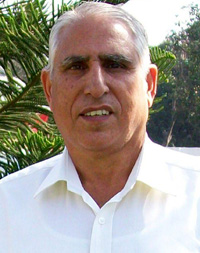
Dr. Jai Kishan Sharma is Ph.D. in Kashmir Shaivism from University of Jammu. He has written research papers and articles for several magazines, journals like Shiraza, Hamara Sahitya, Dharma Marg etc. He devotes his time in reading, researching and writing.
Copyrights © 2007 Shehjar online and KashmirGroup.com. Any content, including but not limited to text, software, music, sound, photographs, video, graphics or other material contained may not be modified, copied, reproduced, republished, uploaded, posted, or distributed in any form or context without written permission. Terms & Conditions.
The views expressed are solely the author's and not necessarily the views of Shehjar or its owners. Content and posts from such authors are provided "AS IS", with no warranties, and confer no rights. The material and information provided iare for general information only and should not, in any respect, be relied on as professional advice. Neither Shehjar.kashmirgroup.com nor kashmirgroup.com represent or endorse the accuracy or reliability of any advice, opinion, statement, or other information displayed, uploaded, or distributed through the Service by any user, information provider or any other person or entity. You acknowledge that any reliance upon any such opinion, advice, statement, memorandum, or information shall be at your sole risk.
Posted by ashokkoul at 12:01 AM No comments:
Email ThisBlogThis!Share to XShare to FacebookShare to Pinterest

Friday, February 7, 2020

SARISHORE (ISHBER)


SARISHORE (ISHBER)
The eastern shore of the Dal Lake is full of springs.The Hindus attach some sanctity to almost all these springs and hence in olden days a large number of temples was built and gardens laid out round about them by the kings, their queens and their ministers.The most important of these springs is Gupta Ganga, situated in Ishibor village. Ishibor is the corrupt form of Shri Ishan Bror. Shri Ishan was the spritual tutor of King Sandimati (34 B.C.-A.D. 13), and 'Bror' is probably derived from 'bairau'-a god. It was here that King Sandimati built a temple in honour of his guru, Shri Ishan, and laid out gardens. Later on his example was followed by Bad Shah (A.D. 142O-1470). The spring is sacred to the Hindus who come here to bathe on Baisaki or New Year's Day. It is also visited on Shri Krishna's birthday.
There is a peak (Cave) Dedicated to Lord Shiva called Sorshwari (Sorishore) just above the spring which some of the pilgrims climb to gain merit. There is also an Institute of Kashmiri Shaivism established by Dr Karan Singh Sole Trustee Dharmarth Trust where Sunday classes on Kashmiri Shaivism are held by Swami Laxman Ji-a great scholar and living exponent of Kashmiri Shaivism. His ashram functions as a light house to spiritualism.

Posted by ashokkoul at 1:03 AM 2 comments:
Email ThisBlogThis!Share to XShare to FacebookShare to Pinterest
Newer Posts Older Posts Home
Subscribe to: Comments (Atom)
Powered By Blogger

bitter truth

kashyap news ...............will be soon available on tv

Followers

Blog Archive

  • ►  2025 (30)
    • ►  August (16)
    • ►  July (8)
    • ►  June (2)
    • ►  February (2)
    • ►  January (2)
  • ►  2024 (55)
    • ►  December (6)
    • ►  November (2)
    • ►  October (1)
    • ►  September (5)
    • ►  August (3)
    • ►  July (6)
    • ►  June (7)
    • ►  May (3)
    • ►  April (8)
    • ►  March (10)
    • ►  February (4)
  • ►  2023 (5)
    • ►  July (1)
    • ►  May (2)
    • ►  February (2)
  • ►  2022 (30)
    • ►  December (16)
    • ►  November (6)
    • ►  July (1)
    • ►  June (2)
    • ►  May (1)
    • ►  April (3)
    • ►  March (1)
  • ►  2021 (82)
    • ►  December (5)
    • ►  November (5)
    • ►  October (1)
    • ►  September (2)
    • ►  August (4)
    • ►  July (4)
    • ►  June (6)
    • ►  May (21)
    • ►  April (7)
    • ►  March (18)
    • ►  February (8)
    • ►  January (1)
  • ▼  2020 (153)
    • ►  December (2)
    • ►  October (5)
    • ►  September (9)
    • ►  August (8)
    • ►  July (9)
    • ►  June (10)
    • ►  May (30)
    • ►  April (58)
    • ►  March (6)
    • ▼  February (6)
      • Shivratri 2020
      • Know The Difference Between Jyotirlinga And Shivlinga
      • THE FLAVOUR OF KASHMIR - FESTIVALS AND RITUALS
      • BEAUTIES OF INDIA
      • Kaw Bhatt Kawo!
      • SARISHORE (ISHBER)
    • ►  January (10)
  • ►  2019 (366)
    • ►  December (59)
    • ►  November (17)
    • ►  October (22)
    • ►  September (17)
    • ►  August (24)
    • ►  July (20)
    • ►  June (15)
    • ►  May (38)
    • ►  April (81)
    • ►  March (7)
    • ►  February (50)
    • ►  January (16)
  • ►  2018 (540)
    • ►  December (58)
    • ►  November (94)
    • ►  October (62)
    • ►  September (83)
    • ►  August (38)
    • ►  July (48)
    • ►  June (49)
    • ►  May (18)
    • ►  April (20)
    • ►  March (31)
    • ►  February (24)
    • ►  January (15)
  • ►  2017 (181)
    • ►  December (10)
    • ►  November (66)
    • ►  October (21)
    • ►  September (15)
    • ►  August (4)
    • ►  July (11)
    • ►  June (11)
    • ►  May (4)
    • ►  April (1)
    • ►  March (21)
    • ►  February (11)
    • ►  January (6)
  • ►  2016 (190)
    • ►  December (11)
    • ►  November (7)
    • ►  October (12)
    • ►  September (7)
    • ►  August (18)
    • ►  July (4)
    • ►  June (24)
    • ►  May (10)
    • ►  April (21)
    • ►  March (20)
    • ►  February (33)
    • ►  January (23)
  • ►  2015 (140)
    • ►  December (20)
    • ►  November (13)
    • ►  October (6)
    • ►  September (9)
    • ►  August (13)
    • ►  July (11)
    • ►  June (9)
    • ►  May (23)
    • ►  April (9)
    • ►  March (10)
    • ►  February (10)
    • ►  January (7)
  • ►  2014 (137)
    • ►  December (3)
    • ►  November (5)
    • ►  October (17)
    • ►  September (7)
    • ►  August (8)
    • ►  July (13)
    • ►  June (7)
    • ►  May (3)
    • ►  April (8)
    • ►  March (26)
    • ►  February (10)
    • ►  January (30)
  • ►  2013 (172)
    • ►  December (16)
    • ►  November (16)
    • ►  October (4)
    • ►  September (9)
    • ►  August (16)
    • ►  July (18)
    • ►  June (23)
    • ►  May (18)
    • ►  April (9)
    • ►  March (19)
    • ►  February (14)
    • ►  January (10)
  • ►  2012 (153)
    • ►  December (8)
    • ►  November (10)
    • ►  October (14)
    • ►  September (5)
    • ►  August (8)
    • ►  July (13)
    • ►  June (25)
    • ►  May (18)
    • ►  April (20)
    • ►  March (17)
    • ►  February (8)
    • ►  January (7)
  • ►  2011 (105)
    • ►  December (20)
    • ►  November (53)
    • ►  October (18)
    • ►  September (14)

About Me

My photo
ashokkoul
I AM SOCIAL WORKER AND SERVES HUMANITY.HELPS NEEDY ONE AND POOR PEOPLE .
View my complete profile
Powered by Blogger.