 |
 |
|
Forgotten Temples of Kashmir
Photo series Part-20 An effort to preserve and record Hindu cultural and religios heritage of Kashmir NAGBAL.....ANANTNAG 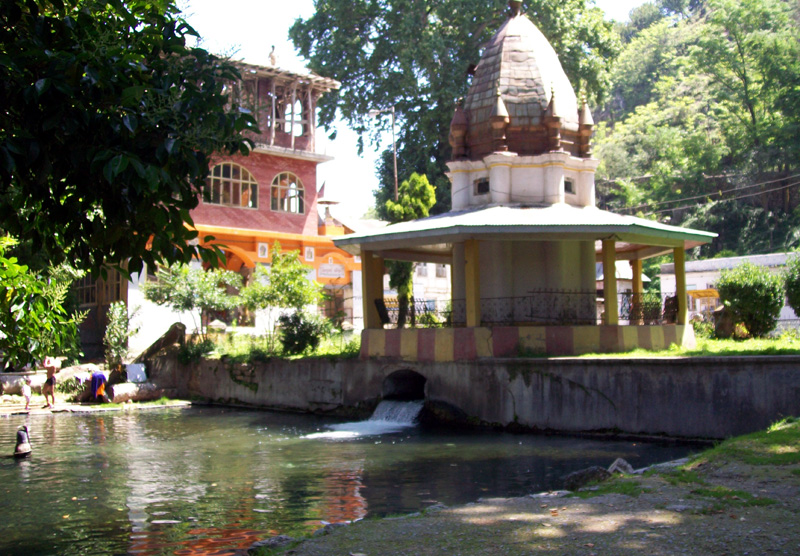 Exclusive images and report from a remote village in Kashmir provided for Shehjarby Chander M. Bhat |
 nantnag
is one of the 11 districts that make up Kashmir Valley. The city finds a
pride place in Bhagavad Gita that says, “I am Anant Naga”. Anantnag is
home to highly honoured shrines from any faith, practicing it with
utmost belief. Anantnag is an ancient city which came into existence as a
market town around 5000 BC making it one of the oldest urban
settlements in the whole world. Famous Lal Chowk of Anantnag is a big
trade centre of the town and it was the seat of one of the oldest degree
colleges in Jammu and Kashmir State. nantnag
is one of the 11 districts that make up Kashmir Valley. The city finds a
pride place in Bhagavad Gita that says, “I am Anant Naga”. Anantnag is
home to highly honoured shrines from any faith, practicing it with
utmost belief. Anantnag is an ancient city which came into existence as a
market town around 5000 BC making it one of the oldest urban
settlements in the whole world. Famous Lal Chowk of Anantnag is a big
trade centre of the town and it was the seat of one of the oldest degree
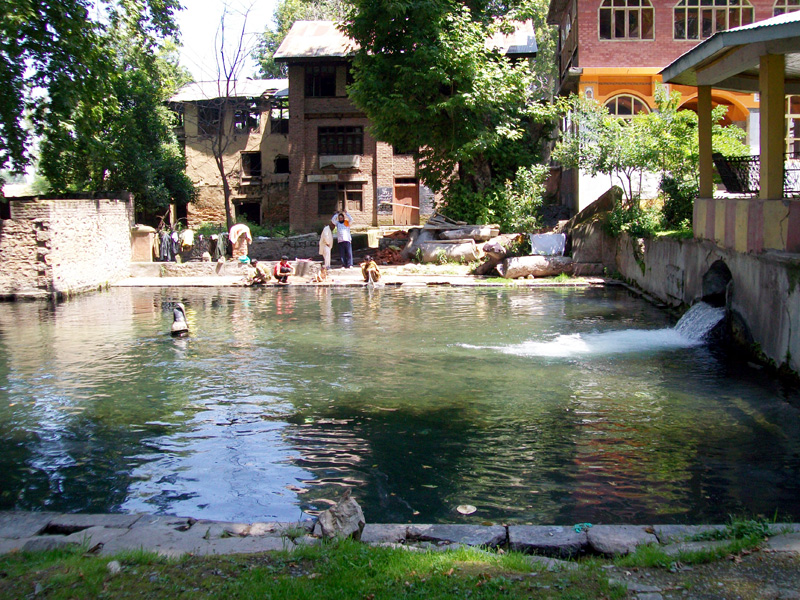
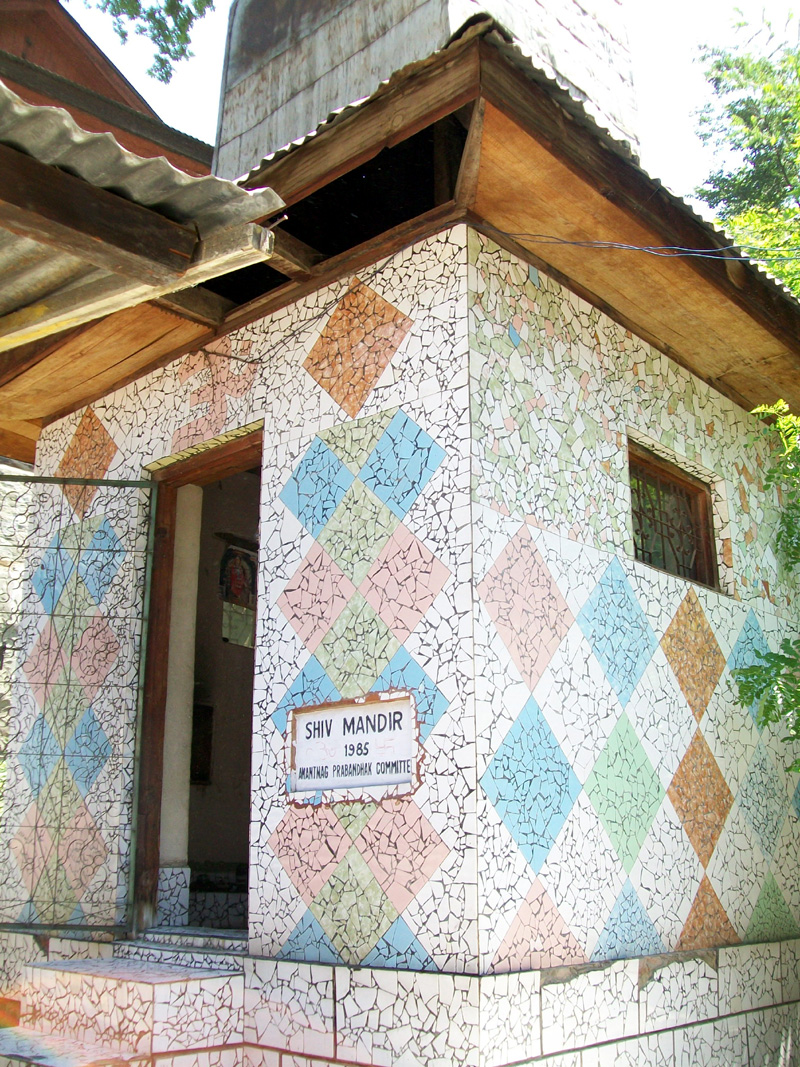
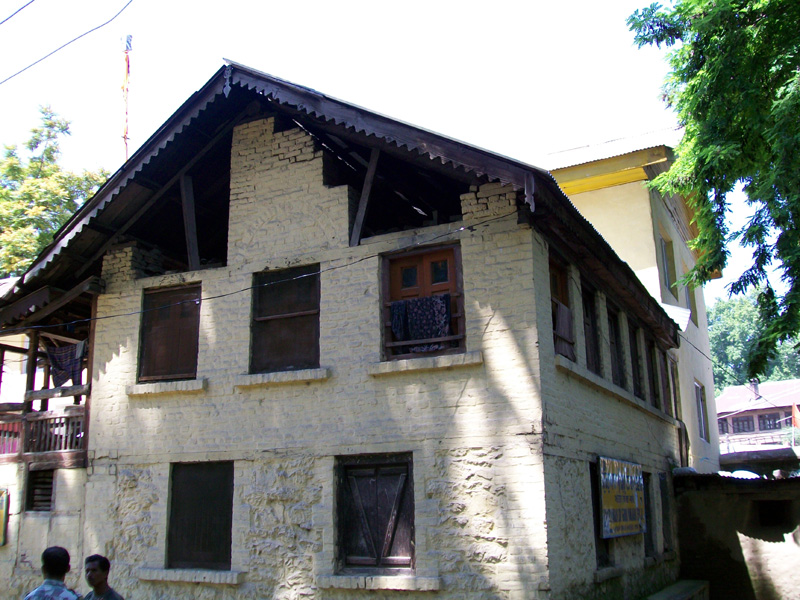
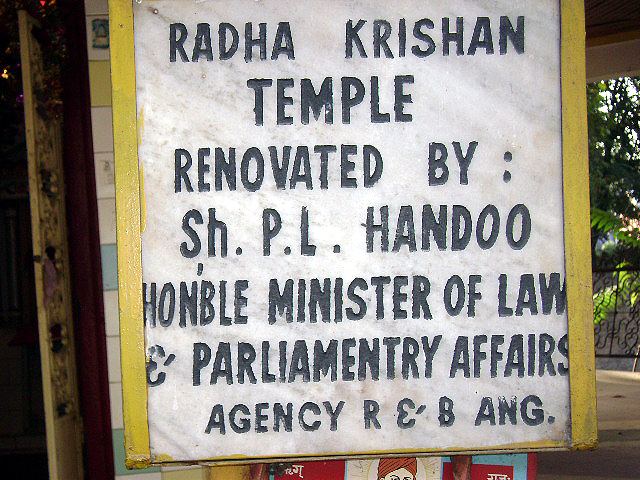
colleges in Jammu and Kashmir State.According to ancient mythological stories, the name Anant Nag is given to the place because Lord Shiva during his journey to Amarnath cave left all his valuables on the way and Anant Nag was the place where he is supposed to have left countless number of serpents residing on him. Anant nag is also well mentioned in ancient Naga and Pichash chronicles of ancient aboriginals of the valley. It was also known as Kashyapteshwara in ancient times linking it to the mythology of Kashyap Reshi. In ancient times, it was called the Inder Nag. Anant also means numerous in the Sanskrit language and Naga means springs in the Kashmiri language. Thus Anantnag is believed to mean numerous springs because here are many springs including Nagbal, Salak Nag and Malik Nag in the town. Thus every part of Anantnag town resides on a crest of water. Few feet depth brings water to the surface. Anantnag is a perfect Vastu Shastra location by nature. On one side is a hillock releasing endless water from its feet. Localities are thus blessed with this perfect Vastu creation of nature. The name of Anantnag District according to a well known archaeologist, Sir A. Stein, comes from the great spring Anant Naga issuing at the centre of the city. This is also corroborated by almost all local historians including Kalhana according to whom the city has taken the name of this great spring of Cesha or Anant Naga land of countless springs. The spring is mentioned in Neelmat Puran as a sacred place for the Hindus and Koshur Encyclopaedia testifies it. Mendi Kadal, one of the localities of Anantnag town was famous for magic waters that cured leprosy patients. Anantnag town was a transit camp for Amarnath Pilgrims in olden days. The town of Anantnag is constituted by three main boroughs or towns viz. Anantnag, Khanabal and Mattan. The old city of Anantnag comprises Nagbal, Maliknag, Kadipora, Cheeni Chowk, Doni Pawa, Sarnal Bala, Janglatmandi, Old Port Khanabal, Downtown Martand and Dangarpora areas and few villages like Haji Danter, Mir Danter etc. About 1200 households of Kashmiri Pandits were living in Anantnag town and almost entire community joined in mass exodus during 1990. Most of the Kashmiri Pandit community were either in Government Service or had their own business establishments in the town. Noted Kashmiri Pandits from Anantnag who made their name on national scene were Sh. Piarey Lal Handoo, Sh Prem Nath Bhat, Dr. A.N. Safaya etc. Chirvi’s, Zutshi’s, Goja’s, Jad’s and Guzerwan’s were noted business families in the town. Anantnag is centre seat of Maraz segment of Kashmir and its language culture is unique in comparison to other segments of Kashmir Valley. It was a land locked place from Verinag...Kokernag belt and from Qazigund...Shopian belt. This advantageous position left lesser impact on its culture by Huns, Kushans and Afghans. Near Anantnag three streams namely Arapath, [the glacier waters from Mrigin Mountain and streamlets from springs of Chahaer and Brahmasar form Aripat] Bringi [Bringi freshet is formed by the glacier waters from the Hokhsar Mountain and various other streams from Springs of Navbhug and Kokernag] and Sandran [the glacier waters from Brari Mountain and streams from Verinag and other springs of Shahabad from Sandran] confluence together and mingles with Veyth. Another stream Liddar [Lamboodri] also joins the flow with them at a little distance downstream further ahead. The Nagbal temple is in the eastern corner of the Anantnag town, placed adjacent to a spring. There are long shady Chinar trees that stand sentinel round the tank. The presiding deity of the Nagbal temple is Lord Ananta Bhawan set up at the outlet of the spring. The temple was built by Maharaja Ranbir Singh, the 2nd Dogra ruler of Kashmir. There are also other smaller temples in the temple complex. Shiva temple, the oldest temple, was built during the reign of Maharaja Partap Singh. A sulphur spring, which is believed to possess spiritual power, is also located in the temple complex. Nagbal is bounded by incredible beauty. The holy spring which originates from here and the formation of which is attributed to Vishno or Narayana is said to be a Vedic pilgrimage centre. The spring rises beautifully from the foot of a small hill-lock and is dedicated to the worship of Ananta or Vishno. Annual festival is held on beuuderpeth gat’iu pachh tsodah. The shrine of Reshi Mol Sahib is situated in the centre of the Anantnag town and is at a stone’s throw distance from Nagbal and famous Devibal Shrine is also located nearby. Devibal, a small stone temple is located near Nagbal Temple complex and is dedicated to the Mata Ragnya. Inside the temple is the sanctum sanctorum, which is about 12 square feet in size, in the middle of which is 6 square feet holy spring. The Ragnya is said to have blessed the spring. According to a legend, Wazir Pannu, who was a minister during Dogra rule, had a dream in which the goddess revealed to him the secret of her presence in the holy spring and left it to the care of Pandit Balkak, a priest. Maharaja Pratap Singh used to visit the shrine during his travel from Jammu to Srinagar or back, pray and make offerings. He is also believed to have donated land to the shrine. You may come down from land of shepherds or from the land of modernity, the smooth transition from one site to this site; creates a unique experience of soul purification as clay of Anantnag has touched the feet of Lord Shiva and graced by Mata Ragnya. A stay at Anantnag is a saga of memory for anyone who descends on it. |
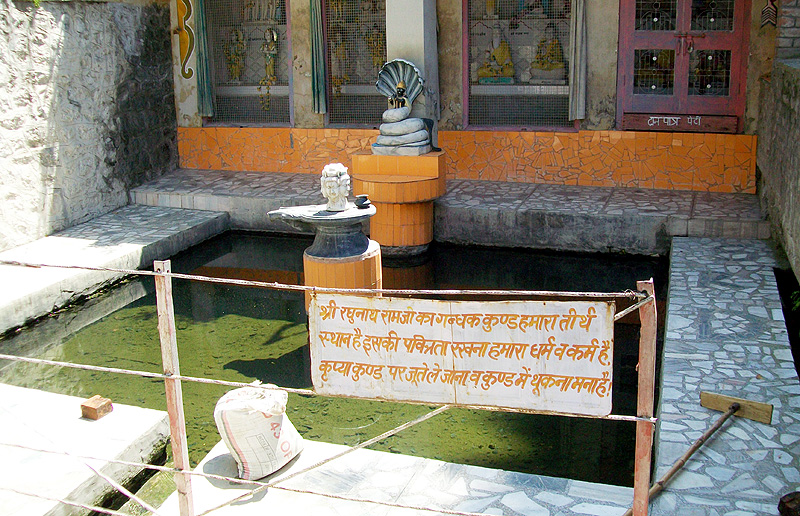
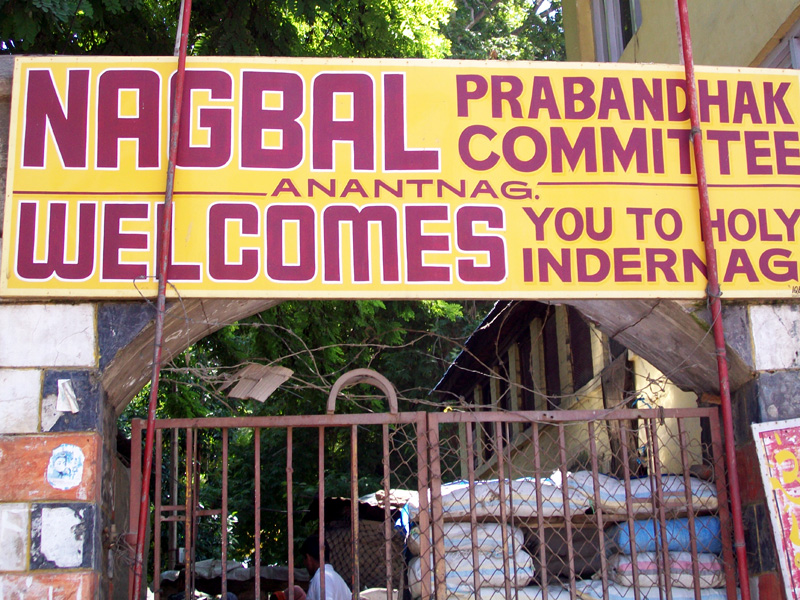 Entrance Gate. 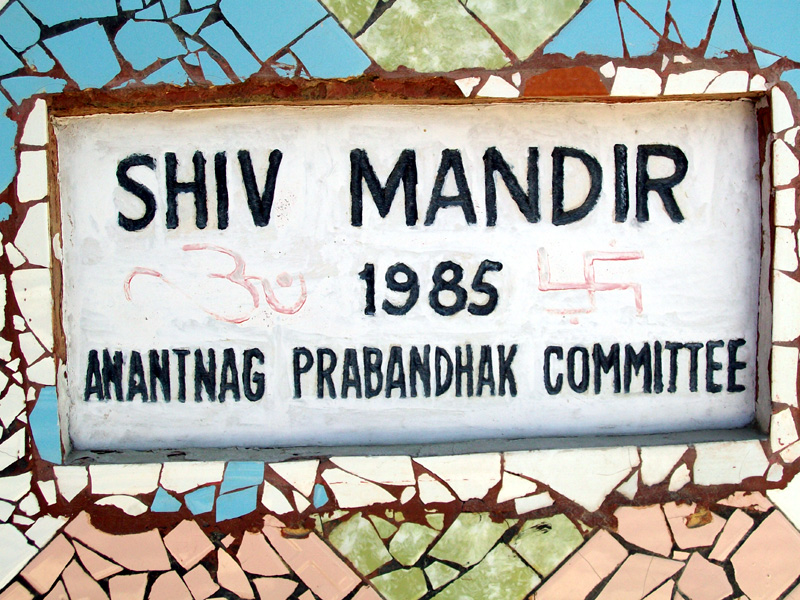 Sign Board at the entrance |
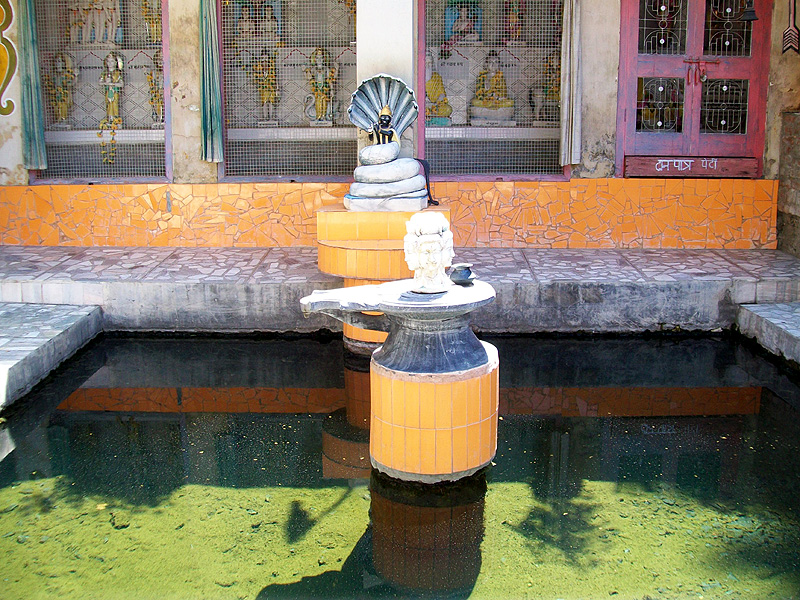
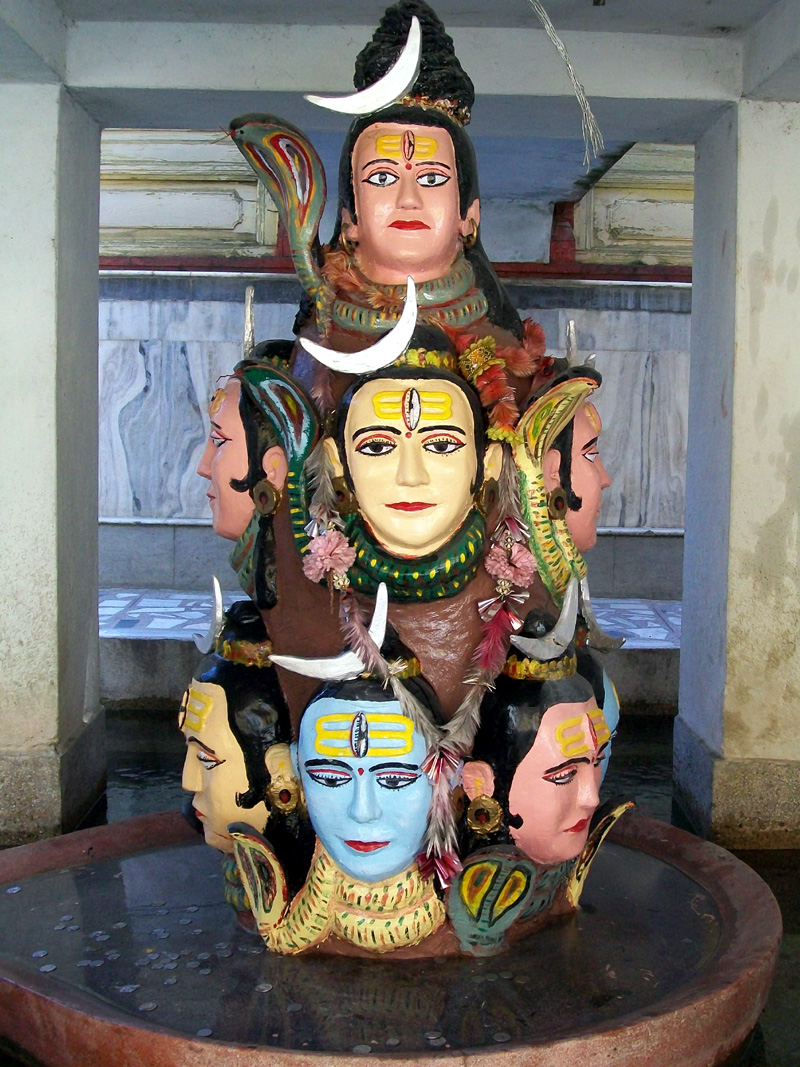 Shiv Lingam with faces |
 |
 |
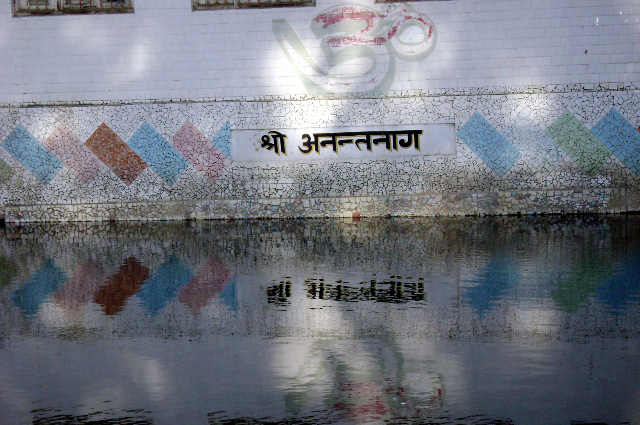 Nag at Anantnag |
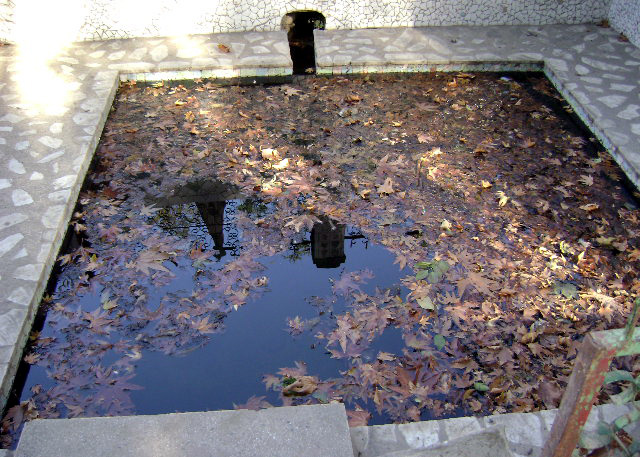 Close up of Nag |
 |
 |
 |
 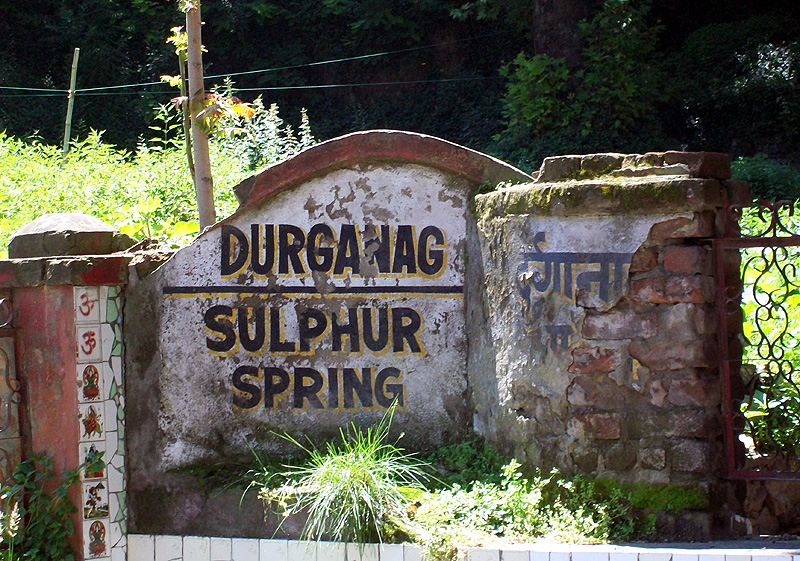 Sulphur Spring 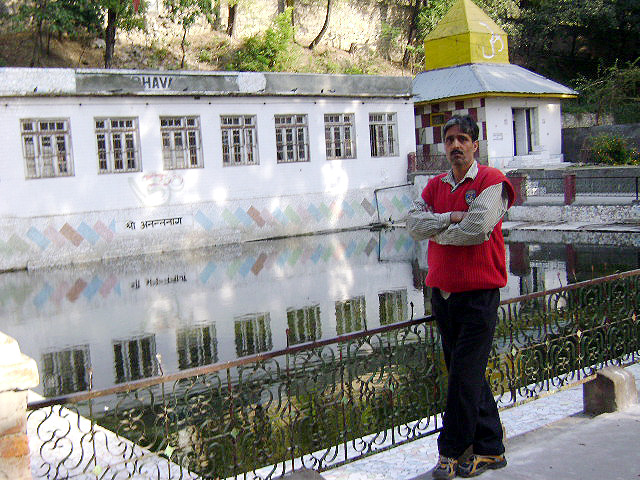 Author inside Temple Complex 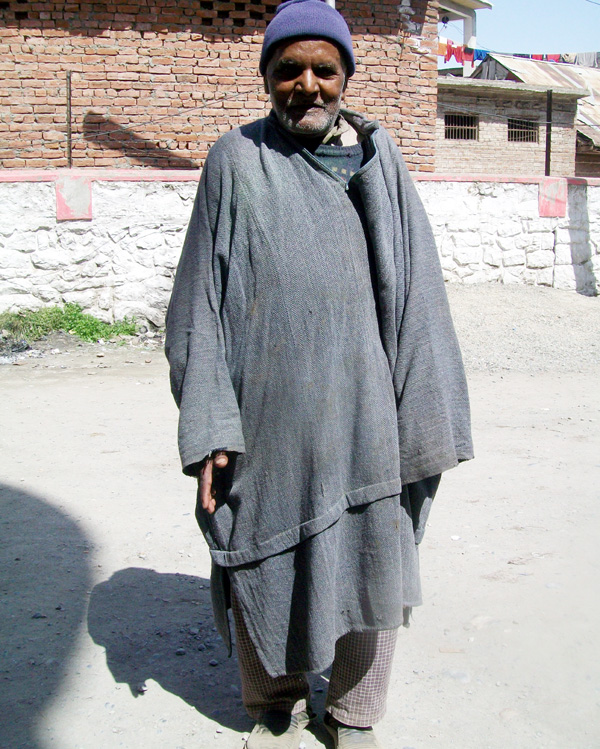 The only Person who has not left Anantnag and now a days living in Nagbal |
|
|
|
|
 *Born
on 20th March, 1960 in Murran a village in North Kashmir, Chander M.
Bhat is presently working as an Assistant Supdt. Posts, in Department of
Posts, Govt. of India. His articles regarding Posts and of
non-political nature stand widely published in various papers and
magazines of the country. A booklet 'How to Collect Stamps" published by
the Department of Posts, has earned him genuine accolades. He worked on
the project of tracing the roots of his co-villagers and of the village
Murran, resulting into the culmination of a widely acclaimed book
"Murran -My Village". Man with depth, Chander M. Bhat has also another
book, "Ocean by Drops" (collection of poems) in his vase having colorful
poems. His book "Ancient History of Jammu and Kashmir", confirms his
researching capability. Various research papers like "The Splendor that
is Amarnath" and "Vitasta" The Sacred River of Kashmir" are valuable
additions to his works that has proved very fruitful and guiding force
in the exile period of Kashmiri Pandits community of which the author is
also a member. *Born
on 20th March, 1960 in Murran a village in North Kashmir, Chander M.
Bhat is presently working as an Assistant Supdt. Posts, in Department of
Posts, Govt. of India. His articles regarding Posts and of
non-political nature stand widely published in various papers and
magazines of the country. A booklet 'How to Collect Stamps" published by
the Department of Posts, has earned him genuine accolades. He worked on
the project of tracing the roots of his co-villagers and of the village
Murran, resulting into the culmination of a widely acclaimed book
"Murran -My Village". Man with depth, Chander M. Bhat has also another
book, "Ocean by Drops" (collection of poems) in his vase having colorful
poems. His book "Ancient History of Jammu and Kashmir", confirms his
researching capability. Various research papers like "The Splendor that
is Amarnath" and "Vitasta" The Sacred River of Kashmir" are valuable
additions to his works that has proved very fruitful and guiding force
in the exile period of Kashmiri Pandits community of which the author is
also a member.Presently the author is working on "OOL - THE NEST" a six volume project on all the 595 (each volume of about 2500 pages)Kashmiri Pandit villages of Kashmir. POSTED BY : VIPUL KOUL  |
Monday, October 1, 2018
NAGBAL.....ANANTNAG


Forgotten Temples of Kashmir

|
|
Forgotten Temples of Kashmir
Photo series Part-11 An effort to preserve and record Hindu cultural and religios heritage of Kashmir Mata Bhuvaneshwari….Chandpora (Harwan) 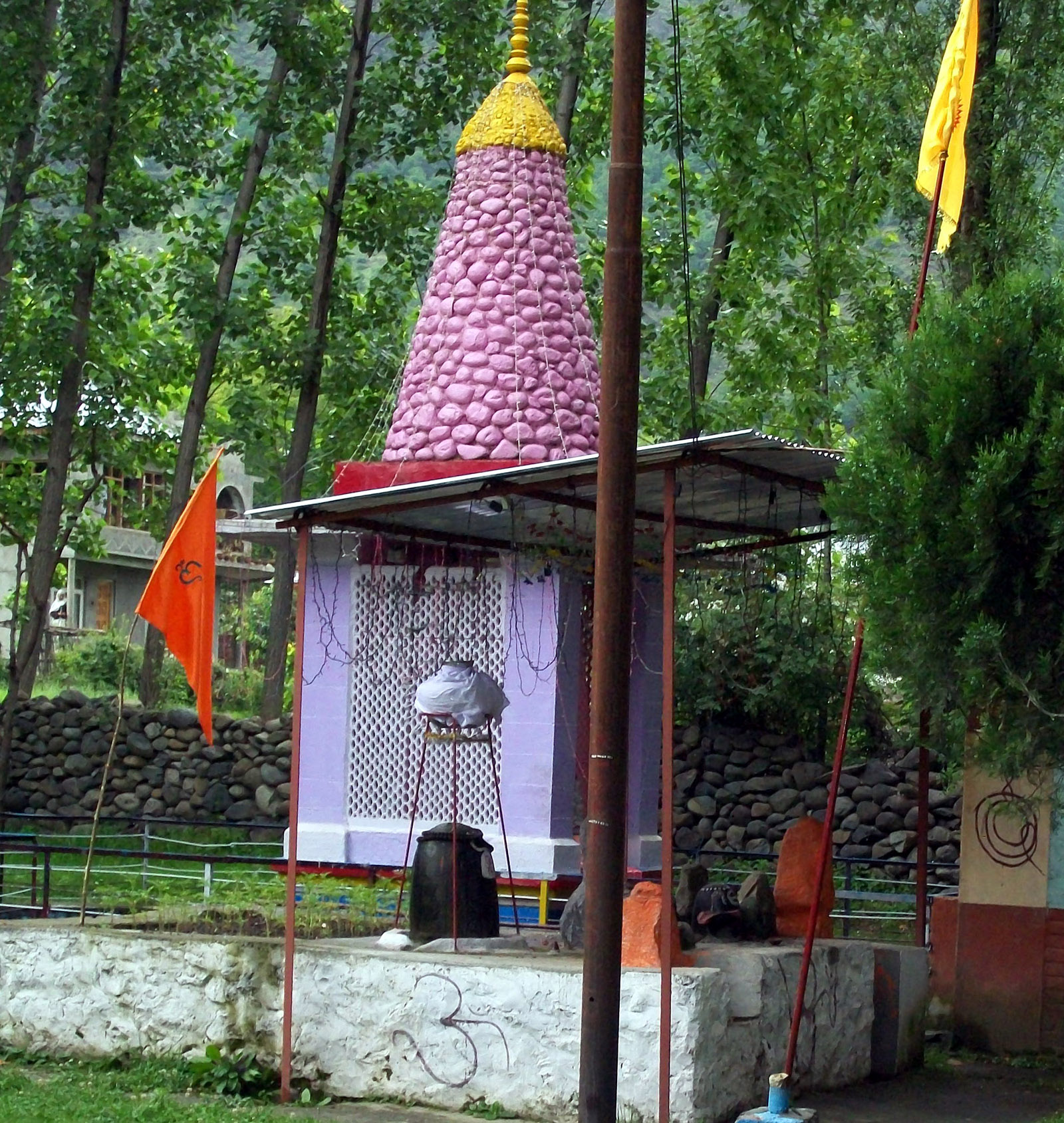
Exclusive images and report from a remote village in Kashmir provided for Shehjarby Chander M. Bhat
|
 arwan
is located about 3 km beyond the famous Shalimar garden where a
Bhuddhist monastery existed and a scholar, the glorious Nagarjuna, lived
one hundred and fifty years after the Buddha. The place was called
Sadarhadvana which stands for forest of six saints.
arwan
is located about 3 km beyond the famous Shalimar garden where a
Bhuddhist monastery existed and a scholar, the glorious Nagarjuna, lived
one hundred and fifty years after the Buddha. The place was called
Sadarhadvana which stands for forest of six saints.Harwan is a huge garden lined with flower beds and massive Chinar Trees with a beautiful canal flowing right through the middle. The canal is fed from a beautiful lake which lies behind the garden. There is not much clutter of fountains and other fancy things but vast big green carpeted green lawns which form an ideal spot for picnics. Kalhana maintains in his Raj Tarangini that "there is not a piece of land, equal to a mustard seed that is not a tirtha in Kashmir". It is on this account that the Aryans visited Kashmir frequently; they stayed mostly at Buzahama and Harwan. On a hillock, linked with the name of Raja Harish Chandera (known for his honesty), there still exist some ancient ruins considered sacred. At Harwan, in Chandpora, there is a small sacred spring associated with Mata Bhuvaneshwari. Kalhana has mentioned this spring in the Raj Tarangni; at two of its corners, we find the idols of Mata Bhuvaneshwari installed. It is said that it was Maharaja Gulab Singh who changed the original name of the place from 'Chachaa Pora' to Chand Pora. The Maharaja's grandson Maharaja Partap Singh often visited the sacred spot and paid his obeisance to the Holy Mother; as a religious ritual, he would feed young virgins and adore them as divinities. The hillock of Mahadev, believed to be the abode of Lord Shiva is about 20 kilometers away from the holy spring located in Chandpora. It is believed that Lord Shiva keeps a vigil on it from the Mahadev Peak. It was during Maharaja Partap Singh's reign that a Sadhu Alakh Ram took up his abode in a hut near the spring mentioned above. The hut got destroyed in a fire. Thereafter two Dharmshallas were constructed to provide shelter to pilgrims, these structures did not stand the fury of nature for long and no trace was left of them. With the expansion in the population of the village around, the inhabitants got together and constituted a committee to look after the shrine, which they named as Bhuvaneshwari Sathapana Committee. The members of the committee in question spared no efforts in raising a pucca structure that served as a Dharmshalla accommodating at least 200 pilgrims. The committee in question not only renovated the spring but also got a concrete temple built up in which the image of the Mata was firmly installed. In the adjoining area of the temple, measuring 3 kanals of land, there exist six Chinar trees and a brook having pure water flows through the complex. It is said that a spring has sprouted from within the hollow of each of these Chinars. The water of the main spring at the shrine can cure diseases. The legend is there that once the only son of a woman, who had gone blind, reposing his trust in the kind heartedness of the Mother Goddess Bhuvaneshwari, washed his eyes with the water of the holy spring for seven consecutive days; he regained his vision through the grace of virgin Goddess Mata Bhuvaneshwari, whose devotees make only vegetarian offerings to her in the shape of the fruits and other edible things. Non vegetarian offerings to the Goddess are strictly forbidden. Mata Bhuvaneshwari, is one of the seven sister-divinities and the youngest of them, the other six being Ragyna, Sharika, Jawala, Zeshta, Uma and Shardha. According to Kashmir, Shivism, Shiva, who is the male counterpart of the Shakti, is the Supreme Being. He remains introvert and dormant, while Shakti is active and dynamic. The Shaivite philosophy is, in principle, non dualistic. In her diverse manifestations, Shakti performs manifold functions. As Saraswati, she propagates knowledge and wisdom. As Lakshmi, she distributes wealth and as Kali she destroys the demons. In Kashmir, Shakti worship is very popular and every clan of Kashmiri Pandits adores its chosen female deity as Ragyana, Sharika, Jawala, Zeshta, Uma, Sharda or Bhuvaneshwari. Being the youngest, Bhuvaneshwari, is adored as eternal Shakti. The devotees in great bulk, including all the inhabitants of Chandpora, have deep-rooted faith in Bhuvaneshwari. It is said that when a hawan was performed propitiate the Goddess Bhuvaneshwari on the seventh day of it a beautiful snake, bearing white patches, emerged all at once from the spring at Chandpora, it made seven circumambulation around the temple to the joy of devotees present there. It accepted the milk that was offered to it by the devotees, and then vanished. The devotees took it as a good augury, believing firmly that Bhuvaneshwari had blessed them. Thus enthused and encouraged, a beautiful Murti (idol) of the Goddess carved out of the marble from Jaipur was installed in the temple on Mata’s Birthday in the year 1974, falling on Vetha Truvah which is also celebrated as the birthday of the river Vitasta (Jhelum) annually. It was the late Swami Laxman Joo, renowned saint and Shavite Scholar, who took care of the installation ritual. After the displacement of the Pandits from the Valley, the devotees of the Mata being away could no longer ensure the preservation and maintenance of the shrine. With the passage of time, due to climatic ravrages the Dhramshala collapsed, though, the other pacca structures still exist. Now the Mata's hawan is being performed at the Kheer Bhawani Peeth at Janipur, Jammu to mark the birthday of Bhuvaneshwari. Notes and References 1. Place Names in Kashmir by B.K.Raina and S.L.Sadhu published by Bharatiya Vidya Bhavan, Mumbai and Indira Gandhi National Centre for the Arts, New Delhi, 2000 edition. 2. Bujbror…An Ancient Religious Place by Sh. P.N.Bhat published in Koshur Samachar. 3. Encyclopedia: Kashmiri Pandit Culture and Heritage by C.L.Kaul, published by Ansh Publications, New Delhi, 2009 edition. |
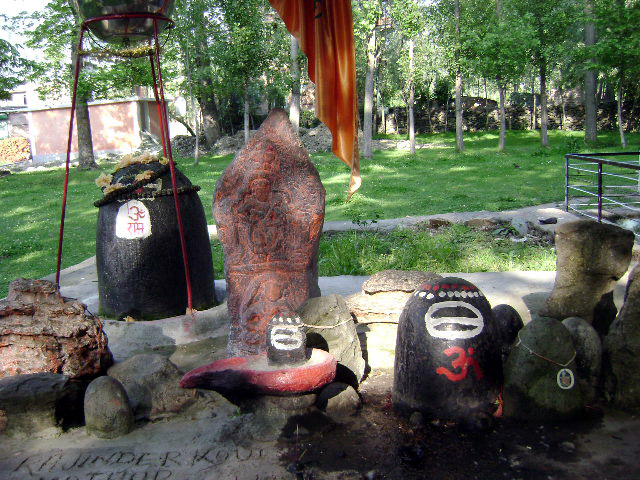
Icons in open in the lawns of the shrine |
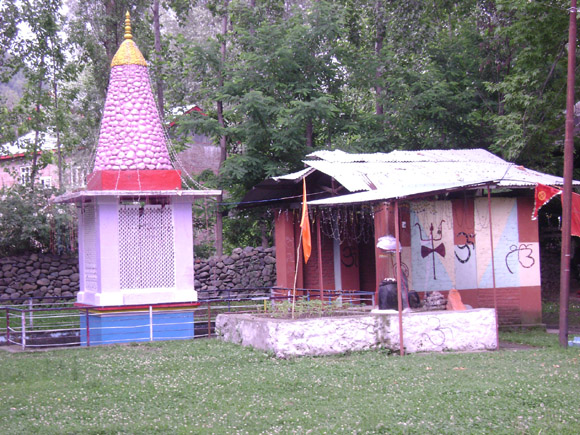
Lawns of the Shrine |

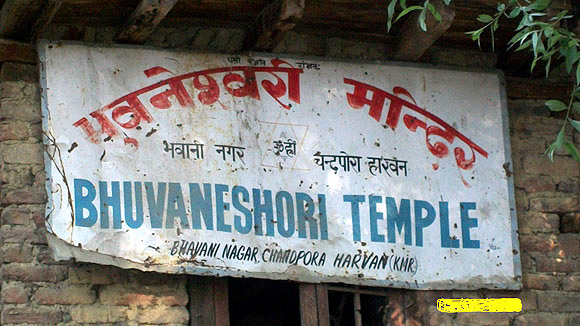
See the scars of stones on my face |
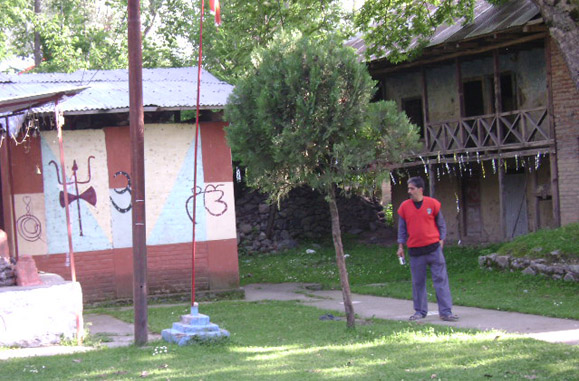
Author in the lawns of the shrine trying to collect the scattered pieces of history |
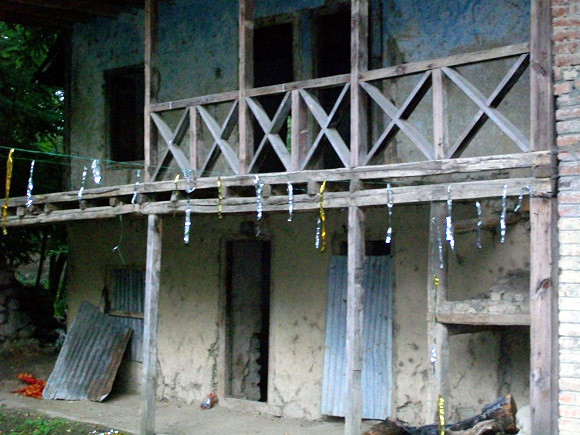
Old Dharamshala adjacent to the temple. All the doors and windows open like a wound |
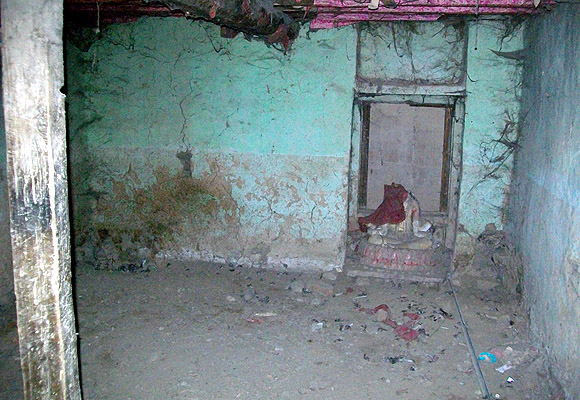
Inner view of the room of old Dharamshala |
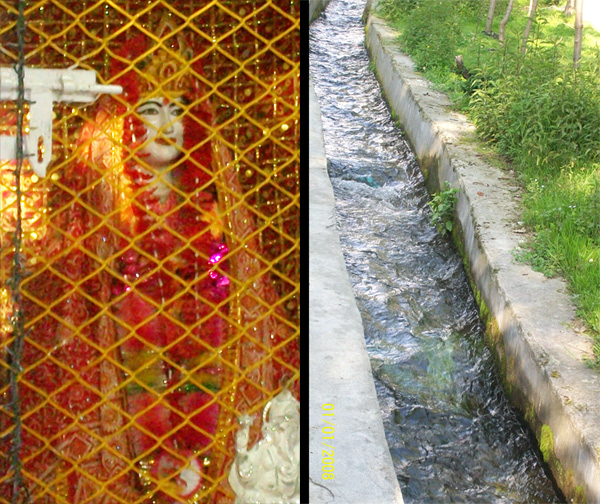
aMata Bhuvaneshwari |
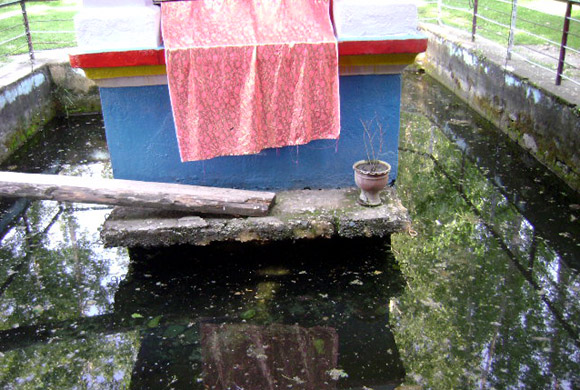
Close view of the Holy Spring |
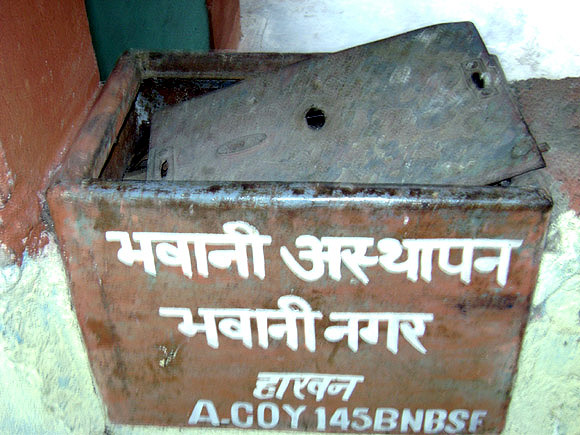
I was opened forcibly, by big hammers |
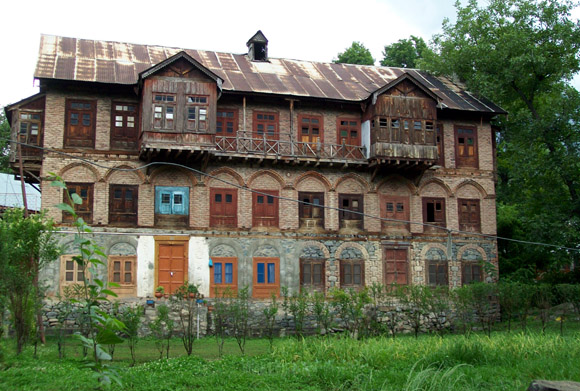
A Kashmiri Hindu house adjacent to the Shrine |
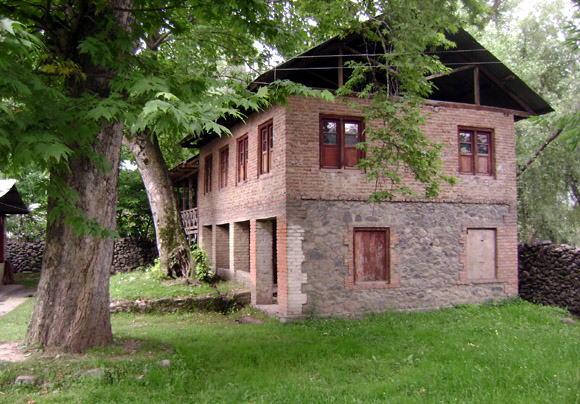
Newly constructed Dharamshala. Doors and windows are open |
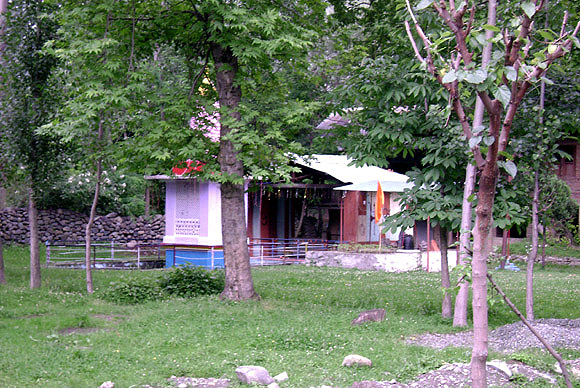
Shrine in the shambles |

|
 *Born on 20th March, 1960 in Murran a village in North Kashmir,
Chander M. Bhat is presently working as an Assistant Supdt. Posts, in
Department of Posts, Govt. of India. His articles regarding Posts and of
non-political nature stand widely published in various papers and
magazines of the country. A booklet 'How to Collect Stamps" published by
the Department of Posts, has earned him genuine accolades. He worked on
the project of tracing the roots of his co-villagers and of the village
Murran, resulting into the culmination of a widely acclaimed book
"Murran -My Village". Man with depth, Chander M. Bhat has also another
book, "Ocean by Drops" (collection of poems) in his vase having colorful
poems. His book "Ancient History of Jammu and Kashmir", confirms his
researching capability. Various research papers like "The Splendor that
is Amarnath" and "Vitasta" The Sacred River of Kashmir" are valuable
additions to his works that has proved very fruitful and guiding force
in the exile period of Kashmiri Pandits community of which the author is
also a member.
*Born on 20th March, 1960 in Murran a village in North Kashmir,
Chander M. Bhat is presently working as an Assistant Supdt. Posts, in
Department of Posts, Govt. of India. His articles regarding Posts and of
non-political nature stand widely published in various papers and
magazines of the country. A booklet 'How to Collect Stamps" published by
the Department of Posts, has earned him genuine accolades. He worked on
the project of tracing the roots of his co-villagers and of the village
Murran, resulting into the culmination of a widely acclaimed book
"Murran -My Village". Man with depth, Chander M. Bhat has also another
book, "Ocean by Drops" (collection of poems) in his vase having colorful
poems. His book "Ancient History of Jammu and Kashmir", confirms his
researching capability. Various research papers like "The Splendor that
is Amarnath" and "Vitasta" The Sacred River of Kashmir" are valuable
additions to his works that has proved very fruitful and guiding force
in the exile period of Kashmiri Pandits community of which the author is
also a member.Presently the author is working on "OOL - THE NEST" a six volume project on all the 595 (each volume of about 2500 pages)Kashmiri Pandit villages of Kashmir. Posted By: vipul koul  |
Shankaracharya Temple - Kashmir
Shankaracharya
Temple - Kashmir
The Shankaracharya temple is situated in the Srinagar district on the hill known as Takht-e-Suleiman. It is housed at a height of 1100 ft. above surface level of the main city on the hill. It is believed that Raja Gopadatya got the temple constructed in 371 BC, giving it the name of Gopadri. The great philosopher Shankaracharya is supposed to have stayed here when he visited Kashmir to revive Sanatan Dharma.

This incident, which took
place ten centuries ago, led to the renaming of the temple as the Shankracharya
temple.
The Shankracharya Mandir of Kashmir, India is dedicated to Lord Shiva and is thought to be the oldest shrine in the Kashmir valley. The temple, as it stands today, has undergone many repairs throughout its life. The first repair is supposed to have been done under the rule of Lalitaditya. The second repairs were undertaken by Zain-ul-Abideen after the temple got damaged in an earthquake. These repairs were carried out during the Governorship of Sheikh Mohi-ud-Din. Maharaja Gulab Singh, a Dogra ruler, is credited for the stone steps that form a part of the passage to the shrine. The electrification of the Shankracharya temple was done in 1925.

The temple is of great importance,
not only from the point of view of religion, but also from architectural
viewpoint. A high octagonal platform supports the temple, approached by
a flight of approximately hundred steps. The sidewalls of the steps once
bore some valuable inscriptions. There is also a Persian inscription inside
the temple, dating back to Emperor Shahjahan's rule. The main surviving
shrine, consisting of a circular cell, provides a magnificent view of the
valley below. The inner chamber of the Shankaracharya temple, after being
repaired, is now covered with a modern ceiling.


How to Reach ?
Shankarcharya lies in Srinagar District across the Nehru Park: a beautiful island within the Dal Lake One can either trek to Shankaracharya Temple from the Durganag Temple lying in civil lines area or alternatively can take a automobile upto the footsteps from the Boulevard road. The climb is approx. 7 Kms and then there is a flight of 100 odd steps up. the road passes through jungle and offers beautiful views allround.and the nearest Airport is approx. 25 Kms away in Badgam Distt.This Airport is connected with major cities of India. The nearest Rail Head is at Jammu which is 300 Kms away and from there National
Highway NH1A connects the Kashmir valley with India. Every sort of transport to suit every budget from Buses to Taxis ply on this Highway. It Takes around 10 to 12 hours to cross this mountaineous road which crosses some beautiful spots and the famous Jawahar Tunnel linking KashmirValley with India.

It is located at 1100
ft. above surface level of the main city on the Shankaracharya hill. The
Shiva temple, as Kalhana believes, was constructed by Raja Gopadatya in
371 B.C. and, as such, is the oldest shrine in Kashmir, though it is not
certain if the temple exists in the same form as it had been built more
than two thousands years ago. The first repair of the temple is believed
to have been undertaken during the reign of Lalitaditya in the eighth century
A.D. According to the historian Shrivara, Zain-ul-Abideen conducted
second repairs of the temple after it had been damaged in an earthquake. The third time repair was undertaken during the Governorship of

Sheikh Mohi-ud-Din when the
temple is believed to have been named as Shankaracharya. Dogra ruler, Maharaja
Gulab Singh, constructed stone stairs upto the temple. In 1925, the temple
was electrified. The temple, besides a prominent Hindu religious place,
is of great archaeological importance. The temple commands a magnificient
panoramic view of the Srinagar City.
The Shankaracharya temple is situated in the Srinagar district on the hill known as Takht-e-Suleiman. It is housed at a height of 1100 ft. above surface level of the main city on the hill. It is believed that Raja Gopadatya got the temple constructed in 371 BC, giving it the name of Gopadri. The great philosopher Shankaracharya is supposed to have stayed here when he visited Kashmir to revive Sanatan Dharma.
The Shankracharya Mandir of Kashmir, India is dedicated to Lord Shiva and is thought to be the oldest shrine in the Kashmir valley. The temple, as it stands today, has undergone many repairs throughout its life. The first repair is supposed to have been done under the rule of Lalitaditya. The second repairs were undertaken by Zain-ul-Abideen after the temple got damaged in an earthquake. These repairs were carried out during the Governorship of Sheikh Mohi-ud-Din. Maharaja Gulab Singh, a Dogra ruler, is credited for the stone steps that form a part of the passage to the shrine. The electrification of the Shankracharya temple was done in 1925.
Shankarcharya lies in Srinagar District across the Nehru Park: a beautiful island within the Dal Lake One can either trek to Shankaracharya Temple from the Durganag Temple lying in civil lines area or alternatively can take a automobile upto the footsteps from the Boulevard road. The climb is approx. 7 Kms and then there is a flight of 100 odd steps up. the road passes through jungle and offers beautiful views allround.and the nearest Airport is approx. 25 Kms away in Badgam Distt.This Airport is connected with major cities of India. The nearest Rail Head is at Jammu which is 300 Kms away and from there National
Highway NH1A connects the Kashmir valley with India. Every sort of transport to suit every budget from Buses to Taxis ply on this Highway. It Takes around 10 to 12 hours to cross this mountaineous road which crosses some beautiful spots and the famous Jawahar Tunnel linking KashmirValley with India.
|
second repairs of the temple after it had been damaged in an earthquake. The third time repair was undertaken during the Governorship of
Shankaracharya Temple
The Shankaracharya Temple (Kashmiri: शंकराचार्य मंदिर (Devanagari), شنکراچاریہ مندر (Nastaleeq)) is also known as the Jyesteshwara temple or Pas-Pahar by Buddhists. It is on top of the Shankaracharya Hill (also called Hill of Solomon) on the Zabarwan Mountain in Srinagar, Kashmir, India. It is dedicated to Lord Shiva (Shri Shiv Ji). The temple is at a height of 1,000 feet (300 m) above the plain and overlooks the city of Srinagar.

 The temple dates to 200 BC, although the present structure probably dates to the 9th century AD. It was visited by Adi Shankara and has ever since been associated with him; this is how the temple got the name Shankaracharya . It is also regarded as sacred by Buddhists.
Some historians report that the temple was actually a Buddhist temple
during the Buddhist era which was then changed into Hindu site of
worship by Adi Shankaracharya. Persians and Jews call it Bagh-i-sulaiman or the Garden of King Solomon. Persian inscriptions are also found inside the temple.
The temple dates to 200 BC, although the present structure probably dates to the 9th century AD. It was visited by Adi Shankara and has ever since been associated with him; this is how the temple got the name Shankaracharya . It is also regarded as sacred by Buddhists.
Some historians report that the temple was actually a Buddhist temple
during the Buddhist era which was then changed into Hindu site of
worship by Adi Shankaracharya. Persians and Jews call it Bagh-i-sulaiman or the Garden of King Solomon. Persian inscriptions are also found inside the temple.
According to Pandit Anand Koul (1924) the temple was originally built by the Hindu king "Sandiman" who, according to Koul, reigned in Kashmir from 2629 to 2564 BC. It was repaired by King Gopaditya (426–365 BC) and by King Lalitaditya (697–734 A.D.). Sikandar, the iconoclast did not, for some reason, destroy it. Zain-ul-Abidin repaired its roof which had tumbled down by earthquake. Sheikh Ghulam Mohi-ud-din, a Sikh Governor (1841–46), also repaired its dome. It was repaired by King Gopaditya (426–365 BC) and by King Lalitaditya (697–734).
The earliest historical reference to the hill comes from Kalhana. He called the mountain Gopadri. Kalhana says that King Gopaditya granted the land at the foot of the hill to the Brahmins that had come from the "Araya versh." The land grant was called "GOPA AGRAHARAS". This area is now called Gupkar. Kalhana mentions another village in the vicinity of the hill. King Gopaditya housed some of the Brahmins who had eaten garlic to a village next door. Kalhana names this village as Bhuksiravatika (Buch’vore today). Kalhana also mentions that King Gopaditya built the temple on the top of the hill as a shrine to Jyesthesvara (Shiva Jyestharuda) around 371 BC. Abul Fazal mentions that King Gopaditya built the temple. Although many experts believe that the current temple was probably built later, most of them agree that the base of the structure does seem to be very old. It is said that Lalitaditya Muktapida (724-726 AD) of Karakote dynasty did repairs to the temple. According to Srivara Budsah, Zain-ul-Abideen (1420-1470 AD) did major repairs to the temple. He put the Kalash (spire) and the roof of the structure which had fallen due to an earthquake. The third time the temple was repaired was by the Muslim Governor, Sheikh Mohi-ud-Din (1842 to 1845) during the Sikh rule of Kashmir.
The name of the hill was changed from Gopadri to Takhate-Suleiman during the period of Sultans. There is no historical evidence that King Solomon visited this valley.
The name Takhate-Suleiman, however, seems to have persisted during the Mughal, Afghan, Sikh and Dogra periods. Any publication during these periods all refer to the hill by that name. Mughal ruler Jahangir along with his wife, Noor Jahan, once climbed the hill for a picnic on its summit. Noor Jahan is said to have prepared pudding for her husband there upon which Jahangir extempore recited this verse, ‘Shakar farosh e mann paye halva giri nishast’ (My candy seller is seated to prepare the pudding). Noor Jahan equally replied with an extempore verse, ‘Yani ki zer-i-Takhta-i-Sulaiman pari nishast’ (As if a fairy is seated under the [shade of] Solomon’s Throne)
The name Shankaracharaya for the temple first appears when Governor Sheikh Mohi-ud-Din made the repairs in the mid-19th century. It had apparently not been used as a temple for centuries. At that time it was consecrated as a Shankaracharaya temple and a Shiv Lingam was placed inside. It is only during the Sikh period that people started to have prayer services at the temple and the Shravan Poornima started being celebrated there.
The Dogra King Gulab Singh (1846-1857 AD) constructed the steps to the hill from Durga Naag temple side. The Maharaja of Mysore came to Kashmir in 1925 and he made the electrical installations at the temple. In 1961 Shankaracharaya of Dwarkapeetham put the statue of Adi Shankaracharaya in the temple. In 1974 the Government of J&K constructed the road that goes to the TV antenna near the top of the hill.
The temple dates to 200 BC,[2] although the present structure probably dates to the 9th century AD. It was visited by Adi Shankara and has ever since been associated with him; this is how the temple got the name Shankaracharya [3] . It is also regarded as sacred by Buddhists.
Some historians report that the temple was actually a Buddhist temple
during the Buddhist era which was then changed into Hindu site of
worship by Adi Shankaracharya. Persians and Jews call it Bagh-i-sulaiman or the Garden of King Solomon. Persian inscriptions are also found inside the temple.
According to Pandit Anand Koul (1924) the temple was originally built by the Hindu king "Sandiman" who, according to Koul, reigned in Kashmir from 2629 to 2564 BC. It was repaired by King Gopaditya (426–365 BC) and by King Lalitaditya (697–734 A.D.). Sikandar, the iconoclast did not, for some reason, destroy it. Zain-ul-Abidin repaired its roof which had tumbled down by earthquake. Sheikh Ghulam Mohi-ud-din, a Sikh Governor (1841–46), also repaired its dome. It was repaired by King Gopaditya (426–365 BC) and by King Lalitaditya (697–734).
The earliest historical reference to the hill comes from Kalhana. He called the mountain Gopadri. Kalhana says that King Gopaditya granted the land at the foot of the hill to the Brahmins that had come from the "Araya versh." The land grant was called "GOPA AGRAHARAS". This area is now called Gupkar. Kalhana mentions another village in the vicinity of the hill. King Gopaditya housed some of the Brahmins who had eaten garlic to a village next door. Kalhana names this village as Bhuksiravatika (Buch’vore today). Kalhana also mentions that King Gopaditya built the temple on the top of the hill as a shrine to Jyesthesvara (Shiva Jyestharuda) around 371 BC. Abul Fazal mentions that King Gopaditya built the temple. Although many experts believe that the current temple was probably built later, most of them agree that the base of the structure does seem to be very old. It is said that Lalitaditya Muktapida (724-726 AD) of Karakote dynasty did repairs to the temple. According to Srivara Budsah, Zain-ul-Abideen (1420-1470 AD) did major repairs to the temple. He put the Kalash (spire) and the roof of the structure which had fallen due to an earthquake. The third time the temple was repaired was by the Muslim Governor, Sheikh Mohi-ud-Din (1842 to 1845) during the Sikh rule of Kashmir.
The name of the hill was changed from Gopadri to Takhate-Suleiman during the period of Sultans. There is no historical evidence that King Solomon visited this valley.
The name Takhate-Suleiman, however, seems to have persisted during the Mughal, Afghan, Sikh and Dogra periods. Any publication during these periods all refer to the hill by that name. Mughal ruler Jahangir along with his wife, Noor Jahan, once climbed the hill for a picnic on its summit. Noor Jahan is said to have prepared pudding for her husband there upon which Jahangir extempore recited this verse, ‘Shakar farosh e mann paye halva giri nishast’ (My candy seller is seated to prepare the pudding). Noor Jahan equally replied with an extempore verse, ‘Yani ki zer-i-Takhta-i-Sulaiman pari nishast’ (As if a fairy is seated under the [shade of] Solomon’s Throne)
The name Shankaracharaya for the temple first appears when Governor Sheikh Mohi-ud-Din made the repairs in the mid-19th century. It had apparently not been used as a temple for centuries. At that time it was consecrated as a Shankaracharaya temple and a Shiv Lingam was placed inside. It is only during the Sikh period that people started to have prayer services at the temple and the Shravan Poornima started being celebrated there.
The Dogra King Gulab Singh (1846-1857 AD) constructed the steps to the hill from Durga Naag temple side. The Maharaja of Mysore came to Kashmir in 1925 and he made the electrical installations at the temple. In 1961 Shankaracharaya of Dwarkapeetham put the statue of Adi Shankaracharaya in the temple. In 1974 the Government of J&K constructed the road that goes to the TV antenna near the top of the hill.
Shankaracharya Temple
 SOURCES : NEELMAT PURAN
POSTED BY : VIPUL KOUL
History and development


Temple of Jyeshteswara - Shankaracharya, built c.220 BC. The temple overlooks Dal Lake
Photos taken in 1868 CE by John Burke (photographer)
Photos taken in 1868 CE by John Burke (photographer)
According to Pandit Anand Koul (1924) the temple was originally built by the Hindu king "Sandiman" who, according to Koul, reigned in Kashmir from 2629 to 2564 BC. It was repaired by King Gopaditya (426–365 BC) and by King Lalitaditya (697–734 A.D.). Sikandar, the iconoclast did not, for some reason, destroy it. Zain-ul-Abidin repaired its roof which had tumbled down by earthquake. Sheikh Ghulam Mohi-ud-din, a Sikh Governor (1841–46), also repaired its dome. It was repaired by King Gopaditya (426–365 BC) and by King Lalitaditya (697–734).
The earliest historical reference to the hill comes from Kalhana. He called the mountain Gopadri. Kalhana says that King Gopaditya granted the land at the foot of the hill to the Brahmins that had come from the "Araya versh." The land grant was called "GOPA AGRAHARAS". This area is now called Gupkar. Kalhana mentions another village in the vicinity of the hill. King Gopaditya housed some of the Brahmins who had eaten garlic to a village next door. Kalhana names this village as Bhuksiravatika (Buch’vore today). Kalhana also mentions that King Gopaditya built the temple on the top of the hill as a shrine to Jyesthesvara (Shiva Jyestharuda) around 371 BC. Abul Fazal mentions that King Gopaditya built the temple. Although many experts believe that the current temple was probably built later, most of them agree that the base of the structure does seem to be very old. It is said that Lalitaditya Muktapida (724-726 AD) of Karakote dynasty did repairs to the temple. According to Srivara Budsah, Zain-ul-Abideen (1420-1470 AD) did major repairs to the temple. He put the Kalash (spire) and the roof of the structure which had fallen due to an earthquake. The third time the temple was repaired was by the Muslim Governor, Sheikh Mohi-ud-Din (1842 to 1845) during the Sikh rule of Kashmir.
The name of the hill was changed from Gopadri to Takhate-Suleiman during the period of Sultans. There is no historical evidence that King Solomon visited this valley.
The name Takhate-Suleiman, however, seems to have persisted during the Mughal, Afghan, Sikh and Dogra periods. Any publication during these periods all refer to the hill by that name. Mughal ruler Jahangir along with his wife, Noor Jahan, once climbed the hill for a picnic on its summit. Noor Jahan is said to have prepared pudding for her husband there upon which Jahangir extempore recited this verse, ‘Shakar farosh e mann paye halva giri nishast’ (My candy seller is seated to prepare the pudding). Noor Jahan equally replied with an extempore verse, ‘Yani ki zer-i-Takhta-i-Sulaiman pari nishast’ (As if a fairy is seated under the [shade of] Solomon’s Throne)
The name Shankaracharaya for the temple first appears when Governor Sheikh Mohi-ud-Din made the repairs in the mid-19th century. It had apparently not been used as a temple for centuries. At that time it was consecrated as a Shankaracharaya temple and a Shiv Lingam was placed inside. It is only during the Sikh period that people started to have prayer services at the temple and the Shravan Poornima started being celebrated there.
The Dogra King Gulab Singh (1846-1857 AD) constructed the steps to the hill from Durga Naag temple side. The Maharaja of Mysore came to Kashmir in 1925 and he made the electrical installations at the temple. In 1961 Shankaracharaya of Dwarkapeetham put the statue of Adi Shankaracharaya in the temple. In 1974 the Government of J&K constructed the road that goes to the TV antenna near the top of the hill.
Soundarya Lahari
History and development
Temple of Jyeshteswara - Shankaracharya, built c.220 BC. The temple overlooks Dal Lake
Photos taken in 1868 CE by John Burke (photographer)
Photos taken in 1868 CE by John Burke (photographer)
According to Pandit Anand Koul (1924) the temple was originally built by the Hindu king "Sandiman" who, according to Koul, reigned in Kashmir from 2629 to 2564 BC. It was repaired by King Gopaditya (426–365 BC) and by King Lalitaditya (697–734 A.D.). Sikandar, the iconoclast did not, for some reason, destroy it. Zain-ul-Abidin repaired its roof which had tumbled down by earthquake. Sheikh Ghulam Mohi-ud-din, a Sikh Governor (1841–46), also repaired its dome. It was repaired by King Gopaditya (426–365 BC) and by King Lalitaditya (697–734).
The earliest historical reference to the hill comes from Kalhana. He called the mountain Gopadri. Kalhana says that King Gopaditya granted the land at the foot of the hill to the Brahmins that had come from the "Araya versh." The land grant was called "GOPA AGRAHARAS". This area is now called Gupkar. Kalhana mentions another village in the vicinity of the hill. King Gopaditya housed some of the Brahmins who had eaten garlic to a village next door. Kalhana names this village as Bhuksiravatika (Buch’vore today). Kalhana also mentions that King Gopaditya built the temple on the top of the hill as a shrine to Jyesthesvara (Shiva Jyestharuda) around 371 BC. Abul Fazal mentions that King Gopaditya built the temple. Although many experts believe that the current temple was probably built later, most of them agree that the base of the structure does seem to be very old. It is said that Lalitaditya Muktapida (724-726 AD) of Karakote dynasty did repairs to the temple. According to Srivara Budsah, Zain-ul-Abideen (1420-1470 AD) did major repairs to the temple. He put the Kalash (spire) and the roof of the structure which had fallen due to an earthquake. The third time the temple was repaired was by the Muslim Governor, Sheikh Mohi-ud-Din (1842 to 1845) during the Sikh rule of Kashmir.
The name of the hill was changed from Gopadri to Takhate-Suleiman during the period of Sultans. There is no historical evidence that King Solomon visited this valley.
The name Takhate-Suleiman, however, seems to have persisted during the Mughal, Afghan, Sikh and Dogra periods. Any publication during these periods all refer to the hill by that name. Mughal ruler Jahangir along with his wife, Noor Jahan, once climbed the hill for a picnic on its summit. Noor Jahan is said to have prepared pudding for her husband there upon which Jahangir extempore recited this verse, ‘Shakar farosh e mann paye halva giri nishast’ (My candy seller is seated to prepare the pudding). Noor Jahan equally replied with an extempore verse, ‘Yani ki zer-i-Takhta-i-Sulaiman pari nishast’ (As if a fairy is seated under the [shade of] Solomon’s Throne)
The name Shankaracharaya for the temple first appears when Governor Sheikh Mohi-ud-Din made the repairs in the mid-19th century. It had apparently not been used as a temple for centuries. At that time it was consecrated as a Shankaracharaya temple and a Shiv Lingam was placed inside. It is only during the Sikh period that people started to have prayer services at the temple and the Shravan Poornima started being celebrated there.
The Dogra King Gulab Singh (1846-1857 AD) constructed the steps to the hill from Durga Naag temple side. The Maharaja of Mysore came to Kashmir in 1925 and he made the electrical installations at the temple. In 1961 Shankaracharaya of Dwarkapeetham put the statue of Adi Shankaracharaya in the temple. In 1974 the Government of J&K constructed the road that goes to the TV antenna near the top of the hill.
Soundarya Lahari
Shankaracharya Temple
.jpg)
Shankaracharya temple
Architecture and design
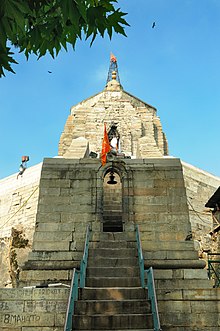
The Jyoteshware temple rests on a solid rock. A 20-foot tall octagonal base supports a square building on top. The terrace around the square temple is reached by a stone staircase enclosed between two walls.[13] A doorway on the opposite side of the staircase leads to the interior, which is a small and dark chamber, circular in plan. The ceiling is supported by four octagonal columns, which surround a Basin containing a Lingam encircled by a snake
POSTED BY : VIPUL KOUL
Subscribe to:
Posts (Atom)