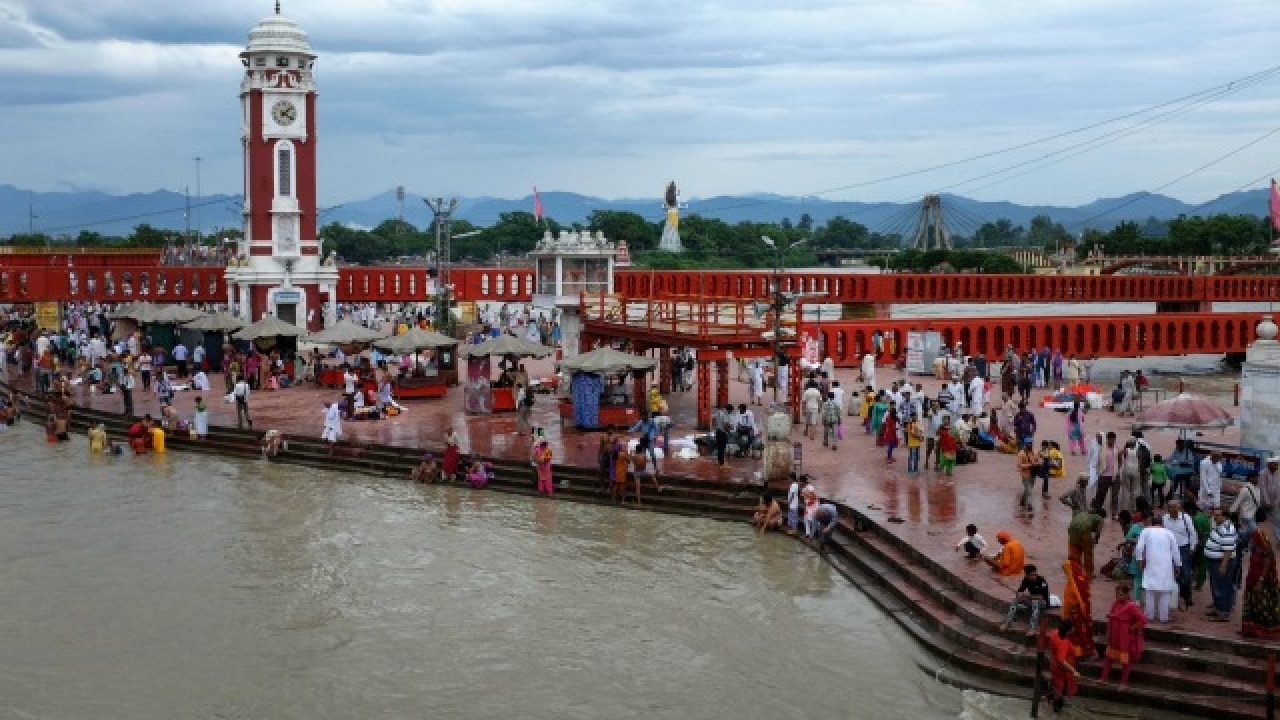
Aniruddha Kumar Jha, a panda (genealogist) in Haridwar who has
maintained records of thousands of Hindu families from across India for
35 years in Devanagiri, has decided to digitally preserve them. Jha, the
53-year-old who would meticulously jot down data in 300-year-old
ledgers, said, “We have to move forward with the times. Records can be
maintained better if preserved digitally.”
Jha has been maintaining handwritten records of family members of
the deceased since the age of 19. He normally sits in his 6 ft by 6ft
office on the ghats of the Ganga River in Haridwar and writes them down
on scroll. Owner of a hotel, Jha has done well to ensure his future
generations are economically sound.
He is one of the 2,500 genealogists who regularly update family
registers (bahis) of people who come to Haridwar to perform the last
rites of their loved ones. Pandas are usually found at Har Ki Pauri,
jotting down recent births, deaths, and marriages.
A recent dip in footfall at Haridwar to perform last rites has
prompted pandas like Jha to digitise death records. It won’t be long
before these handwritten records fade into oblivion. Soon, death records
will be available online. These 300 years old scrolls sometimes have handwritten data in both Devanagari and Urdu. (Photo courtesy - Cheena Kapoor)
“Over the years, the custom of visiting Haridwar to update family
ledgers is slowly dying,” says Mahendra Kumar, a panda who has been
maintaining records since the 1980s. “People are now moving abroad and
forgetting about these centuries-old customs. Most of them do not even
know the names of their great-grandfathers or their original ancestral
village. If the records are digitised, people can access them online
from any part of the world,” says Kumar.
Most of these handwritten scrolls have been maintained by over
twenty generations of panda, making it a popular family business in the
region. Nowadays, pandas are in charge of designated registers
categorized as original districts/villages of a particular family’s
ancestors. These 300 years old scrolls sometimes have handwritten data in both Devanagari and Urdu. (Photo courtesy - Cheena Kapoor)
Aniruddha, for instance, received the family scrolls of Bhagalpur,
and from parts of Punjab and Haryana after his father decided to divide
his possessions among his sons. “We have been in the business for over
14 generations and have bahis (ledgers) older than Tulsidas’ Ramayana.
Most of the older records were written on bhojpatra (leaves of the birch
tree) and have been destroyed by moths. We have begun to transfer older
records to new scrolls. A few pandas have even begun digitising
records, and have thrown the old scrolls into the Ganga.”
According to the Genealogical Society of Utah, Hindu family records
dating back to 1194 were once maintained by these Haridwar
genealogists. An 800 years old scroll has handwritten data written in both Hindi and Urdu. (Photo courtesy - Cheena Kapoor)
These records have been made available to family members on the
society’s website. In fact, the society has been maintaining these
records since 1981. In a rare find, a record from 1264 was found
recently in an old trunk in the ancestral home of Aniruddha in
Jawalapur, which is about 8 kms from Haridwar, by our reporter. Two men perform last rites of their father on the ghats of river
Ganga in Haridwar. Kushavarta Ghat is where Hindus perform last rites
for departed souls. (Photo courtesy - Cheena Kapoor)
For families who have converted to other religions, their records are not updated.
Lachhi Ram, who has been a panda for 26 years, said, “There was a
time when people used to come to us to update their family ledgers in
order to settle family and property disputes.
Things have changed now. Religious conversion and migration has reduced dependency on this process.”
The much revered Pashupati Temple is one of the oldest in Nepal.
The pagoda style temple stands tall on the banks of the River Bagmati
and has a history dating back to 400 AD. Covering an area of 264
hectares, this place of worship is dedicated to Lord Shiva. The temple complex is huge and comprises of 518 structures.
The main temple is an architectural masterpiece and features cubic
constructions and wooden rafters. There are four main doors wrapped in
silver sheets and the roof is made from copper with gold coating. The
main idol is a stone Mukhalingam (linga with one or more human faces)
with the silver serpent. The idol has four faces facing four directions.
Unlike other Shiva lingams, this idol in the Pashupati Temple is always
dressed in its golden attire except during a devotional activity.
Every year, the temple draws hordes of Hindu pilgrim
mostly elderly followers. They come here to meet death and getting
cremated on the banks of the sacred Bagmati River that finally meets the
holy Ganga. Open cremations are the norm and the rituals taking place
here are powerful and gut-wrenching. Watching the cremations by the
river bank is one of the must-do activities. Note : Non-Hindus are strictly forbidden to enter the temple.
Reputed as the oldest temple in Nepal, the Changu Narayan Temple was built during the reign of the Lichhavi Dynasty. The temple is dedicated to Lord Vishnu in the form of Narayan.
The two-tied pagoda styled temple features four doors that are guarded
by stone lions. There is a gigantic statue of Garuda in the west of the
temple. The statues of King Bhupatindra Malla and his queen are
positioned in front of the temple entrance. However, the highlight of the Changu Narayan Temple is the Narasingha (half lion and half man) statue.
The monument is adorned with intricate carvings that are over 1500
years old. The temple was badly affected during the 2015 earthquake and
the restoration is under progress.
A walk around the temple will take you back in time. If you are a history buff, the Changu Museum should be on your list. The museum
showcases traditional rural life. You can witness a 500 years old dish
washing rack and around 225-year-old rice grain. Other objects include a
cow’s gallstone, a raincoat made from leaves and rhino skin shield.
Guhyeshwari Temple is one of the Shakti Peeths located very close to Pashupati Temple. In the 17th century, King Pratap Malla had constructed this beautiful temple on the banks of River Bagmati. Guhyeshwari Temple represents the divine feminine power that Devi Parvati embodies.
It is also popular among the Tantrik worshippers. This is a
pagoda-style temple that boasts a unique interior. The central shrine is
a flat figure of the goddess parallel to the ground and the puja is
usually done by bowing down. There is also a pond next to the idol,
known as Bhairav Kunda. During the Dashain festival, devotees from
different parts of Kathmandu come here and pray to the goddess.
Pashupati and Guhyeshwari
temples together symbolize the power of Shiva and Shakti. The aura surrounding
the temple is strong and powerful. Pilgrims believe in the existence of
divinity and come here with the hope of a better life. Note : Non-believers of Hinduism is prohibited from entering the temple.
As the name suggests, Dakshinakali Temple is dedicated to Goddess Kali.
It is one of the main temples in Nepal located close to the village of
Pharping. The temple is dedicated to the fierce Hindu Goddess ‘Kali’,
the incarnation of Devi Parvati. It was built in the 14th
century during the rule of the Malla King. The main shrine was an image
of the deity carved out of the stone. The temple looks simple and is
seated amidst a serene environment. In order to satisfy the
blood lust of the goddess, animal sacrifices especially cockerels and
male goats are made every Tuesday and Saturday. A large number of devotees gathers around the temple to witness the sacrifice.
During the 15-day Dashain festival, thousands of pilgrims flock the
temple. It is one of the most popular Hindu festivals. The temple is
decorated with bright lights and the mystic aura can be felt in the
smell of incense stick and reverberating chants. The temple authority
also arranges grand feast and it is the best time to visit this sacred place of worship. Note : Non-believers of Hinduism are not allowed to enter the temple and perform religious rituals.
Located
in the Gorkha District, the 17th-century Manakamana Temple is
dedicated to Durga Bhawani. This religious landmark is perched atop a hill and
enclosed by a quaint village. It was built during the reign of Ram Singh, the
legendary Gorkha King. It is believed if someone worships the goddess with a
pure heart, his or her wish gets fulfilled. With stunning architectural beauty,
the four-storied Manakamana Temple stands on a square pedestal with pagoda
styled roof. The temple can be reached after a 10-minute gondola ride from
Kurintar and each carrier can carry 6 persons at a time.
Pilgrims
worship the goddess with offerings of dresses, colours, flowers and scents.
Sacrificing animals is an age-old tradition and during festivals, devotees
stand for 5 to 10 hours to witness the sacrifice. Pilgrims make resolutions and
when their wishes are fulfilled, they again visit Manakamana temple to show
gratitude to the Devi. Note : Non-Hindus are restricted to enter the temple and worship the Devi.
Surrounded by the mesmerizing Vijapur Hills, the sacred Dantakali Temple is one of the major Shakti Peeths. According to Hindu mythology, this is the place where Sati Devi’s (Lord Shiva’s wife) teeth have fallen.
Hence, Dantakali Temple holds a major religious significance to the
followers of Hinduism. The temple is built with brick and cement and
features a metal pinnacle on top. The holy shrine is a small
silver-plated rock that is regarded as Devi Sati’s tooth.
Numerous devotees flock the temple on the occasion of Navratri. On Maha Ashtami (the 8th
day of Dashain), goat sacrifices take place within the temple premise
which is a rare yet intriguing sight. Dantakali temple is frequented by
pilgrims from every nook and crannies of Nepal as well as India. The
majestic sight of the sloping roofs of Dharan from the top looks no less
than paradise.
Nestled at the foot of the Shivpuri Hills, Budhanilkantha Temple
holds a high religious significance not only in Nepal but also across
Southern Asia. It houses the biggest stone sculpture of Lord Vishnu lying on a bed of serpents.
The 5 metres long statue is positioned in a lake that represents the
cosmic sea. The statue is a sculptural marvel that is carved on a single
block of basalt stone. The ‘Sleeping Vishnu’ has a history dating back
to the 5th century. The statue was discovered by a farmer
during the rule of the Malla Dynasty. The delicate artwork on the
sculpture is a feast to the sore eyes. Hence, this place of worship
attracts heritage buffs along with Hindu pilgrims.
Thousands of pilgrims flock the temple on the occasion of
Haribondhini Ekadashi that takes place between October and November. A
large fair also takes place on the auspicious days which marks the
awakening of Lord Vishnu from his long sleep. If you are planning to
visit the Budhanilkantha Temple, combine the trip with Shivapuri National Park located just above it. Note : Non-Hindus are not allowed to visit the
temple except for Nepali Buddhists. Cameras and mobile phones are
strictly forbidden near the pond area.
Seated in one of the hot tourist destinations of Pokhara,
the Bindabasini Temple is one of a kind. This sacred landmark is the
ideal spot to embrace calmness in the bustling region. The temple is
nestled on a hilltop at an elevation of 3000 feet along the Machapuchare
and Annapurna Ranges. It is dedicated to Ma Durga, who is often regarded as the guardian deity of Pokhara.
She is worshipped here in the form of Bhagwati, the fierce goddess. In
order to appease her, animal sacrifices take place on Tuesdays and
Saturdays.
It is believed, that the pagoda-style temple was built by King Khadag
Bum Malla after Devi Durga instructed him to do so. The central shrine
is a Saligram that symbolises the goddess. The auspicious occasion of
Dashain witnesses a large number of visitors from Nepal as well as
India. This stunning temple is enclosed by lush greenery and visitors
come here to spend time amidst the gorgeous panorama and absorb the
breathtaking views. A trip to the Bindabasini Temple can be combined
with a visit to the Old Bazaar and the Phewa Lake.
The very ancient
Swayambhunath Stupa rests on a hillock in the Kathmandu Valley. It is one of
the most admired temples and a great place to soak up the panoramic views of
the city. It is one of the oldest as well as the holiest Buddhist stupas in the
region. According to some inscriptions, the stupa was built by King Manadeva in
460 A.D. The complex has a stupa, some shrines and temples that belong to the
Licchavi period. It is an architectural marvel in the shape of a white dome that
signifies our planet, earth. And the tower-like structure on top represents the
13 stages of nirvana. On each side of the stupa is the ‘Paanch Buddha’ statue
that represents the five different qualities of Lord Buddha. The main stupa
also houses a number of artefacts belonging to the bygone era.
Swayambhunath Stupa is frequented by tourists and pilgrims throughout
the year. It is believed that the glory of the Kathmandu Valley started
from here. After visiting the stupa, you can also explore the Harati
Devi Temple which is a part of Swayambhunath Stupa complex. And if you
are looking for some relaxation after the very touristic trip, take a
walk along the Swayambhu Circle Road.
The iconic
Muktinath Temple sits on the lap of the snow-covered mountains at an altitude
of 3710 metres. The pagoda styled structure in such a picturesque location is a
visual treat. According to Tibetan Buddhists, this temple holds the reputation
of being one of the 24 tantric places. Hence, it has a lot of significance to
the ‘Dakinis’ (sky dancers). The main
shrine of Sri Muktinath is one of the holy shrines known as Svayam Vyakta
Ksetras. The idol is made from gold which is tall enough to be compared to a
human. The worship is conducted in the presence of a Buddhist monk and pilgrims
are expected to make a religious offering to the deity.
Muktinath Temple is the best place to learn about Tibetan culture and
traditions in Nepal. If you are planning to visit Muktinath Temple, you
can easily combine the trip with a few other places in Jomsom which
includes the view tower and the Mustang Eco-Museum. Jomsom is also a
great place to get a closer look at the Thakali culture.
Located in the
Mithila Region, the massive white temple of Janakpur is dedicated to Devi Sita.
It is one of the biggest temples in Nepal that is frequented by tourists from
other parts of the country as well as India and Sri-Lanka. The auspicious
occasions of Ram Navami, Dashain, Diwali and Holi are celebrated with much
fervour. Built in the year 1910 by Queen of Tikamgarh, this temple is an
architectural marvel.
The grand Janaki Temple looks like a spectacular palace and features
domes, verandas and pillars. It is a fusion of Hindu, Koiri and Mughal
architecture and feature intricate windows with coloured glass. There
are a total of 60 chambers adorned with pretty carvings and beautiful paintings.
The statue of Devi Sita stands in the inner sanctum and t is flocked by
devotees throughout the year. This temple is particularly popular among
women who wear colourful saris and visit the temple. At the back of the
temple complex, there is a small museum which tells the epic story of
Lord Rama and Devi Sita.
Baglung Kalika
Temple is one of the holiest Kali temples in Nepal. Popularly known as Kalika
Bhagwati Temple, it is located deep inside the forest right above the Kali
Gandaki River. Kali is often considered as one of the most powerful forms of
Devi Durga and the consort of Lord Shiva. It is an ancient temple constructed
by Pratap Narayan but it was renovated in the year 1990.
Within the complex, there are a number of other temples as well.
Apart from Hindu devotees, Tantric from different parts of the globe
visits the temple to achieve knowledge. During Navratri celebration,
devotees from around Nepal come here to celebrate the occasion and
perform puja to please the goddess. The devotees perform rituals to win
legal suits, win their loved one or gain victory over their enemies.
Marriages are also conducted inside the temple premises with a belief
that the couple will be blessed for a lifetime.
Nestles in the
Gaindakot town, the much revered Maula Kalika Temple is sacred to the Hindus. At
an altitude of 1841 feet above sea level, this temple stands erected on top of
the Maula Hill in the northern side of Gandaki River. This temple has a history
dating back to the 16th century when the ruler of Palpa made an
offering site dedicated to Goddess Kalika or Kali. According to Hindu
Mythology, Goddess Kali is the incarnation of Devi Parvati and symbolizes
power, energy and new beginning. The temple has been renovated several times
and the present temple was built in the 1990s. During festive occasions
especially Dashain, hordes of devotees visit the temple from neighbouring
countries as well as other parts of Nepal.
Maula Kalika Temple is one of the most popular hiking spots for
intrepid travellers. Climbing numerous stairs in order to reach the
final destination seems exciting for many. The majestic view of
Gaindakot and Bharatpur town from the hill is enthralling and conjures
amazing memories. It is ideal to visit the temple early in the morning
so that you can absorb the beauty of the rising sun from the top. You
can also include Devghat and Chitwan National Park in the itinerary as these spots are close by.
14. Mayadevi Temple, Lumbini
Mayadevi Temple is one of the most ionic Buddhist temples situated in the UNESCO declared World Heritage Site of Lumbini.
It is the birthplace of Lord Buddha and attracts his followers from all
around the globe. This temple is considered sacred because the
archaeologists have identified the exact site where Queen Maya Devi gave
birth to Gautam Buddha. The Mayadevi Temple is considered the heart of Lumbini
and showcase diverse architectural style. There is a brick pavilion
that safeguards the temple ruins and just beside the ruins, there is a
holy pond where Maya Devi had taken a bath before giving birth to the
Lord.
The Lumbini Gardens brings harmony through worship and devotion. If
you are an explorer willing to learn about the sacred places in South
Asia, Mayadevi Temple should be on your list. Pilgrims come here to
pray, meditate and feel enlightened. There is a spiritual aura that
revolves around this ancient site and you must visit it to believe it.
15. Bajrayogini Temple, Sankhu
The Tantric temple of Bajrayogini was built in the 16th
century by King Pratap Malla. The temple worships the goddess of
Bajrayogini, one of the most ferocious of the tantric goddesses. This is
a 3-storied sanctuary with a gold plated entrance that is located on
the shores of River Sali. However, most of the temple is damaged after
the 2015 earthquake.
In the month of Magh, hundreds of devotees take a holy bath in the
river and worship the goddess. The main idol has two hands, one holding a
lotus and the other holding a sword. She wears heavy clothing and
jewellery. The entire region is a treasure trove of small temples and
caves that looks intriguing and has an old world charm. There are a
number of yagya kundas where offerings are made to the God of Fire.
Bajrayogini Temple unravels the sheer magnificence of the Hindu as
well as the Buddhist culture. Take a stroll around the temple and admire
the elegant work. No wonder, the pagoda-style structure adorned with
beautiful sculptures is a feast to the sore eyes. Apart from exploring
the place of worship, you can also take the lesser known path to hike up
through the region of Sankhu.
16. Boudhanath Stupa, Kathmandu
The much revered Boudhanath Stupa is located at a distance of 11
kilometres from the city centre. The 36 metres stupa is one of the
tallest in entire South Asia. With countless monasteries enclosing it,
Boudhanath is the centrepiece of Tibetan Buddhism in Nepal. The stupa is
shaped like a mandala and looks more like the Gyantse of Tibet. The
white-washed dome is an architectural splendour and perfectly
complements the all-seeing-eyes of Gautam Buddha that symbolizes
awareness. The first stupa was built around AD 600 and it was renovated
by the Licchavi rulers in the 8th century. The Tibetan merchants have also rested and offered prayers here for several centuries.
This stupa is a UNESCO listed World Heritage site and is one of the
main attractions in Kathmandu. Here you can also explore the numerous
other monasteries surrounding Boudhanath Stupa and appreciate the
spectacular interiors. You can even visit the Ghyoilisang Peace Park
which is a peaceful park with a massive sculpture of Guru Rinpoche in
the middle. Make sure to wander along the Phulbari Street which is lined
with food stalls serving delicious dishes.
17. Tal Barahi Temple, Pokhara
Standing in the
heart of the Phewa Lake, the two-storied pagoda styled Tal Barahi Temple is
dedicated to Devi Barahi, an incarnation of Durga Ma. Goddess Barahi symbolizes
Shakti and destroys all the evils around. The temple was built during the reign
of King Kulmandhan Shah and holds significance to both the Hindus as well as
the Buddhists. The grand structure is made from stone, wood and brick and can
accommodate a large number of devotees.
In order to reach this place, visitors have to take a boat ride along
the Phewa Lake. The ride is enjoyable and the scenic beauty is
admirable. Hence, Tal Barahi Temple is not only suitable for pilgrims
but it is also a safe haven for heritage lovers and nature enthusiasts.
18. Devghat Dham, Tanahun District
Devghat Dham is one of the most religious and cultural centres in
Nepal that is located at the confluence of Krishna Gandaki and Seti
Gandaki Rivers. It is believed that several gods and goddesses visit
Devghat from time to time. As a result, taking a holy dip in this region is considered sacred and people who die here rest in peace forever.
The great Saligram stone has been found here which doubles the
importance of Devghat. No wonder, this place is a religious and
spiritual haven.
Devghat Dham has
great historical significance. Remains of ancient gods that are more than 400
years old can be found here. There are countless temples located in this region
including the Ram Temple, Siddhiganesh Temple, Harihar Ashram, Aghori Ashram,
Galeshwor Ashram, Pashupati Temple and so on. Thus, Devghat is flocked by
devotees as well as tourists throughout the year.
19. Chabdi Barahi Temple, Chabdi Barahi
Located in the
Tanahun District, the Chabdi Barahi Temple has a religious significance dating
back to the centuries. According to Hindu mythology, Satyavati was born in this
spot in the form of a fish. Hence fish plays an integral role in this temple.
The temple complex has a number of idols belonging to different gods and
goddesses. It is believed that if you visit the temple on foot, all your wishes
would be granted.
There is only
one priest who performs all the religious rituals in the temple complex.
Numerous devotees visit this sacred structure during the auspicious occasion of
Dashain as well as on the first day of the year. In order to please the
goddess, goat sacrifices are made in the temple. However, no sacrifices take
place on the occasions of Ekadashi, Aunsi and the Shravan month. Note : Menstruating females and their husbands are strictly prohibited from entering the temple.
20. Panchakanya Temple, Dharan
Panchakanya Temple is one of the oldest temples in Dharan. This
temple is located amid dense forest and you can witness numerous monkeys
wandering around. This religious site has two temples and one has
intricate carvings and statues.
The religious landmark is dedicated to the Panchakanyas, the five
legendary heroines who belong to the Hindu epics. They are Kunti,
Ahalya, Tara, Draupadi and Mandodari. Panchakanya Temple is not
frequented by visitors and requires renovation.
These sacred
temples are an epitome of the rich cultural heritage in Nepal. No wonder, they
make the country proud on the global map and also help in the economic growth
and development
(On 24 November 1675 at Chandni Chowk, Delhi, India)
This was an extremely important event in Sikh history that had a profound impact on the future direction of Sikhism, the religion of the Sikhs.
Guru Tegh Bahadar, the ninth Sikh Guru undertook the supreme sacrifice for the protection of the most fundamental of human rights - the right of a person to freely practice his or her religion without interference or hindrance.
In the modern times we tend to take this freedom for granted –
but in 1675, millions of people were denied this basic right. There was
forced conversion of religion; many thousands were killed for refusing
to change their religion.
Unique sacrifice
To give ones life for a cause is a difficult and highly challenging
undertaking. Many in past human history have given their lives for their
own personal reason; however, what is astonishing in the case of the
ninth Sikh Guru is the fact that the Guru was not protecting the right of his "own people" called the Sikhs to practise their religion but instead the rights of the non-Sikhs, the peace-loving people from Kashmir.
These people from Kashmir were very respected Hindus pundits (scholars) who were being threatened with conversion to Islam, under the threat of death by the "Muslim" Emperor, Aurangzeb.
In 1669, the Mughal ruler Aurangzeb departed from the policy of
tolerance practised by his predecessors and unleashed instead a policy
of religious persecution against non-Muslims. This caused large-scale demoralisation, fear and panic among the people.
The commitment by the SikhGuru to protect and support the liberty of all the people of a country was unprecedented. This type of supreme sacrifice had never previously been recorded in human history. On May 25, 1675 in answer to an appeal of a large group of revered Kashmiri Pandits, Guru Tegh Bahadur made the momentous decision that has forever changed the level of moral commitment, dedication and sacrifice required by followers of God. The Guru made this critical decision to risk laying down his life if necessary to protect the right of the Hindus to follow their religion freely without interference or duress.
The Guru by this act has set a yardstick by which the Sikh must gauge their devotion to their religion. It is now not acceptable to say that: "I believe in the right of others to practise their faith peacefully" - this does not even get near the level of awareness required for the followers of Sikhism. The Guru has by his example taught the followers to maintain a high level of morality.
It is not even acceptable to say: "I, as a Sikh respect and honour other religions" – even this does not get the Sikh to the required threshold of "wakefulness" ("Surat"). The Sikh
mind-set has to get to a position of consciousness where he or she will
be able to say: "I as a Sikh am ready to die to protect the right of
the people of all faiths". The ability to advance to these reaches of
awareness (Surtee or Surat) is a gift obtainable from the Almighty, and
was the lesson taught by Guru Tegh Bahadur to the followers of Sikhism. Not only does the Guru's words mention this clearly in Gurbani, but the life of the Gurus also actually reinforces these words of Bani.
naanak sobhaa surat day-ay parabh aapay gurmukh day vadi-aa-ee. ((4)(15)(48))
O Nanak, by His Grace, He bestows enlightened awareness; God Himself blesses the Gurmukh with glorious greatness.
It should be remembered that the Gurus did not believe in the practises of the Hindu religion and had issued various holy Shabads denouncing various Hindu practises like Sati, Purdah, Idol worship, etc. However, this had no bearing when it came to the decision to protect these Kashmiri Hindus
- for the right of a person to freely practise their religion was
considered to be predominant over their own personal beliefs and
preferences.
Guru Gobind Singh recorded his father's martyrdom with these words:
Theekar fore dilees sir, Prabh par kiyo payan,
Tegh Bahadur si kriya, Kari na kinhoo aan.
Tegh Bahadur ke chalat, Bhayo jagat main sog.
Hai hai hai sab jag bhayo, Jai jai jai sur log.
He burst the bonds of mortal clay
And went on to the abode of God.
No one ever performed an act as noble
As did Tegh Bahadur.
With the departure of Tegh Bahadur
The world was stricken with sorrow.
A wail of horror rent the earth,
A victor's welcome by the dwellers of heaven.
Bichitra Natak
To bring to the attention of all human beings in greater India and to
record in world history the barbaric ways of the Mughal Empire, Guru Tegh Bahadar
escalated the consciousness of the Sikh psyche to a newer level. It was
now not acceptable for a God loving people to protect just their own
kind, but it was the duty of all God loving people to protect the rights
of all the people of God, no matter what their chosen religion may be. Guru Tegh Bahadar put into practise the profound message of Gurbani that had been existant since Guru Nanak Dev's time:
Emperor Aurangzeb was a barbaric ruler of the Mughal
Dynasty who came to power in 1658 and ruled for 49 years until his
death in 1707. When he came to power in 1658, he killed or had killed
his three brothers and imprisoned his father and forcibly converted
Lakhs (hundreds of thousands) of Hindus to Islam. He is commonly
considered the last of the "grand" Mughal emperors. His last 25 years
were spent in the Deccan fighting a war of attrition against the
Marathas which practically bankrupted the Mughal Empire, which never
rose again to its onetime splendour. Thought the succeeding Mughal
Emperors were even more blood thirsty in their attempts to wipe out the
Hindu and Sikh religions, they would soon fall to the perhaps, greater
atrocities of the Persians, Afgaanis and the mixed blessings of the
British conquerors that completed their demise.
The Kashmiri Pandits were Hindus renowned for their high intellect and education. They had a good relationship with the Sikhs and their Gurus. Guru Nanak Dev met Pandit Brahm Das who was an ancestor of Pandit Kripa Ram in Mattan. Kripa Ram had known the Ninth Guru and also taught Sanskrit classics to the young Gobind Rai. During the reign of Jehangir, Guru Hargobind
came to Srinagar and met Kashmiri saintess Mata Bagh Bari, who lived at
Rainawari. It is interesting to note that Mata Bagya Bari's spiritual
interaction with the sixth Sikh Guru is incredibly well-preserved in the
Sikh religious tradition. In Pandit tradition Mata Bagya Bari is a person renowned for her high spiritual merits.
The Turning Point
In early 1675, the Kashmiri Pandits approached Guru Tegh Bahadar to seek his assistance in their acute hour of need. These Hindus from Kashmir had been given a deadline by Emperor Aurangzeb to convert to Islam or be killed. Pandit Kripa Ram with his large delegation met Guru Tegh Bahadar at Chak Nanki, Kahlur (now known as Anandpur Sahib). He explained their dilemma to the Guru in the open Sangat at the place where today stands Gurdwara Manji Sahib, in Anandpur Sahib.
"The Emperor had given us some time to decide to convert to
Islam or to be executed. The time for deciding has expired. Now, we
have to convert to Islam or die. What shall we do? Guru ji, we have no
one else to turn to. We don't have an army to protect us - We need your
help. Please assist us", said Kripa Ram.
Guru ji is said to have gone into deep thought after Pandit Kripa
Ram's request. At this point, it is said that Guru ji son, Gobind Rai
walks into the Sangat to see Guru ji deep in thought.
"Guru ji, I see the acutely sad faces of the Sangat and you are silent and in deep thought. What is the problem?" asked Gobind Rai to his father. Gobind is about 9 years old at this stage.
Guru ji slowly turn to his son and explain the situation as concisely as possible.
"Baata (Son), this is sangat from Kashmir. They are Hindus
who have been friends of Sikhs since the time of Guru Nanak. They have a
very serious problem on their hands" said Guru ji.
Gobind Rai replied, "Pita ji, you are the Guru of the entire world ("Jagat Guru"). You will know of a solution to all problems" "Baata, Emperor Aurangzeb has given them an ultimatum – If they do not become Muslims, he will kill them all", explained Guru ji.
Guru ji continued, "Some well-known Religion person
("Mahapurakh") will have to make a sacrifice to stop this butchery. We
have to find a supreme soul who will die so as to awaken the sleeping
consciousness of the people of Hind".
"Pita ji, there is an easy answer to this problem. You are
the most spiritually aware person in whole of Hind. You can make that
sacrifice", answered Gobind Rai.
Guru ji was pleased to hear these words as it confirmed that his
son had reached a suitable age to become the next Guru, and that Guru
ji's work on Earth had been completed.
Guru ji addressed the Pandits, "Go and tell Aurangzeb that
if he can convert Guru Tegh Bahadar to Islam, they will all convert.
Otherwise he should leave them alone"
The Pandits were delighted that a solution was found and duly
informed Emperor Aurangzeb of the decision. Aurangzeb was delighted that
by converting one person, he would without any further delay have the
conversion of many 1000's to Islam. Accordingly he summoned his officers
to arrest Guru Tegh Bahadar.
The Turning Point
In early 1675, the Kashmiri Pandits approached Guru Tegh Bahadar to seek his assistance in their acute hour of need. These Hindus from Kashmir had been given a deadline by Emperor Aurangzeb to convert to Islam or be killed. Pandit Kripa Ram with his large delegation met Guru Tegh Bahadar at Chak Nanki, Kahlur (now known as Anandpur Sahib). He explained their dilemma to the Guru in the open Sangat at the place where today stands Gurdwara Manji Sahib, in Anandpur Sahib.
"The Emperor had given us some time to decide to convert to
Islam or to be executed. The time for deciding has expired. Now, we
have to convert to Islam or die. What shall we do? Guru ji, we have no
one else to turn to. We don't have an army to protect us - We need your
help. Please assist us", said Kripa Ram.
Guru ji is said to have gone into deep thought after Pandit Kripa
Ram's request. At this point, it is said that Guru ji son, Gobind Rai
walks into the Sangat to see Guru ji deep in thought.
"Guru ji, I see the acutely sad faces of the Sangat and you are silent and in deep thought. What is the problem?" asked Gobind Rai to his father. Gobind is about 9 years old at this stage.
Guru ji slowly turn to his son and explain the situation as concisely as possible.
"Baata (Son), this is sangat from Kashmir. They are Hindus
who have been friends of Sikhs since the time of Guru Nanak. They have a
very serious problem on their hands" said Guru ji.
Gobind Rai replied, "Pita ji, you are the Guru of the entire world ("Jagat Guru"). You will know of a solution to all problems" "Baata, Emperor Aurangzeb has given them an ultimatum – If they do not become Muslims, he will kill them all", explained Guru ji.
Guru ji continued, "Some well-known Religion person
("Mahapurakh") will have to make a sacrifice to stop this butchery. We
have to find a supreme soul who will die so as to awaken the sleeping
consciousness of the people of Hind".
"Pita ji, there is an easy answer to this problem. You are
the most spiritually aware person in whole of Hind. You can make that
sacrifice", answered Gobind Rai.
Guru ji was pleased to hear these words as it confirmed that his
son had reached a suitable age to become the next Guru, and that Guru
ji's work on Earth had been completed.
Guru ji addressed the Pandits, "Go and tell Aurangzeb that
if he can convert Guru Tegh Bahadar to Islam, they will all convert.
Otherwise he should leave them alone"
The Pandits were delighted that a solution was found and duly
informed Emperor Aurangzeb of the decision. Aurangzeb was delighted that
by converting one person, he would without any further delay have the
conversion of many 1000's to Islam. Accordingly he summoned his officers
to arrest Guru Tegh Bahadar.
Guru Tegh Bahadur taken into custody by Nur Muhammad Khan Miraza of Ropar Police post, on Savan 12,1732 at Malikpur Ranghran, Pargana Ghanaula, and sent to Sirhind.
In the summer of 1675, the Guru, along with some of his companions were finally brought to Delhi and asked to convert to Islam or else face the penalty of death. Guru ji was also asked to perform a miracle. Guru Tegh Bahadur
averred that he would rather sacrifice his life than give up his faith
and his freedom or belief or perform a miracle. Thus, under Aurangzeb's
orders, Guru ji and his companions were tortured. The Guru was chained
and imprisoned in a cage and was tortured in the cruellest and the most
inhuman ways for five long days. In order to terrorise him further into
submission, one of his distinguished devotees (Bhai Mati Das) was sawn alive, another (Bhai Dyal Das) was boiled in the cauldron and the third (Bhai Sati Das) was roasted alive before the Guru.
Finally, the Guru himself was beheaded, under imperial warrant, in
broad daylight, in the middle of a public square, the most prominent
public place in India, called Chandni Chowk, of Delhi, on the charge
that he was a stumbling block preventing the spread of Islam in the
Indian subcontinent. The exact location of the beheading is marked by Gurdwara Sis Ganj in Delhi.
His martyrdom was yet another challenge to the Sikh conscience. It was
then realized that there could be no understanding between an insensate
power imbrued with blood and a proud people wedded to a life of peace
with honour. The sacrifice roused the Hindus from their passive silence
and gave them the fortitude to understand the power that comes from
self-respect and sacrifice. Guru Tegh Bahadur thus earned the affectionate title of "Hind-di-Chadar" or the Shield of India.
ਤਿਲਕ ਜੰਵੂ ਰਾਖਾ ਪਰਭ ਤਾ ਕਾ ॥ ਕੀਨੋ ਬਡੋ ਕਲੂ ਮਹਿ ਸਾਕਾ ॥
He protected the forehead mark and sacred thread (of the Hindus) which marked a great event in the Iron age.
ਸਾਧਨ ਹੇਤਿ ਇਤੀ ਜਿਨਿ ਕਰੀ ॥ ਸੀਸ ਦੀਆ ਪਰ ਸੀ ਨ ਉਚਰੀ ॥੧੩॥
For the sake of saints, he laid down his head without even a sign.13.
ਧਰਮ ਹੇਤਿ ਸਾਕਾ ਜਿਨਿ ਕੀਆ ॥ ਸੀਸ ਦੀਆ ਪਰ ਸਿਰਰ ਨ ਦੀਆ ॥
For the sake of Dharma, he sacrificed himself. He laid down his head but not his creed.
ਨਾਟਕ ਚੇਟਕ ਕੀਝ ਕਕਾਜਾ ॥ ਪਰਭ ਲੋਗਨ ਕਹ ਆਵਤ ਲਾਜਾ ॥੧੪॥
The saints of the Lord abhor the performance of miracles and malpractices. 14. Anxious to witness a miracle, the Emperor called Guru Tegh Bahadur
to the Deccan; the Guru insisted that he was a mere devotee of God; he
also explained that neither his name "Tegh Bahadur" nor the epithat sachcha padshah
used for him implied temporal aspiration on his part; inferring that
the Guru could not work a miracle, the Emperor ordered his execution. (Risala Dar Ahwal-i-Nanak Shah Darvesh)
Other Persians who have written about this historical event.
Aurengazeb the 'Puritan King' whose life is a sharp contrast to that of his predecessors/ancestors lost no time after ascending the throne in Delhi in 1658 to convert whole of India to Islam.
To fulfil this desire of his he had no hesitation in using and wielding
sword. The fundamentalist emperor threw to winds the seemingly secular
policy of his forefathers replacing it by one of religious harassment
and persecution. He re-imposed the "Jazia" (a protection tax paid by non-muslims), which often was as much as 60%. While the entire Indian
people shuddered at his manner of building an Islamic state, he
implemented a well calculated plan according to which he started with
liquidating Hindu scholars in India in general and the Kashmiri Pandits
in particular. Not surprising he did not spare his own father. According
to him elimination of Hindu scholars was a pre-requisite for the spread of IslamIndia. (from ikashmir.org)
Others websites that quotes about this historical event include:
The Omkareswara Temple is situated on the
Island of
Mandhata at the banks of Narmada River. This area is one
of Indias most enchanting pilgrimage places. The river Narmada branches into two
and form the island Mandhata, known in
ancient times as Shivpuri. The River Krishna joins Narmada and the confluence or Sangama is considered a very holy place. Seen from above the island is shaped
like the OM symbol.
Like a mini Varanasi
The island is dominated by the white
Sikhara of the Sri Omkar Mandhata ("Bestover of desires"), the
Omkareswara Temple. This temple holds one of the 12 sacred Jyotir Shiva
Lingams (natural rock lingams which is said to have miracously emerged
from light).
The Omkar Island is 2km long and 1km wide, with jagged cliffs on its
southern and eastern sides. It is adorned with temples, sadhu's caves
and bathing ghatts and the air is filled with chanting from the temples.
Stair leading to the Omkareswara Temple area
Main entrance
Entrance to the Omkareswara Jyotir Linga Shrine.
A TV screen is showing the offerings to the Linga.
Inside the Omkareswara Temple
The temple top seen from the narrow streets
Sadhu performing Puja to another Shiva Lingam
Bala Shiva Shrine
Shiva Lingam with Cobra ornament
Cradle
Narrow steps inside the temple top
The temple top seen from inside
Puja materials for sale before entering the temple
Entrance to the highly revered Sri Adi Shankara's Cave,
which he used for prayer.
Sri Adi Shankaracharya is considered an incarnation of
Lord Shiva, a great realized soul and the greatest reformer of India. He
preached the Advita (non-dualistic) philosophy of Vedanta, to
reestablish the authority of the Veda's and wrote the Brahmasutra.
The idol inside the cave, a depicting of
Sri Adi Shankaracharya (788-820AD), the religious reformer of India.
Ganapati Shrine on the way to the Jyotir Lingam Shrine
The sacred Shiva Lingas from Narmada River are sold in great numbers
at the shops near the temple
The Omkareswara Jyotir Linga
Sri
Omkareswara
The Omkareswara Jyotir Shiva Lingam is
very old and with a rugged surface from rituals performed to it over
centuries. It is 25-30cm in diameter, black and very shiny.
"The Lingam
is split into two, the Omkareswara & the Amaleshwara"
The Omkareswara Jyotir Lingam
The Amaleswara Jyotir Lingam
Mythology
Legend
tells us that
Mandhata, a
great Emperor of the Ishvaku clan, ruled and also did great penance here at
this land. It is said that once sage Naradar, during his visit to the Vindyas,
sang the praise of mount Meru to Mount Vindhya. On hearing this, Mount Vindhya
prayed to Lord Siva to gain in importance. Lord Siva blessed him and appeared
here as Omkareshwara and Amaleshwara and gave the boon of growing, but without
hindering devotees of Lord Shiva. But the Vindhyas did not stop growing, and even
obstructed the sun and the moon. Sage Agasthyar subdued its growth by saying it
should not grow till he gets back there. He never went back and hence the growth
was arrested.
Wiev from the Omkareswara Temple towards the Amaleswara Temple.
The Amalesara is the two dark Sikharas in the middle of the picture
behind
the white temple (which is not Omkareswara)
A pilgrimage to the Omkareswara Jyotir Lingam is not complete
untill you have visited and have had the Darshan of the Amaleswara Jyotir Lingam.
The Amaleswara Temple (see bottom of this page) you will find on the mainland
before walking across the footbridge.
The
Omkareswara Temple
The Omkareshwara temple is built in the North Indian Nagara
style and is characterized by a lofty white spiraled Shikhara. The temple is
constructed from local softstone worked to a rare degree of detail, particulary
in the friezes of the upper part of the structure. It is said that this
cavelike temple dates
all the way back to the Krita Yuga.
It is possible for the pilgrims to enter the tower and on the way up you pass by
shrines to Ganesha and Annapurani.
Devotees consider worship to the Panchamuga Ganesha, to be very auspicious.
The lightbulbs on the temple roof
Omkareswar is a busy pilgrim city
The Amaleswara Jyotir Lingam
Temple,
Madhya Pradesh
The first wiew of the Amaleswara Temple seen from the street
The Amaleswara temple top
In the village on the mainland you find the
Amaleswara Temple,
the shrine with the other half of the Jyotir Lingam. Legend
has that upon the request of the Devas, the Shivalinga split into two,
one half being Omkareshwara and the other Amaleshwara or Amareshwar.
The Yatra (pilgrimage)
to Omkareswara is therefore not complete unless you have visited the Amaleshwara temple and have had
the Darshan of the Amaleswara Jyotir Linga.
The Amaleswara Temple seen from the courtyard
Entrance busy with pilgrims
Courtyard with the Nandi Shrine
Nandi bull at the entrance
Relief at the backside of the maintemple
Sidetemple
Side Temple
Idols left over after reconstruction
The footbridge
Footbridge from mainland to the island of Omkareswara
A high foot bridge is connecting the
island with the village on the mainland. You can also go by boat and once you are
there you have a feeling of being in a mini Varanasi with narrow lanes, shrines in little nooks, incense, Narmada
Shiva Lingams and dye merchants. Crowds gather for the Pujas that are performed in
the temple three times a day.
Narmada River seen from the bridge towards east
Narmada seen towards west
The pylons carrying the bridge
Boatride to the Sangama
This area offers beautiful boatrides to the Sangama where the Narmada
River and Kaveri River meet and merge into eachother. The meeting
place beteen two or even more auspicious, three rivers is considered as
very holy places in the Hindu tradition.
See Narmada River for more fotos from
the boatride at Omkareswara.