
|

|
|
Forgotten Temples of Kashmir
Photo series Part-20 An effort to preserve and record Hindu cultural and religios heritage of Kashmir NAGBAL.....ANANTNAG 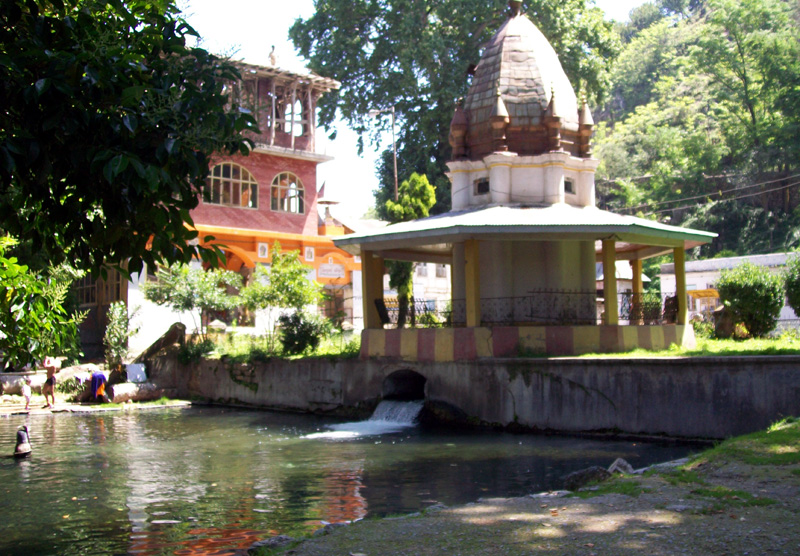
Exclusive images and report from a remote village in Kashmir provided for Shehjarby Chander M. Bhat |
 nantnag
is one of the 11 districts that make up Kashmir Valley. The city finds a
pride place in Bhagavad Gita that says, “I am Anant Naga”. Anantnag is
home to highly honoured shrines from any faith, practicing it with
utmost belief. Anantnag is an ancient city which came into existence as a
market town around 5000 BC making it one of the oldest urban
settlements in the whole world. Famous Lal Chowk of Anantnag is a big
trade centre of the town and it was the seat of one of the oldest degree
colleges in Jammu and Kashmir State.
nantnag
is one of the 11 districts that make up Kashmir Valley. The city finds a
pride place in Bhagavad Gita that says, “I am Anant Naga”. Anantnag is
home to highly honoured shrines from any faith, practicing it with
utmost belief. Anantnag is an ancient city which came into existence as a
market town around 5000 BC making it one of the oldest urban
settlements in the whole world. Famous Lal Chowk of Anantnag is a big
trade centre of the town and it was the seat of one of the oldest degree
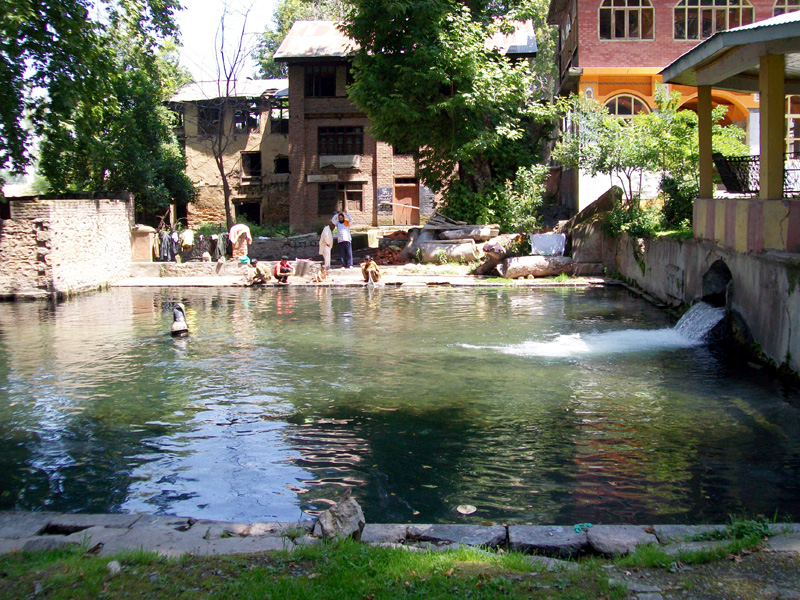
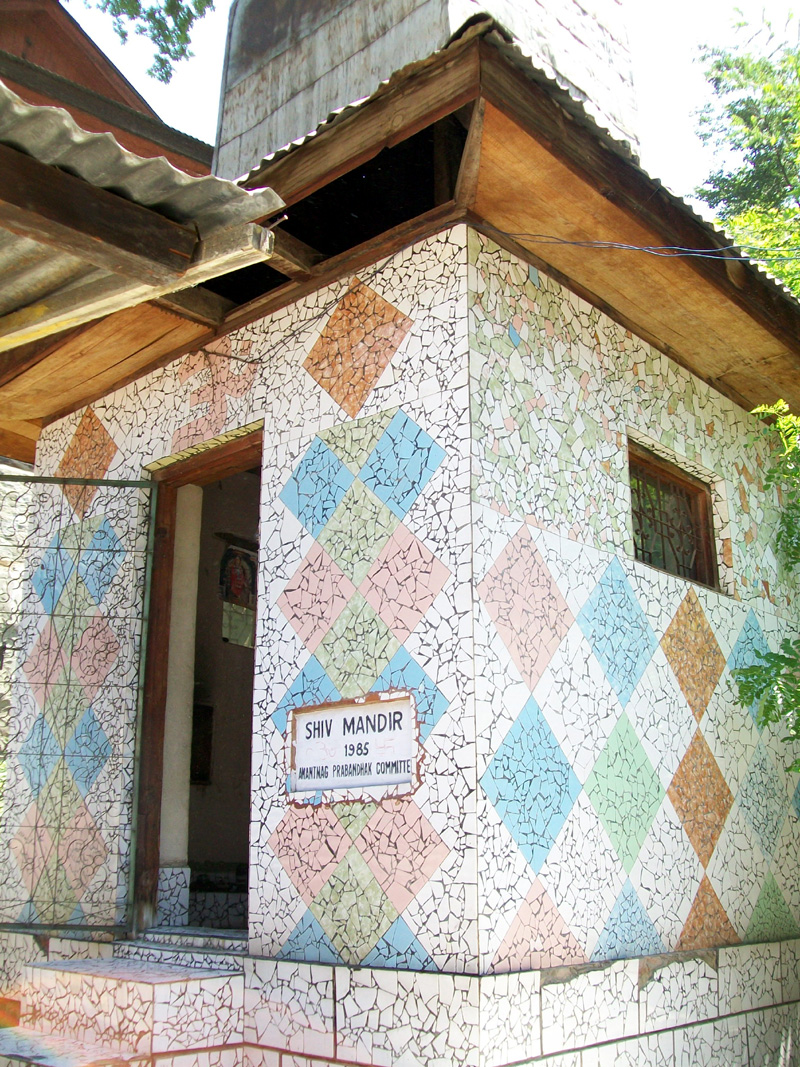
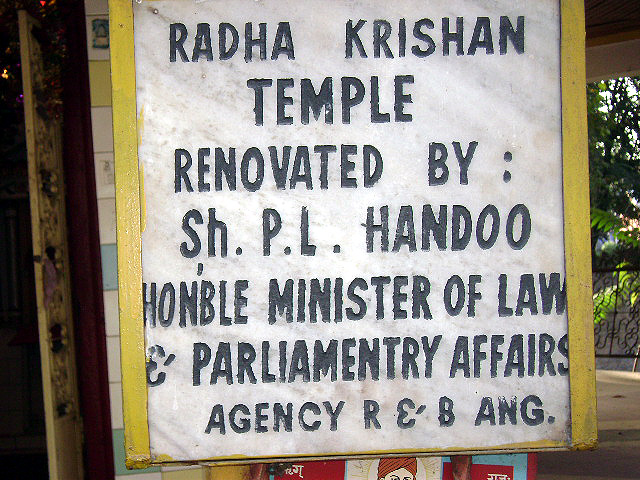
colleges in Jammu and Kashmir State.According to ancient mythological stories, the name Anant Nag is given to the place because Lord Shiva during his journey to Amarnath cave left all his valuables on the way and Anant Nag was the place where he is supposed to have left countless number of serpents residing on him. Anant nag is also well mentioned in ancient Naga and Pichash chronicles of ancient aboriginals of the valley. It was also known as Kashyapteshwara in ancient times linking it to the mythology of Kashyap Reshi. In ancient times, it was called the Inder Nag. Anant also means numerous in the Sanskrit language and Naga means springs in the Kashmiri language. Thus Anantnag is believed to mean numerous springs because here are many springs including Nagbal, Salak Nag and Malik Nag in the town. Thus every part of Anantnag town resides on a crest of water. Few feet depth brings water to the surface. Anantnag is a perfect Vastu Shastra location by nature. On one side is a hillock releasing endless water from its feet. Localities are thus blessed with this perfect Vastu creation of nature. The name of Anantnag District according to a well known archaeologist, Sir A. Stein, comes from the great spring Anant Naga issuing at the centre of the city. This is also corroborated by almost all local historians including Kalhana according to whom the city has taken the name of this great spring of Cesha or Anant Naga land of countless springs. The spring is mentioned in Neelmat Puran as a sacred place for the Hindus and Koshur Encyclopaedia testifies it. Mendi Kadal, one of the localities of Anantnag town was famous for magic waters that cured leprosy patients. Anantnag town was a transit camp for Amarnath Pilgrims in olden days. The town of Anantnag is constituted by three main boroughs or towns viz. Anantnag, Khanabal and Mattan. The old city of Anantnag comprises Nagbal, Maliknag, Kadipora, Cheeni Chowk, Doni Pawa, Sarnal Bala, Janglatmandi, Old Port Khanabal, Downtown Martand and Dangarpora areas and few villages like Haji Danter, Mir Danter etc. About 1200 households of Kashmiri Pandits were living in Anantnag town and almost entire community joined in mass exodus during 1990. Most of the Kashmiri Pandit community were either in Government Service or had their own business establishments in the town. Noted Kashmiri Pandits from Anantnag who made their name on national scene were Sh. Piarey Lal Handoo, Sh Prem Nath Bhat, Dr. A.N. Safaya etc. Chirvi’s, Zutshi’s, Goja’s, Jad’s and Guzerwan’s were noted business families in the town. Anantnag is centre seat of Maraz segment of Kashmir and its language culture is unique in comparison to other segments of Kashmir Valley. It was a land locked place from Verinag...Kokernag belt and from Qazigund...Shopian belt. This advantageous position left lesser impact on its culture by Huns, Kushans and Afghans. Near Anantnag three streams namely Arapath, [the glacier waters from Mrigin Mountain and streamlets from springs of Chahaer and Brahmasar form Aripat] Bringi [Bringi freshet is formed by the glacier waters from the Hokhsar Mountain and various other streams from Springs of Navbhug and Kokernag] and Sandran [the glacier waters from Brari Mountain and streams from Verinag and other springs of Shahabad from Sandran] confluence together and mingles with Veyth. Another stream Liddar [Lamboodri] also joins the flow with them at a little distance downstream further ahead. The Nagbal temple is in the eastern corner of the Anantnag town, placed adjacent to a spring. There are long shady Chinar trees that stand sentinel round the tank. The presiding deity of the Nagbal temple is Lord Ananta Bhawan set up at the outlet of the spring. The temple was built by Maharaja Ranbir Singh, the 2nd Dogra ruler of Kashmir. There are also other smaller temples in the temple complex. Shiva temple, the oldest temple, was built during the reign of Maharaja Partap Singh. A sulphur spring, which is believed to possess spiritual power, is also located in the temple complex. Nagbal is bounded by incredible beauty. The holy spring which originates from here and the formation of which is attributed to Vishno or Narayana is said to be a Vedic pilgrimage centre. The spring rises beautifully from the foot of a small hill-lock and is dedicated to the worship of Ananta or Vishno. Annual festival is held on beuuderpeth gat’iu pachh tsodah. The shrine of Reshi Mol Sahib is situated in the centre of the Anantnag town and is at a stone’s throw distance from Nagbal and famous Devibal Shrine is also located nearby. Devibal, a small stone temple is located near Nagbal Temple complex and is dedicated to the Mata Ragnya. Inside the temple is the sanctum sanctorum, which is about 12 square feet in size, in the middle of which is 6 square feet holy spring. The Ragnya is said to have blessed the spring. According to a legend, Wazir Pannu, who was a minister during Dogra rule, had a dream in which the goddess revealed to him the secret of her presence in the holy spring and left it to the care of Pandit Balkak, a priest. Maharaja Pratap Singh used to visit the shrine during his travel from Jammu to Srinagar or back, pray and make offerings. He is also believed to have donated land to the shrine. You may come down from land of shepherds or from the land of modernity, the smooth transition from one site to this site; creates a unique experience of soul purification as clay of Anantnag has touched the feet of Lord Shiva and graced by Mata Ragnya. A stay at Anantnag is a saga of memory for anyone who descends on it. |
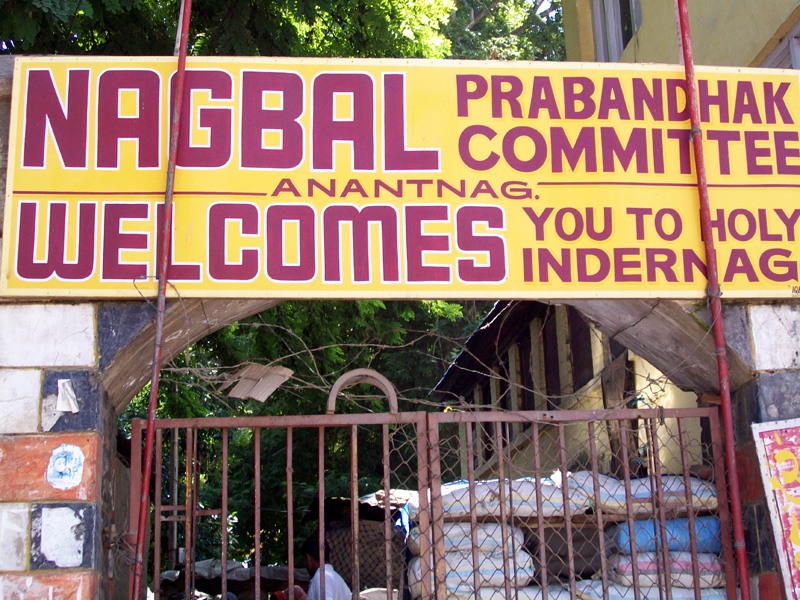
Entrance Gate. 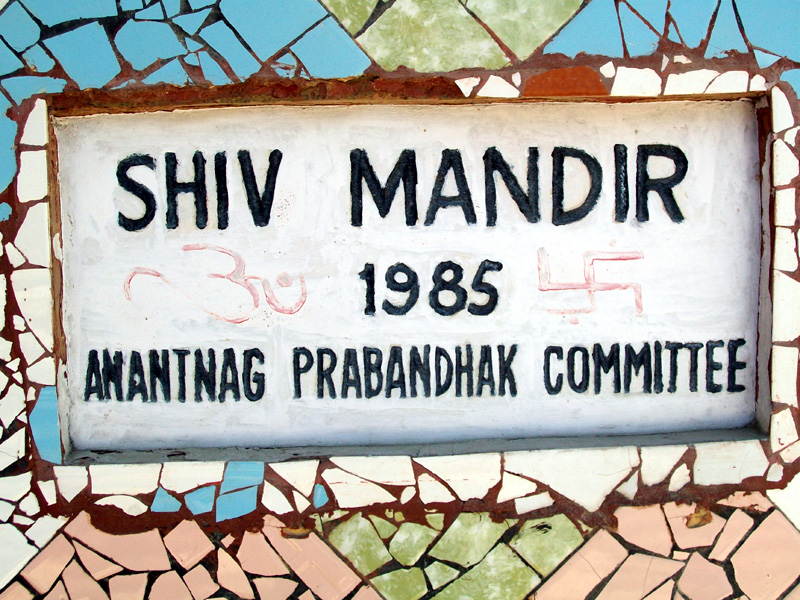
Sign Board at the entrance |
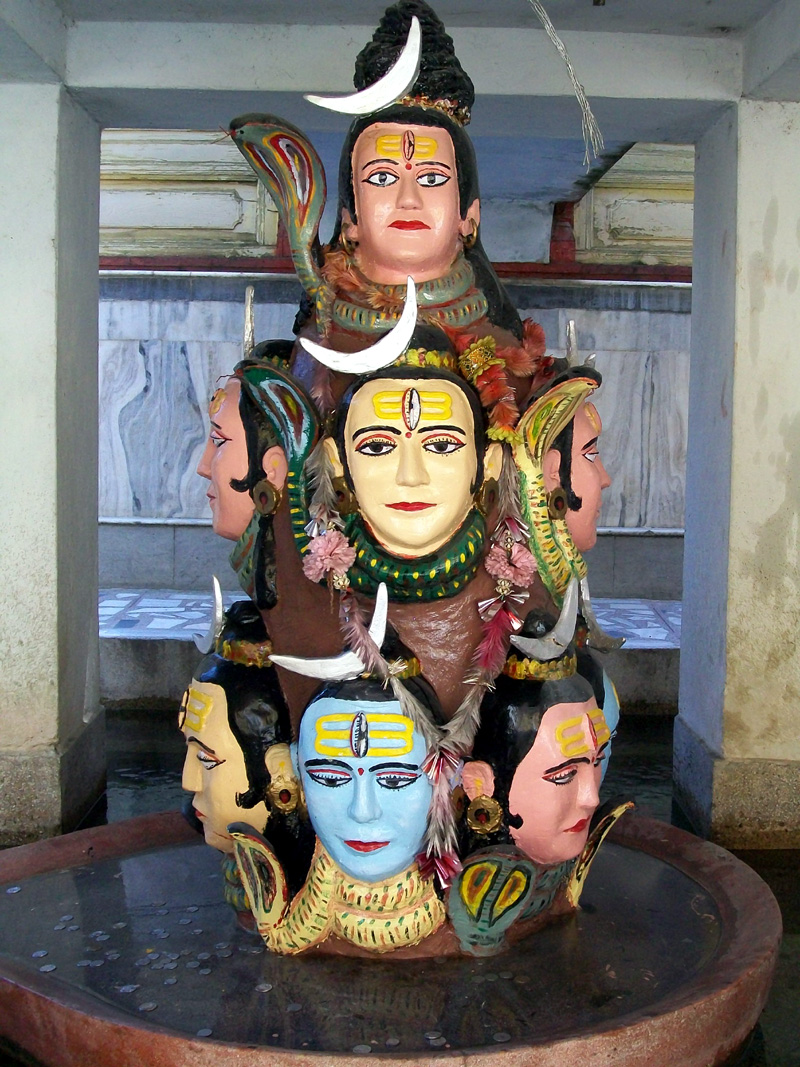
Shiv Lingam with faces |
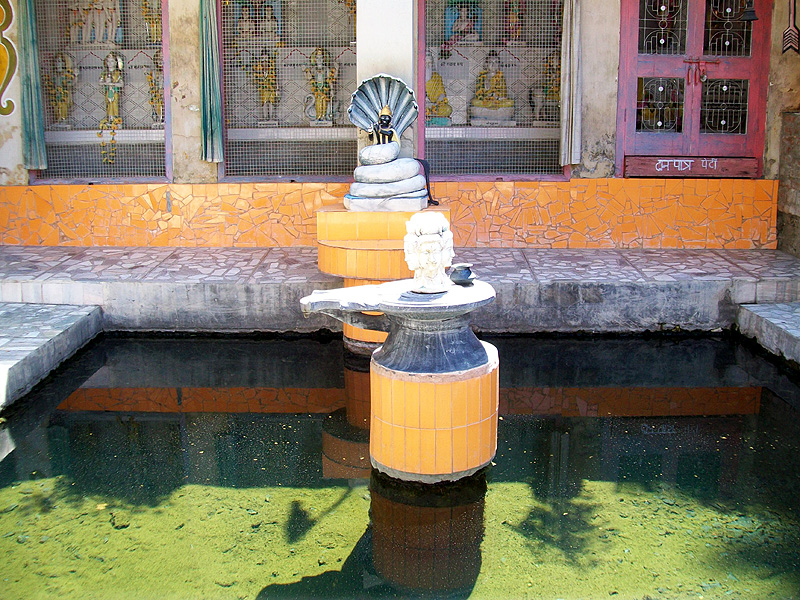
|
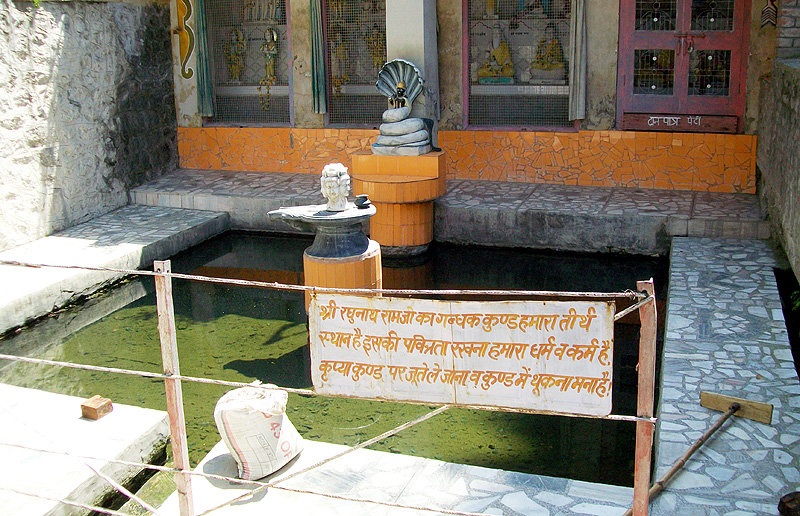
|
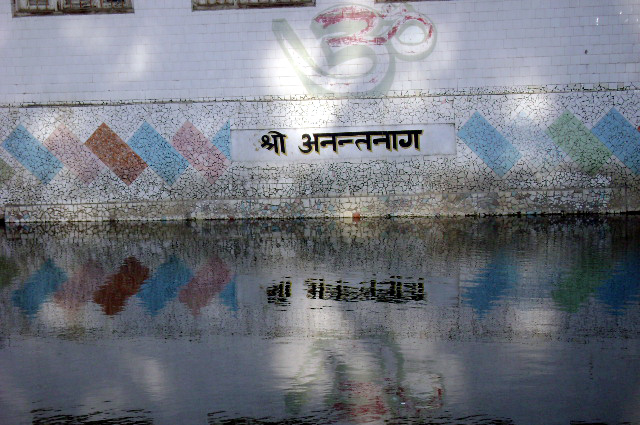
Nag at Anantnag |
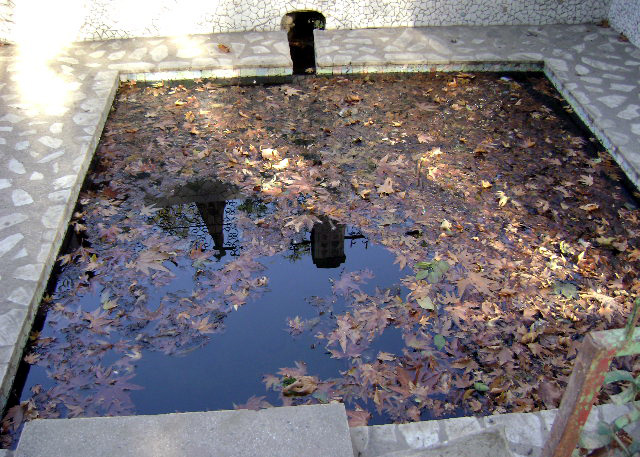
Close up of Nag |
|
|
|
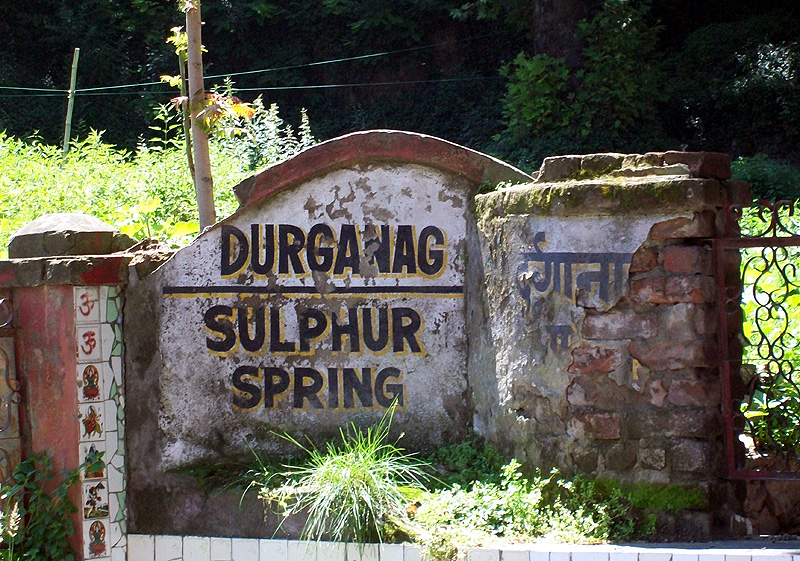
Sulphur Spring 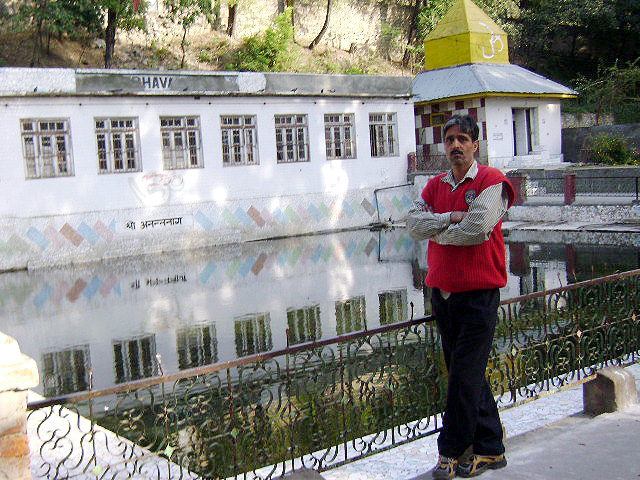
Author inside Temple Complex 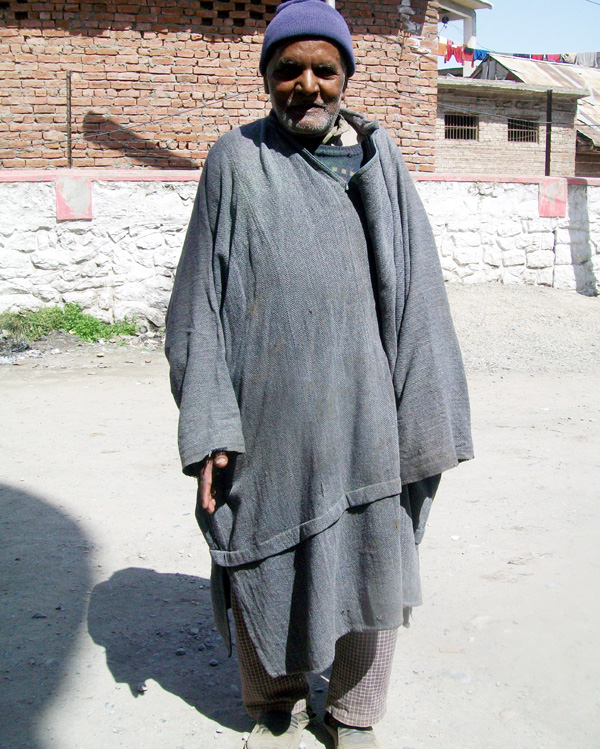
The only Person who has not left Anantnag and now a days living in Nagbal |
|
|
|
|
 *Born on 20th March, 1960 in Murran a village in North Kashmir,
Chander M. Bhat is presently working as an Assistant Supdt. Posts, in
Department of Posts, Govt. of India. His articles regarding Posts and of
non-political nature stand widely published in various papers and
magazines of the country. A booklet 'How to Collect Stamps" published by
the Department of Posts, has earned him genuine accolades. He worked on
the project of tracing the roots of his co-villagers and of the village
Murran, resulting into the culmination of a widely acclaimed book
"Murran -My Village". Man with depth, Chander M. Bhat has also another
book, "Ocean by Drops" (collection of poems) in his vase having colorful
poems. His book "Ancient History of Jammu and Kashmir", confirms his
researching capability. Various research papers like "The Splendor that
is Amarnath" and "Vitasta" The Sacred River of Kashmir" are valuable
additions to his works that has proved very fruitful and guiding force
in the exile period of Kashmiri Pandits community of which the author is
also a member.
*Born on 20th March, 1960 in Murran a village in North Kashmir,
Chander M. Bhat is presently working as an Assistant Supdt. Posts, in
Department of Posts, Govt. of India. His articles regarding Posts and of
non-political nature stand widely published in various papers and
magazines of the country. A booklet 'How to Collect Stamps" published by
the Department of Posts, has earned him genuine accolades. He worked on
the project of tracing the roots of his co-villagers and of the village
Murran, resulting into the culmination of a widely acclaimed book
"Murran -My Village". Man with depth, Chander M. Bhat has also another
book, "Ocean by Drops" (collection of poems) in his vase having colorful
poems. His book "Ancient History of Jammu and Kashmir", confirms his
researching capability. Various research papers like "The Splendor that
is Amarnath" and "Vitasta" The Sacred River of Kashmir" are valuable
additions to his works that has proved very fruitful and guiding force
in the exile period of Kashmiri Pandits community of which the author is
also a member.Presently the author is working on "OOL - THE NEST" a six volume project on all the 595 (each volume of about 2500 pages)Kashmiri Pandit villages of Kashmir.  POSTED BY :VIPUL KOUL |
Tuesday, October 9, 2012
Forgotten Temples of Kashmir


Forgotten Temples of Kashmir

|

|
|
Forgotten Temples of Kashmir
Photo series Part-13 An effort to preserve and record Hindu cultural and religios heritage of Kashmir Village Loduv...Abode of Jeewan Sahib 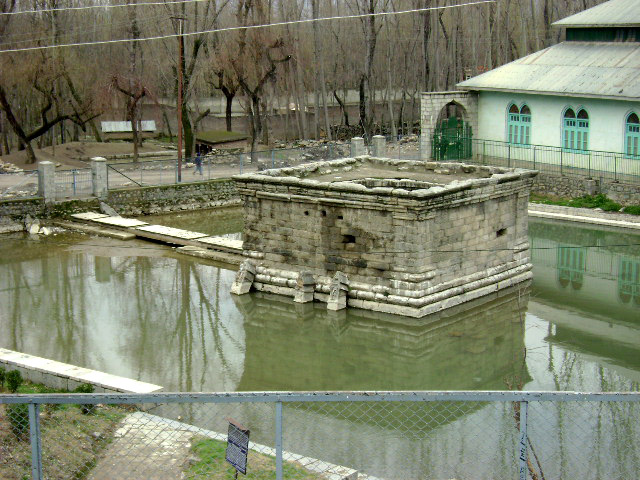
Exclusive images and report from a remote village in Kashmir provided for Shehjarby Chander M. Bhat
|
 midst
of the beautiful Vastur Van is village Loduv in total silence some 20
km from Srinagar near famous saffron fields of Pampore. Village Loduv is
located within the jurisdiction of Pampore Police Station in the
district of Pulwama and was comparatively prosperous in relation to
other neighbouring villages. It stands about three km to the southeast
of Pampore town. The chief place of the then Vihi Pargana is now the
town of Pampore, the ancient Padampur. Padma, the powerful uncle of the
puppet-king Cippate-Jayapida, founded it in the beginning of the ninth
century. Padma is said by the Chronicle to have also built a temple of
Visnu-Padmasvamin. Close to the temple is the Ziarat of Mir Muhammad
Hamadani with some fine ancient columns and ornamented slabs. Padampura
owing to its central position in a fertile tract seems to have always
been a place of importance and is often mentioned by Kalhana and the
later Chroniclers. To the south of the village one passes first Balhom, a
large village, which in the Likaprakasa and Tirthasamgraha figures as
Balasrama? Under a large Deodar near it Baladevi is worshipped in the
form of an ole stone. At the foot of rocky spur, which descends from
the mountain range to the north, lies the picturesque village of Vuyan,
one mentioned by Kalhana under the name of Ovana. It has a large
sulphurous spring visited by the sick. The first factory in Jammu and
Kashmir for the manufacture of cement was installed at Vuyan because of
the availability of raw material for the purpose. Vuyan was burnt during
the civil war between the Kashmiris and the immigrant Syeds in 1484
A.D. The name of the village changed from Ovana (Uvana) to Vuyan and
then to Wuyan.
midst
of the beautiful Vastur Van is village Loduv in total silence some 20
km from Srinagar near famous saffron fields of Pampore. Village Loduv is
located within the jurisdiction of Pampore Police Station in the
district of Pulwama and was comparatively prosperous in relation to
other neighbouring villages. It stands about three km to the southeast
of Pampore town. The chief place of the then Vihi Pargana is now the
town of Pampore, the ancient Padampur. Padma, the powerful uncle of the
puppet-king Cippate-Jayapida, founded it in the beginning of the ninth
century. Padma is said by the Chronicle to have also built a temple of
Visnu-Padmasvamin. Close to the temple is the Ziarat of Mir Muhammad
Hamadani with some fine ancient columns and ornamented slabs. Padampura
owing to its central position in a fertile tract seems to have always
been a place of importance and is often mentioned by Kalhana and the
later Chroniclers. To the south of the village one passes first Balhom, a
large village, which in the Likaprakasa and Tirthasamgraha figures as
Balasrama? Under a large Deodar near it Baladevi is worshipped in the
form of an ole stone. At the foot of rocky spur, which descends from
the mountain range to the north, lies the picturesque village of Vuyan,
one mentioned by Kalhana under the name of Ovana. It has a large
sulphurous spring visited by the sick. The first factory in Jammu and
Kashmir for the manufacture of cement was installed at Vuyan because of
the availability of raw material for the purpose. Vuyan was burnt during
the civil war between the Kashmiris and the immigrant Syeds in 1484
A.D. The name of the village changed from Ovana (Uvana) to Vuyan and
then to Wuyan.About two miles further east one reaches the village Khruv, the ancient Khaduvi that, as we have seen, gave to the district its former name. There is abundance of fine springs in and about Khruv: Abul-i-Fazl mentioned them as objects of worship and estimates their number as 360. Above the village a so-called ‘Svayambhu-Chakra’ or mystical diagram is shown on a rock. It is held sacred to Jwalamukhi-Durga and largely visited by pilgrims especially the Pandits. The temple is situated on the top of a small hillock. The Jwalaji festival falls on or about 16th July every year. This shrine forms the Isht Devi of maximum Pandits of the valley. Only a mile to the north of village Loduv is the village of Saar, until recently the seat of a flourishing iron-industry. Kalhana mentioned it by the name of Sanara as an Agrahara founded by King Sacinara. The Ziarat of Khwavu Khizar, which stands here near several small springs. Wahab Khar was born in 19th century at Saar. A blacksmith by profession he was also a Sufi saint. Wahab Khar has projected “mysticism” in his poetry. His “Sheikh Sana”, “Mash Tulur” and “Mehraj Name” are considered his best poetic creations. Wahab Khar Passed away in 1912. To the south of village Loduv, on the bank of the Vitasta lies the village of Latpor. An old gloss of the Rajtarangini identifies it with Lalitapura, a place founded in honour of King Lalitaditya by his architect. The king, according to the Chronicle, was not pleased with the attention; in any case no importance seems to have attached to the place. There are no old remains above ground, but the local tradition still knows of King ‘Laltadit’ as the founder of a large town on the neighbouring Udar. Some I km to the west of village Loduv is village Sempor. Some sources place this village as the birth place of great woman saint of Kashmir, Lal Ded in the year 1335 A.D. According to Guldastai Kashmir by Harpogal Koul, Loduv Pandit, a minister of Raja Saka during 2409-72 KE founded Loduv village. Loduv Pandit also built a temple there. Total area of the village is 904.87 hectares and as per 19781 Census total population of this village was 2820 souls comprising of 369 households. Kashmiri Pandit community comprises 24 percent of total population of the village and was having about 57 households. Eight households have held back after the mass exodus of Kashmiri Pandits from the valley in the year 1990. I visited the village on 7th March 2010; one Shri Ravi Ji Bhat son of Shri Nath Ji Bhat aged 43 of the same village accompanied me. M.A.Stein writes in Kalhana’s Rajtarangini, “The Pargana, which adjoins Srinagar from the southeast, in olden days, was known as Vihi. It extends from near Puranadhisthana to the Vastur Van spur near Vountpur (Awantipora) and comprises a wide semicircular tract of fertile karewa lands. In ancient times the district took its name from the village of Khaduvi, the present Khrew”. Loduv is known for two ancient temples…a bigger one and a smaller one. The bigger temple is in the middle of a shallow tank, which receives water from a spring in its North-East corner. The temple simple in design, 24 feet square externally, supports a domical ceiling. According to Pandit Ram Chand Kak “Externally the walls are without decoration, their bareness being only partially relieved by a cornice which consists of three courses of stone adorned with projecting fillets. The corner pilasters are quite plain, and headed by a semicircular, almost horseshoe-shaped, arch surmounted by a single storied pediment of very slight projection. Internally the temple is circular with a diameter of 17 feet and 6 inches. The smaller temple is similar to the bigger one. Internally the temple is 6 feet square and the ceiling consists of three courses of over lapping stones. Inside the spring is a Shiva Linga made of lime stone”. According to Pandit Kak, “A few yards behind this temple, higher up the hill and immediately at the back of the mosque, a smaller temple which externally presents the same appearance as the large temple, the only difference being that the projecting pediment which enclosed the round-headed doorway has here developed into a well-defined portico with a trefoil niche”. According to “Soon Adab” published by Jammu and Kashmir Academy, 1977, the material of the smaller temple has been used to build a Ziarat. At present there is no Shiva Linga in the spring. This temple has been taken over by the Archeological Survey of India and is being looked after by an employee of the same department. There are two more Shiva Temples in the village built by the Pandits of the village in recent past. These temples have been built on the shades of mighty Chinars. Village deity Raza Sahib called Tcharas Raza also lives near one of the temples. Gousein Naar forms the part of village Loduv, situated some half km from the main village. Ten Kashmiri Pandit families [nicknamed Gousein] were residing in this mohalla of the village. All the ten families migrated out of Kashmir in the year 1990. Jeewan Sahib passed his last days of his life in a house at Gousein Naar. Jeewan Sahib, an outstanding saint of the 18th century was born in Motiyar Mohalla of Rainawari. He was a highly evolved saint with tremendous spiritual powers. It is said that this great saint shifted from Rainawari to Gousein Naar in the 1779 and practiced sadhana in this village. All time Dooni was on during his life time and it continued for some years after he attained Mahasamadhi. The then Maharaja of Kashmir allotted him a jaggir of 80 kanals of land at Gousein Naar. Ten Kashmiri Pandit families were residing in this mohalla of the village, who were brought there from Srinagar by the then Maharaja of Kashmir to look after the land gifted to Jeewan Sahib. All these things are there but the people whose presence once thrived on the face of Loduv are now few and far between. Notes and References: 1. Place Names in Kashmir by B.K.Raina & S.L.Sadhu, published by Bharatiya Vidya Bhavan, Mumbai & Indira Gandhi National Centre for Arts, New Delhi, 2000. 2. Encyclopedia: Kashmiri Pandit: Culture & Heritage by C.L.Kaul, published by Ansh Publications, 2009. 3. Swami Jeewan Shah by Anjali Kaul, Austin. 4. Ancient Monuments of Kashmir by Ram Chand Kak, published by Aryan Books International, New Delhi, 2000. 5. Soon Adab…Kashir (Folklore) published by Jammu & Kashmir Academy, 1977. 6. Kalhan’s Rajatarangini….A Chronicle of the Kings of Kashmir, Vol: II by Stein, Aurel, published by Motilal Banarasi Dass, 1979. |

Close view of the ancient temple |
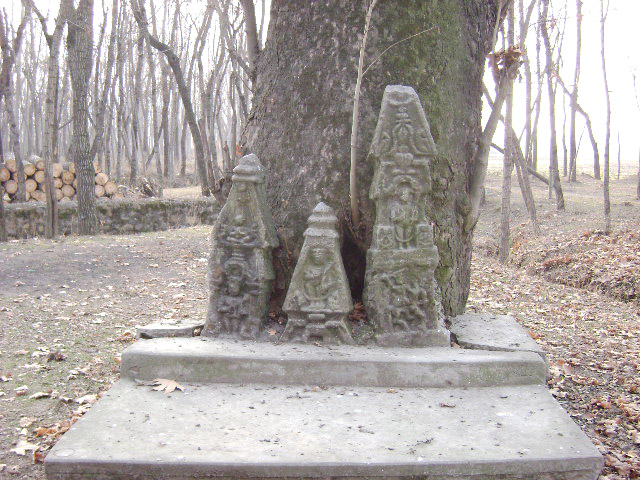
Icons in open in the premises of Shiv Temple at Bona Aangan |
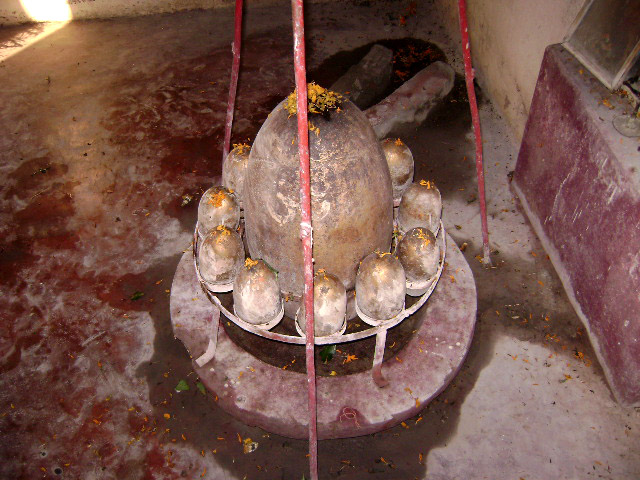
Icon of Shiva in the temple at Batapora..JPG |
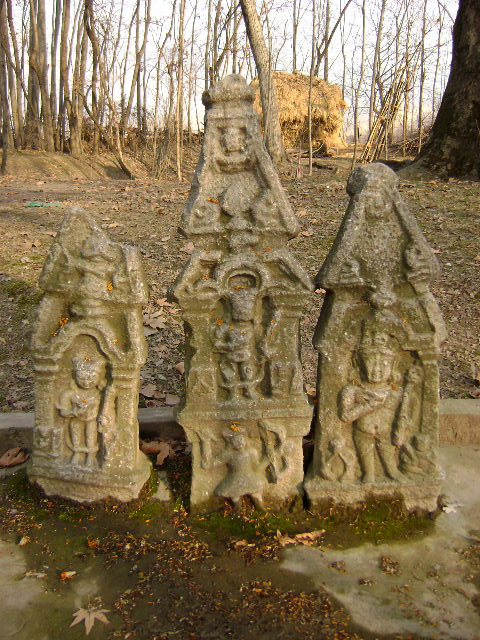
Icons in open in the premises of Shiv Temple |
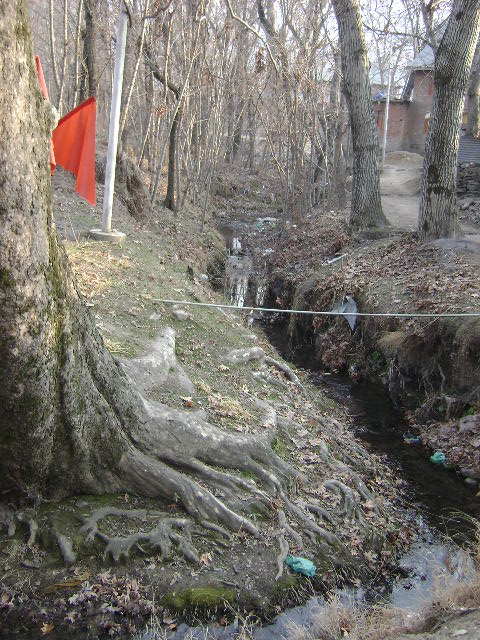
Razabal, Tcharas Raza |
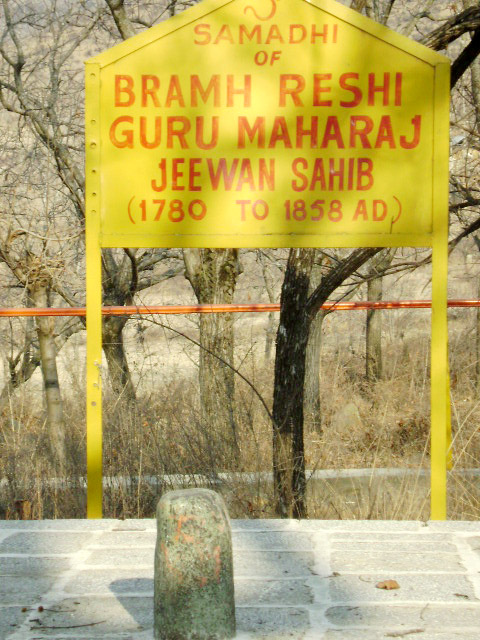
Close up of Samadhi |
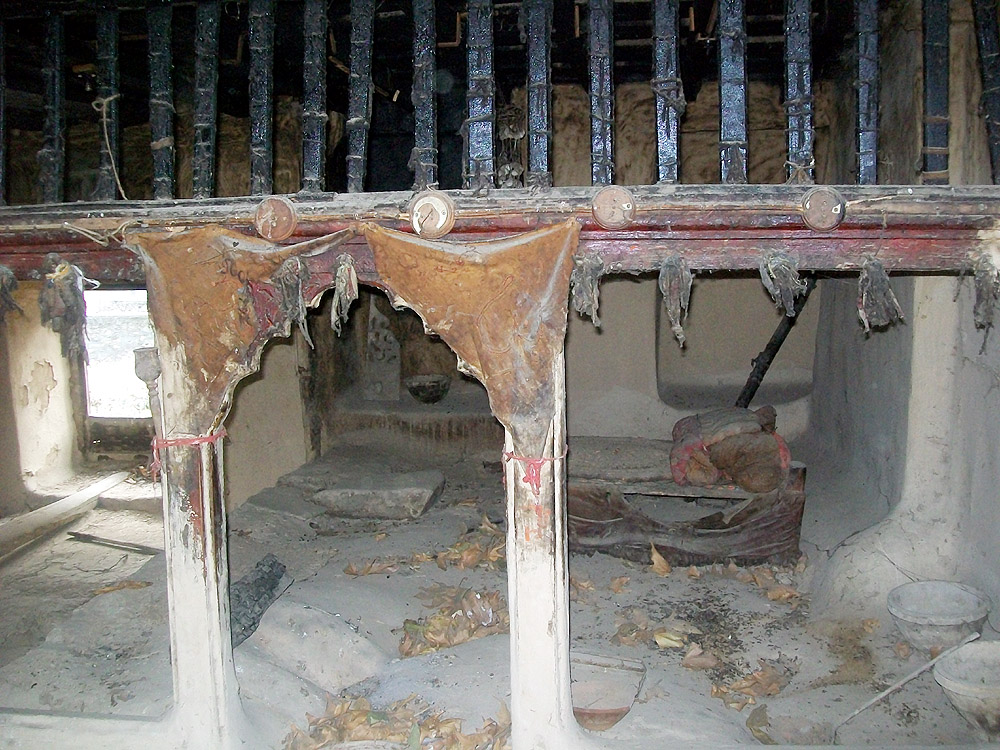
aAasana of Jeewan Sahib. Dhoni in front. |
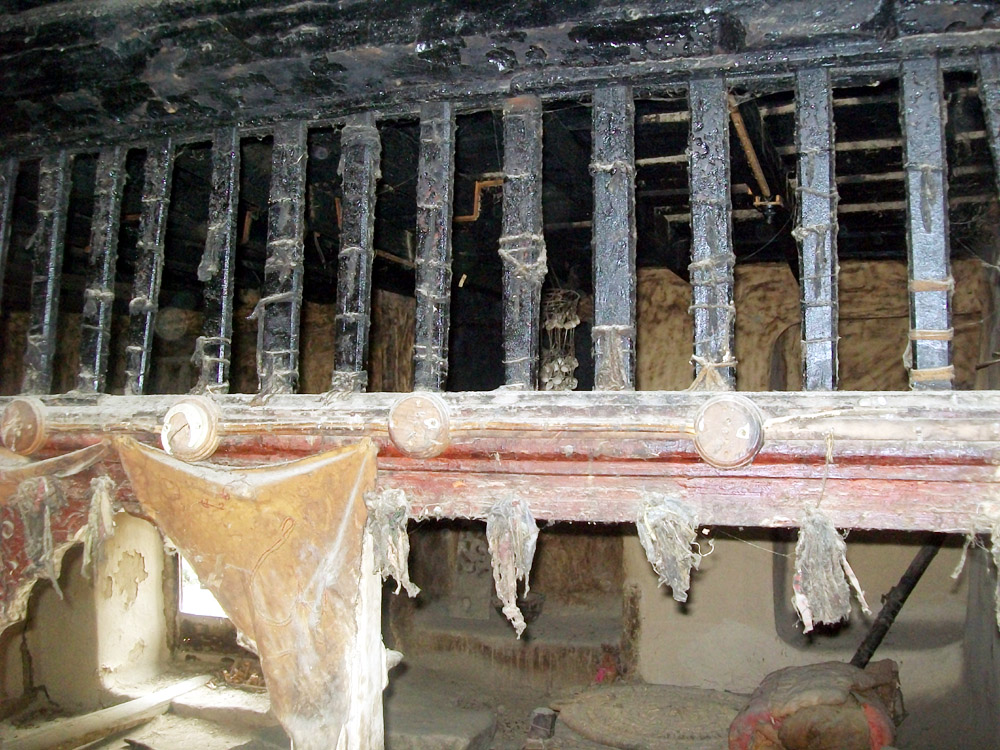
'Dashi' still there |
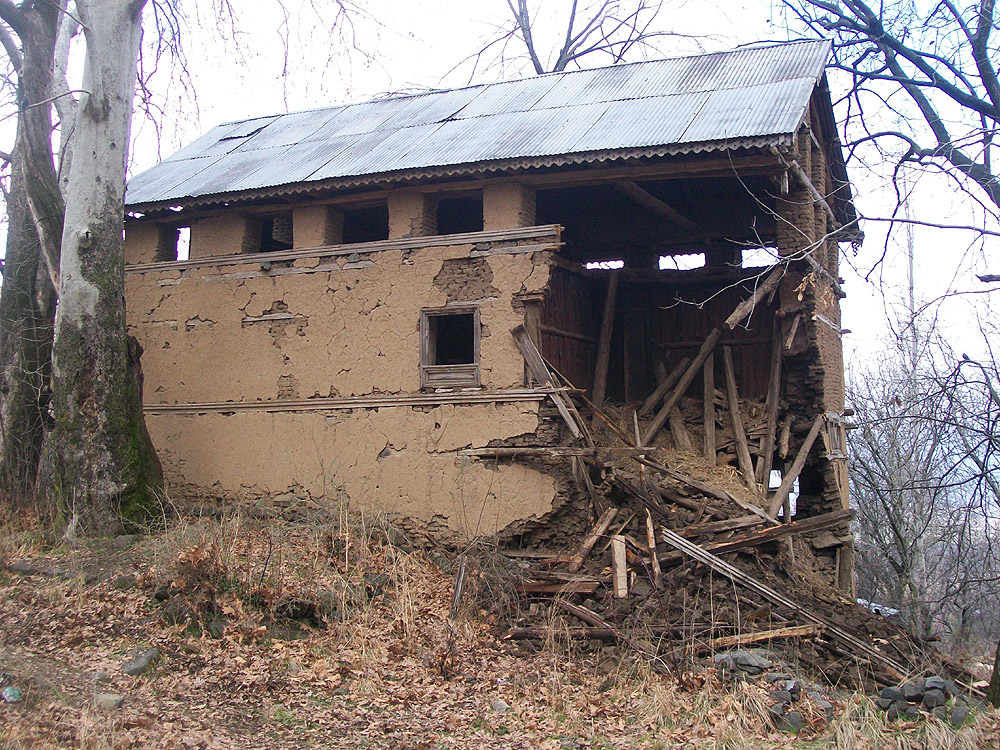 House at Gousein Naar where Jeewan Sahib practised sadhana
 |
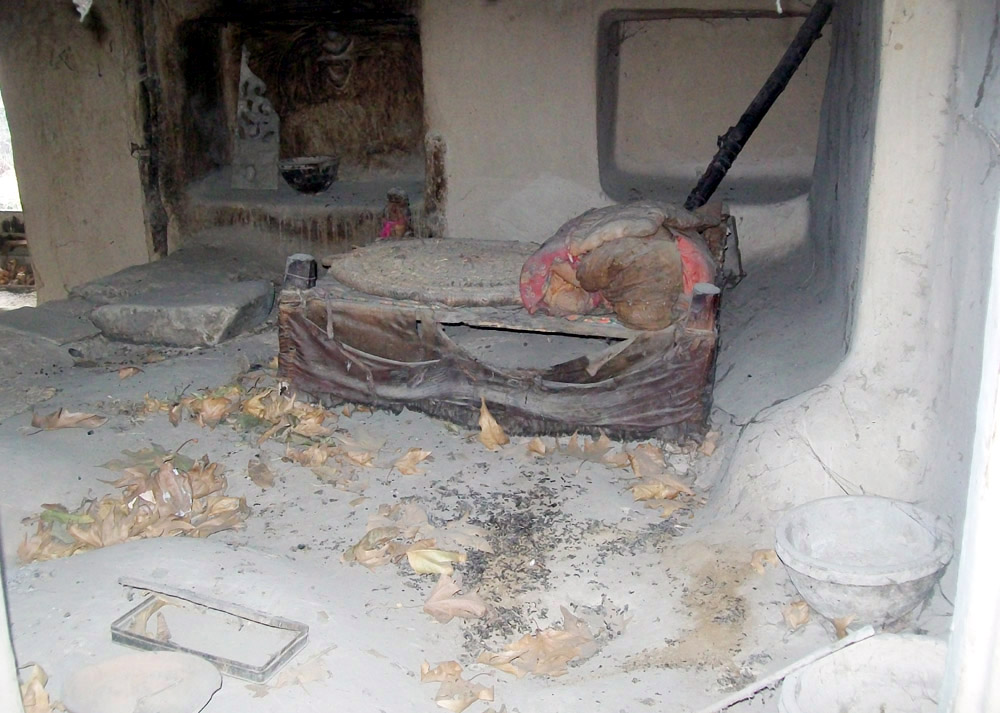
Thakhta [wooden plateform] on which Jeewan Sahib used to sit |
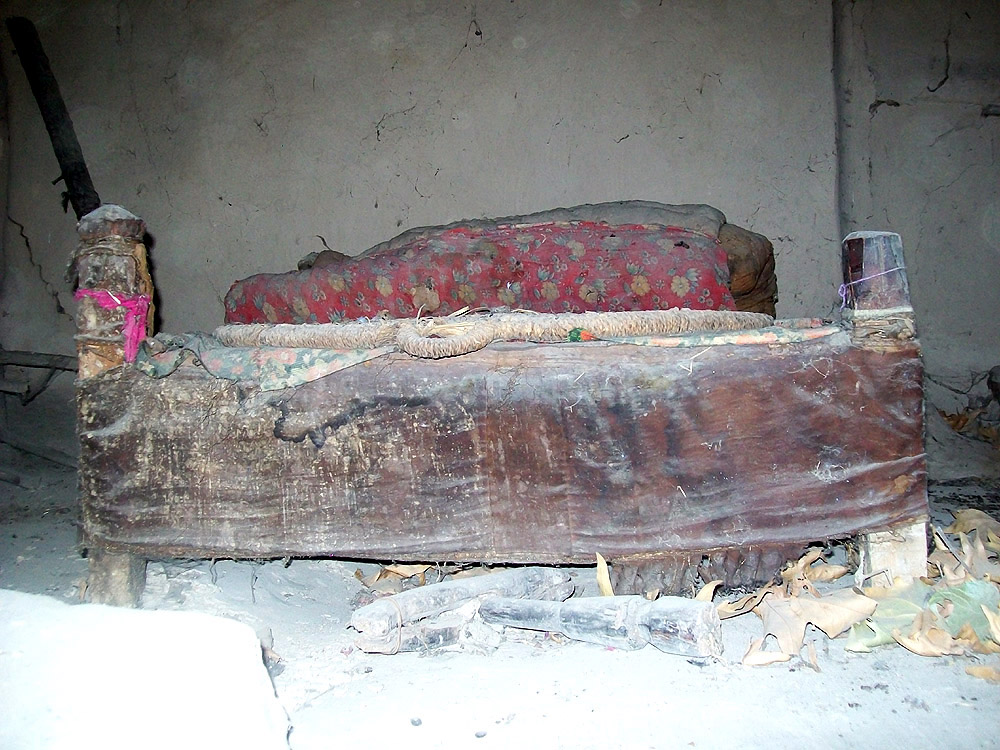
Close up of Thakta |
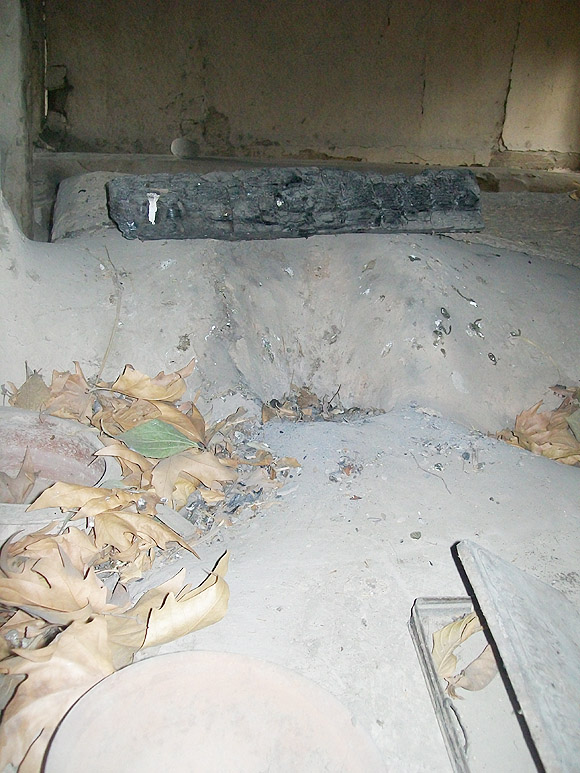
Holy Dhoni |
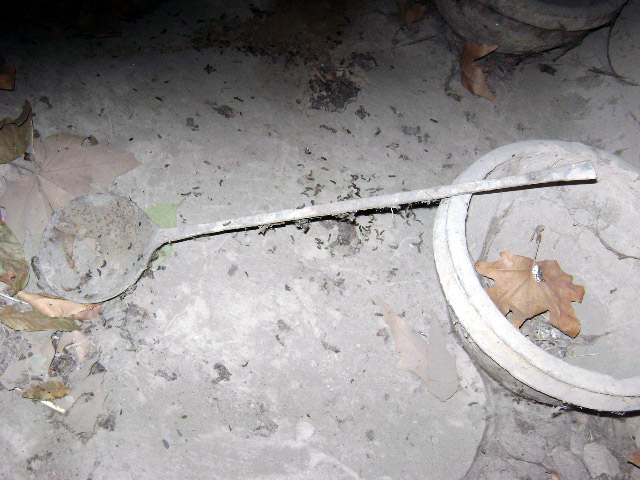
Big Spoon for Dhoni still in the house |
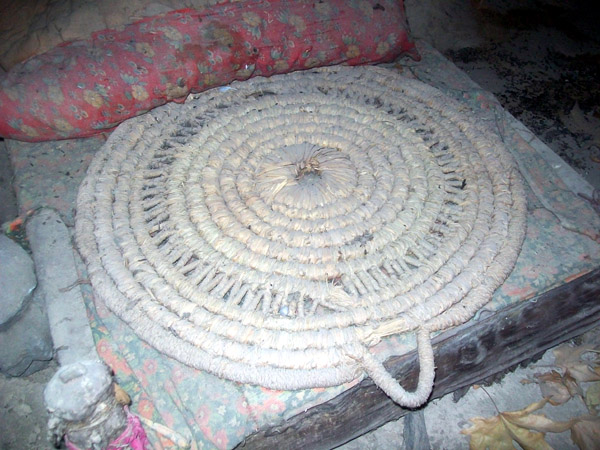
Bchagiz [grass aasana] used by Jeewan Sahib |
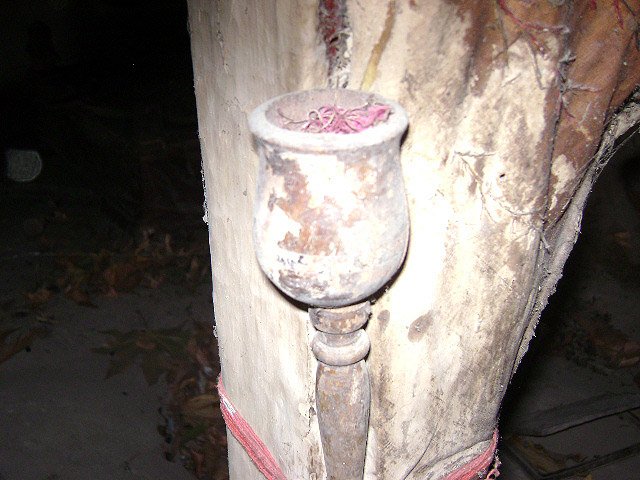
Earthen Chilim of Jeewan Sahib |
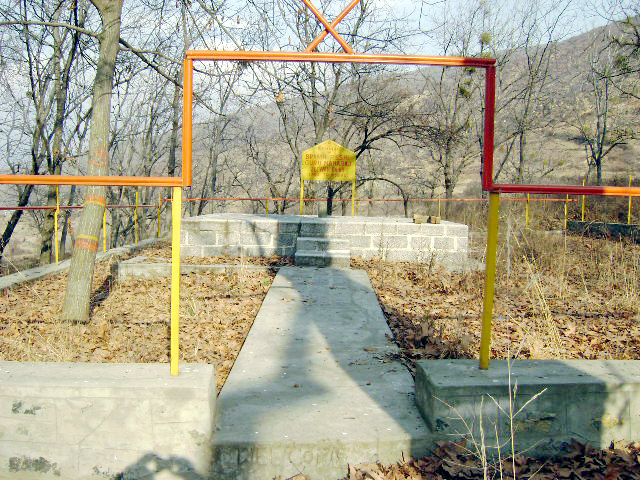
Samadhi of Jeewan Sahib constructed recently by State Govt. |
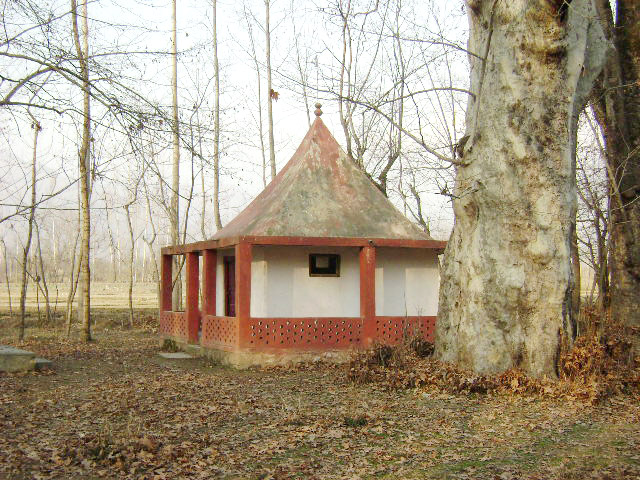
Another Shiv Temple in the premises |
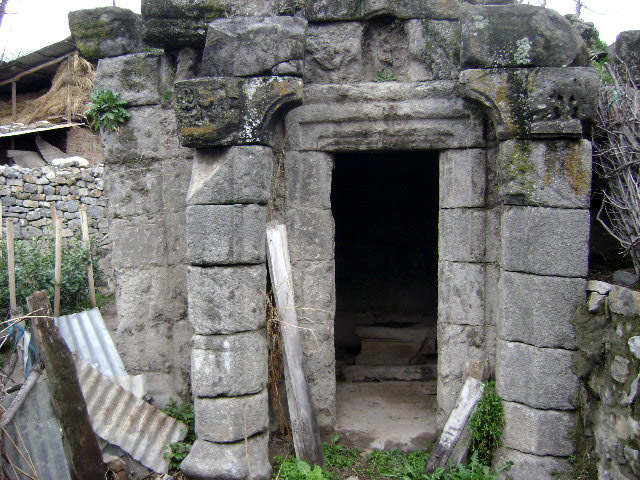
Smaller temple. Now inside the premises of a local house |

|
|
|
 *Born on 20th March, 1960 in Murran a village in North Kashmir,
Chander M. Bhat is presently working as an Assistant Supdt. Posts, in
Department of Posts, Govt. of India. His articles regarding Posts and of
non-political nature stand widely published in various papers and
magazines of the country. A booklet 'How to Collect Stamps" published by
the Department of Posts, has earned him genuine accolades. He worked on
the project of tracing the roots of his co-villagers and of the village
Murran, resulting into the culmination of a widely acclaimed book
"Murran -My Village". Man with depth, Chander M. Bhat has also another
book, "Ocean by Drops" (collection of poems) in his vase having colorful
poems. His book "Ancient History of Jammu and Kashmir", confirms his
researching capability. Various research papers like "The Splendor that
is Amarnath" and "Vitasta" The Sacred River of Kashmir" are valuable
additions to his works that has proved very fruitful and guiding force
in the exile period of Kashmiri Pandits community of which the author is
also a member.
*Born on 20th March, 1960 in Murran a village in North Kashmir,
Chander M. Bhat is presently working as an Assistant Supdt. Posts, in
Department of Posts, Govt. of India. His articles regarding Posts and of
non-political nature stand widely published in various papers and
magazines of the country. A booklet 'How to Collect Stamps" published by
the Department of Posts, has earned him genuine accolades. He worked on
the project of tracing the roots of his co-villagers and of the village
Murran, resulting into the culmination of a widely acclaimed book
"Murran -My Village". Man with depth, Chander M. Bhat has also another
book, "Ocean by Drops" (collection of poems) in his vase having colorful
poems. His book "Ancient History of Jammu and Kashmir", confirms his
researching capability. Various research papers like "The Splendor that
is Amarnath" and "Vitasta" The Sacred River of Kashmir" are valuable
additions to his works that has proved very fruitful and guiding force
in the exile period of Kashmiri Pandits community of which the author is
also a member.Presently the author is working on "OOL - THE NEST" a six volume project on all the 595 (each volume of about 2500 pages)Kashmiri Pandit villages of Kashmir.  Posted By: Vipul Koul |


Some Marvels of Kashmir
 | ||
 |
|

Intuitive Mysticism of Masterji


|
|


Pandit Zinda Koul (1884-1965)
Intuitive Mysticism of Masterji
Professor Kashi Nath Dhar
Koshur Samachar
MYSTICISM is a continuous exercise in self- realization. It is an incessant mental drill in which the self and the super-self are fully identified. In Kashmir from the hoary times to the present day, this urge of the soul for becoming one with the super-soul has been always emphasized. Monistic Shaivism, as propounded in the 'Shiva Sutras' of Acharya Vasu Gupta, and later interpreted profusely by Abhinava Gupta, is the first mile-stone ;of the human spirit on its pilgrimage to self-consciousness in Kashmir. The Kashmiri version of Persian Sufism has also influenced the Kashmiri thought to a large extent. This veritable quest for self-education and self-discipline is therefore not at all foreign to the mental fiber of a Kashmiri. It is in his blood. Lalleshwari and Nund Rishi (14th Century AD) epitomized this mental trait in their Vakhs and also gave it the most homely and appropriate expression in Kashmiri, pure and simple. Till then either Sanskrit or Persian ruled the day in this field. This torch of interrogation and consequent self- satisfaction, the hallmark of mysticism, was kept alive by- a host of Kashmiri thinkers like Parmananda, Rupa Bhavani, Gobind Kak, (Vanapoh), Shamas Fakir, Ahmed Rah, Samadmir, Shah Ghafoor and others and its virgin heights were admirably scaled by these stalwarts.
In mysticism two distinct trends are discernible. The first, born of experience, is termed as 'revealed' and the second, attained by intellect, is named 'intuitive'. The goal of both these media is the same; firstly, locating clearly the frontiers between the immanence and transcendence, and finally, fusing these into each other. The acme of such intellectual pursuit is rising above the Finite and getting closer to the Infinite as speedily as possible, thereby minimizing the distance between the two. In Islamic Sufism also, similarly, two forms of mystic exaltation are noticed, abnormal and supernormal. Ibni Farid calls these respectively as intoxication and sobriety of union. It can therefore, be said safely that intuitive mysticism is a non-stop intellectual process and is more arduous than the revealed for reasons obvious.
In this context of mystic discipline, Masterji has earned by his own right a prominent place in the galaxy of such thinkers who churn their intellect incessantly and groom it to explain the ideal spurning the actual. This should not be treated as self-deceitÑfleeing from the life in all its naked realities instead of facing it with courage and patience. Masterji did not forget life around him, he did not abjure life even though it was always bitter to him. He was a civil servant by profession but a Savant by nature. As long as he remained in -government service, he acquitted himself very well with undivided dedication to his profession. He drank at the fountain of life most voraciously. He wore his profession on his sleeves, so to say.
Perhaps, this acute sense of responsibility to his profession ignited the first spark of the mission he had to undertake in future. This formative period in his life ushered in the mental ferment which is so necessary for reaching the mystic plane. It is the moment of self-forgetfulness when the 'actual' with all the teeth is incapable to bite; the soul commences its flight to touch unknown horizons and the body has no meaning at this stage.
Masterji's life was no bed of roses. It had nothing palatable to offer to him, it only enabled him to keep the wolf from his door. He never lived in affluence. The cruel hand of death snatched away his dearest son; he had to fend for his widowed daughter-in- law and her children. He did not succumb under the weight of such calamities. He fought his life's problems in the most detached manner conquering these bit by bit, never losing hope. These came as a blessing in disguise and made a mystic of him, not out of spite for life, but for making it more meaningful.
Masterji was a profound scholar of Persian. He could not escape the influence and impact of great Persian mystics like Shams Tabrez, Maulana Rumi, Hafiz Shirazi and others. He had fully assimilated all that they had to say. The echo of Shams Tabrez's 'Man tu Shudam, tu Man Shudi' can be unmistakably understood from his verses also.
Masterji built his personality brick by brick. The foundation for this was provided. by the Hindu mystic lore especially by the Kashmir Shaivism. Vedanta and the Upanishads also acted as the cementing link to make it more broad-based. Both are portrayed most eloquently in his 'Sumaran'. Masterji's intuitive mysticism is a happy blend of Hindu mystic thought and Islamic Sufism. He toiled hard to attain to that plane of self-consciousness where the material contours melt away before the effulgence of the 'spirit'. A hand-to-mouth living gave him the required tools for rising above it. Erudite scholarship in Persian and Sanskrit opened for him the vistas of mystic exuberance achieved by a host of his predecessors. Self-discipline in the case of the first and self-education in the case of the second, are in themselves a worthy preamble to self-dependence, and this in its turn paves the way to self-consciousness. Masterji's unambiguous attitude to mysticism is of synthesis in which intuition and intellect form the woof and the warp. The didactic content is, therefore, somewhat subdued in his poetry. He does not claim to be a preacher. He only unravels the conclusions that he has arrived at in life. He does not even analyze these but only clothes these in most pulsating words as they ooze forth. The intensity of feelings does not afford him even a breathing time to ruminate on what he has written or expressed. He goes on serializing his heart-beats most candidly. His approach is suggestive and not direct. His innate introspection rejects the dross and only assimilates the pure - the yard-stick for it being his unerring intellect. So 'Sumaran' is a codified version of his feelings and not a treatise on morality or ethics. His poetry is clear and more intelligible than that of Lalla or Nund Rishi, because his discriminating intellect has an edge over their on-rushing experiences by which they feel overwhelmed. Masterji is always sure of the ground under his feet.
Masterji was a conscious artist like Goswami Tulsidas who without mincing words beckons to us in undertones, by implication, to make this life a veritable bridge to the life-beyond. He makes a happy compromise between the self and the super- self, matter and spirit, enjoyment and renunciation, intellect and intuition. He does not leave us guessing. That is, perhaps his most substantial contribution to our unbroken heritage of mysticism.

EDITED BY : ASHOK KOUL
Sunday, October 7, 2012
A brief history of Kashmir
A brief history of Kashmir
by Kanhya L. Kaul
Miltsar, May 1992
Kashmiri Overseas Association
We begin our story of oppression and the destruction of our community, Kashmir Hindus, at the hands of Muslim fundamentalists and fanatics, sultans and kings, Amman Ullahs and other terrorists, with Sultan Sikander (1389- 1413). He perpetrated untold oppression on the Hindus of the valley; tortured them, killed them and destroyed without any mercy the idols of their worship. He earned the notoriety of having razed to the ground the famous temples, 'Vijeshwar' and 'Martand'. The fanatic despot and brutish iconoclast earned the sobriquet of 'But-Shikan'. He was the first fanatic to offer the infamous three choices, repeated later by others, to Kashmiri Hindus, conversion to Islam, exile, or death. Tragically enough, the choices were repeated by the terrorists of 1990 also. As a result, mass exodus of KPs from the valley took place then as it did in 1990. The savage Sultan destroyed Hindu scriptures, and, it is said that one time, he murdered so many Hindus at a stretch that the sacred thread (Younia) of the murdered, weighed about seven maunds ( about 900 lbs) which he set on fire in a huge pile! The historian Jonaraja laments thus - "Struck by the fear, the Brahmins killed themselves by poison, some by ropes and others by drowning themselves in the Dal Lake, others by jumping from a precipice and others burnt themselves to death." According to traditional sources, only eleven Brahmin families were left behind in the valley. Sultan Zain-ul-Abedin (1420-1470), popularly known as BUDSHAH was no better than his predecessor in the initial period of his rule, but when successful treatment at the hands of a famous physician, Shri Bhatt saved him from some nearly fatal disease, a conversion of a sort took place in him and he became tolerant towards the Hindus. This paved the way for the return of a sizable section of the Brahmins to the valley. But alas! The succeeding Sultans and Kings of the Chak dynasty who ruled Kashmir till 1586, again actively engaged in annihilating the Hindus of the valley, and thus, reducing them to a negligible minority.
Then came the Mughals. There was respite for the Hindus during their rule till Aurangzeb usurped the throne after getting his three brothers killed and father placed in prison where he died. To divert the attention of his Muslim subjects from his heinous crimes, Aurangzeb turned to killing of Hindus and liberal Muslims, sufis, who were patronized by his murdered elder brother, Dara Shikoh. Again, the Hindus were subjected to killings and conversions as before. As a result, a group of 16 Kashmiri Hindus who had heard of Guru Teg Bahadur, left for Punjab to seek his advice and guidance for their survival. They met him on May 25, 1675 ( about 375 years ago). The Guru remarked that their tale of woe and suffering was of such a magnitude that it needed the sacrifice of a great man. Upon hearing this comment from his father, the Guru's young son who was with his father listening, Guru Gobind Singh remarked: " Can there be any other greater man for this sacrifice than your good self." The rest is a glorious chapter in the history of Hindus' vitality and inner strength for survival against the savages who committed crimes against them in the name of Islam, the holy Quran, and against the true message of the Prophet ( Peace be upon him). The Guru Teg Bahadur left for Delhi, was arrested at Sirhind, finally produced before Aurangzeb who gave him a choice between conversion to Islam or performance of some miracle; and upon his refusal to do either, the Guru and his three disciples were executed at Chandni Chowk in Delhi on 11th November, 1675. This supreme sacrifice of the Guru has enriched the struggle of Kashmiri Hindus' to survive in the face of the atrocities inflicted upon them. It has served as an immense source of inspiration to Kashmiris down the centuries. Though the Kashmiri Hindus survived the remaining years of Aurangzeb's rule, they did not know the worst was yet to follow.
The fall of the Mughals lead to Parhan rule with the conquest of Kashmir by Ahmad-Shah Abdali of Afghanistan in 1752. The Afghan rule was brutal and the cruelest. The tyranny which lasted till 1819 proved disastrous for the Brahmins. The Sunni Kashmiri Muslims were spared physically but devastated economically. But the Shias of the valley were victimized. Hence the popular saying in Kashmir: "Kafirun patte gaye Raifzan lar" - after the 'Kafirs' ( Hindus), the Shias are next (in line for torture). The excessive oppression, torture and killings of Kashmiri Hindus, and their forcible conversion to Islam through the centuries finally reduced them to a microscopic minority, hardly five to seven percent of the population in the Valley where they were the only religion at one time. The 'Killing Fields of Kashmir'- Batta Mazar-- where hundreds of murdered Hindus were buried en mass, is still in existence in Srinagar, a reminder to the Kashmiri Hindus of today of the atrocities they have survived. And talking about migrants, our forefathers too migrated from the valley, only to return. A town en rout to the plains in the south came to be known as "Batawath" which now is spelled as Batote, meaning Batta's Path! (Editor's note: 'Batta' is another word for Kashmiri Hindu or Pandit)
To end the tyranny of Pathans, again an illustrious son of the community, played his part by inviting Maharaja Ranjit Singh to end their misery. The Sikh rule ensued from 1819 to 1846. Though economically fully exploited, the life of Hindus was safe. The Dogra rule from 1846 to 1947 considering what the community had gone through before, will stand as 'golden era' in the history of the community. After Maharaja Gulab Singh, the founder of the Dogra dynasty, his son Ranbir Singh proved to be an able administrator and a benevolent ruler. He introduced the rule of law in the state. He gave the state the present penal code, Ranbir Dandh Vidhi. His era was an era of peace and progress in the state. Much more important developments took place under his nephew, Maharaja Hari Singh. An era of modernity was introduced in the valley. The community not withstanding set backs here and there made tremendous progress, under the Dogra rule, taking full advantage of the opportunities available to the people in the valley though getting politically exploited from time to time by various powers in the state. Then, came the Freedom of India in 1947, the partition of India, and with all that the Congress misrule of Kashmir!
In the wake of the partition of the subcontinent in 1947 when two independent dominions of India and Pakistan came into being, thousands of tribesmen (Qabaelis) assisted by the regular Armed Forces of Pakistan invaded Kashmir. They devastated almost whole of northern division of Kashmir valley, and also from the Jammu area, Mirpur, Poonch, Rajouri, Bhunder, Kotli by loot, plunder and killings. Again, thousands of Kashmiri Hindus, including the Sikhs were the worst victims. Consequent upon the accession of the J & K State to India on October 27, 1947, a full fledged war ensued between India and Pakistan and subsequent events are well within the knowledge of every Indian.
During the National Conference rule form 1947 to August 1953 when Sheik Mohd. Abdullah was the Prime Minister of the State, the Kashmiri Pandits, no doubt, felt secure so far as their lives were concerned but economically they were so hard pressed that thousands of them had to bid good-bye to their homeland and seek employment in other parts of the country. From 1953 to 1963 when Bakshi Ghulam Mohd was the Premier of the State, the same policy of administering slow poison to the young and educated Kashmiri Pandit youths by denying them their due was meticulously followed, thus, forcing them to leave the State. Again, the successive state governments continued the policy of discrimination in jobs and admissions in educational institutions against Kashmiri Pandits.
Late Sheik Mohd. Abdullah (1905-1982) acknowletlged in his biograp, The 'Atash-i-Chinar', published four years after his death in 1986, that hundreds of Kashmiri Pandits have rendered yeomen's services to their homeland and the rest of the country. However, irritated with their loyalty to India, has advised the Kashmiri Pandits to shun being "spies of Delhi" and fifth columnist among Kashmiris. Little does he know that he is allowed to rest in peace in his grave only because he is lying under strong protection of the Delhi's security forces.
In early 1986, a petty incident in Jammu snowballed into a clash between the members of two major communities, Hindus and Muslims. A backlash was immediately 'engineered' in Anantnag district of Kashmir by some local political leaders and Pakistani agents including the then Pradesh Congress Chief, Mufti Mohd. Sayeed, and later Union Home Minister. Acting under the guidance of Mufti, the paid agents mobilized all goondas, notorious criminals and bad characters of the area. They attacked temples, and houses of hundreds of Kashmiri Pandits, in scores of villages, razing them to the ground.
Post September 1989 events which have shaken the very foundation of the secular edifice of India, resulting in the genocide of Kashmiri Hindus culminating in their mass exodus from the Valley since Jallualy 20,1990, hardly need narration here. Hundreds of columns in dailies, weeklies and fortnightly have been written to cover them. For us, Kashmiri Pandits, the process of persecution, suppression and killings which started against us with the advent of Islam in the valley in the second quarter of the fourteenth century with the help of the sword has reached the climax; with the difference that the sword has been replaced now with the Kalashnikovs, AK-47's, grenades, light machine guns, rocket lalmchers and so on, and that Kashmir is a part of democratic and secular India. Kashmiri Hindus have become refugees in their own country!
It is time that we pool our resources, and resort to some bold, imaginative and coordinated action. We are survivors, and by the Grace of the Lord, We shall overcome!
***********************
The above article is based on Stark Realities in Historical Perspective published in Kashur Samachar by K.L. Swaroop, former Vice President of the Kashmiri Samiti, Delhi.
Courage! Courage, Brother! Donot stumble Though thy path be dark as night, There is a star to guide the humble~ Trust in God and do the right. .... A. Pope...........

EDITED BY : ASHOK KOUL
BY:-
Kashmir Information Network
CONVERSIONS AS MUSLIM MALAISE

Mohan Lal Koul
By:Kashmir Information Network.PART II
Chapter 13
There is hardly any conceivable excess and atrocity which the Kashmiri Pandits as a characteristic religious group have not been subjected to by the Muslim marauders. Apart from the pogrom having no semblance of a human face that was perpetrated on them the devastating catastrophe that could befall them was the forcible conversion to an alien religion of Islam. History is a pulsating witness to the brutal conversions that were realised by Muslim monarchs whether of Sunni or Shia brand through spilling of blood, hacking of flesh and splintering of body limbs for transforming religious complexion of Kashmir. Sikander, Ali Shah, Malik Saif-ud-din, Kaji Chak, Aurangzeb and Afghan surrogates as medieval despots were at pains to devise all instruments of coercion and repression with the ominous motive of proliferating the support-base of Islam which in Kashmir at the initial stages was near negligible. With the loss of political power to the Sikhs the raging fury of proselytisation campaigns came to a sudden halt but the deep and crippling scar of conversion was already inflicted on the religious personality of Kashmir. Some of the neo-converts who were traumatised by the forcible conversion to Islam harked back to their birth religion. Had the process found support from the power structures it would have turned into a roaring tide. With the decay of Sikh state the reins of power in Kashmir were handed over to the Dogras by the British masters and with the speed of lightning a consistent campaign of calumny virulent hatred was unleashed by the Punjab based violent and fanatic Muslim groups urging the Kashmir Muslims to dismantle the Dogra rule spoke by spoke. Demands were yelled that the rulers who were dubbed as staunch Hindus should cease to create hurdles in the holy task of conversions from other faiths and should desist from interference in the launch of straightforward hate campaigns against the religious enemies. CONVERSIONS AS MUSLIM MALAISE
In the murderous loot of 1931 the seven Kashmiri Pandits belonging to a single family of the village of Kanikoot near yusmarg were offered conversion as an alternate choice to escape slaughter. In 1932 when riots were triggered off in Mirpur the Hindus were massacred, arsoned and coerced to accept Islamic faith. Forty-one Hindus were forcibly converted to Islam in the Kotli Police Station area. In the Seri Police Station area four hundred and thirty-five Hindus from ten villages were coerced to join the Islamic ranks. In Kotli Tehsil five Hindus were slaughtered- who reportedly rejected the offer of conversion to Islam. A Maulvi, combative and violent, from Kashmir was responsible for the riots in Rajouri with their quick impact in all the adjoining areas.
"Islam is in danger" (and ironically it is always deemed in danger) is the standard Muslim tactics of generating Muslim paranoia against Hindus and mobilising the Muslim hordes for unleashing wild frenzy for Jehad. In the ensuing tidal wave of chaos and mayhem the Hindu minority for one reason or the other is charged with betrayal and sacrilege to Islam and struck with fear psychosis generated in ample measure by the yelling and howling Muslim crowds many succumb to the sword of Islam. Pt. Hargopal, a poet and historian, known as the Lion of Kashmir, along with Janki Nath and Sham Narain was accused of having used abusive language against Islam over a trifling issue of trespass which, his neighbour, a Moulvi, refused to remove despite numerous requests and entreaties. Hargopal was put under detention to quell the mob fiery. His licence as a practicing lawyer was cancelled. Despite court acquittal the Muslims as a combination of brute force and harsh coercion never felt satisfied with the quantum of punishment awarded to him. Ultimately all the three were exiled from their native homes.
The tribal raid of 1947 had all the contours of Muslim Jehad and primeval savagery. Thousands of Hindus, men, women and children whose staggering numbers were never divulged were mercilessly butchered and conversions as a Muslim malaise resorted to on a large scale. Till the adjoining areas of Baramulla and the town itself were under the deluge of tribals Kahmiri Pandits who were unable to move to the safer zones in the city of Srinagar were not only looted and killed but also converted to the Islamic religion by the secular progeny of humanists drummed about as Islamic sufis. After the territories under the avalanche of the barbarous raiders were cleared by the valiant soldiers of India, prominent Kashmiri Pandits like Pt. Kashyap Bandhu, Pt. Shamboo Nath Ogra, Pt. Sham Lal Shalla alongwith Rameshwari Nehru toured the villages and hamlets where Muslim marauders having planted banners of crescent had effected forcible conversions. The neo-converts despite threats and verbal invectives from the Muslim bigots were re-christened and restored to their birth religion.
The Muslim fundamentalist movement of 1989-variety targeting the Kashmiri Pandits as enemies of Islam and agents of Brahmanical imperialism realised their massive exodus to the Siberia of Indian plains. History has been repeating for them. They were slaughtered and their hefty properties looted, grabbed or destroyed as per the religious ordinances and fatwas that have been relentlessly and immutably in vogue. Buzzing off to safer zones despite heavy losses in terms of life and limb, what satisfied them the most was that they preserved their ideological and religious personality which they had acquired through civilisational processes of growth and flowering and had not renounced even in the worst.times of Muslim holocaust. Yet there are a few thousand of their co-religionists who chose to stay back for their own reasons despite polarisation on communal lines and religious cleansing. Their presence in the valley though confined to the high security zone has been blown out to authenticate and propagate the dubious theory of Muslim secular sense, tolerant ethos and intellectual acceptance of composite culture. As is buttressed by the authentic reports their numbers are believed not to exceed a bare two thousand. But the vested interests in cohorts with unscrupulous elements in the corridors of central government inflated their figures to a whopping twenty thousand only to secularist the troubled times and to establish that the Pandits' perception of deadly threat from the Muslim majority was only a ploy to be in self-exile.
The Kashmiri Pandits who have chosen to stay back as subservient to Muslim identity and majoritatianism are to all intents and purposes hostages to the Muslim majority and have been victims to Muslim fundamentalist terror attacks and Qrgies of carnage. The fate of Sohan Lal Braroo, his wife and his innocent daughter has blackened the countenance of Muslim rationality and exposed the Muslim pretensions of allegiance to Sufi Islam and caused shivers in the corridors of Geneva, the seat of Human Rights Commission. T.N. Bhat who had stayed back and was a poor guy eking out existence from the scarce earnings from a few temples. The inhuman terrorists earning tremendous favours and sympathies from the Muslim masses robbed him of his earnings at the Shrine of Zeshta Devi, tied him to a three wheeler, wounding him brutally and fatally and hurled him in an unconscious state into the Dal Lake for final burial. But the humiliating disability and torture that they have been subjected to is the forcible conversion to Islam and adoption of Muslim dress codes, language nuances and other outer appearances that stand out a Muslim.
The Report of a team of the Gandhi Peace Foundation which visited Kashmir very recently reveals, "Those Kashmiri Pandits who have stayed back with their families have made adjustments with the overwhelming majority of Muslims. Their women do not wear sari, do not put on a bindi or wear 'dejohur'. They have no outward sign of being married."
Since the volcanic eruption of fundamentalist insurgency till June, 1994 a good number of Kashmiri Pandits and their daughters under duress have been forcibly converted to Islam at the hands of rabid Muslims owing allegiance to multiple armed outfits.82 The Pandit girls who were abducted from their house-holds and work - places were forcibly converted and married to Muslims after meting out to them the treatment prescribed for the looted women of Kafirs. In the hateful conversion campaigns the Jammaati-Islami has been in the active vanguard and has drawn unstinted and unqualified support from a Muslim fanatic, Qazi Nissar, and some Janata Dal turn-coat politicals with a dubious track-record in politics. The pages of "Kashmiriayat" as the official organ of umat-e-Islami have showered a litany of plaudits and praises on Qazi Nissar impelled by the Islamic concept of Kufra for the initiation and direction of the conversion campaign. The hapless victims to the brutality of conversion generally belong to the villages of Anantnag, Pulwama and Tangmarg.
In Tral (District Pulwama) a Pandit family with a teenage daughter clinging to its habitat like a limpet was coerced to accept Islam by the rabid Jammaat activists.84 Since its conversion the brutalised family has been shifted from its ancestral house to the house of a Muslim in the same locality. Attempts galore have been made to abduct the teenage girl by the lecherous elements held in high esteem as the saviours of Islam. The Pandit family is under close watch lest it should slip off to the safer zones for retrieval from the atrocity and as is reliably reported has been under lessons of initiation in Islamic precepts and practices by some rabid Mullahs who have been howling along with dogs since 19/20th January 1990 as generalismos of Islamic army of marauders.
Another Kashmiri pandit girl from Safapora was made off as a prize catch by a Muslim in broad daylight. She was converted under the shadow of a gun and married to her Muslim abductor. The parents of the girl living in absolutely hostile environs meekly protested against the atrocity but were threatened with dire consequences if they did not shut up their traps and maintain stoic silence. The mother of the girl under a terrific shock developed serious ailments and her spouse floated a humiliating application in the dailies for permission from the brutal terrorists to shift his wife to Srinagar for proper medical;aid. The family somehow managed to flee to Jammu and thus was able to save another teenage daughter from the similar fate awaiting her.
In Tangmarg a Kashmiri Pandit lady married with children was said to have been lifted and forcibly married to a Muslim who is said to be a driver. Her husband tried to report the abduction to the nearby police station but was threatened with dire consequences by the hostile Muslims in the area. In the same area another girl with Hindu origins was said to have been converted and married to a Muslim under duress.
Again in Tral (District Pulwama) a Kashmiri Pandit girl living with her parents was abducted by the Islamic terrorists who rule the roost despite government claims of normalcy. She was converted to Islam under gun-point and married by a terrorist affiliated to a particular brand of terrorist formation. Another terrorist of a different brand did not take kindly to the marriage and after an incessant chase were able to spot the terrorist and his bride and without mincing words commanded him to hand over the girl to him for marriage. Losing his cool and in utter rage the terrorist pounced on his rival and in the ensuing bloody duel he fell to a bullet. The rival made off with his catch to the privacy of a den leaving behind no clues for tracing him out.
In the health resort of Pahalgam a Kashmiri Pandit boy possessed of Dutch courage reportedly married a Muslim girl from the same area. The Muslim terrorists alongwith their Muslim supporters were shell-shocked by such a marriage as it was deemed to score off the history that they were writing in Kashmir. They were dead set after the two lovers for their annihilation. Ultimately after a hunt the couple was traced, abducted and mercilessly beheaded with a blunt axe. Their bodies with severed heads were recovered from a field. How could a space be allowed to those who are deviants from the grammar of Islam?
Scores of Sikh girls have been abducted and brutally converted to the Islamic religion. The abduction and subsequent conversion of Satinder Kour D/o Bhupender Singh R/o Khawaja Bagh, Barmulla and Surinder Kour D/o Dalip Singh R/o Alucha Bagh, Srinagar have been splashed in the media. Appeals to the Sikh separatist leader Simranjit Singh Mann who had informed the valley Sikhs that he had ensured their safety through a pact with the Kashmiri terrorists failed to secure their release from the clutches of the Islamic crusaders. The Sikh organizations of varied hues from the Punjab have also issued numerous appeals for the redemption of the Sikh girls but to no avail. The chief of the Dukhtaran-i-Milat, Aisha Indrabi, has been assiduously working to the nefarious end of realising the conversion of many a Sikh and Pandit girl.
In the villages of Sopore, Tral, Mattan, Anantnag et al the Pandit families that have been atrociously converted to Islam are allowed to retain the pictures of Hindu gods and goddesses only to mislead the anti-terrorist operators and maintain the effectiveness of the den.
Som Deva reports, "Since the eruption of the fundamentalist insurgency till June, 1994 nearly a hundred Pandit and many Sikh girls have suffered this fate at the hands of Jamaat-i-Islami and Its armed outfit Hizbul Mujahideen. Later on they were married to Muslim boys."
He continues, " In July, 1993 two Pandit girls at the historic village Omanagri (Anantnag) and another one at Safapore were forcibly converted to Islam by Jammaat activists. The attempts by their families which subsequently migrated to Jammu to seek the help of official agencies for retrieving their daughters evoked no response.
Posted by: Vipul Koul

Subscribe to:
Posts (Atom)