Arnimal
Arnimal was the wife of Munshi Bhawani Das, an erudite Persian scholar in the court of Jumma Khan, who was the Afghan Governor of Kashmir from 1788 to 1792 AD. Born in the eighteenth century, nearly two hundred years after Habba Khatoon, Arnimal followed in the wake of the tradition of her predecessor and made the love lyrics adopted by Habba Khatoon more of a plaintive wail. Arnimal's lyrics are masterpieces of Kashmiri language. The word pictures of delicate sentiments drawn by her are so vivid, real and charming that very few Kashmiri poets have reached the standard set by her. Most of these lyrics have been set to music and are sung even now by Kashmiri minstrels with great interest and gusto.
Arnimal : A Leading Light
In the sub-continent of India, it is the unique distinction of Kashmir that she has produced poets and writers who have, from early times, left literary compositions in verse and in prose to enlighten us about their respective times and their own lives. But with the Afghan rule in Kashmir in the eighteenth century, the Kashmiri Hindu woman had lost much of her talent and zest for life. Historically the position of Kashmiri women was in many ways better than her counterparts in other regions of the country. Traditionally the Kashmiri woman had enjoyed a certain freedom in society. She had wielded power, exercised responsibility and enjoyed a high status up to the end of the 13th century. But towards the 14th century, she was no more educated; she had ceased to dabble in politics, she was denied the pleasure of singing, dancing and other creative arts of self-expression but even in such pitiable conditions a Kashmiri Pandit woman preserved the right to free movement. So when queens and ladies of the upper strata surrendered before the fanaticism of men, the women and men of lower classes stuck to their resolve of defending their rights of freedom, however, restricted. According to research by a Kashmir woman scholar, Momeen Jan, in the beginning of the 14th century, some powerful Muslim rulers introduced the system of purdah and the upper class Hindu women followed suit. The introduction of purdah, according to her, signalled a decline in the status of Kashmiri women, who began to be confined in their houses. A great blow was dealt by the Afghan rulers, who would humiliate and molest Kashmiri women. Under these conditions purdah began to be used more vigorously. The women in the middle ages fought for their right of free movement and self-expression. Little wonder that it was in these classes that heroines were born during the middle ages. Lal Ded, Habba Khatoon and Arnimal were known celebrities, who stood above the rest in stature and who achieved undying fame in philosophy and shrewdness in poetry. These heroines sprang from no soil of respectability but were the progeny of poor and toiling parents.
Under the Mughals, the Kashmiri women lost their liberty; their rights and privileges were snatched away partly by law and mainly by discouragement and disapproval of the ruling class.
In the eighteenth century, in the year 1752 AD, the Afghan adventurer Ahmad Shah Abdali, captured Kashmir from the Mughals and with the Afghan occupation the ease loving people of this heaven on earth passed through severe trials and hardships. The women were the worst sufferers. Shri P.N. Bazaz writes in his Daughters of Vitasta, "Horrifying are the tales related of the barbarities, which were perpetrated on women whose very fault was that they happened to be handsome in appearance and graceful in form." To save womenfolk from the wild behaviour of the cruel masters, the Kashmiris introduced the practice of wearing veils. Within the four walls of the Hindu homes young women had to conceal their faces by sleeves of their long loose gowns (Pheran) from the gaze of men. It was known as Nor Dion (concealment by sleeve). This confinement snatched away all the charm and intellect from these Kashmiri women. Their intellect rusted and their physical charm faded away. Yet the undying embers occasionally threw out a spark, which illuminated the darkness around. It is in this context that Shri P.N. Bazaz sees "two brave souls" as two leading lights of the dark age in Kudamal and Arnimal.
Kudamal appeared on the scene in the time of Sardar Mohamad Azim Khan, a heartless Afghan governor, who ruled Kashmir from 1813 to 1819 AD. His ruthless methods of inhuman torture and savagery to collect new taxes levied on Kashmiri Hindus were limitless. The lawlessness of the Afghan mercenaries remained unchecked. Eminent Kashmiri Pandits were forced to perpetrate a rule of terror on people for not paying taxes. Many Pandits became the target of Azim Khan's ruthlessness and arrogance. Pt. Birbal Dhar, who was a high official and revenue collector under the Afghan government became the chief victim of Azim Khan's wrath. In consultation with other patriotic and influential people of his time Pt. Birbal chalked out a plan to liberate the valley from the clutches of uncultured Afghans. So he along with his son Raj Kak tried to approach Maharaja Ranjit Singh of Punjab. When Azim Khan learnt about the plan hatched by Birbal Dhar and some Muslim feudal lords, orders were issued to apprehend and produce in court the wife of Birbal Dhar (Kudamal) along with her teenaged daughter-in-law. In spite of the protection given to these ladies by the loyal Muslim friends of Birbal Dhar, both the ladies were located and seized. Kudamal was an experienced and politically conscious lady. She made up her mind to end her life and not to surrender to the shameful and brutal behaviour of the Afghan governor. The brave lady gulped a piece of almas (a precious stone), which was studded to her gold ring. It had its effect and she breathed her last after declaring the bitter truth to the very face of Azim Khan. She spoke to him bravely that the days of his tyrannical regime were numbered and the deliverance of Kashmir from his rule was certain. The prophecy of Kudamal was fulfilled by the subsequent events after her death
Another great woman belonging to the same dark age was Arimal. She deserves praise and admiration for her boldness in facing misfortunes and for the invaluable contribution which she made to Kashmiri literature though her ordeal and heroism were of a different kind. Daughter of a respectable family and wedded to a person of a great family, Arnimal (1737 - 1778) was pretty, imaginative and accomplished but all through her life she suffered pangs and torments of separation from her beloved husband, Bhawani Das Kachru. Jumma Khan was no less a harsh Pathan Subedar than others but he patronized learning and respected scholars. It was during his days that Munshi Bhawani Das Kachru a Pandit literateur, flourished as a Persian poet. As a common practice in the Afghan days, Arnimal was married in her childhood. Before attaining the bloom of her youth, she was deserted by her poet husband for some unknown reasons. J. L. Koul writes, “It is curious that the three most famous women poets of Kashmiri (Lal Ded, Habba Khatoon and Arimal) separated from one another by intervals of about two centuries, should have suffered domestic unhappiness at their husbands' homes and thus learnt in suffering what they sang in their songs."
The separation from her husband proved painful and tormenting for Arnimal and her emotions were terribly stirred. As a result of this sorrow and unhappiness was born the most melodious poetry full of pathos and grief. Here I am reminded of the immortal lines from the poem, Ode to Skylark, written by P.B. Shelley, a great romantic English poet of the nineteenth century. He writes:
Shri P.N. Bazaz has transtated the lyric as:

Prof. Jai Lal Koul translates the lyric as follows:
Shri P.N. Bazaz translates the lyric as:


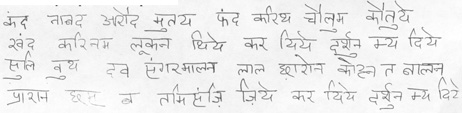

writes :
Bibliography
1. Daughters of Vitasta by Prem Nath Bazaz
Pamposh Publications, New Delhi.
2. A History of Kashmir by Prithvi Nath Koul Bamzai,
Metropolitan Book Co (Pvt) Ltd.
New Delhi ( 1st edition, 1962 ).
3. Studies in Kashmiri by Jai Lal Koul,
Kapoor Brothers, Srinagar, Kashmir.
4.

5. Palgrave's Golden Treasury

 Posted by : vipul koul
Arnimal was the wife of Munshi Bhawani Das, an erudite Persian scholar in the court of Jumma Khan, who was the Afghan Governor of Kashmir from 1788 to 1792 AD. Born in the eighteenth century, nearly two hundred years after Habba Khatoon, Arnimal followed in the wake of the tradition of her predecessor and made the love lyrics adopted by Habba Khatoon more of a plaintive wail. Arnimal's lyrics are masterpieces of Kashmiri language. The word pictures of delicate sentiments drawn by her are so vivid, real and charming that very few Kashmiri poets have reached the standard set by her. Most of these lyrics have been set to music and are sung even now by Kashmiri minstrels with great interest and gusto.
Arnimal : A Leading Light
Arnimal : A Leading Light
Jai Kishori Pandit
Arnimal
was the wife of Munshi Bhawani Das, an erudite Persian scholar in the court of
Jumma Khan, who was the Afghan Governor of Kashmir from 1788 to 1792 AD. Born in
the eighteenth century, nearly two hundred years after Habba Khatoon, Arnimal
followed in the wake of the tradition of her predecessor and made the love
lyrics adopted by Habba Khatoon more of a plaintive wail. Arnimal's lyrics are
masterpieces of Kashmiri language. The word pictures of delicate sentiments
drawn by her are so vivid, real and charming that very few Kashmiri poets have
reached the standard set by her. Most of these lyrics have been set to music and
are sung even now by Kashmiri minstrels with great interest and gusto.
In the sub-continent of India, it is the unique distinction of Kashmir that she has produced poets and writers who have, from early times, left literary compositions in verse and in prose to enlighten us about their respective times and their own lives. But with the Afghan rule in Kashmir in the eighteenth century, the Kashmiri Hindu woman had lost much of her talent and zest for life. Historically the position of Kashmiri women was in many ways better than her counterparts in other regions of the country. Traditionally the Kashmiri woman had enjoyed a certain freedom in society. She had wielded power, exercised responsibility and enjoyed a high status up to the end of the 13th century. But towards the 14th century, she was no more educated; she had ceased to dabble in politics, she was denied the pleasure of singing, dancing and other creative arts of self-expression but even in such pitiable conditions a Kashmiri Pandit woman preserved the right to free movement. So when queens and ladies of the upper strata surrendered before the fanaticism of men, the women and men of lower classes stuck to their resolve of defending their rights of freedom, however, restricted. According to research by a Kashmir woman scholar, Momeen Jan, in the beginning of the 14th century, some powerful Muslim rulers introduced the system of purdah and the upper class Hindu women followed suit. The introduction of purdah, according to her, signalled a decline in the status of Kashmiri women, who began to be confined in their houses. A great blow was dealt by the Afghan rulers, who would humiliate and molest Kashmiri women. Under these conditions purdah began to be used more vigorously. The women in the middle ages fought for their right of free movement and self-expression. Little wonder that it was in these classes that heroines were born during the middle ages. Lal Ded, Habba Khatoon and Arnimal were known celebrities, who stood above the rest in stature and who achieved undying fame in philosophy and shrewdness in poetry. These heroines sprang from no soil of respectability but were the progeny of poor and toiling parents.
Under the Mughals, the Kashmiri women lost their liberty; their rights and privileges were snatched away partly by law and mainly by discouragement and disapproval of the ruling class.
In the eighteenth century, in the year 1752 AD, the Afghan adventurer Ahmad Shah Abdali, captured Kashmir from the Mughals and with the Afghan occupation the ease loving people of this heaven on earth passed through severe trials and hardships. The women were the worst sufferers. Shri P.N. Bazaz writes in his Daughters of Vitasta, "Horrifying are the tales related of the barbarities, which were perpetrated on women whose very fault was that they happened to be handsome in appearance and graceful in form." To save womenfolk from the wild behaviour of the cruel masters, the Kashmiris introduced the practice of wearing veils. Within the four walls of the Hindu homes young women had to conceal their faces by sleeves of their long loose gowns (Pheran) from the gaze of men. It was known as Nor Dion (concealment by sleeve). This confinement snatched away all the charm and intellect from these Kashmiri women. Their intellect rusted and their physical charm faded away. Yet the undying embers occasionally threw out a spark, which illuminated the darkness around. It is in this context that Shri P.N. Bazaz sees "two brave souls" as two leading lights of the dark age in Kudamal and Arnimal.
Kudamal appeared on the scene in the time of Sardar Mohamad Azim Khan, a heartless Afghan governor, who ruled Kashmir from 1813 to 1819 AD. His ruthless methods of inhuman torture and savagery to collect new taxes levied on Kashmiri Hindus were limitless. The lawlessness of the Afghan mercenaries remained unchecked. Eminent Kashmiri Pandits were forced to perpetrate a rule of terror on people for not paying taxes. Many Pandits became the target of Azim Khan's ruthlessness and arrogance. Pt. Birbal Dhar, who was a high official and revenue collector under the Afghan government became the chief victim of Azim Khan's wrath. In consultation with other patriotic and influential people of his time Pt. Birbal chalked out a plan to liberate the valley from the clutches of uncultured Afghans. So he along with his son Raj Kak tried to approach Maharaja Ranjit Singh of Punjab. When Azim Khan learnt about the plan hatched by Birbal Dhar and some Muslim feudal lords, orders were issued to apprehend and produce in court the wife of Birbal Dhar (Kudamal) along with her teenaged daughter-in-law. In spite of the protection given to these ladies by the loyal Muslim friends of Birbal Dhar, both the ladies were located and seized. Kudamal was an experienced and politically conscious lady. She made up her mind to end her life and not to surrender to the shameful and brutal behaviour of the Afghan governor. The brave lady gulped a piece of almas (a precious stone), which was studded to her gold ring. It had its effect and she breathed her last after declaring the bitter truth to the very face of Azim Khan. She spoke to him bravely that the days of his tyrannical regime were numbered and the deliverance of Kashmir from his rule was certain. The prophecy of Kudamal was fulfilled by the subsequent events after her death
Another great woman belonging to the same dark age was Arimal. She deserves praise and admiration for her boldness in facing misfortunes and for the invaluable contribution which she made to Kashmiri literature though her ordeal and heroism were of a different kind. Daughter of a respectable family and wedded to a person of a great family, Arnimal (1737 - 1778) was pretty, imaginative and accomplished but all through her life she suffered pangs and torments of separation from her beloved husband, Bhawani Das Kachru. Jumma Khan was no less a harsh Pathan Subedar than others but he patronized learning and respected scholars. It was during his days that Munshi Bhawani Das Kachru a Pandit literateur, flourished as a Persian poet. As a common practice in the Afghan days, Arnimal was married in her childhood. Before attaining the bloom of her youth, she was deserted by her poet husband for some unknown reasons. J. L. Koul writes, “It is curious that the three most famous women poets of Kashmiri (Lal Ded, Habba Khatoon and Arimal) separated from one another by intervals of about two centuries, should have suffered domestic unhappiness at their husbands' homes and thus learnt in suffering what they sang in their songs."
The separation from her husband proved painful and tormenting for Arnimal and her emotions were terribly stirred. As a result of this sorrow and unhappiness was born the most melodious poetry full of pathos and grief. Here I am reminded of the immortal lines from the poem, Ode to Skylark, written by P.B. Shelley, a great romantic English poet of the nineteenth century. He writes:
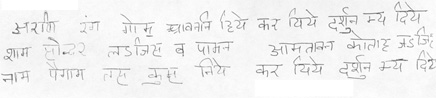
"We look before and after,The importance of the love-lyrics written by Arnimal lies in this that they reflect the sorrow, sufferings, passions and longings of common Pandit women of the valley of Kashmir. Lamenting the absence of her beloved husband, Shri Bhawani Das, Arnimal said :
And pine for what is not;
Our sincerest laughter
With some pain is fraught;
Our sweetest songs are those that tell of saddest thought."
Shri P.N. Bazaz has transtated the lyric as:
(Owing to the pangs of separation) my complexionArnimal thinks that people, devoid of fine feelings and sensibilities, cracked jokes at her expense. She has become the object of taunts. But all this does not change her mind. The intensity of feelings made her complaints deeply touching. She continues to long for her beloved husband with great devotion and love. She says :
"Which was like July jasmine
Has assumed the pallor of the yellow rose
O, when will he come to let me have
A look at his beloved face!"
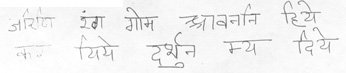
Prof. Jai Lal Koul translates the lyric as follows:
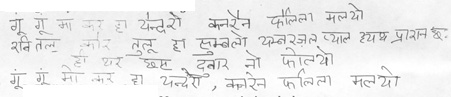
I have filled cups on cups for loveArnimal's lyrics are musical; it has melodious music with its musical rhymes and ever-recurring refrains, its alliterations and its assonances that come most spontaneously from the depth of her heart. All her songs deal with human emotions and are intensely subjective. Many people who enjoy listening to music and seeing paintings, find it difficult to appreciate poetry and a suggestion as how to approach a song or a lyric is to read it aloud. Poetry uses the musical sounds and rhythms of words. Though the printed words on the page may seem flat but the actual sound and rhythm of the spoken words help the lines to come alive. It is best when reading or hearing a song that its significance begins to dawn on us. A poet uses images and we need to pay close attention to the words and sounds of poetry. A poet also loves to transpose his or her experience into a setting which is familiar to him or her. Arnimal uses images and settings most familiar to her. "Arnimal" for instance, literally interpretted, means in Kashmiri "the garland of Arni rose," the wild pale rose common in the country side. She weaves a delicate imagery out of her own name when she says:
Go and cry out to him
Across hillsides and meadows green
I send him tender thoughts
Like deer he roams the woods afar
And leaves me here to grieve
Go and cry out to him
A summer jasmine I had bloomedBorn in the picturesque village of Palhalan, thirty kms away from Srinagar, Arnimal was just fitted to voice the fears and frustrations of a suppressed Kashmiri woman as she was brought up in the charming surroundings of broad leafed chinars, tall slender poplars, calm lakes and majestic mountains at her father's place. Her lol-lyrics have captured the hearts of almost all Kashmiri knowing people. All her songs have been set to music and their imagery and pathos are moving to the extreme. The music and pathos in the following lines are very touching :
But now have turned a yellow rose
When will my love come unto me?
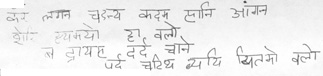
Shri P.N. Bazaz translates the lyric as:
When will thy feet touch lay courtyard
I will place them on my head, O come!
For love I left my home and hearth
And tore the veil, O come!
Again she says
Genuine love is abiding and perennial; it can never die or disappear; it knows neither dismay nor frustration. The sole desire of the lover is that the beloved may be happy wherever he is. The hope that both will be re-united sustains Arnimal through thick and thin. The thought of such future re-union gives her joy and courage to endure the mocks of friends and sneers of foes. She says :
May Love, my jasmine, I long for thee
Come O come, I long for thee
I plighted when young my troth to thee
Why didst thou break thy plighted troth?
O sweet, O dear, I long for thee
"My rivals are throwing taunts at meThe poetry of Arnimal is devoid of the mystic touch and of religious experiences. It speaks of the heart of the human soul. After separation from her husband, the spinning wheel became her constant companion and she composed her songs in tune with the sound of the revolving wheel. Its sound could not but remind her of the tragic story of her own life. She sang :
Since the beloved has ceased to talk to me
Won't he come for a short while and show me
His face, so that I should offer
My arterial blood as sacrifice for his safety?
In English it is rendered as:Arnimal's songs are poignant in their pathos, helplessness and resignation to one's fate but there is no malice found any where in them. There is an undercurrent of quiet fortitude which is characteristic of the age-old suffering of a Kashmiri Pandit woman especially when she is unhappily married or due to ill luck separated from her beloved husband. There seems to be little doubt that Arnimal, deserted and maltreated by her husband, lived at her father's home for long spells of time. In most of her songs, therefore, she expresses frustration. She always craved for the nearness of her husband. She pleaded him with all sweet things in life but he always duped her. She pleads :
Murmur not my spinning wheel,
Thy straw-rings I will oil
From under the sod, O Hyacinth,
Raise thy stately form
For look, the narcissus is waiting
With cups of wine for you
The jasmine will not bloom again
When once it fades away
I treated him to candy sweetBesides fortitude and resignation, these lyrics breathe a note of dissatisfaction if not revolt against the age-old custom which condemned the Hindu woman of Kashmir if she experienced unhappy marriage and unfaithful love. Thus her lyrics give voice to many voiceless Kashmiri women of her time and these lend the same musical and spontaneous voice to all such women who suffer silently in all ages. Composition of songs became a spontaneous mode of expression with Animal. Gradually she acquired mastery over words and invented a unique style of expression. Some of these lyrics have become classics in Kashmiri language. She surpasses some of the most talented English poets in the use of alliteration and imagery. Just listen to the lyric she wrote :
He took my heart and I was duped
Now he is gone, and I am made
A laughing stock for an to see
Will no one tell him what I feel?
Let us arise at early dawn
And seek my love
On hills and mountains high
I wait and wait expectantly,
When will my love come unto me?
Tell me, O Friend, who can trust whom?In English poetry one comes across instances of such intense emotions coupled with an intense display of imagery and alliteration. John Keats, a great poet of the romantic era of the nineteenth century scintillates his odes with many verbal gems. Like Animal, he experienced frustration in love and knew the pain and fever of passion. In his Ode to Autumn, he makes use of alliteration spontaneously. He
What deception he worked on me!
Pulling at my wrists in deep sleep,
He hurt my very vitals.
Taking away, all my gold,
What deception he worked on me!
writes :
Seasons of mists and mellow fruitfulnessThe lyrics of Arnimal and odes of John Keats traverse the entire range of emotions, including protests, love, sorrow and weariness. Both of them succeeded in transferring their personal trials and tribulations into universal ones. In this way, Arnimal has become one of the leading lights of the Kashmiri Hindu women who are the best examples of self-sacrifice and embodiments of love. A cursory study of her life and lyrics is enough to establish the poetical genius and mastery of technique achieved by that unlettered woman who belonged to the dark age of Afghan rule in Kashmir in the eighteenth century and yet she stands as the leading light of the unhappy period of history in the life of Kashmiri Pandits, both men and women.
Close bosom friend of maturing sun
Bibliography
1. Daughters of Vitasta by Prem Nath Bazaz
Pamposh Publications, New Delhi.
2. A History of Kashmir by Prithvi Nath Koul Bamzai,
Metropolitan Book Co (Pvt) Ltd.
New Delhi ( 1st edition, 1962 ).
3. Studies in Kashmiri by Jai Lal Koul,
Kapoor Brothers, Srinagar, Kashmir.
4.
5. Palgrave's Golden Treasury