Friday, December 9, 2022

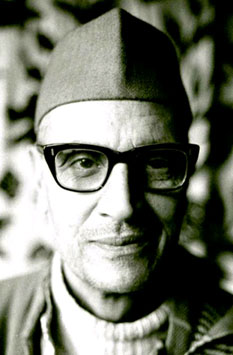
Swami Laxman Joo


Introduction

Jankinath Kaul KamalFathers of the Kashmir Monistic Saiva Thought, who flourished in the valley from ninth to thirteenth century A.D., were erudite scholars and eminent saints. They recorded what they practised and accomplished thereby. Later, there were interruptions in this line of thought. and it was mostly the ritualistic faith that kept the tradition alive. After Sivopadyaya, the eighteenth century scholar-saint who wrote commentaries and books of the kind, there appeared saints of the order during nineteenth century. But they, only taught the lore and made no use of pen. Early twentieth century saw the Kashmir of past glory blessed with a son who, not only practised and lived this wonderful philosophy-the Trika Saiva of Kashmir named Pratyabhijna Darsana-but also disseminated its postulates by teaching and writing among the seekers of Truth in the country and among those from foreign lands.

Birth and Initiation

A luminary of the first magnitude on the spiritual firmament of modern times, Lakshmana Raina was born at Namchibal in Srinagar (Kashmir) on May 9, 1907. He showed signs of spiritual fertility from his very birth. Finding the child far too precocious, his noble, god-fearing and devout parents put him in the tutorage of Swami Rama, who had been their family priest, and saint of high order in the tradition of the refined Tantric Monism of Kashmir known as the Trika system. From his early childhood Lala Saab cast a spell not only over his parents and relatives but also on Swami Rama. At sixteen, however, the boy was ripe enough for being initiated by Swami Mahtab Kak, who had been commissioned by his illustrious preceptor just betore entering mahasamadhi, when the promising Laksmana was only seven years old. The enterprising and well- to-do parents could not prevail upon the young boy, to enter the life of a householder or even to take up a job.

Renunciation and Learning

It was typical of young Lakshmana to take his own time to do things rather than act on the spur of moment and force the pace. He had requested his loving parents to make a place available for him in solitude. But it took them some time to execute the promised plan. Yet the spiritual urge compelled the earnest aspirant to leave home for practising yoga at the famous forest ashrama of Sadha-malyun in Handawara, Kashmir. He left no clue about himself at home except a line on a piece of paper requesting his brothers to give comfort to his parents. Getting the clue after a thorough and anxious search for the young Lakshmana, his father Pandit Narayan Das and his preceptor Swami Mahtab Kak went there to meet him. They succeeded in persuading him to come to the city and accept to live in a newly built house in their factory premises as he had desired. Here the earnest scholar-saint devoted himself to the study of Kashmir Saiva literature available at the Research Department of the Jammu and Kashmir Government started early by Sir Pratap Singh, the then Maharaja of the state. Highly learned Pandits had helped the department in editing and publishing a number of books on Kashmir Saivisim, excavated and discovered throughout the state. Lakshmana Joo engaged the most efficient Pandit, Rajanaka Maheshvara to teach him Saiva sastra at home. He also studied Sanskrit grammar and the allied schools of Indian philosophy at full length. He edited the Bhagavad Gita with its Sanskrit commentary by Abhinavagupta and wrote important footnotes to it. This was published when he was about twenty-five years old.

Seclusion

During the year 1934-35 Brahmachari Lakshmana Joo chose a secluded place at the foot- hill above Ishaber village in the vicinity of the famous Nishat garden. He loved the spot because his ideal teacher Abhinavagupta, one of the most prominent authors of Kashmir Saivism, had lived somewhere around the place in vineyards about nine centuries ago. A bungalow was constructed by his parents at the selected site. It had a spacious garden with multi-colour flower-beds, fruit-bearing trees and a vegetable garden. Adjacent to this spiritual abode Sri Jia Lal Sopori of Srinagar built a house for his daughter Sharika Devi, who, after taking a vow of leading a celibate life, had found her worthy preceptor in Brahmacari Lakshmana Joo. Deviji remained in utter penance for attaining perfection in the monistic Saiva order by learning Agama Sastra from him and practising Saiva-yoga under his care. Devotees and seekers of Truth began to pour in now. It was about this time that the present writers was introduced to this holy man of divme charm by his own master and later recommended for the study of Utpaladeva's masterpiece, Sivastotravali. This marked the beginning of the Sunday class at the ashrama that always remained increasing and surcharged with wonderful spiritual vibrations.

Meeting Ramana Maharshi

Suddendly the young saint made a silent trip to certain places of his own choice in India. He wanted to confer with saints of high order perhaps to ascertain his attainments. He spent some time at Bombay beach to establish his power of spiritual perception. Then spending a very short time with Mahatma Gandhi at Sevagram he rushed to have a glimpse of Sri Aurobindo at Pondicherry where the Mother evinced interest in him. Therefrom he found his way to Tiruvanamalai to meet Ramana Maharshi at the Ramanachramam. Bhagavan Ramana looked at the young attractive saint graciously. It must have been the moment of Drstidiksa-initiation by mere sight. Swami Lakshmana Joo spent some weeks in the presence of the Maharshi. He later expressed: "I felt those golden days were indeed divine". Thus Swamiji revived in 1938 A.D. the spiritual link that united Madras and Kashmir when a monk of Madhurai, named Madhuraja, had travelled to Kashmir in the eleventh century to meet the great Abhinavagupta. Swamiji returned to Kashmir with greater spiritual charm. He then wrote a Hindi translation of the Sambapancasika, adding important hints as footnotes to it. This was published in 1943.

Aurobindvan Solitude

Swami Lakshmana Joo took to strict seclusion in his own ashrama premises for several months. During that period of 'Aurodbindvan solitude', he concentrated on the Kramastotra culled out from the Tantraloka. Giving a wonderful exposition of the twelve forms of Saiva Yoga in lucid Hindi preceded by the original Sanskrit text, this small book of deep insight into the Reality of dvadasakali was published in 1958. Along with his progress in spiritual attainments, Swamiji propagated the Saiva faith so efficiently and effectively that scholars and seekers after Truth got drawn towards him, not only from his own country but also from abroad.

The Ishwara Ashrama

After India was declared a free country, she has virtually remained in shambles, not tidy as before. A sense of insecurity increased day by day in everyone's mind and almost everywhere. In the suspicious circumstances, Swami ji disposed off his immovable property along with that of Sharika Devi ji, about the year 1957 and started to live in a small house newly constructed at a stone's throw from the general road near Gupta Ganga Temple in Ishaber village. 'Ishwara Ashrama' was the name given to the ashrama and the disciples began to call Swami ji Ishwara Swarupa. (This ashrama is the headquarter of Ishwara Ashrama Trust now).

Ashrama Activities

The Ashrama activities gathered momentum. Swamiji held regular Sunday class/satsanga. On Mondays he observed silence (maunam) and spent his day in 'God's House', the tiny cottage for meditation, built in a beautiful small garden near the previous ashrama-place. A set programme was followed on other weekdays A spacious lecture hall with cupboards on one side for library and a havana-shala for annual yagya were constructed in the premises of Shri Ranvir Siva Temple, Gupta Ganga by the Dharmarth Trust of lammu and Kashmir under the trusteeship of Dr. Karan Singh, former union minister and ambassador. The complex was named Kashmir Saiva Pathika. Sunday discourses on Tantraloka by Swamiji, lectures by eminent spiritualists and seminars were held there with grace and glory. Swami ji, at certain occasions gave series of lectures on spiritual topics for the elevation of common people, besides taking special classes and guiding scholars in their research work. Maiden translation with footnotes in Hindi of his favourite book Sivastotravali was published by the Chowkhamba Sanskrit series office, Varanasi in 1964. This Swamiji taught with a new exposition each time.

Honours Conferred

Two saintly persons of Swami ji's calibre, contemporaneous with him, were Pandit Nilakantha Jyotishi (later Swami Nilakanthananda Saraswati, D.L.S., Richikesh) and Pandit Satram Bhat of Ishaber. Although each had a different mode of thought yet the 'spiritual trio' was destined to meet and corroborate on the Yoga-bhumi of Ishaber. They met closely on Rrahma-sutra Sankarabhasya and Yogavasistha Maharamayana. Scholars and professors came to Swamiji from the universities of Torino (Italy), Paris, Oxford, and America for his guidance in Pratyabhijna and Tantraloka. To the scholars and his disciples from foreign lands he gave pithy and short lectures on abstruse topics in English. For Kashmiri disciples he explained the tenets of Saivism in a literary style full of elegance and wit. To general audiences he spoke in lucid Hindi. Swami Lakshmana Joo read his paper in Sanskrit on 'Kundalini Vijnana Rahasyam' at the All India Tantra Sammelanam held under the auspices of the Varanaseya Sanskrit University at Varanasi in the year 1965. His exposition of the subject was much applauded by the great luminary Mahamahopadhyaya Gopinath Kaviraj and other scholars of great repute. After some years the Varanaseya Sanskrit University conferred upon Swami Lakshmana Joo the degree of D. Lit.. honoris causa, in recognition of his splendid and valuable service to the cause of Sanskrit. When Swami ji was informed about this, he simply gave an innocent smile and said in an expression of humour "I have become a doctor now". The Jammu and Kashmir Akademi of Art, Culture and Languages presented the robe of honour to Swamiji at a special function while Mir Qasim was Chief Minister of the state.

Contribution

Swamiji's contribution to the promotion of the studies in Kashmir Saivism, propagation of the Trika philosophy and growth of Kashmiri culture will be remembered for long. This considerably helped the revival of this philosophy and way of life which had otherwise been fading away due to political changes in the valley. Swamiji, however, became known nationally and internationally as the best exponent of Trika philosophy. The saint- scholar gained spiritual ecstasy of jivanamukta (liberated while living) and in his own country came to be known as 'the sage of Ishaber' to whom all sorts of people - young and old, male or female - came to pay obeisance and receive blessings or a blissful touch. A reproduction of a few of his lectures in English was publsihed in 1982 under the caption: "Lectures on Practice and Discipline in Kashmir Saivism." "The Kashmir Saivism - supreme secret" was published in the year 1985. This contains lectures on important topics of Saiva philosophy based on the Pratyabhijna of Utapaladeva and the Tantraloka of Abhinavagupta given by Swamiji to his western disciples. The Pancastavi of Dharmacharya with comprehensive Hindi translation and footnotes was published in the year 1987. Beside these works, some of the texts relating to Kashmir series (K.S.T.S.) were translated for the first time by Thakur Jaidev Singh after they were taught to him by the Master. Jaidev's language reflects in a luminous fashion the mystical experiences in the texts namely Pratyabhijna hrdaya, Siva sutra, Vijnanabhairava and Paratrisika which also bear his elaborate introductions. Swamiji's immense erudition stimulated some more disciples and admirers to expound these Saiva texts. Prof. Nilakanth Gurtoo wrote Hindi translations of Paratrisika and Spandakarika. The present writer, wrote an independent, pithy and uptodate Hindi commentary on Siva-sutras that was highly praised by the Master. Smt. Kamala Bawa translated the text and commentary of Pratyabhijna hrdayam into Hindi. Smt. Prabha Devi translated into Hindi Para Pravesika, Paramarhasara and Guru Stuti. All these have been published. Dr. Oscar Botto wrote on Abhinavagupta and Tantraloka in Italian and Dr. Lillian Silburn (France) translated some Saiva hymns and certain texts on Saivism into Italian and French respectively. Thus Swamiji taught as well as spread with effective measure this unique philosophy of Kashmir in the country and abroad.

Birthday and Excursions

Swamiji's birthday was celebrated every year on such a grand scale that it turned to be a great fair for common people and an auspicious day for his admirers and devotees who flocked from all parts of the country to have a glimpse of the sage sitting in long samadhi. Indian as well as foreign disciples attended to see this godman 'living free' on this earth. Sri Dinanath Ganjoo, Smt. Kamla Bhagati, Sri Narayan Joo and Smt. Raj Dulari Kaul among many others sang Kashmiri poems of eulogy to their preceptor. This cheerful holyman of wisdom, wit and peace distributed prasada and day long. The next day Swamiji spent in giving gifts to devotees and disciples. Once Swamiji remarked "If I had to celebrate my birthday twice a year I would finish up all my extra property by distrubuting it."

Excursions to places of sanctity and natural scenery in the valley were occasionally arranged. Kirtans by disciples and discourses by Swamiji were usual features all along. Prominent places visited on large group excursions were: Verinag, Takshakanag, Karkutanang, Sadha-malyun, Uma Nagari, Hangalgund, Tangamarag, Naran-nag (Sindh Valley), Dacchigam and Dara etc. by bus, and different places around and in Dal Lake by dunga (house-boat) during summer besides linger trips to Hardwar and Rishikesh during winter.

Moments of bliss were experienced when saints and men of learning came to meet the sage of Ishaber. Dr. Karan Singh often visited the ashrama to receive blessings. Smt. Indira Gandhi, the former Prime Minister of India sought interview with the sages whenever she came on a visit to the state. Swamiji had a meeting with J. Krishnamurti at Kotarkhana in the Dal Lake. Maharshi Mahesh Yogi visited the Ishawara Ashrama and invited Swamiji to his house-boats in the Dal Lake. Swamiji gave an interesting exposition of the Vijnanabhairava to his devotees on request. Paul Reps, in his short introduction to the chapter 'Centering' says: "It presents 112 ways to open the invisible door of consciousness. I see Lakshmana joo gives his life to its practice". Swami Ramdas (a jivanmukta) of Kanhangarh, Mangalore, Swami Satyananda Saraswati of Munger, and Swami Muktananda of Ganeshpuri were pleased to meet the Swami when they visited Srinagar. Swami Lakshmana Joo himself attended and presided over spiritual meetings held occasionally in the valley and outside it. In 1976 Sri Ramakrishna Ashram, Srinagar (Kashmir) organized a spiritual congregation inthe Ashrama precincts. This was graced by the world famous cultural ambassador of India, Swami Ranganathananda while the meeting was presided over by Swami Lakshmana Joo, who described Sri Ramakrishna as a sidha yogi.

Another time Swami Ranganathananda was invited by Swamiji to address a special meeting of scholars and devotees and declared the chief guest as 'messanger of peace'. Swamiji occasionally went to Hardwar and Rishikesh to meet saints, especially Swami Sivananda Saraswati of the Divine Life Society giving expositions to parallelism of Kashmir Saiva Mysticism with the mysticism of Sankara Vedanta.

Ecstasy

During his years of maturity, Swami Lakshmana joo was writing a comprehensive compendium of Kashmir Saiva Darsana in lucid Hindi. It runs into several chapters. Excerpts from the manuscript were at times read out by him to selected disciples among whom the present writer was fortunate to be one. It is understood that writing of the book remained incomplete but was published later in 1994 by Sri Prabha Deviji. Prof. P.N. Pushp, while writing his foreward to this book titled Trika Rahasya Prakriya has also observed the incompleteness of this work. During his latter days of ecstasy Swamiji only explained selected pithy verses from the Agama sastras and Yogavasistha and sang these alongwith his disciples in divine rapture. These continue to be sung by devotees at Sunday satsang meetings with the wonderful Gurustuti composed early by one of Swamiji's illustrious disciple of Varanasi, Sri Rameshwar Jha, who having studied and practised Vedantic Mysticism had found great interest in the Kashmir Saiva Mysticism and had accepted Lakshmana joo as his preceptor of the Faith.

Occult Powers

Though Swamiji was a master of occult powers, he never made a display of those powers. Swamiji was against their being used as he was convinced that the use of occult powers was an impediment on the spiritual path. He was the master of self- control and care. However he appeared to have made use of his divine power sparingly and with great caution. Not only his close disciples but also un-acquainted people of different beliefs, from far and near, some of whom had not even met the Swami in person, were convinced of his powers which he might have used un-assumingly for their upliftment. Certain comtemporary saints of the country have said that Swami Lakshmana Joo had been strictly guarding his earned treasure of powers and, if at all, he used those scarcely. His awe- inspiring sight and proverbial sympathy drew people of all walks of life near him with their problems to which he was often sharp in giving decisions. It was also observed that he gave a healing touch to those who needed it. Common people believed him to be a redeemer from evils. Some persons of pure heart felt a current of mysterious joy running through their body while receiving his touch on bowing at his lotus feet.

Picture of Personality

Swamiji had disciplined himself into such unwinking vigilance that he was never found saying or doing a thing that was not in consonance with the Truth of his way of life. Only eight months before Swamiji chose to merge in the infinite, his chief disciple Brahmavadini Sharika Devi entered the Divine on Feb. 1, 1991. He did wonderfully well what was quite befitting to his nature and practice. In fact there was very high aiming in the core of Swamiji's very existence which was manifest in a happy combination of three lements:

(i) Simplicity, an expression of simplicity;

(ii) Enthusiasm, the vital push of the spirit within;

(iii) Wisdom, the light of the soul as the portion of the Divine Himself.

Endowed with a magnetic personality, divine charm and wide scholarship behind his spiritual attainments Saivacarya Iswara Swarupa Sri Swami Lakshmana Joo was an inextricable combination of life and religion. By years of study and contemplation, his practice of yoga had ripened to such an extent that his teachings contain the best solution to the problems that face humanity today. His very presence was solace to the depressed, hope to the forlorn, joy to the seeker, inspiration to the scholar and satisfaction to the soul striving for spiritual upliftment. The best in him was all-lovingness that attracted towards him people of all faiths and of different creeds. An embodiment of magnificent qualities, he was a faithful friend, a benefactor brother, a fondling father, a true teacher, a noble neighbour, an instinctive instructor, an affirmed administrator, a congenial companion and above all the girdling guide of all who came near him. His disciples and admirers sought to throng around his radiant personality as honey-bees hover about a fragrant lotus in bloom. Iswara Swarupa's sagacity made him into an exemplary sage. He looked simply divine, when he made a short tour to United States in June-July, 1991.

Homage

The playful ways of the Master - the sage of Ishaber-came to an end on this earth in Delhi in the early hours of the 27th September, 1991 in moments of calmness and tranquility. He had verily been a yogabhrasta (fallen from yoga in previous birth) for he was born is a house of pious as well as wealthy and well-thought parents-sucinam srimatam gehe yogabhratobijayate. The present life of grace and glory was only the means for this Divine being to merge into Supreme Siva, the final beatitude of life. The powers of Truth and Light may not be visible to the naked eye but they are there for the discerning. To pay homage to the beloved 'Gurudeva' let us live fur the Divine and let Divine take control of our life to fulfill his purpose.

Source: Koshur Samachar

Shaivacharya Swami Ram


Shaivacharya Swami Ram

So intense was his Sadhana, he never moved out of his place for 20 long years

*-Gopinath Raina 

(1854-1915)
There lived the renowned saint, his Holiness Swami Ramji, the Shaiva teacher of my Master
-Swami Lakshman Joo

Introduction
Kashmir, as also the rest of India, produced a galaxy of great saints, seers and savants during the last millennium. While India was graced by illustrious God-men like Tulsi, Kabir, Surdas, Tuka Ram, Chaitanya Mahaprabhu, Narsi Mehta, Tyagaraja, Dhyaneshwar, Namdev, Tiruvalluvar, Mirabai, Dayanand Saraswati, Guru Nanak, Sri Ramakrishna Paramahansa, Vivekananda, Shri Sai Baba of Shirdi, Shri Narayana Guru , Mahatma Gandhi, Ramana Maharishi, and Sri Aurobindo, Kashmir has had the good fortune of giving birth to great saints like Lalleshwari, Rupa Bhawani, Sheikh Nuruddin, Parmanand, Reshipir, Jeewan Sahib, Anandji, Swami Ram, Sahib Kaul, Maanas Razdan, Grata Bab, Swami Vidya Dhar, Bhagwaan Gopinath, Kashkak, Nandlal Ji, Sati Ded, Mathura Devi and, last but not the least, Lakshman Joo.

All of them without an exception enriched, elevated and refined life and helped revive and strengthen the ancient cultural, religious and philosophical heritage.

In the present troubled times when the people of the Valley, Kashmiri Pandits in particular, are passing through untold miseries, the only solace comes from the saints and mystics of the purest ray serene like Swami Ram, who by their very exemplary living taught people to rise above caste, creed and color and see the light within.


The Birth
The great mystic Saint-Philosopher, Swami Ram was born in a pious and god-fearing Brahmin family of Braroos near Ganpatyar in Srinagar on Pausha Krishna Dwadashi, December 16, 1854 AD (Bikrami Samvat 1911). His father, Pandit Sukhdevji, a highly respected practicing Brahmin of his time, eked out his livelihood by attending to religious activities of his yajmaans, While Pandit Sukhdevji was a great devotee of Anandeshwar Bhairav himself, his brother, Pandit Ishwar Sahib, was a great Yogi who never married.

At a time when no one could even imagine the lofty spiritual heights the newborn attained in his later life, the family astrologer, who drew Swami Ram's birth chart, predicted that baby Ram would turn out to be a saint of a very high order.

Swami Ram not only displayed mystical leanings from his very childhood but also evinced keen interest in learning scriptures. He received early education at home from his own learned father who perfected his knowledge of Sanskrit and Karmakaand. He served his father as an assistant in his day-to-day religious assignments.

As was customary in those days, Swami Ram was married to Saraswati Devi when he had just turned 14. But his marital life did not last long following the untimely death of his wife within three years of marriage. She died of small pox.

Swami Ram's instinctive detached outlook and ascetic temperament was not lost on those who came in contact with him even in his youth. All and sundry could not but be touched by his humane approach and true spiritual perspective.


Meets His Masters--Vidya guru & Parmaarth guru
As good luck would have it, the precocious boy Ram was noticed by a great Shaiva scholar of the time, Shri Lal Joo Kokru who initiated him into the study of Agama Sastras. Endowed as he was with a sharp intellect and the lure of things mystical and spiritual, further strengthened by his upbringing and the family background, Swami Ram seriously pursued the study of Shaiva philosophical literature.

His otherworldly disposition confined Swami Ram to lonely spots in the valley where he undertook not only deep study of Shaiva Agamas and literary works of great masters like Abhinavgupta, but also practiced yoga sadhana so intensely that it did not take him long to finally merge with the blissful consciousness of Shiva.

After he had acquired a clear comprehension of the school of philosophy by dint of his intelligence and hard work, destiny brought him in contact with a great mystic-seer, Shri Manas Ram Monga, popularly known as Maneh Kak. Being a Siddha, Maneh Kak found in Swami Ram a deserving Shishya who, he felt, had the potential of understanding and apprehending the subtleties of Trika system. The guru was convinced that the boy Ram was the most deserving person to transmit his knowledge and experience to others through time-tested guru-shishya parampara.


Guru-Shishya Lineage
The Guru-Shishya lineage, to which Swami Ram belonged, is said to have originated from Shri Kanthanatha. Elaborating on this theme, Shyam Sundar Jatoo says in his book entitled Vidyadharstava published in 1953 AD: “That the world may not be deprived of the Trika way of liberation, Lord Shiva incarnated as Shri Kanthnatha who imparted the sacred teachings to the supreme ascetic and sage Durvasa at the beginning of Kali Yuga. The sage, by his yogic powers, created a maanas putra, Tryambhakaditya, and initiated him into Shaiva Agamas. And thence onward an un-broken chain of fourteen realized souls (Siddhas) spread this teaching in this world. The 15th Sidha, Sangamaditya, who lived the life of a householder, came to Kashmir where his great grandson, Somananda, the celebrated author of the well-known ‘Shivadrishti’, followed by a chain of disciples from Utpalacharya down to Abhinavgupta spread monistic Shaiva thought in Kashmir between the 9th and 13th centuries.”

It was after a gap of a few centuries that the scholar-saint Sivopadyaya appeared on the scene in the 18th century to revive the tradition initiated by sage Durvasa.guru-shishya parampara And this tradition was carried further in the 19th century by Swami Ram, who taught the lore to his avowed disciples-Swami Mahtab Kak, Swami Vidyadhar and Swami Gobind Kaul, who, in turn, continued this Again, it was only Swami Ram’s grand-disciple, Swami Lakhsman Joo, who popularized Pratyabhijna philosophy through his writings during the 20th century among the seekers of truth in Kashmir and the outside world.


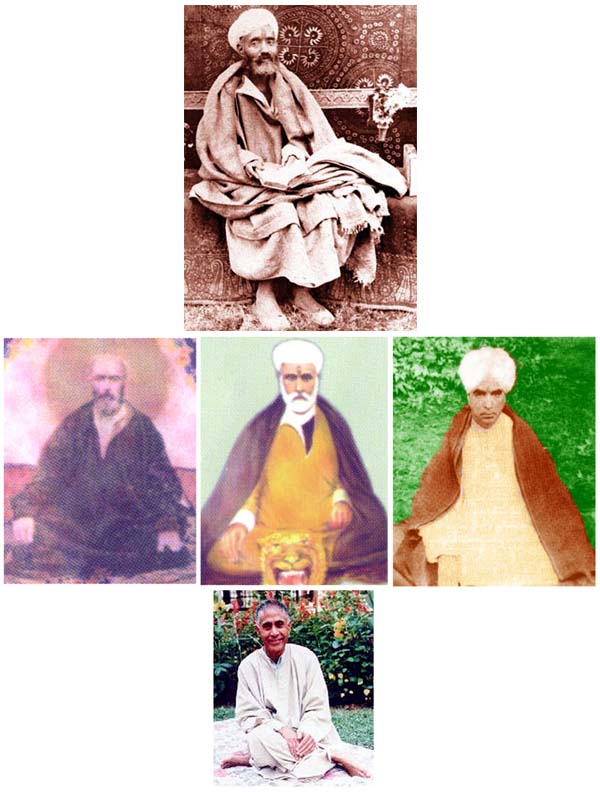
(Swami Ram on top: below are his three disciples -
Swami Vidyadhar , Swami Mahatab Kak and Swami Gobind Kaul and
In the third row is his grand-disciple, Swami Lakhsman Joo, just below his guru, Swami Mahtab Kak)

Shri Ram Trika Shaivashrama

Silent and steadfast in wisdom, Swami Ram had realized oneness with Shiva. A perfect Siddha that he had become, he was looked upon as Saakhshaat Shiva by those who approached him for fulfillment of mundane desires and for guidance in their spiritual pursuits.

After acquiring a thorough and extensive knowledge of Kashmir Saivism, Swami Ram would normally visit secluded places and spend days and nights in his spiritual sadhana, caring little for food and other comforts. One of his favorite sports was the seat of Mangaleshwar Bhairav in Malikangan, Srinagar, where he began drawing aspirants and a large number of common people seeking to invoke his blessings.

As destiny would have it, one of his ardent devotees and a worthy Yajmaan, Pandit Narayan Das Raina, a merchant and a houseboat owner of Srinagar, begged him to grace his small three-storied house, which he owned, just 300 meters from his residence in Fateh Kadal. The offer of Narayan Das, a man of high ideals and simple habits, and who held the great mystic in great respect, was accepted by Swami Ram, ostensiby for the simple reason that the place could .be fruitfully used by him exclusively for spiritual work. It is said that Narayan Das's business touched skies after Swami Ram moved to his vacant house.


It is this house that virtually turned into a veritable Ashram, known since as Shri Ram Trika Shaivashrama in downtown Fatehkadal in the capital city of the northern Indian State of Jammu & Kashmir. Here he shared his knowledge and explained the deeper aspects of Shaiva philosophy to the growing number of disciples and devotees..The Ashram echoes with the recitations from Shaiva scriptures and the chanting of devotional hymns by Swami Ram's devotees even to this day.


Scholarly Exposition
It is in this Ashrama that Swami Ram taught the Shaiva philosophy to worthy disciples like Swami Mahtab Kak (the celebrated guru of Swami Lakshman Joo), Swami Vidyadhar and Swami Govind Kaul. The three-some had been his personal devotees who received inspiration and personal guidance to rise to their full stature.

An erudite scholar in Sanskrit and an epitome of Jnana (knowledge), Swami Ram was a great exponent of Shaiva Siddhanta. His scholarly exposition of the Agama Sastras attracted a large number of devotees, aspiring sadhaks and admirers, mostly house-holders. He taught and guided them all in the mysteries of Shaiva philosophy.

Among the texts he taught were Vasugupta’s Stotravali, Abhinavgupta’s Tantraloka,, Utpalacharya’s Shivastotravali.and Panchastavi. Swami Ram would become ecstatic while explaining each verse of Panchastavi, which consists of five hymns with a distinct theme addressed to the Supreme Mother of the Universe.


Swami Ram with his disciples & devotees

Since Pancastavi eulogizes the female aspect of God in a religio-philosophic poetry of a very high standard, it has become very popular with the Shaiva devotees of Kashmir. One of the hymns, Laghustava (21 verses) highlights the dynamic power of the goddess; the second, Charchastava (31 verses) elaborates the attributes of the divine Mother; the third, Ghatastava (24 verses) speaks of the creative union of Sakti with Shiva; the fourth, Ambastava (32 verses) invokes the goddess as the benevolent mother and the fifth, Sakalajnanastava (38 verses) celebrates the glory of Adi Shakti, the Source of All. All the hymns are devotional in character.

In his later years, Swami Ram, it is said, sat in one pose with knees held to his breast and did not move out for 20 long years. Regular visitors to the Ashram would remain spellbound to see Swami Ram immersed in undisturbed Samadhi for hours, nay, for even days together.


Swami Ram's Philosophy
The primal aspect of life is movement, a vibration (spanda). Without movement, without vibration there is neither action, nor speech, nor experience. If there is no movement, there is no growth, no progress. If none of these are there, then there is no life, no universe.

As the name implies, Trika philosophy deals with the three fundamentals of human existence: Man, Universe and the Ultimate Principle governing the world. Man and his personality are the main themes of Kashmir Saivism.

Swami Ram believed that emancipation (Swatantrya) is the final goal of human life. The state of pure bliss leads to the ultimate state of moksha or salvation. Every one of us is Shiva. In the ultimate analysis, Jivatman, an individual soul has to merge with Parama Shiva, the Absolute Self.

According to Swami Ram, the outer glitter and temporary pleasures of this world overwhelm the senses and one cannot evolve and be free from the bondages of the world until one realizes one’s true nature, i.e. Shiva. He would quote Shiva Sutras to declare, “Our bondage is due to ignorance, avidya”.

The aim of Trika Sastra is to awaken man to the fact that Jivatman is nothing but Shiva, the all-powerful (Sarva Shaktimaan) Lord of the Universe. Swami Ram believed one could achieve liberation from this causal body (deha mukti) only through anugraha or grace. But it all depended on the enthusiasm of the devotee or the pupil. Almost a hundred years later, Ramana Maharshi echoed Swami Ram’s belief when he said, “The grace of the guru is like an ocean. If one comes with a cup he will only get a cupful. The bigger the vessel the more one will be able to carry”


Occult Powers
"Mystic experience", declares the great psychologist, William James, "is not the aberration of a diseased mind, but is a genuine experience of God, which illumines the intellect, purifies the will and exalts the emotions."

As is the wont, legends grow around great mystics all over the world. Swami Ram, a mystic of a very high order, could not be an exception. Though Swami Ram strictly guarded his treasure trove of powers, he used them very scarcely out of compassion for the lowly and the lost. Many a sick person was cured by his mere touch. His very darshan provided a healing touch to the afflicted souls.

Stories about his Siddhis are still current in the valley. My father, Pandit Sudarshan Shastri, a well-known Sanskrit scholar of his time, was almost a regular visitor to the Ashram during the last years of Swami Ram's life. He bore witness to many anecdotes of Swamiji's acts of benevolence and miracles. He would often tell me how he and his friends during their visit to the sage would experience the thrill of a mysterious joy running through them while receiving Swami Ram's touch on bowing at his lotus feet.

People from all walks of life, men, women and children, including the then ruler of Kashmir, Maharaja Pratap Singh, visited his Ashram for blessings. He was candid enough to tell the Maharaja that he was not destined to have a progeny in this birth. He was often heard muttering to himself, “Where-from shall I get Pratap a son?”

Once the son of his ardent devotee and host, Pandit Narayan Dass was taken seriously ill and the doctors had almost lost all hope. Swami Ram, who used to go in samadhi for days together, had just come out of it. It was dead of night and he felt the need to eat something. He asked one of his devotees to visit Narayan Das's residence and get some potatoes. The said devotee went and knocked the door of Narayan Das's residence. Out came Naraya Das's wife, Shrimati Arnyamal, who expressed her unhappiness for disturbing them at that unearthly hour for just a few potatoes. The devotee returned empty handed. Swami Ram sighed and said to himself: "Well, I was trying to beat back the god of death and save their son. But, alas! Let destiny take its course.now." Pandit Narayan Das's son left this world the next morning.

It is said that a Muslim neighbor in the meantime, on learning that the Swami wanted some potatoes, went to the Ashram with a basket of potatoes. Swami Ram said: "why this basketful of potatoes? You cannot handle all of them." He just picked up three potatoes and gave them as prasad to the childless Muslim lady who had brought the basket. Legend has it that she later bore three sons.

After the tragic death of their only son, the dejected couple, Pandit Narayan Das and his wife, Arnymal, who were now left with just 3 daughters and no male progeny, surrended completely to Swami Ram and made fervent plea for a son. The ever-compassionate sage stretched his hand, picked up a single almond and gave it to Arnymal to eat. Nine months later, she was blessed with a boy. As soon as the news of the birth of the baby boy reached Swami Ram's ears, he became ecstatic and proclaimed, "I am Ram; let the child be called Lakshman."

Though Swami Ram is no more with us in mortal frame, his Immortal Spirit continues to exert its spiritual influence and guide his devotees and the seekers after truth. The invisible hand of his mystical powers is not lost on those who invoke his blessings.

Vivekananda Meets Swami Ram

Swami Vivekananda and one Dandi Swami Narayan are among some of the great saints from outside Kashmir who visited Swami Ram.

Swami Ram was in deep meditation when Swami Vivekananda visited the Ashram. He found solace in his presence which he acknowledged with the remark "there is still spiritual light present in Kashmir." When Swami Vivekananda apprised Swami Ram of the difficulties still facing his mission of spiritual rejuvenation of the world, he was advised to seek the blessings of Ragnya Mata at Tullamulla. The advice was followed, resulting in Vivekananda's memorable experience at the Kshir Bhavani shrine, as later described by Vivekananda in his autobiography. Soon after, Swami Vivekananda left for Chicago, USA, to attend the Parliament of World Religions in 1893.

Swami Vivekananda also sang a soul-full hymn to Shiva in Swami Ram's presence. While singing Vivekananda went into ecstasy before completing the hymn. Swami Ram immediately took up the recitation of the said hymn where Vivekananda had left it. Such was the divine mystical meeting of the two great souls.

The Dandi Swami Narayan has in his Travelogue referred to Swami Ram's clairvoyant prowess while narrating details of his meeting with the sage. He says that during his brief visit to Srinagar in 1892, he visited the Ashram and while he was ascending the staircase to Swami Ram's room, his doubts were all removed. He decided to return without seeing the saint. Swami Ram all of a sudden told one of his disciples, Lal Joo Kaul to go and bring that Dandi Swami back. The devotee rushed out of the house and brought the ochre-robed Swami to the Ashram. Once he was in the presence of Swami Ram, he made his obeisance thus:


Anandam Khalu Imani Bhootani Jaaynate Anandena Jaatam Jeevante
Anandam Prayanti Abhisamvishanti Anandam Eva Brahma.

Accepting salutations, Swami Ram said:


Mato Vaa Imani Bhootani Jaayante Mayi Jaatam Jeevante
Maam Prayanti Abhisamvishanti Aham Eva Brahma.

While the Vedantin proclaimed that Ananda, i.e. Bliss is Brahman-the Ultimate Principle (Anandam Eva Brahma), Swami Ram, true to the Shaiva concept, asserted that I am Shiva-the Ultimate Principle (Aham Eva Brahma).


Mahasamadhi
January 14, 1915, the day of Makara Sankranti marked the end of the earthly journey of this great philosopher-saint who revived the legacy of Shaivism toward the close of the 19th century. He entered the eternal abode of Shiva on the 14th day of the dark fortnight of the most auspicious lunar month of Magha in Bikrami Samvat 1971.

But before he merged into the Universal Divine Self, Swami Ram ensured the continuation of the Trika heritage by entrusting aspiring disciples and the 8-year-old boy Lakshman to the tutelage of his principal disciple, Swami Mahtab Kak. In fact, Swami Ram himself acted as the guru of his grand disciple, Lakshman Joo, till his Mahasamadhi.


Divine Rapture
While immersed in what is known as Sahaja Samadhi, Swami Ram would often times go in divine rapture. And in that meditative state, his close disciples normally heard him utter one of the Shlokas penned by Swami Ram himself.


(Moha shaanto guruvara mukhaan maayatatwovalambhaat
magnam cheta samarasasamaswaad lolam chidabdau
bhaavvraata prashamamgaman nirvikalpe samadhau
siddabhaasa sa bhavati hi may ko api samavidvikaasa

“All my ignorance got dispelled when I learnt the Truth from the lips of my respected guru whose word was as sacred as the Sastra itself. As a result, the mind (Chitta) realized oneness of life, tasted the loving nectar of equality and dived deep into the ocean of divine consciousness. The web of thought finally settled down in the state of nirvikalpa samadhi (unqualified meditation). Thus the indescribable Supreme-Consciousness was revealed to me in its perfection.)

This one shloka speaks volumes of Swami Ram’s experience of Supreme Divine Consciousness.


Sources:
1 Personal notes by the author, based on his father's reminiscenses.
2 Personal notes by Sri Triloki Nath Ganju of Shaiva Trika Ashram, Fateh Kadal, Srinagar.
3 Swami Ramji by Pandit Janki Nath Kaul 'Kamal'-(Koshur Samachar)
4 Swami Ramji-The Shaivite Acharya by Opinder Ambardar (Koshur Samachar)

*G.N. Raina retired from Indian Information Service (I.I.S.) in 1983 after completing 35 years as a distinguished editor, correspondent, commentator and administrator; All India Radio; Editor, AICC Journal, Varnika, (Jan.'84-Dec.'90); Editor-in-Chief, Koshur Samachar (March'91-Oct.-'95; Editor-in-Chief, Sanatana Sandesh, an official publication of South Florida Hindu Temple, Fort Lauderdale, Florida (1997-2005); Editor-in-Chief of KASHEER, KOA magazine (2003-2004), He presently lives in Miami, and spends his time writing personal memoirs.

Swami Vidyadhar


- Prakash Kaul

Swami Vidyadhar was born on the 13th bright day of Ashad 1942 (Bikrami), corresponding to 1886 AD, in an orthodox Brahmin household of a Kanthdhomayan 'Gotra'. His father, Shri Ganakak Razdan (Khonmushi) died when Vidhlal, (the Swami's parental name) was only six. His mother, Harmali, was from a respectable Khushoo family of Malayar and an embodiment of the finest traditions of Indian womanhood. His elder brother, Shri Gopi Nath, entrusted him to the able care of Shri Madhav Joo Chander and Shri Rajkak Ganz for being taught in the traditional Brahminic ritual. Later he obtained the degree of Visharad.


Swami Vidyadhar
Courtesy: Pran & Asha Chaku, Houston, TX (1997)

Devout Behavior

Right from his boyhood Vidyadhar astounded everyone by his sharp intellect and humility. He had a sharp memory and a resolute disposition. For his devout behavior and ability, he was deeply loved by his teachers and others. At the age of 15, he was married to Shrimati Padmavati, the illustrious daughter of Shri Rishi Kak Kalu, a noble Brahmin.

There is no record how and when Vidyadhar surrendered himself at the feet of his master, Yogiraj Ramji. Swami Ramji, the embodiment of allÑ pervading bliss, initiated and taught many of his disciplesÑchief among them being Swami Mahtab Kak, Swami Vidyadhar and Swami Govind Kaul. The backdrop of this stream of Gurus is depicted thus in Shri Vidyadharastava.

Vidyadhar studied Shastras under his Guru and also received initiation into mysteries of the 'Shaiva Sadhana'. Swami Ramji was a perfect Guru - Stroti and Brahmnisht. It was the benevolence of the Lord Himself personified in Swami Ramji that guided the real Sadhakas like Vidyadhar. By and by Vidyadhar became absorbed in his inner self and the only longing he had was to free himself from the mundane chorus of household activities. He attended his worldly jobs with more of a detached bent of mind. During this period, Vidyadhar lost his mother. He was only 28 and still a perfect Sadhaka. Gradually, he lost all taste for worldly life and he would remain aloof confined mostly to a room in his house. Occasionally, however, he would teach scriptures to those who came to him.

Then came the turning point. In 1915, Swami Ramji shed his mortal frame. From now onwards, it became virtually impossible for Vidyadhar to remain confined to the four walls of his house. In 1919 came the breakthrough. He left his home and remained for some time at the holy place of Thajiwara - a hallowed place near Bijbehara. Thence, he went to the aloofness of Kamlavan a solitary place near village Tral. An SOS from his elder Gurubhai, Swami Mahtab Kak, unsettled his future plans. Swami Mahtab Kak, after the exit of his Guru, was in command of Shri Ram Shaiva Ashram. The Gurubhai asked him to return home apparently on the entreaties of his (Vidyadhar's) father-in-law. He would not spurn the directive of the Gurubhai.

Wandering Monk

His stay at home did not, however, check the strong yearning for the life of a wandering monk. At times, the future care of his small children would flash through the ascetic Vidyadhar's otherwise serene mind. At the same time, the absolute mood, said euphemistically that he did not like to see majority of his Srinagar disciples running agitatedly here and there. All laughed far it referred to the usual practice of Srinagar disciples going to villages where Swamiji would stay, entreating him to come over to Srinagar.

Last Days

On Amavasi at about 10-30 a.m. Swamiji addressed three of his disciples present rather unexpectedly thus: "World is changing fast and Adharma is growing. It is better that you people be of some help to these mortal remains". Then he asked one of his disciples to check up the 'Tithi' from the 'Panchang' while going to the bathroom down in the courtyard. When Swamiji came back the disciples informed about the 'Tithi' and 'Mahurat'. With a smile, the Swami said "All right" and wiped his hands and feet with a towel. A few moments later his body had a paralytdc attack and, simultaneously, the outward sensations ceased. The body remained in this state for about two-and-a- half days amidst the continuous chanting of hymns by the great concourse of disciples and other people. On the third bright day of the Margshirsh at about 3 a.m. the numb body of Swamiji opened eyes at the conclusion of the Bhairavstotra of Swami Abhinavagupta. The eyes were full of tears.

The Bhaktas started the daily Aarti and at its conclusion the mortal frame ceased to breathe. The revered Gurumata of the disciples, Shrimati Padmavati, had also come there after 30 years of her seclusion and Sadhana and paid homage to her departing illustrious consort. In deference to the wishes of the Swami, expressed to some of his disciples, the last rites were observed without any fanfare.

Many are the anecdotes of Swami Vidyadhar's acts of benevolence and miracles to which even to this day many are eyewitness. To respect the sentiments of Swamiji's disciples not to write about any such miracles of their illustrious Guru, it would not be worthwhile to recall all the majesty of the Yogi both in his spiritual and social spheres.

Compositions

Swamiji had great command over Sanskrit grammar and language and an astounding hold on Shastras. In his moments of intense Bhakti, he composed some devotional Sanskrit poems and many of these hymns are popular among the Kashmiris even to this day. The hymn to 'Rangy Bhagwati' forms part and parcel of the 'Aarti' being recited at Kheerbhawani.

For his erudition he was called lovingly Vidyadhar and rightly so. Swamiji, throughout his life, remained an embodiment of intense Sadhana and complete detachment. Self-abnegation and an unflinching faith in himself were hall-marks of his illustrious life. Never in his life did he show any traces of exhibitionism; in fact, he shunned all such extraneous propensities. He lived a simple ascetic's life. Never after renunciation did he touch money. He had absolutely left 'Kamini' and 'Kanchan' as Sri Ramakrishna Paramhansa enjoins upon the travelers on spiritual path in his gospel.

The Swami knew no fear and showed great courage in going against the tradition in dealing with matters of suffering and injustice. It will be fit to recall some of the prominent incidents in his life which undoubtedly show his lofty disposition.

At the death of one of his sons, a relative came to Swamiji apparently to offer his condolences and in the process wept bitterly. Swamji gave him sympathy and advised him not to grieve over the inevitable.

Once when Swamiji was coming down the stairs of his Ashram for his usual 'Sandhya' a thief loaded with articles stolen from the Ashram passed his way and even paid homage to him. In the morning when disciples informed him of the theft, he told them that a man loaded with the stolen articles had paid him respects in the early hours of the morning and he did not catch him then.

Among Kashmiri Pandits, there was a subcaste called 'Leji Bhat' who due to changing fortunes of the valley had got converted at some distant past and had reverted to their parent faith subsequently. Even though their lives were ideal, high caste Brahmins would not even partake the meals prepared by them. Likewise, was the situation for the Bohra sub-caste in the Pandit community. Swamiji could stand no such differentiation. He initiated fairly good number of disciples from among the sub-castes and started a slow but sure propaganda against this high-handedness of the so- called top-class and orthodox Brahmins.

Menace Eliminated

Finally, a big Yagya was organized by the sub- castes at Bijbehara. Swamiji invited all the learned and orthodox Brahmins of the valley to the Yagya along with other leaders of the Pandit community. They could not spurn his offer. At the conclusion of the Yagya food was served by the brethren who had been wronged and everybody took the meals. Thus the menace to the integrity of the Pandit community was eliminated.

Swamiji was fond of music and often musicians, both Hindus and Muslims, used to recite rare Sufi and devotional poetry of great Siddhas like Parmanand and Lalleshwari to him. One among them was Swami's constant companion. Swamiji loved him like a child. But the musician married a Muslim girl and got alienated from his community. Some time later, the musician left the company of the girl and came to Swamiji after a period of self- imposed exile. While others despised him, the Swami received him with open arms. Nothing had changed the love of the Swami for his child.

Playful Countenance

That was Swami Vidyadhar, the great saint who would keep the audiences spell-bound by his sweet voice and great discourses, opening new vistas of spiritual path. This scribe, whose father was a disciple of Swamiji, had the great fortune of his constant company right from his early childhood to his early teens. He cherishes the playful countenance of the great Yogi for the Yogi seemed to be his playmate all the time he was in contact with him. He vividly recollects the mock horse which the Yogi would lovingly offer himself to be while the writer as a conscious Balak rode on his back.

Source: Koshur Samachar
Social concerns of Krishna Joo Razdan


B L Razdan
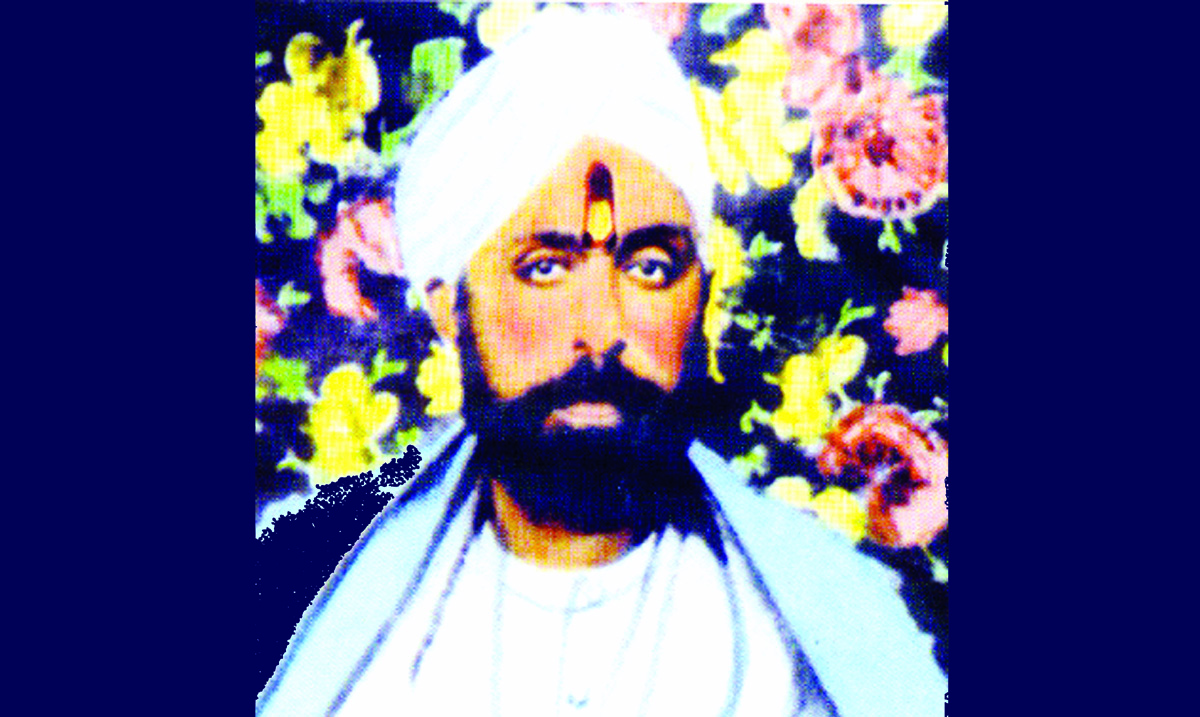
The genius of the renowned Kashmiri saint poet Pandit Krishna Joo Razdan flourished in the valley of Kashmir towards the close of 19th and the beginning of the 20th century. Besides being a saint of very high order Krishna Joo Razdan was regarded as the “poet of kashmiri poets” of the native Kashmiri language apparently because of his divine devotional poetry that had come to engulf the literary circles in almost all the regional languages of India.
The merit of Krishna Joo Razdan’s poetry was recognised by none other than the renowned and the famous Dr. Sir George A. Grierson, who had a substantial collection of his Kashmiri poems translated into Sanskrit way back in 1914 – 1925 and published under the aegis of the Asiatic Society, Calcutta, so that this treasure of rich Kashmiri poetry was not lost to the posterity merely because of the limited reach of the Kashmiri language.
The noted U S poet and writers Emily Warn once asked a difficult question like “Does the social function of poetry vary so wildly that we cannot generalize about it?” And then she herself hazarded an answer. “Poetry binds solitudes. It enacts a central human paradox: we exist as singular selves, yet can only know them through our relations. A poem creates a presence that is so physically, emotionally, and intellectually charged that we encounter ourselves in our response to it. The encounter, which occurs in language, preserves and enlarges our solitude and points out our connections.” According to Matthew Arnold poetry is a record of the emotions and sentiments of people at some particular point of time.
Thus viewed, even as the advent of 20th century saw Krishna Joo Razdan emerge as one of the great writers of devotional poetry, he did not confine himself to devotional themes alone. He also tried his hand at writing on other subjects and themes. No wonder that some critics have said that Krishna Joo Razdan was the first devotional poet to highlight the spirit of patriotism in the beginning of 20th century. This created a basis for poets like Azad and Mahjoor for strengthening the trend of patriotic poetry in Kashmiri.
Krishan Joo Razdan was the first Kashmiri poet who was proud of his mother tongue Kashmiri and lauded and hailed it as Mother Goddess’ own language. Wrote he in one of his poems:
I assert with confidence that Mother Godess loves Kashmiri language the best of all. For a person reading and speaking this language a gibbet changes into a mounting saddle. Those who read and hear Kashmiri language are absolved of all troubles By Mohter Goddess in her infinite beautitude Besides purging them of all their sorrows she sends bounties galore Treating as her own offspring she showers on them her abundant love I have composed a lyric pregnant with divine love and enlightenment I have abbreviated a tale adjudged too long by all My convictions should be avaialable to sages and savants They alone can appreciate all my thoughtful surmons
(Translated from Kashmiri by Prof. K. L. Moza)
As is clear from this famous poem, Razdan Sahib is proud of Kashmiri language which is the principal medium of his poetic expression. He regards it dearest to the Mother Goddess. He is convinced that salvation for Kashmiris is attainable only by singing praises of the Mother Goddess in Kashmiri language’. Krishna Joo enriched Kashmiri language with similes and metaphors culled from his charming rural ambience, making it a desirable medium for poetic expression. Loving deeply his mother tongue Kashmiri Razdan Sahib enriched the language by making it the principal medium of his poetry in spite of being a profound scholar of Persian and Sanskrit languages.
As is true about every great poet, the tone of some of Razdan Sahib’s lyrics is prophetic. Horrified by the progressively dwindlindling numbers of his community he painfully anticipates its diaspora. This prophetic vision of the immortal bard in the early decades of the twentieth century came very true towards the end of the very same century.
In spite of having suffered at the hands of foreign invaders, Krishna Joo Razdan, as a true Hindu, was secular to the core. Razdan Sahib’s devotional poetry illustrates the tremendous inclusiveness of Hindu faith. He calls shivratri shab-e-qadr and shab-e-meraj which are both fundamentally exclusive Islamic concepts. At the same time he was proud of his own sanatan dharam faith and went about proclaiming the same by applying a huge tilak of chandan and saffron on his forehead. As preached in the holy Geeta, Far from breeding any rancour, Krishnajoo had attained eternal peace by turning his mind away from worldly pleasures and adoring the divine in his heart. This gave him freedom from want, worries, anxieties and fear. He sincerely believed in the oneness of the universe and in the brotherhood of mankind. “Let us all unite”, he exhorts, “and go in for self-introspection. Let us stand united and strive for peace”. Again, like Lalla, he seems to believe that it is “we who existed in the past and we who shall exist in the future.”
Krishna Joo Razdan lived far ahead of his times. He was genuinely concerned about the condition of women and led by example in restoring their rights and dignity. He would suggest to one and all that they receive their daughters with broad smiles whenever they would visit their parents and make their stay as comfortable as possible. Never should anyone be seen with a frown on his face while dealing with one’s daughter. He lived up to these prescriptions himself. It is recounted that his sister broke an earthen pitcher while carrying water to her in-laws’ house. The mother-in-law saw this. Quickly came she and picked up the mouth of the broken vessel and after dangling it before her, put in around her neck. Krishna Joo was cut to the quick on learning about this incident. He hired men to carry dozens of earthenware resembling the broken pitcher and sent these to the mother-in-law, thereby not only avenging the insult to his sister but also making public the support she enjoyed among her kinsmen. Later, when the same sister was widowed with two children, he recalled them all to his village and constructed a separate house for her and her children and gave them landed estate that ensured their survival with dignity. Incidentally, one of these two children, on growing up, was later known as Swami Gobind Koul, a well-known saint of Kashmir in his own right.
Full of empathy and generous to a fault Krishna Joo Razdan ensured that the tillers at his estate were provided a fair share of the crops so that they could live comfortably and with dignity. He was also concerned about the plight of craftsmen and other professional workers like the potter, the jester, the blacksmith, the wrestler, the cook, the gardener, etc. Like Shakespeare’s stage, he regarded the world as a “Bhanda Jeshan” or a folk play and has manifestly written so in one of his famous poems. In his poems, Razdan also highlighted the plight of his fellow Kashmiri Pandits, who had acquired an exalted social status but were reduced to penury during the Afghan rule.
A contemporary of Razdan Sahib recalled that on one occasion, while attending a marriage feast he overheard another guest shout that some of the dishes served were not up to the mark and that one of these smelt like burnt. Krishna Joo at once called the person serving the dish and publicly asked him for another serving remarking aloud that the dish tasted so nice that he could not help asking for another helping. This silenced in tracks the murmur that had just been given rise to among the gathering by the unpleasant remark of the other invitee and saved embarrassment to the host.
Krishna Joo believed in Swdharma and like a true Vedantist held the view that all religions were true and the path shown by each different faith was a different path that ultimately led to Him, the one and only God. There was, therefore, no need for conversion, or re-conversion for that matter.
(The author is formerly of the Indian Revenue Service, retired as Director General of Income Tax (Investigation), Chandigarh).

SWAMI RAM

SWAMI RAM ANOTHER GREAT SAINT OF KASHMIR


Swami Ram(1854-1915) was a great saint of kashmir .He carried forward Trika shaivism a deep rooted Shaiva philosophy of kashmir propounded by Abhinavgupta .I shall not say much about him since everything on him is available on net or in books sold everywhere . Yes some things i would like to add ;-

-Swami ji had a detached outlook to life and did not marry after the death of his wife. Swami ji's wife died when he was just 17 years old.
_ Swami Mahtab Kak (the celebrated guru of Swami Lakshman Joo), Swami Vidyadhar and Swami Govind Kaul were his personal devotees who received inspiration and afffection from swami Ram.
_Hindus , Muslims , men, women and children, including the then ruler of Kashmir, Maharaja Pratap Singh, visited his Ashram for blessings. Swami ji had told Maharaja Partap singh that he would never have a child.
-Before leaving for Chicago to attend the parliament of world religions in 1893 , Swami Vivekananda visited swami Ram ji and sat with him for three hours.
-Once a Muslim lady visited swami ji with a basket of Potatoes . Swami Ji smiled and said " I know why have you come daughter . Can you handle this basket full?" He took three potatoes and gave it to the woman. The rest he kept in his Ashram. The woman bore three sons later .
( As  told to me by late Anupam Kaul son of late pandit janki nath Kaul Kamal .Anupam ji died young . He was a friend and a colleague )
-Pandit Narayan Dass Raina a merchant and builder of first House Boat in kashmir , became his devotee and offerred swami Ji his own small house at Fateh kadal. Swami ji Moved in and this house continues to be the Ashram of swami Ji .Narayan Dass was later known as Nav Naraan in Kashmir.He was incidentally father of Swami Lakshman Joo , the celeberated Shaiva scholar of Kashmir .

I visited the Ashram in September 2009. It is on main Fateh Kadal road just 50 metres from Old Fateh kadal bridge or about 300 metres from the Shrine of Shahe Hamdaan . It was locked . The shopkeepr nearby informed that one Mr Roshan lal has the keys . Roshan lal lives nearby . Once Roshan lal came , we went inside and entered the room where swami ji would sit . It is a small three storeyed house . A newly built kitchen and toilets were opened for us in the ground floor , Swami Ji's room with photographs and his Wooden Sandal ( KHRAAV ) is well preserved in a room on first floor . The third floor has sitting space . We could not meet Prof T N Ganju who has done excellent work in maintenance of this Ashram. Ganju Sahib still lives in kashmir and on that specific date he had reportedly gone out of valley on some private visit .I sought permission to photograph and had Prasad from roshan lal ji .
My father had not seen swami ji . But still he would relate many stories connected with this great saint. I was informed by him that Swami ji would meditate for days together .He ate very litttle and had controlled his desires. Lalla Ded calls these desires as NAFAS. So does Sheikh Nur Ud din or Nund Reshi . Maulana  Rumi the thirteenth centuary Sufi saint and poet too comments on  NAFAS.  Arabs call these desires as NAFAS -AL- AMMARA.
Nafas Myonuy Chhuyah Hostuy,
Ami Hassey Monganam Gari Gari Bal.
lachhi Manz Saas Manz Akhaa lostuy,
Naati Heutinum Saari Tull.
( Lalla Ded )
This greedy mind of mine is like an elephant
This elephant is always demanding .
This elephants has trampled hundreds under its feet
except a few who dared and challenged it .

"O son, if you want to know the form of NAFAS,
read the description of seven gates to hell! "
( Maulana Jala Ud Din Rumi page 88 The Essence of Rumi by John Baldock)


Thursday, December 1, 2022

गुरु गोरक्षनाथ एवं नाथ सन्तों का सन्त-साहित्य और समाज पर प्रभाव


गुरु गोरक्षनाथ एवं नाथ सन्तों का सन्त-साहित्य और समाज पर प्रभाव

भारतीय धर्म-संस्कृति की साधना पद्धतियों में नाथ पंथ और इसके प्रवर्तक गुरु गोरक्षनाथ जी तथा अन्य नाथ सिद्धों का प्रमुख स्थान है। गोरक्षनाथ जी ने योग-साधना के सैद्धान्तिक पक्ष को व्यावहारिक रूप प्रदान कर जन सामान्य तक पहुंचाया। समग्र भारत ही नहीं, अपितु सीमावर्ती देशों को अपनी योग-विभूति से तथा चरित्र, चिन्तन एवं व्यवहार से बड़ी गहराई तक प्रभावित करने वाले अग्रगण्य महायोगी गुरु गोरक्षनाथ जी ही थे। धार्मिक मानव उन्हें साक्षात् शिव स्वरूप ही स्वीकार करता है। सच्चा आध्यात्मिक जीवन जीने की प्रेरणा देने वाला गोरक्षनाथ जी का जीवन चरित्र प्राचीन काल से ही प्रचलित किम्वदन्तियों, कथाओं, चमत्कारों, विश्वासों तथा उनकी रचनाओं के माध्यम से प्राप्त होता है।
भारतीय धर्म-साधक-सम्प्रदायों की पतनोन्मुख तथा विकृत स्थिति के समय वामाचारी तांत्रिक साधना जोरों पर थी। पंचमकारों का खुल कर प्रयोग हो रहा था। भोगवाद अपनी चरम सीमा पर था। साधन सम्प्रदायों में आचार सम्बन्धी नियमों का पालन नहीं हो पा रहा था। वामाचार-पंचमकार के परम परिशुद्ध और साधनोहितकारी तत्वों का दुरुपयोग हो रहा है। ऐसे संकटापन्न समय में गोरक्षनाथ जी ने भारतीय संस्कृति, धर्म, समाज एवं साधनों के उद्धार हेतु साधना की पवित्रता, संयमपूर्ण जीवन की शक्तिमता, चारित्रिक श्रेष्ठता और आडम्बर रहित जीवन का उद्घोष किया उनकी संस्कृत तथा हिन्दी रचनाओं से प्रमाणित होता है। प्राचीन तांत्रिक साधना-परम्परा और उसके अवस्थागत क्रमिक विकास के महत्व की पुर्नप्रतिश्ठा का सम्पूर्ण श्रेय गोरक्षनाथ जी को ही दिया जा सकता है। ‘‘धन जीवन की करें न आस, चित्त न राखै कामिनी पास’’ जैसे कथनों से स्पष्ट होता है कि कंचन एवं कामिनी के प्रति निर्लोभी एवं निर्मोही पवित्र मानसिकता उनके व्यक्तित्व के विशिष्ट अंग हैं। विभिन्न प्रकार की सिद्धियों के बिषय में उनका अभिमत था कि सिद्धियों का प्रयोग सर्व जन हिताय होना ही श्रेयस्कर है। गोरक्षनाथ जी के अन्तःकरण में सबके प्रति समभाव था। उनके आचार सम्बन्धी उपदेश योग के सैद्धान्तिक अष्टांग योग की अपेक्षा अधिक व्यावहारिक थें। उनके व्यक्तित्व की सभी विशिष्टताएँ सार्वभौम चारित्रिक आदर्श की सर्वमान्य विशेषताएँ हैं। इन सद्प्रवृत्तियों एवं आदर्शों की उस समय सर्वत्र और सर्वाधिक उपेक्षा हो रही थी। इस संदर्भ में गोरक्षनाथ जी और नाथपंथ के चारित्रिक उच्चादर्श के योगदान की सामाजिक उपयोगिता एवं महत्ता को नकारा नहीं जा सकता है। हिन्दी साहित्य के कतिपय विद्वानों ने गोरक्षनाथ जी एवं नाथपंथ की रचनाओं का उल्लेख करते हुये बाह्य पूजा, तीर्थाटन, जातिपांति इत्यादि के प्रति उपेक्षा बुद्धि का प्रचार रहस्यदर्शी बन कर शास्त्रज्ञ विद्वानों का तिरस्कार करने और मनमाने रूप द्वारा अटपटी वाणी में पहेलिया बुझाना, घट के भीतर चक्र, नदियाँ, शून्यदेश आदि मानकर साधना का प्रचार, नाद-विन्दु, सुरति-निरति जैसे शब्दों, उपदेशों की विशेषताओं का वर्णन तो किया है किन्तु गोरक्षनाथ जी एवं नाथ पंथ की चारित्रिक संयम और सदाचार की विशेषता पर ध्यान नहीं दिया। सम्पूर्ण सन्त साहित्य के चिन्तन, मनन से यह स्पष्ट होता है कि गोरक्षनाथ जी ने अपने सम्प्रदाय से ही नहीं, इतर सम्प्रदायों से भी आचार एवं संयम को लेकर लोहा लिया। तभी तो इन्द्रिय निग्रह तथा ‘‘यहु मन सकती, यहु मन सीव, यहु मन पंच तत्व का जीव। यह मन लै जै उन्मन रहै, तीनि लोक की वाता कहै।’’ के रूप में सर्वान्तर्यामी आगत अनागत विन्दु स्वरूप में तथा संयम एवं सदाचार के आदर्श के रूप में गोरक्षनाथ जी के व्यक्तित्व की प्रतिषठा संभव हो सकी।
यद्यपि वैदिक साधना के साथ समानान्तर रूप से प्रवाहित तांत्रिक साधना का समान रूप से शैव, शाक्तों, जैनों, वैष्णवों आदि पर प्रभाव पड़ा। तथापि उनसे सदाचार के नियमों का पालन यथाविधि नहीं हो सका। चतुर्दिक फैले हुए अनाचार को देखकर गोरखनाथ जी ने ब्रह्मचर्य प्रधान योग युक्त ज्ञान का व्यापक प्रचार-प्रसार किया। इसीलिये तो तुलसीदास जी बोल पड़े- गोरख जगायो जोगु, भगति भगायो लोगु। भक्ति को भगाने वाला संबोधन से तात्पर्य कदाचित साकारोपासना से है। गुरु गोरक्षनाथ जी की भक्ति मुख्य रूप से केवल गुरु तक ही सीमित है।

गोरखनाथ जी ने भक्ति का कहीं भी विरोध नहीं किया है। तुलसीदास जी के कथन से एक बात स्पष्ट हो जाती है कि यदि गोरक्षनाथ जी न होते तो संत साहित्य नहीं होता। गुरु गोरक्षनाथ और नाथ पंथ की योग-साधना एवं क्रिया-कलापों की प्रतिक्रिया ही सभी निर्गुण एवं सगुण मार्गी सन्तों के साहित्य में स्पष्ट होती है। उस प्रतिक्रिया के प्रवाह में प्राचीन जातिवाद, वर्णाश्रम धर्म, अस्पृश्यता, ऊंच-नीच के सभी भेदभाव मिट गये। योग मार्ग के गूढ एवं गुह्य सिद्धान्तों को साकार करके जन भाषा में व्यक्त एवं प्रचलित करना गोरक्षनाथ जी का समाज के प्रति सबसे बड़ा योगदान था। गोरक्षनाथ जी के विराट व्यक्तित्व के कारण ही अनेक भारतीय तथा अभारतीय सम्प्रदाय नाथ पंथ में अन्तर्भुक्त हो गये। गोरखनाथ जी के योग द्वारा सिद्धि की प्राप्ति संयमित जीवन और प्राणायाम से परिपक्व देह की प्राप्ति, अन्त में नादावस्था की स्थिति में दिव्य अनुभूति और सबसे समत्व का भाव इत्यादि विशिष्टताओं ने तत्कालीन समाज एवं साधना पद्धतियों को अपने में लपेट लिया। तभी तो जायसी ने 'पद्मावत' में गुरु गोरक्षनाथ जी की महिमा के बारे में कहा है कि-

‘‘जोगी सिद्ध होई तब, जब गोरख सौ भेंट’’

तथा कबीरदास जी ने भी गोरखनाथ जी की अमरता का वर्णन इस प्रकार किया है-

कांमणि अंग विरकत भया, रत भया हरि नाहि। साषी गोरखनाथ ज्यूँ, अमर भये कलि माहि ।।

सन्त कबीर के अनगिनत साखियों, सबदियो में योगपरक रहस्य पदों का दिग्दर्शन है जिसमें प्राणायाम, षटचक्र, भेदन, कुण्डलिनी जागरण, सहज समाधि, उनमनी स्थिति इत्यादि योग-साधना के अन्तरंग रहस्यों का लोक जीवन के प्रतीकों के माध्यम से लोक भाषा में ही आकर्षण एवं सजीव वर्णन किया है। नाथ सन्तों की गुरुभक्ति को कबीर ने सर्वात्मना स्वीकार किया कहा कि-

‘‘सब धरती कागद करूं, लेखनी सब बनराय। सात समुद्र की मसि करूं, गुरू गुन लिखा न जाय।।

और गुरू गोविन्द दोऊ खड़े, काके लागू पाय । बलिहारी गुरू आपने, गोविन्द दियो बताय ।।

वस्तुतः समग्र हिन्दी साहित्य की मूल चेतना समृद्ध लोकानुभव है। गोरक्षनाथ जी एवं नाथ सन्तों का ज्ञान वह किसी शास्त्र ही नहीं, पुराण का ही नहीं, अपितु वह सहज लोकानुभव और लोक व्यवहार का था जिसे वे जी रहे थें, भोग रहे थे। क्योंकि ब्रह्मचर्य, आसन, प्राणायाम, मुद्राबन्ध, सिद्धावस्था के विविध अनुभव ऐसा कुछ भी नहीं, जिसके व्यवहार को छोड़ कर शास्त्र का आधार लेना पड़े। उनका लोकानुभव यज्ञ और पण्डित, ऊँच-नीच इत्यादि की विभाजक रेखा नहीं खींचता वह मनुष्य मात्र के लिये है। लोक जीवन की विविधता का अनुभव सही मार्ग की पहचान इस लोक को संकट से उबारने तथा स्वानुभूत सत्य को जन-जन तक सम्प्रेषित करना ही गुरु गोरक्षनाथ और नाथ सन्तों का मुख्य ध्येय था। गोरखनाथ जी तथा अन्य नाथ सन्तों की योग-साधना का प्रभाव हिन्दी साहित्य के साथ-साथ मराठी साहित्य, तेलुगु, उड़िया, बंगाली, तमिल, कन्नड़, तिब्बती, चीनी साहित्य पर भी पड़ा। ज्ञानदेव जी अपनी ज्ञानेश्वरी में कहते हैं कि मुझे यह ज्ञान परंपरागत प्राप्त हुआ। गुरु गोरखनाथ जी से यह ज्ञान गहनीनाथ जी को तथा गहनीनाथ जी से निवृत्तिनाथ और निवृत्तिनाथ से मुझे प्राप्त हुआ इसी प्रकार तेलुगु के सन्त बेमन, वीर ब्रह्म आदि ने भी गुरु गोरखनाथ जी के भावों का अनुकरण किया।
उत्तरांचल का लोक साहित्य भी गुरु गोरक्षनाथ तथा नाथ-सन्तों की गाथाओं के लिये बड़ा समृद्ध है। यहाँ न केवल स्थानीय मंदिर एवं पर्वत शिखरों के नाम भी नाथ सिद्धों के नाम से प्रसिद्ध हैं अपितु बद्रीनाथ, केदारनाथ आदि के साथ नाथ शब्द नाथ सन्तों के प्रभाव के कारण ही जुड़े। गढ़वाली लोक गीतों में गोरक्षनाथ, मत्स्येन्द्रनाथ, सत्यनाथ, चौरंगीनाथ, नृसिंहनाथ, बटुकनाथ आदि नाथ सन्तों का बार-बार उल्लेख मिलता है तो तंत्र-मंत्र, जादू-टोना, झाड़-फूंक के लिये प्रसिद्ध थे। लोक गाथाओं में यहाँ जागर गाथाएँ प्रसिद्ध हैं और उन सिद्धों के अवतरण के लिये गाये जाते हैं। गुरु गोरक्षनाथ जी तथा नाथ सन्तों का प्रभाव सन्त साहित्य के साथ-साथ तत्कालीन राजवंशों पर भी था। ऐसे बहुत से प्रमाण मिलते हैं जहां नाथ सन्तों ने राजा के आरोग्य तथा निरंकुश होने पर राज्य की बागडोर अपने हाथों में ली। बहुत से ऐसे स्थान भी हैं जो नाथ सन्तों के आशीर्वाद से प्राप्त हुए। मेवाड़ का राववंश बप्पा रावल को गुरु गोरखनाथ जी से ही प्राप्त हुआ था। गोरखनाथ जी द्वारा निर्दिष्ट तत्वविचार तथा योग-साधना को आज भी उसी रूप में समझा जा सकता है।
नाथ सम्प्रदाय को गुरु गोरक्षनाथ जी ने भारतीय मनोवृत्ति के अनुकूल बनाया। उसमें जहां एक ओर धर्म को विकृत करने वाली समस्त परंपरागत रूढ़ियों पर कठोरता से विरोध किया, वहीं सामान्य जन को अधिकाधिक संयम और सदाचार के अनुशासन में रखकर आध्यात्मिक अनुभूतियों के लिये योग मार्ग का प्रचार-प्रसार किया। गोरखनाथ जी एवं उनकी साधना-पद्धति का संयम एवं सदाचार से संबंधित व्यावहारिक स्वरूप जन-जन में इतना लोकप्रिय हो गया था कि विभिन्न धर्मावलम्बियों, मतावलम्बियों के अपने-अपने धर्म एवं मत को लोकप्रिय बनाने तथा जन सामान्य को अपने कर्म पंथ में सम्मिलित कर लेने के लिये नाथ पंथ की साधना का मनचाहा प्रयोग किया।
सम्प्रति समाज में नाना प्रकार की कुरीतियों, कुप्रभावों, अवांछनीयताएँ परिव्याप्त हैं जो हिन्दू समाज को विखण्डित कर रही हैं। यदि विभिन्न प्रकार की समाजिक, शारीरिक समस्याओं से मुक्ति प्रदान करना ही हमारा अभीष्ट है तो नाथ पंथ की योग-साधना हमें इन समस्याओं से मुक्ति दिलाने में सहायक हो सकती है। गुरु गोरक्षनाथ जी तथा नाथ सन्तों की यह साधना आज भी मनुष्य की सांस्कृतिक, आध्यात्मिक, मानसिक, शारीरिक और सामाजिक रूप से समुन्नत और स्वस्थ बनाने में निरंतर क्रियाशील है।