Monday, December 26, 2011

10 Famous Hill Top Temples of Goddess Durga

JAI MATA DI                        
Navratri, The nine divine night’s of festival, dedicated in the honor of Goddess Durga. The biggest annual festival is celebrated at every temple of Maa Durga across the country. There are innumerable temples throughout India, dedicated to Maa Durga. Some of the most famous Durga temples are Vaishno Devi, Chandi mandir Chandigarh, Kamakhya Temple, Dakshineswar Kali, Ambaji Mata temple and Edakkunni Sri Durga Bhagavathy Temple. There are 52 Shakti Peeth of goddess Shakti or Parvati,located throughout India and neighbor countries.
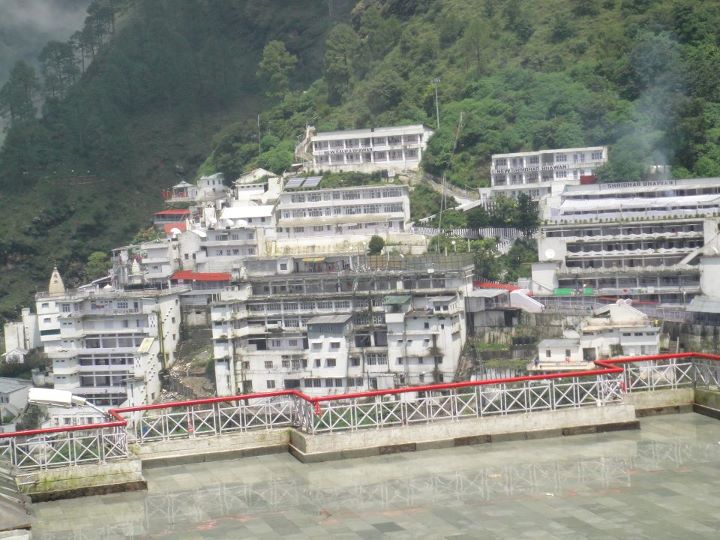
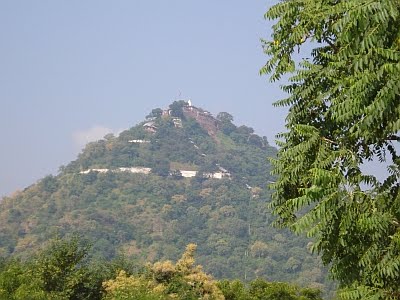
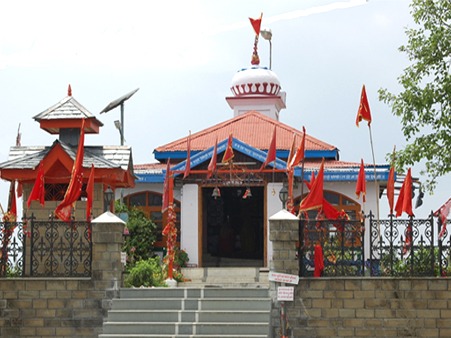
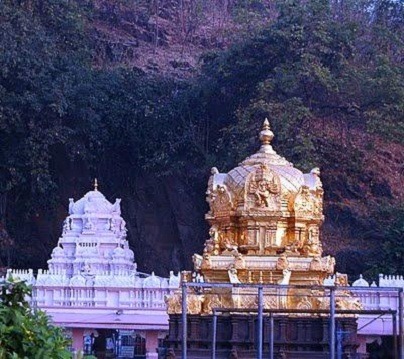
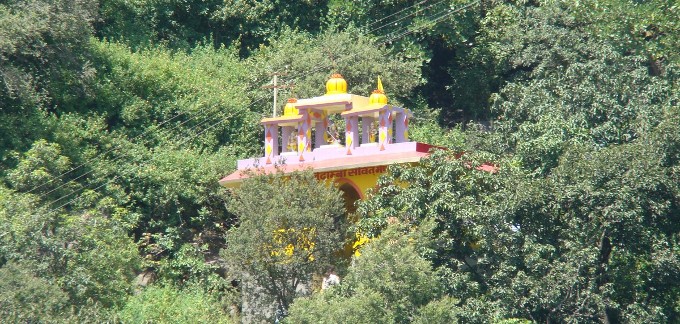
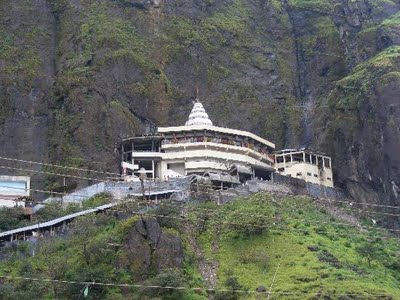
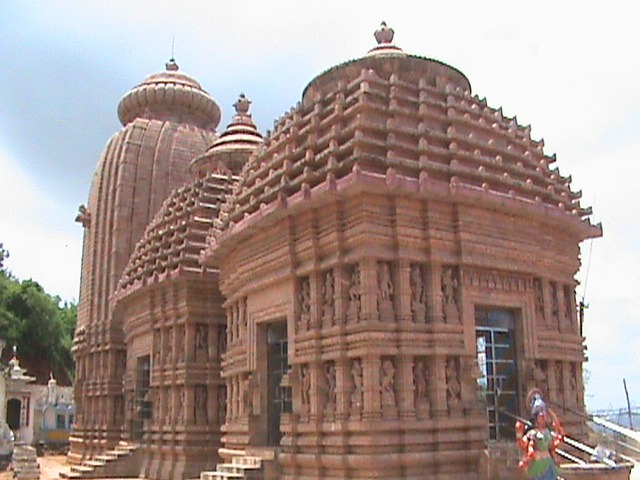
Vaishno Devi Temple: The world famous and most religious pilgrimage destination in India, Vaishno Devi Mandir is located at the height of 5300 ft on in the trikuta hills of state Jammu and Kashmir. The holy shrine of Mata Vaishno Devi is located inside a cave in a hill,  It is one of the most sacred Hindu pilgrimage site, Approximately 8 million yatris visit the temple every year. There is another famous hill temple known as Mata Balaji Sundri Temple in kathua, Jammu and Kashmir.Sharda Mata Temple: Maihar wali Mata Temple is situated on a trikuta hill of maihar in the state called heart of India. The sacred and holy temple is one of the 52 Shakti Peeth of goddess Parvati,where the necklace of Sati fell. The temple is well known for the 1063 steps to the top, Millions of devotees throng the temple all round the year. Other most famous Durga temples in Madhya Pradesh are Ratangarh Wali Mata, Tulja Bhavani Devas and Salkanpur.Tara Devi Temple: The Tara Devi Temple is situated at the top of a hill called the Tara Devi Mountain in Simla, Himachal Pradesh. It is one of the famous temple and most popular tourist attraction of the city,surrounded by lush green devdar trees, green forests and green meadow. The temple was built approximately 250 years ago, Every year thousands of pilgrims visit Tara Devi temple. Himachal Pradesh also has two other most popular Hindu temples Chamunda Devi Temple and Jawala Ji temple.Kanaka Durga Temple: The famous Hindu temple of Goddess Kanaka Durga located at Vijayawada in Andhra Pradesh. The Kanaka Durga Templeis dedicated to Goddess Kanak Durgeshwari, situated on a hill top of Indrakiladri mountain on the banks of river Krishna. It is one of the most important and second largest temple in Andhra Pradesh, Other temples are Tirupati Balaji Temple and Bhadrakali Temple.Chamundeshwari Temple: The Chamundeshwari Temple is situated on the heights of Chamundi Hills at Mysore in the state of Karnataka. The Chamundedshwari Temple is considered to be a very religious temple having large silver gates and golden idols. Chamundi Hills is one of the best tourist attractions in Mysore, Other religious tourist attractions are Devarayanadurga, Hidimbeshwara Temple and Ekanatha Temple.Mansa Devi Temple: Mansa Devi is one of the most visited and most popular temple, dedicated to goddess Mansa in the holy city of Haridwar, in the Uttarakhand state. The temple is located at top of Bilwa Parvat on the Sivalik Hills, a mountain chain of the Himalayas. The Shakti Peeth is one of the famous siddh peethas along with other two Peethas are Chandi Devi Temple and Maya Devi Temple located in Haridwar.Adhar Devi Temple: The Adhar Devi Temple is one of the popular religious destinations, Located in the Mount Abu region of Royal state Rajasthan. The temple is situated in a cave  with picturesque views of the surrounding mountains and forests. The Adhar Devi Temple is dedicated to the Goddess Durga, another world famous temple in Rajasthan is Karni Mata Temple.Bamleshwari Devi Temple: Maa Bamleshwari Temple is situated on a hilltop which is 1,600 ft high at Dongargarh in the state of Chhattisgarh. Dongargarh is one of the major tourist attraction as well as the main pilgrimage of the district and the prominent places of worship. The goddess Maa Bamleshwari temple refferd as Badi Bamleshwari, Another temple at ground level is situated about 1/2 km from the main temple is referred as Chhoti Bamleshwar. The tribal state also host one of the most famous temple called Danteshwari Temple.Saptashrungi Devi Temple: The Saptashrungi Devi temple is located at Vani near Nashik in Maharashtra. This temple is also one among the 51 Shakti peethas located on the Indian subcontinent. The image of the Devi is huge-about 10 feet tall with 18 hands, holding various weapons, A large number of devotees visit every year. Renuka/Anusuya  Devi Temple, Ekvira Devi and Tulja Bhavani Temple are few famous temples of Goddess Durga in Maharashtra.Tara Tarini Temple: The Shakti peeth is situated on the holy taratarini hill in the tribal state, Orissa. The Taratarini Temple is one of the most ancient shakti shrines of India, dedicated to the twin Goddesses Tara and Tarini worshiped as manifestations of Adi Shakti. The taratarini hill Shrine is one of the oldest pilgrimage centers of Mother Goddess and is one amongst the four major ancient Shakti Peethas in India.
Posted by :
Vipul Koul

Sunday, December 25, 2011

In the hope of Skiing in Snowland : Auli-Joshimath

Snow Covered Auli
                                                              Snow Covered Auli


Journey in brief :
Day 1 : Delhi - Rishikesh
Day 2 : Rishikesh - Dev Prayag - Rurdrapryag - Nandaprayag - Joshimath
Day 3 : Joshimath-Auli-Joshimath Temple
Day 4 : Joshimath-Rishikesh-Rafting-Haridwar

Day 5 : Haridwar-Ganges-Temples-Dehradun
Day
5 : Dehradun-Mussoorie-Delhi

It was the month of perpetual spree, I had just returned from an insightful and thought-provoking trip to Varanasi and was again getting ready for an adventurous one to high Himalayas. It was Christmas-2008 and Delhi was welcoming pleasant winters with freezing cold breeze. I am a fanatic lover of Delhi’s winters and wanted to add some spice by visiting Auli, considered as the only Skiing Resort of India, although I have also heard that Gulmarg is also catching up as another prime destination for Skiing.
Cedar Deodar Forest near auli
                                                           Cedar Deodar Forest near auli
We got ourselves quickly booked on a train to Rishikesh but unfortunately it was a sleeper coach that too in that freezing cold weather. Anyway it was a group of 5 guys so we somehow survived the night sipping tea on the deserted platforms. We reached Rishikesh early in the morning and finished all the necessary morning rituals. We were not having luxury of time as most of the transport from Rishikesh to Joshimath leaves early. We finished our roadside breakfast/tea and hopped into a shared taxi to Joshimath.
Road to Joshimath
                                                            Road to Joshimath
The Taxi started heading towards higher mountains. Initially we were driving on the bank of river Ganges till we reached Devprayag. Devprayag is one of the holiest places in Hindu religion as it’s the very site where two sacred rivers Bhagirathi and Alakananda meets and forms the world famous Ganges. Before Devprayag till the origin Gaumukh, Ganges is addressed as Bhagirathi. We stopped at Devprayag to take some photographs of the holy Sangam. After Devprayag we drove further uphill but on the bank of river Alakananda. Roads were really bumpy and we could see land-sliding almost after every few kilometers. The landscape was changing after each hour as we were gaining more and more altitude. It was also becoming colder as well. By the time we took our lunch we were significantly tired yet we were not even half way through. After witnessing many other prayags (Rudraprayag, Karnaprayag, Nandaprayag) and Chamoli district, we touched down in Joshimath at around 9’ o clock in the evening after some 12 hours of rigorous journey (everyone was annoyed with the journey). Fortunately we were having a place booked in advance with room heater in each room. Temperature was sub-zero the time we arrived at Joshimath. Without unpacking any stuff, we went to sleep to regain some energy for the days ahead.
Reflection of rising sun from joshimath
                                                    Reflection of rising sun from Joshimath
Next morning, everyone became amazingly refreshed once we witnessed the golden affect of rising sun on snow peaked Himalayas. For some of the guys, it was the first time in high Himalayas so they were mesmerized with the view. All of us got quickly ready for Auli, which is some 18 km away from Joshimath by road. The best way to reach Auli from Joshimath is Cable car which does not operate all the time but roughly it runs through-out the day. The Cable car platform comprises of a ticket counter and a museum which I found really informative.  This small museum has detailed information about all the peaks which you can see from Auli and nearby sighting spots.
Snow Covered landscape for Skiing in Auli
                                              Snow Covered landscape for Skiing in Auli
We were among the very first tourists going uphill to Auli for that morning. After getting down at Auli, We first sipped a cup of tea and then started trekking uphill. Initially it was thick forest and then all of a sudden we saw a slope covered with mild snow. It was offering one of the finest views of Nanda Devi Range. However snow was not thick enough to do skiing. We headed further up till we found a better place to try our hands on skiing. All of us tried skiing consecutively and failed consecutively. We could hardly cover couple of meters.  Skiing is a complicated affair and relatively dangerous as well. That time of the year snow was not that much as we expected which also made skiing less exciting.  The terrain was a mostly flat covered with snow. As we trekked further up the thin air affect started influencing our systems. We kept heading upwards till a steep patch which offers a panoramic view to entire Nanda Devi range. After couple of hours in the snow land, we receded back to the Cable car station and then to Joshimath. Joshimath is a small town which generally serves as a base station to Badrinath, Kedarnath, Auli, Nanda Devi National Park, Hemkund Sahib, Valley of flowers and other remote destinations. In the winter, routes of all of these places are closed except Auli. One can also reach Mana Village that lies on the same road and considered to be the last village in the Indian side of Tibet Border and one of highest village as well. In the evening, we visited the Joshimath temple which is one of four Math. The Sanctity of the place was intensified due to absolute tranquility and spiritual vibrations were quite evident. We roamed in the vicinity of the entire campus and it was truly cut-loose experience in the ancient India completely desolated from bustling life. Next morning, we had to leave Joshimath due to some urgency and we missed tons of amazing places by a whisker. On the way back to Rishikesh, We stopped before the city to try our hands on river rafting in Ganges which turned out as a mind blowing experience. River Rafting at Rishikesh is not just popular but excessively crowded. One needs to have everything booked in advance to paddle in the river; we were a bit fortunate at that front.
River Rafting at Rishikesh
                                                             River Rafting at Rishikesh
After rafting we headed to Haridwar from where two of us had to leave to Delhi. Haridwar is one the holiest city on the bank of river Ganges which lures millions of pilgrims every year. It’s famous for innumerous temples, Ghats and also as a gateway to Himalayas. For centuries, Haridwar had been a favorite place for many spiritual Gurus. We stayed there for a night and next morning took the holy bathe in the Ganges, been to couple of temples including the world famous Mansa devi temple which lies on the hill top.
Mansa Devi Temple Haridwar
                                                         Mansa Devi Temple Haridwar
Later in the evening we took a bus to Dehradun from RishikeshDehradun is a nice city in the valley and gateway to Himalayas. It’s also a city of country’s best school and beautiful girls. We stayed near Indian Military Academy, a well maintained and organized locality. We roamed around in some of the markets in the evening.
Hari ki Paudi Haridwar
                                                            Ganges' Ghats at Haridwar

Posted by: Vipul Koul

Monday, December 19, 2011

PAKISTAN: The head of the ISI must be prosecuted for hatching conspiracy against democracy


PAKISTAN: The head of the ISI must be prosecuted for hatching
conspiracy against democracy

ISSUES: Democracy, conspiracy

------------------------------Dear friends,The Asian Human Rights Commission (AHRC) has received informationthat the Director General of the Inter Services Intelligence Agency,the country's foremost intelligence agency, has hatched a conspiracyto overthrow the democratically elected government and parliament bytaking help from some Arab monarchies who have strong influence in the
affairs of the country. The Pakistan Army has been trying for two
years to overthrow the civilian government and it is alleged that in
the month of May 2011, Lieutenant General Shuja Pasha, the chief of
the ISI, visited several Arab monarchies in a personal capacity and
sought clearance for the army to take over the country. It is also
alleged that he was given the 'OK' by these monarchies. He also
visited China, without taking permission from the prime minister, but
apparently did not get any formal assistance.

General Pasha also submitted an affidavit in the Supreme Court
accusing the civilian government's former ambassador of writing a memo
to the USA government in which he made charges against the armed
forces and the ISI.

CASE NARRATIVE:

After the attack on Osama Bin Laden's hideout on May 2 by US armed
forces in which he was killed a US businessman of Pakistan origin, Mr.
Mansoor Ijaz, wrote a memo to Admiral Mike Mullen, the then Chairman
of the US Joint Chiefs of Staff, requesting for US backing for a
proposal to install a new, Washington-friendly civilian security team
to assert tighter control over Pakistan’s military, which has ruled
the country for more than half of its history. The memo also offered
to disband "S-Wing", (the ISI's political wing) which used to maintain
relations with the Taliban movement fighting Nato troops in
Afghanistan. Mr Ijaz says that Mr Haqqani, the then Ambassador, had
asked him to send the memo to Admiral Mullen on the assurance that it
had the approval of Mr Zardari, and has offered newspapers email and
phone records to support his claims. His memo was not given any weight
in the US or in Pakistan. He accused president Asif Zardari of
colluding with the Ambassador in sending the memo through him.

After five months following the attack on Bin Laden's Abbottabad
hideout, on October 10 he sent an op-ed in the Financial Times and
disclosed that he has already sent such memo to Mike Mullen. It was
very surprising that after five months of the written memo being sent
to Mullen why it was suddenly reproduced in the Financial Times, to
which the chief of the ISI, General Shuja Pasha, jumped quickly and
went on his own, without taking permission from his boss, the prime
minister of Pakistan, and conducted enquiries in London. He
interviewed Mansoor Ijaz and it is also alleged that following
intimidation and coercion Pasha took Ijaz' statement that President
Zardari is also involved to whom he referred as the ''boss'' of the
Ambassador. According to the affidavit submitted in the Supreme Court,
General Pasha went to London to take statement with the permission of
Chief of Army Staff and on his return reported to the same Chief.

In the whole practice of going to London, taking the statement of
Mansoor Ijaz and submitting his report to the army chief he ignored
the prime minister and his office, behaving very much himself as if he
was superior to the civilian setup.

After returning from London General Pasha and General Kiyani, the
Chief of the Army Staff, forced the civilian leadership to recall
Ambassador Haqqani, and ask him to resign until the inquiry against
him is completed. A meeting between the prime minister, Chief of the
Army Staff and the ISI chief was held, in which ambassador Haqqani was
questioned and the army top brass demanded his resignation which was
tendered in the meeting. It was also decided that a parliamentary
committee on national security would inquire into all the matters and
suggest the prosecution of the responsible person.

But after the meeting Mr. Nawaz Sharif, the leader of the opposition
party, PML-N, went to Supreme Court, bypassing the parliament's
committee. Mr. Sharif is seen in the country as the man of the
military in the politics. He was groomed as a politician during the
period of the military dictator, General Zia Ulhaq, who ruled the
country for eleven years. Sharif's petitions gave very helpful support
to the military establishment to bypass the parliament. The Supreme
Court also took immediate action on the petition and before the
admissibility of the petition was to be decided upon the court issued
the notices to the government and the accused person Haqqani.

The chief of ISI has also told the Supreme Court that what the US
businessman reported was believable and the court can conduct an
inquiry in the presence of Mansoor Ijaz's statements. But suddenly
Ijaz issued a statement referring to a US intelligence source and
accused the ISI chief General Pasha, that on May 7 just after the five
days of the incident of killing of Bin Laden, he secretly visited Arab
countries and asked the permission to overthrow the civilian
government and such permission was given. But later on he denied that
he knew about the matter. However, he has not denied the visit of
General Shuja to Arab countries and the request for toppling the
government. Still the US intelligence office has not denied that Shuja
that he visited the Arab monarchy and requested assistance in toppling
the civilian government nor has the general head quarters of the Army
denied such.

General Pasha's actions are tantamount to High Treason under Article
6 of the Constitution which reads:

(1) Any person who abrogates or attempts or conspires to abrogate,
subverts or attempts or conspires to subvert the Constitution by use
of force or show of force or by other constitutional means shall be
guilty of High Treason.

The prime minister also said that some elements were involved in
conspiracies against his democratic government in order to prevent the
holding of polls to the upper house of parliament next year.

Many ministers and leaders of the ruling party are also pointing out
the conspiracy against civilian rule. The civil society and human
rights activists are also demanding the resignation of and an inquiry
against the ISI chief for hatching the conspiracy against the
democracy. It is also demanded by the civil society and media that if
Ambassador Haqqani was asked to resign on the statement of an American
citizen then General Shuja should also be asked to resign and he
should be tried by a parliamentary commission.

The representatives of the Civil Society including non-governmental
organisations, labour organisations, academia, women’s rights
bodies, and media persons express deep concern over the current
political situation in the country where a crisis is being
manufactured on frivolous grounds, and is being referred as the
so-called Memogate. This has the potential of subverting the
democratically elected Parliament and the Constitution.

The representatives of the civil society say that it is time all
conspirators against democracy and the sovereignty of the people be
called to account. Sovereignty belongs to the people who have agreed
to exercise it through their representatives in a federal,
parliamentary, and a democratic system. Any attempt at arbitrarily
altering this arrangement is tantamount to an attack on the
sovereignty of the people. Various institutions of the state are
supposed to function within their defined constitutional parameters
and complement each other but they seem to be working at
cross-purposes, to the determent of public interest.

ADDITIONAL INFORMATION

Pakistan has been in existence for 64 years 32 of which have been
spent under military dictatorships. The first ten years were spent
under civil bureaucracy. Elected governments have been in power for 22
years but not one of them has been allowed to complete five years
according to the Constitution. The military rulers have changed
Pakistan into a state where the armed forces are not held accountable
before any judicial institution. Whenever the military took over power
no one has ever been held to account on charges of High Treason.

In the last ten years the military and the prime intelligence agency,
the ISI has been involved in forced disappearances, kill and dump
murders of thousands of people but the courts have never shown their
courage to call the military before the law.

It is also alleged that the ISI is involved in bomb blasts and
assassinations in neighbouring countries and providing training to the
Mujahideen.

SUGGESTED ACTION:

Please write the letters to authorities calling them to prosecute the
chief of ISI, General Shuja Pasha for hatching the conspiracy against
the parliament and civilian government and should be asked to resign
from his post and prosecuted for High Treason under article 6 of the
Constitution. There should be an impartial enquiry in the allegations
of the USA intelligence agency and Mansoor Ijaz. General Pasha and
General Kiyani should be prosecuted for bypassing the prime minister,
who is constitutionally in charge of the armed forces and who are
running their own parallel governments.
                                              Posted by:Vipul Koul          Edited by:Ashok Koul

Sunday, December 18, 2011

INDIA: Police an impediment to security

A Statement from the Asian Human Rights Commission

INDIA: Police an impediment to security

There is no doubt that security to life and property is a fundamental
right of every Indian. It is equally the duty of the state to protect
it. The safety of a nation is directly proportionate to the collective
notion of security of every citizen of that country. The single
largest entity that is directly and immediately responsible for the
security of the people in India, like in any other country, is the
local police. However in India, the Asian Human Rights Commission
(AHRC) is of the opinion that it is this very executive organ of the
state that forms the single largest impediment to the security of the
country. (Picture courtesy: Magnifying Glass, The Great Indian Police
Constable, Article available here
                         

Organisations like the AHRC have repeatedly called upon the
government of India that the government must bring the much-needed
reforms to the current state of policing in the country. Indians who
are aware about the state of affairs of the country's police would
agree in one voice that the country's police today suffers from a
series of problems, including but not limited to corruption;
unwarranted political interference; widespread use of torture;
nepotism of all forms; lack of infrastructure and training; absence of
required cadre strength; and above all, deep demoralisation. Yet the
country's governments, state and central, have been keeping reforming
the police as one of its last priorities.

Police officers who are willing to speak privately agree that all of
the above issues, collectively and individually, have damaged the
police beyond repair at the moment, that unless a serious attempt is
made to revive the police from this abysmal downward spiral the
institution has been stooping into, no matter what is being done to
improve the state of internal security of the country, its police
service will not be able to cope up with the security requirement of
the time and will remain the single largest stumbling block to the
country's safety. These officers agree in one voice that in the modern
state, India, there is no place for a police force, as it exists and
functions today. In that, today's Indian police cannot rationally
coexist with the requirements of a modern state and that of its
people.

The cancer of demoralisation that has advanced into the system is of
such nature that many police officers do not think twice before using
their uniform to sell themselves for private gains. The incident
reported from Kerala state last week, where a Circle Inspector of
Police, wearing a sarong and was found loading a lorry with contraband
goods assisted by several of his constables, of which one was named
Satypalan (vernacular for 'guardian of truth') is an example to this
scenario. The local people secretly video graphed the entire incident
and leaked it to the media. It is only after the media exposure of the
incident that the state government reacted against the corrupt and
shameless officer. The general public had filed scores of complaints
over the past several months against the officer, but until last week,
the government had preferred to ignore the complaints. Even today,
none of the complaints are investigated or acted upon. It is the video
that pushed the administration to act, not other genuine complaints.

The AHRC has noted with concern that in India the government will
take action against a police officer only if it has no other option to
save its public image. Unfortunately in all cases the complainant who
dares take a video of a corrupt police officer need not be so
fortunate. The case reported from Tamilnadu state in October this year
is an example. In this incident, a shopkeeper videotaped a woman
police Circle Inspector demanding and accepting Rs. 10,000 as bribe.
Then the shopkeeper called the vigilance cell of the Tamilnadu state
police. The officer on call responded by arriving at the scene. All
the while, the woman police officer was found pleading her guilt to
the shopkeeper and asking him not to report the matter to anyone, in
particular to the media. But as soon as the vigilance officer arrived
with a team of police officers, the officer asked his colleague, who
was caught on video accepting bribes, to leave from the place. Then
the officer assaulted the shopkeeper asking him how dare he video
record the deeds of the police. The entire incident was recorded, and
the police officer was aware that it was being recorded. Yet the fact
that the officer did not hesitate to assault a citizen who dared to
bring to light and report police corruption in full view of a video
camera that the officer knew was recording his deeds as well as audio,
shows the extent of the perception of immunity police officers enjoy
in India. Unlike in the Kerala case, there was no action against
police officers in Tamilnadu.

A random search in the Internet will yield hundreds of results where
police atrocities have been 'caught on tape' in India. Unless there is
an immediate surge by the media by reportage and comments on the
incident, in most cases there would not be any corrective action. In
fact the state of affairs in the Indian police is far beyond the scope
of correction by punishing a police officer here or there.

The entire institution requires an overhaul. Conservative estimates
suggest that more than 40 percent of the police officers in the
country are unfit to serve, out of which 90 percent are persons with
criminal backgrounds. For instance in Kerala, as many as 391 police
personnel, including a Superintendent of Police, a Deputy
Superintendent of Police, a Circle Inspector, 19 Sub-Inspectors and 55
Assistant Sub-Inspectors who are involved in criminal cases, are still
working in the law and order wing of the police. None other than the
Chief Minister of the state, Mr Oommen Chandy, revealed this. Replying
to questions in the State Legislative Assembly on 10 October, the
Chief Minister said that in the state police there are 536 police
officers involved in criminal cases. But this is however the tip of
the iceberg since these are police officers against whom the police
itself have registered cases. Those officers who have managed to stay
clear of any criminal charges despite of their involvement in crimes
should be much higher than those facing prosecution. Above all, the
most alarming scenario is that all the 536 police officers are still
in service! Yet it is not a matter of concern in India.

It is an open secret today that officers for everything, from
appointment to transfer and promotion, pay bribes to politicians and
as it is in the case of Manipur, even to the Chief Minister. The
qualification to be appointed as a police officer in that state is not
intellect, integrity or physical fitness, but the rate of bribe the
candidate is willing to pay to the Chief Minister, his political party
or to its nominee. The AHRC has confirmed information that today, the
rate of bribe to be paid for appointment as a police constable in
Manipur is Rs. 500,000 to Rs. 800,000 and for the post of Sub
Inspector of Police is anything beyond Rs. 1,400,000. What is the
guarantee that these police officers will not accept money or favours
for 'looking the other way' when they come to know about a terrorist
or disruptive activity? In that, the security scenario in Manipur will
drastically improve if corruption in administration and in particular
the state police is checked in that state.

In countries where the government consider its police force to be a
disciplined and serious state agency, worthy of the task they are
entrusted to discharge, allegations against police officers will be
taken seriously. Adequate measures would be put in place that
corruption within the police, if not ruled out is kept at a minimum
level possible. In these countries the public entertain a high
standard of trust in their police and the police officers have a high
degree of morale.

However in India, a police officer is perceived as a criminal in
uniform. Officers and policymakers alike believe that it is only
through fear that law and order could be maintained. What is been
avoided to be acknowledged is the knowledge that fear alienates people
from the police, and visible and widespread ineptitude and corruption
among the rank and file of the police officers cut them into a poor
show of uniformed officers willing to steal even from the beggars'
bowl for whatever it is worth.

Often in every other crime reported in the country, there is a foul
police officer or an entire team of them aiding the suspects. The AHRC
is aware that in states like Uttar Pradesh and Maharashtra, police
officers openly run brothels and engage in human trafficking. In the
national capital, New Delhi, a substantial number of police officers
run private businesses, including the plying of contact carriages in
the city. Unfortunately the security of the country is largely
dependent upon these police officers and the governments are in no
mood to listen. What is alarming however is the banality of it.
About AHRC: The Asian Human Rights Commission is a regional
non-governmental organisation that monitors human rights in Asia,
documents violations and advocates for justice and institutional
reform to ensure the protection and promotion of these rights. The
Hong Kong-based group was founded in 1984.
POSTED BY ; VIPUL KOUL            EDITED BY: ASHOK KOUL


Friday, December 16, 2011

Swami Nand Lal ji maharaj

Swami Nand Lal ji maharaj

Brief Biography

Yogi Raj Swami nandlal Ji
BORN IN 1902.FALGUN SHAKUL PAKSH (TIL ASHTAMI).IN SRINAGAR AT ALIKADAL IN THE FAMILY OF PT.SHAHAJ KOUL(FATHER),BELONGING TO NOBLE AND PROSPEROUS FAMILY.HIS MOTHER DIED WHEN HE WAS JUST A CHILD.HIS FATHER MARRIED TO SECOND WOMEN WHOSE NAME WAS SMT.ZOONMAL.AS ANY OTHER BRAHMIN FAMILY IN KASHMIR WOULD GO TO HARIPARBHAT TO PAY THEIR RESPECT TO THE MOTHER OF WHOLE UNIVERSE MATA SHARIKA BHAWANI(CHAKRESHWAR)AS A DAILY ROUTINE.
HIS ATTACHMENT WITH THE WORDLY AFFFAIRS WERE DICARDED IN HIS EARLY AGE.AT THE AGE OF 14, HE LEFT HIS HOME AND BEGAN OFFERING SERVICES TO THE HOLY SAINTS AND SAGES.HE WENT TO JINPURA(SOPORE) AND JOINED AN ASHRAM.FOR FEW YEARS HE SPENT MOST OF HIS TIME IN ANANTNAG (GOSAIGUND) WITH SWAMI ATMARAMJI.AND AT GAUTAM NAG WITH SWAMI GASH KAK JI.
IN THE MEAN TIME HE PICKED UP BOOK BINDING BUSINESS IN CONTRIBUTION WITH SWAMI SHYAM LAL JI SAPRU WHO LATER ON BECAME HIS FOREMOST DISCIPLE AND FOLLOWER. SH.NANDLAJI LEARNED SANSKRIT FROM SWAMI SRIDHAR AT SOPORE.AND STUDIED VARIOUS SHASTRAS FROM HIM.
IN QUEST OF SELF REALIZATION HE TRAVELLED FAR PLACES AND JUNGLES.DURING THIS PERIOD, MANY PEOPLE DESCRIBED HIS PHYSICAL AND MYSTICAL CONDITION AS SUCH COMPARING WITH SWAMI PARMAHANS RAM KRISHAN,DURING HIS TANTRIK KRIYA SESSIONS. HIS NAILS GROWN UP,HIS WHOLE BODY WOULD BE IMMERSED WITH ASH AND DUST UNAWARE OF HIS NAKEDNESS.PEOPLE WOULD OFTEN FEAR WHEN THEY SEE HIM PERFORMING MIRACLES IN THAT CONDITION.HE ALSO TRAVELLED TO MANSAROVAR AND LADHAK.
HE SPENT ABOUT 2 YEARS FROM 1945 TO 1947 AT SHARDA DEVI PILGRIMAGE AT TATHWAL(NOW IN PAKISTAN) IN MEDITATION.DURING THAT PERIOD HE PERFORMED MANY YAGYAS,SANKIRTAN,SATSANGS ETC.EVERY HINDU FAMILY WHO LIVED NEAR AND AROUND SHARADAJI BECAME HIS DISCIPLES.
IN 1947 WHEN KASHMIR WAS ATTACKED BY PAK RAIDERS WITH PURPOSE OF OCCUPYING KASHMIR, AT THAT TIME SWAMI JI WAS AT SHARADAJI.ONE FEELS JOY AND ASTONISHMENTS,WHEN MUSLIMS WOULD NARRATE THE STORY OF HIS MIRICALES AND AFTER HAVING BRIEF DISCUSSION WITH HIM THEY ESCORTED THE HINDU FAMILIES TO INDIAN TERRITORY AND RELEASED THEM AT BEETPUR(KUPWARA).SWAMIJI RECONVERTED MANY HINDUS BACKIN TO HINDUFOLD IN THE NORTHERN PARTS OF THE KASHMIR.THIS EFFORT WAS APPRECIATED BY MANY.FOR BRIEF PERIOD HE CONTINUED HIS MEDITATION IN AN APPLE ORCHARD AT GAURIPUR-BAUMAI(SOPORE).TILL THE TIME OF HIS HOLINESSES MAHA SAMADHI,HE WOULD REGULARLY SMOKE CHARAS,AT TIMES THIS WOULD CONTINUE FOR 24 HOURS.
LATER ON,HE MADE HIS ASHRAM AND DHARAMSHALA AT TIKKAR(KUPWARA).PEOPLE WOULD THRONG TO THIS PLACE TO HAVE HIS BLESSINGS AND DARSHNAS.PEOPLE FROM EVERY SECT BEGIN TO JOIN IN.SUFI MUSICIANS WOULD COME AND SING,LISTEN TO HIS WISDOM WORDS AND TAKE HIS BLESSINGS.HE OFTEN INSTRUCTED PEOPLE TO DO THEIR MEDITATION WHEN EVER THEY WOULD FIND IT CONVENIENT TO DO IT ,PERFORM YOUR DUTIES TOWARDS ALMIGHTY WITH SINCERITY LOVE AND DEVOTION. AS THIS IS THE KEY TO ACHIEVE ONENESS WITH OUR BELOVED.IN TRUE SENSE HE WAS A MAHARISHI.
WHENEVER,ANY ONE WOULD COME TO HIM WITH PROBLEMS AND QUESTIONS OR FOR ANSWERS.HE WOULD STUN THEM BY TELLING THEM THE REASON WHY THE HAD COME TO HIM,FROM WHERE AND WHAT HE WANTS.SUCH FEATS ARE MERE A CHILD PLAY FOR A SAINT OR RISHI OF SUCH SELF REALIZATION.WHOSE SEPERATION WITH HIS BELOVED COULD BE SELDOM FELT. HIS MIRICALES AND SERVICE TO HIS HUMAN FELLOW BEINGS ARE IN IMMENSE TO TELL.THERE ARE MANY STORIES WERE HE HAS RAISED DEAD TO LIFE,CURED PEOPLE OF HEART ALILMENTS, ASTHAMA.COWS WOULD GIVE MILK ON THEIR OWN.HE WAS CHALLENGED BY MANY FRAUDS BUT WERE SAVED BY HIM AND SHOWED THEM THE RIGHT PATH TO ATTAIN GOD.HE WOULD OFTEN CURE PEOPLE BY MEDICATING THEM WITH DIFFERENT VARIETY OF PICKLES.
WHEN HE WAS BORN OME OF HIS RELATIVES PROPHESED THAT THIS CHILD WILL BRING NAME AND FAME TO OUR FAMILY.HIS NAME WAS PT.AMAR KAUL.HE HIMSELF WAS A NOBLE AND SAINTLY PERSON.
THE GURU OF NAND LAL JI WAS SWAMI LALJI MAHARAJ OF KASHI.HE WOULD OFTEN VISIT KASHMIR ON ELEPHANT TO SPENT HIS SUMMER DAYS IN VALLEY.AT ONE POINT OF TIME HE SAID,THAT THIS BRAMCHARI NAND LALJI HAS ACHIEVED EVERY THING IN JUST SIX MONTHS WHICH TOO ME 12 YEARS TO ACHIEVE.THIS GURU USED TO MAKE ASANA FOR HIS DISCIPLE(NAND LAL JI) WITH HIS OWN HANDS.THIS COULD BE MATTER GREAT ELATION FOR ANY DISCIPLE,BUT SWAMI NAND LALJI KNEW HIS LIMITATIONS AND MAINTAINED GURU-SASHYA PARAMPARA WITH SINCERITY TOWARDS HIS GURU. HE NEVER USED THAT ASANA AND WOULD UNDER HIS FEET.
EVERY SINGLE WORD SAID BY HIM USED TO BE PROPHATIC.IN HIS LIFETIME HE ESTABLISHED TWO ASHRAMS,ONE AT TIKKAR AND SECOND AT HUSHRU IN TEHSIL CHADURA.BOTH OF THESE ASHRAMS HAVE BEEN HOLY PLACES TO TO VISIT.
WHEN THE TIME OF MAHA SAMADHI WAS NEARING IN, HE PROPHATICALLY TOLD THEM THAT HE WOULD LEAVE THEM ON GAURTRAI.AND IN 1968 AT PAMPOSH COLONY(N.DELHI) AT PT.PREM NATHJI SADHUS RESIDENCE HE MERGED WITH HIS BELOVED. EVEN AFTER HIS MAHASAMADHI THIS CHRIST LIKE MASTER STILL HELP AND GUIDE THOSE WHO UTTER HIS NAME WITH TRUE LOVE AND DEVOTION.AND HENCE,WOULD STRENGTHEN THEIR FAITH AND INSPIRE THEM TO PERFORM THEIR DUTY WITH MORE POWER AND VIGOUR.
SWAMI YOGI RAJ NAND LAL JI BRAMCHARI MAHARAJ,HAS THREE DISCIPLES:
  • SWAMI VIBESHAN JI MAHARAJ.
  • SWAMI KRAL BAB JI MAHARAJ.
  • SWAMI MAST RAM JI MAHARAJ.
SWAMI VIBESHAN JI IS IN JAMMU(J&K) PREACHING HIS MASTERS TEACHINGS WITH DEVOTION AND SINCERITY. SWAMI KRAL BAB JI ATTAINED HIS MAHASAMADHI IN 1991 IN HIS ASHRAM AT UDHAMPUR(J&K) JAMMU. SWAMI MAST RAM JI IS ALSO IN HIS PATOLI ASHRAM(J&K)JAMMU.PERFORMING HIS RIGHTFUL DUTY IN SERVICE OF DHARMA AND HIS GURU. FORTUNATE AND NOBLE WERE THOSE PEOPLE,WHO WERE LUCKY ENOUGH TO BE IN THAT YUGA OF SWAMI YOGI RAJ NAND LAL JI BRAMACHARI MAHARAJ AND WERE BLESSED BY HIM. MAY THE BLESSINGS OF THE SWAMI NAND LAL JI BE ON ALL OF US.
                                                POSTED BY ; VIPUL KOUL

The Inimitable Sage Jagadguru Bhagwaan Gopinath Ji

Publication of Bhagawaan Gopinathji Trust


The Inimitable Sage
Jagadguru Bhagwaan Gopinath Ji

"whose influence is being felt in even greater measure now"
by G. N. Raina


"Your Guru has directed me to grace you''- these words were uttered by no less a spiritual luminary than Shri Satya Sai Baba of Puttaparti to a close devotee of Bhagawaan Gopinath Ji when he approached the sage in Bombay at the behest of his son-in-law to seek Grace for overcoming his bodily ailment. The Baba moved his right hand, and poured some holy ash to be taken orally and lo and behold, the devotee instantaneously got rid of his physical pain. The Baba, then, continued saying, ''Your Guru was the greatest Kashmiri saint: he was Jiwan Mukta in the real sense. He will appear before you in about two months''. This was in December 1973, nearly six years after the Bhagawaan had left his mortal coil.
Bhagawaan Gopinath Ji did keep his date and he appeared to the said devotee twice in the subsequent two months (Jan-Feb 1974).
An embodiment of com- passion for all those who sought his grace, Bhagawaan Gopinath Ji has been and continues to be an unfailing source of solace to their afflicted souls. Men and women, young and old, the educated and the unlettered, the agnostics and the believers, would visit him, in and out of season, to receive words of comfort which would still the throbbing pain of their hearts.
Kashmir has produced a galaxy of saints and sages from times immemorial, and in recent past we have had a number of them. But few among the contemporaries have left as indelible an impression on the minds of the people as Bhagawaan Gopinath Ji. Two highly venerated mystics of con- temporary Kashmir -- Kashkak and Nanda Bab, recognised Bhagawaanji's greatness. While Swami Kashkak is on record as saying that Bhagawaanji has been the recipient of special grace of Mother Sharika, Swami Nandlalji described Bhagawaan as ''the king of saints in Kashmir''.
Bhagawaan Gopinath Ji led a simple, austere life. He never moved out of Kashmir: in fact, he shunned publicity, and covered himself with anony- mity. Sadhus and saints from outside Kashmir did visit him. A celibate, he lived with his near relations all his life. Though he read upto middle standard only, yet he displayed a fair knowledge of Sanskrit, Persian, Urdu and English. He spoke very little, never preached, puffed Chillum constantly and always remained engrossed in Brahman, so much so a casual visitor would remain unnoticed by him for hours together.
A Siddha, having attained the olympic heights of spirituality, Bhagawaan Gopinath Ji was an enigmatic God-man. His life was a curious blend of Jnana (knowledge), Bhakhti (devotion) and Karma (action). For most of us who had had the good fortune of his darshan in flesh and blood, he was the holiest of the holy, with a healing touch and wielding Ashta Sidhis for the good of the people and the nation. To some others, his bizarre behaviour presented a picture of his inscrutability. His marijuana smoking, his non- vegetarianism and unortho- dox ways were an enigma to the uninitiated. Ordinary mortals like us could hardly fathom his 'Gunateet' and 'Mayateet' nature.
Born in a respected Bhan family of Kashmiri Pandits in Srinagar on 3rd of July, 1898, Bhagawaan Gopinath Ji al- most inherited spiritual fervour from his highly religious minded father and mother. His mother was born to her parents following the grant of a boon by Goddess Rajnya herself. Bhagawaan Gopinath Ji had two brothers and two sisters. While the elder brother was a bachelor, the one younger to him did marry but remained issueless. The two sisters unfortunately lost their husbands early, the elder one after bearing two daughters and the younger one after bearing two sons and two daughters. Bhagawaanji was looked after by his elder sister and her two daughters.
From the days of infancy, Bhagawaan Gopinath Ji, showed little interest in things material. He would sing the glories of God, of Mother Sharika and seize whatever opportunity he could get to attend bhajan mandalis and raslilas. The spirit of renunciation and the other- worldliness had overtaken his sensitive young mind. That is why his schooling was not complete and he did not take seriously to his uncle's Pashmina business either. He did take up the job of a compositer in the city's oldest press-Vishnath Press, but gave it up only after three years, during which period the press is said to have flourished. Bhagawaan ji rejected the entreaties of the proprietor of the Press saying that his ''Dassdaraz'' with him had ended. Later, he started a grocer's shop which he gave up soon after to plunge headlong into a rigorous tapasya.
From the age of 20, he had begun daily Parikrama of Hari Parbat and would spend hours in Devi Angan absorbed in the meditation of the Divine Mother. Of course, Chillum was his constant companion, even in those days. This period of his Sadhana was marked by devotion to the Shakti aspect of Godhead. He used to recite from memory hymns like Panchastavi, Bhawani Sahasranama, Saundaryalahri Vishnu Sahasranam, Mahimna Stotra, Utpalastotravali, Guru Gita and Bhagwadgita.
Not much is known about who initiated him. The well-known biographer of Bhagawaan ji, Shri S.N. Fotedar has tried to lay his hand on all evidences in this regard but has not been able to establish who his Guru was. Here, we would like to accept what Bhagawaan ji himself hinted at, obliquely though. On being asked, only a few years before his Nirvana, as to who his Guru was, he replied'' any one of the 700 Shlokas of Gitaji can be one's Guru''.
The second and the most important phase of his quest for self realization began when he was 32. For the next seven years, i.e. upto the age of 39, he wrestled with God, so to say. In this period of intense tapasya, he would lie on a bed, face towards the wall, with a lamp burning in his room which would often be cover- ed with layers of dust. It is said that a rat made a hole in one of his heels which took a long time to heal. He had almost lost all consciousness of his body. He would often take Datura seed, opium and other intoxicants and would, at times vomit blood.
While it is difficult, nay impossible, to assess the state of Bhagawaan ji's spiritual advancement during this period, we have a clue given again by Bhagawaan ji himself in a cryptic reply he gave to his elder sister when she tried to pursuade him to take to wordly life in view of the financial difficulties the family was in. He told her, ''Sister, our boat is in the midst of an ocean. Either we will reach the shore safely or get drowned''.
To our great good luck, Bhagawaan Gopinath Ji did swim to the shore and out of the great ordeal of seven long years emerged a Siddha, with of course, a mauled body but a radiant spirit, with full vision of past, present and future. He had realized his true self and become one with Siva, the Ultimate Truth.
The truths of spirit can be apprehended only by those who like Bhagawaanji prepare themselves for their reception by rigorous discipline. It was not for nothing that in later years, he would often tell his close devotees that ''MEHNAT PANANYA BIYI GURU KRIPA'', meaning that intense personal effort and the grace of Guru are the essential pre-requisites of God realization.
Devotees like Prof. K.N. Dhar feel that Bhagawaanji inclined towards the Tantric method of Sadhana. According to him, ''Bhagawan Gopinath Ji opt- ed for the more strenuous path of Tantras with its curves and bends and wove the threads of his life on this texture''. This body, says Rudrayamala Tantra, is an oblation which is to be continuoulsy offered to the fire of self scrutiny. The unextinguishing Dhooni in front of Bhagawaanji since the end of the seven-year spiritual odyssey symbolized this truth.
After realizing the dynamic aspect of Reality, i.e., the Divine Mother, Bhagawaanji took to the worship of Siva, the pure consciousness aspect of Truth. Siva is Infinite Consciousness, the subject as well as the object. Siva and Sakti are one indivisible whole. While Siva is the changeless reality underlying the entire universe, his energy, Shakti, has an infinity of aspects - Chit (intellect), Ananda (bliss), Ichha(Will), Jnana (knowledge) and Kriya (creative work). The recognition (Pratyabijna) of reality, according to Kashmiri Saivist thought, is all that is needed for Moksha. That is why Bhagawaan Gopinath Ji was recognized as Jeewan Mukta (a liberated soul).
Again, Siva and Shakti, in the Ultimate analysis, constitute the contours of a common rather than a specific gender. The male (Nar) and the female (Nari) aspects of Reality are fused together in the case of Tantrik mystics who have often been observed to give feminine names to males and vice versa. One of the foremost Tantrik mystics of Kashmir, Swami Anandji of Jamnagari often addressed his male disciples as females, perhaps to demonstrate that gender had lost all meaning for him and the likes of him. The great sage-poetess of yore, Lal Ded, looked upon all males as females.
An important aspect of Bhagawaan Gopinath Ji's spiritual Sadhana was emission of well-controlled rhythmic vibrations from various parts of his body. Spanda Shastra of Kashmir Saivism speaks of the vibratory nature of ultimate reality. In the last 30 years of his earthly existence, Bhagawaan ji would keep talking to invisible forces while he would be smoking his Chillum. At times, he would not even respond to people around him. None dared disturb him while puffing his Chillum with his eyes turned skyward, emitting and receiving vibrations. Always immersed in Samadhi, he would come down to our plane of consciousness when his attention was drawn, speak a few words and then go back to the same state. It was quite apparent that Chillum symbolized the vehicle of his communion with the Divine. The inhaling of the smoke acted as an aid for supra- mental dialogue with the Ultimate Truth. In such planes of mystic exhilarotion, natural propensities of human organs are said to reverse the roles, where the eyes can speak, the ears can see and the mouth can feel. The senses are said to be under complete control and the mystic utilises them the way he thinks is the best. This stage is known as DIWA SHAKTI.
There is neither East nor West for the naked soul. The whole world is its home and as its home is in each of us, it belongs to all of us''. These words of the French Savant, Romain Rolland, are true of all great saints, savants and sages, Bhagawaan Gopinath Ji belongs to the entire world. There was no Hindu, Mussalman or Christian for him. All religions and all faiths led to the same goal. He once told a close devotee of his. "Think of Brahman as a Tree and sit on any one of its branches. All branches will lead you to the same goal''. As Isa Upanisad puts it, this entire universe is enveloped by God, and nothing but God.
Bhagawaan Gopinath Ji laid stress on Vichar, rational thought and the ability to discriminate between the real and the unreal, and he would often say that ''a Yogi may attain realisation of God but it is only the Vicharvan, the discerning sage and the profound seer, who can fathom all aspects of the Brahman, the Ultimate Truth.'' He confirmed the faith of the devotees in whatever they held dear and guided them according to their capacity. Though he suggested Saakar Upasana (worship of God with form) to the beginners, he would say Yl Gav Taaph Parun meaning that it was just like worshipping the effulgence and not the substance of the sun. On yet another occasion, he told a Sakar Upasak ''you have light to the level of your throat but your body is blank''. He wanted his devotees to realize the absolute truth in all its aspects.
Bhagawaan Gopinath Ji advocated special efforts on the part of a spiritual aspirant. He abhored lackadiasical form of Upasana which he thought was like moving under the shade of willow trees, Yi Gav Veeri Shihilis Tal Pakun. He wanted Truth Seekers to plunge into God realization with complete surrender.
He would often urge the devotees to lift the veil of ego that enveloped Atman. AHANKAARAS NAMASKAAR - SUI GAV OMKAAR - TAMI SAATI BANI SAAKSHATKAAR, which means, ''bid good-bye to Ego and be face to face with reality.''
Here, one would recall an incident when a saintly person was disuaded by a scholar-saint from visiting Bhagawaan ji, saying ''since when have you started bowing to lumps of muck?'' And when the said gentleman went to see Bhagawaan ji, he was asked, ''Why do you come to bow before lumps of muck? We are not chiselled scholars.'' A nice, subtle dig at the scholar-saint! How true! It is the meek, the humble, the unsophisiticated who shall be saved rather than those with inflated egos.
He never advised anyone to give up his houshold, wife or children in the quest of Truth. According to him, a worldly man, a Grihasta, could be a man of dispassion and reach the Ultimate. But he was quite adamant in not guiding those who could not practise celibacy, for he believed that the two centres of Brahma Jnana were located in the Cit (intellect) - one near and the other beyond the back of Chidakasha and that these centres were well preserved only by remaining celibate.
In our spiritual tradition, there are two ways to attain God- head-the one is known as the Buddha way where you tread the path alone, better known in scriptures as tapasya in which individual effort dominates, and the other is to cross the ocean of existence through the medium of a Guru who represents the Divine, who knows the path and is in a position to help others in finding it. The Guru seeks to awaken much more than to instruct, says the great Yogi, Aurobindo Ghosh in his famous work Synthesis of Yoga. And Bhagawaan Gopinath Ji him- self said on one occasion, when a verse in Kashmiri extolling the virtues of a Guru was being sung, Yl GACHHI YACHHUN. It is an indication of God's grace, if one surrenders at the feet of the Guru.
He did not deliver sermons. He initiated a devotee and induced Parmarth (spirituality) by a touch, a mere glance and by sharing his chillum. Each received his grace according to one's Karma.
Strange are the goings-on of mystics. We recognise their greatness on the basis of something they do which is not explained by the ordinary laws of nature. And we describe these ways as mysterious. Saints and sages have been known to have a clear vision, with ability to read the thoughts of others, forecast events, prescribe remedies and clear impediments.
The saints, however are not to be judged by miracles alone, for some of them are really averse to demonstrations of this sort as they do not wish to interfere with nature. But, again, as Bhagawaan Raman Maharishi of Tiruvanamalai put it, ''it is enough for the thoughts of a Jnani to be turned in any direction and the automatic divine activity begins''. As if to prove beyond doubt the effi- cacy of what Shri Raman Maharshi had said about miracles, Bhagawaan Gopinath Ji, during his Amarnath Yatra, addressed an overcast sky at Wavjan above the sacred Sheshnag lake, ''You settle down in Sheshnag'' and in no time was the sky cleor of the black clouds and the thousands of pilgrims resumed journey without fear of a bad weather.
Kind and compassionate as Bhagawaan Gopinath Ji was, he cured incurable diseases like blood cancer, and he would often ask those stricken with malignant diseases to be brought to him and a mere glance or touch would cure them completely, to the surprise of all. On request, he would give some ash from his Dhooni to cure ailments. Diabetes, Tuberculosis, brain haomorrhages and mental disorders were cured by him. He never asked for any money, though whatever was offered was accepted only to be distributed among those present. Once he referred to these offerings (money, fruits, sweets etc) as blood. This is all blood, he would say. And, it is said, he took upon himself any evil attached to such offerings.
A mystic tradition has it that at a particular point of time, a Divine Government functions and oversees the workings of human mind. It also directs the world affairs. Bhagawaan Gopinath Ji was regarded the king of this Divine set up in the State. In this context, one can understand what happened in 1947 and 1948 in the aftermath of a tribal raid conducted surreptituously by Pakistan into the territory of Jammu and Kashmir.
In 1947, in one of his soliloques, Bhagawaan ji was heard saying: ''What is our army doing? They get so much ration and yet do not open a direct route to Kashmir for Ladakhi Lamas.'' And in 1948, we witnessed Indian army conquering Zoiilla Pass and Kargil, thus establishing a direct link with Ladakh. A Military Police Officer connected with this operation was informed by the Front Commander that the operations were directed by a mysterious person, giving his identification clues. Long after that, the said Military Police Officer, a Christian, did visit Bhagawaanji in Srinagar through the courtesy of one Mr. T.N. Dhar and the officer confirmed that the saint exactly answered to the description given by the Front Cammander.
This is not all, In September 1962, when he was at Bhadrakali, Bhagawaanji told his sister and Swami Amrit- ananda who accompanied him, ''Don't you see what is happening across the mountains? A whiff of wind from that side will blow you over''. Rest is a matter of history. Again, before the 1965 war, he pointed towards south-west and said, Kaala (death) was dancing there. At the end of the hostilities, however, he pointed out that ''the west is clear now".
Bhagawaan Gopinath Ji used to sit on his aasan almost all the 24 hours absorbed in Higher Self. Every morning he would wash his face and Yajnopavit at the water tap, tie his turban and put on saffron tilak with a touch of ash in the centre. And then he would start his Dhooni. He would rarely take bath. In fact in the last 30 years of his life, he took bath only twice, once at Kshir Bhawani and another at Chundapora residence in Srinagar when Dal Lake was frozen. It is said that soon after he took bath, there was thaw and the cold wave abated. But even though he did not take bath, his skin usually gave out an aroma. In fact, he had no body consciousness. He used to describe his legs as splinters of wood. He clean shaved his head once a month. The devotees used to massage his body but he would never take bath after the massage. He, however, stopped devotees from doing any massage a year before he left us. He would undertake fasts for months at a stretch. The fasts were not of the ceremonial type, that of missing a meal a day but these involved total abstention from food, except a cup of Kahwa on rare occasions.
In the last two years of his sojourn on the planet earth, he gave enough hints of his decision to give up his gross body. During this period, he did not leave his aasan even to answer the calls of nature. He would remark: ''I have now grown old''. To a devotee who showed concern at his failing health, he said about one and a half month before the fateful day: Amar Chha Maraan (Do the deathless die?) Again, a few months before his leaving the mortal frame, his biographer and a close devotee, Shri Fotedar, asked him why swelling in his genitals persisted. He replied, ''What else is going to happen to this body? It will get shattered piece by piece''. Only a few days before his passing away, he remarked:'' I should like to go to Kshir Bhawani now''. He also said that Dhooni was no more necessary.
Almost on every Sunday, musicians sang till late in the night and he would never ask them to stop. But on his last Sunday on earth, 26th May, '68 he directed the musicians to stop, remarking ''we shall not listen to any more music''.
Then came May 28, 1968, Tuesday - the day Bhagawaan Gopinath Ji finally chose to cast off his Bhautik Sareera. He went through the morning routine as usual. At about 3 p.m. he directed one of his devotees to give the three Sadhus rupee one each. He had the last few puffs at his Chillum. A devotee started making tea but Bhagawaanji said ''We shall not take tea any more''. He asked for water at 5.30 p.m. And at 5.45 p.m. he uttered OM NAMAH SHIVAYA in a low voice, looked around with infinite love towards those present, and closed his eyes. All was over. The revered Nanda Bab mourned the loss by saying that Kashmir had been rocked by an earthquake.
Thus, passed into eternity a great Siddha. He may be no more with us in flesh and blood. But his Spirit continues to guide the ever-increasing number of devotees scattered all over the world. His influence is being felt in even greater measure now.
Nearly a quarter of a century has elapsed since his Nirvana. Yet a mere look at his portrait gives, to the man of faith, the feeling of the presence of a Living Reality. He seems to talk through his lustrous and penetrating eyes. His angelic countenance takes charge of one's afflicted heart, as it were and fills it with inexhaustible bliss. Many a devotee who had never seen him in his life-time, have testified to this mysterious experience.
In his Cosmic form, Bhagawaan Gopinath Ji has been seen to take care of all those who surrender to him, heart and soul. Not bound by the limitations of time and space, Bhagawaanji has been munificent in answering sincere prayers anywhere any time. In the words of Swami Yogananda, the celebrated author of ''The Autobiography of a Yogi'', perfect Masters like Bhagawaan Gopinath Ji "can materialize and dematerialize themselves and move with the velocity of light and utilise the creative light rays in bringing into instant visibility any physical manifestation''. According to him, a sage who has merged his consciousness with that of the Supreme Reality perceives the cosmic essence as light and being free from the three dimensions of space and the fourth one of time, is able to transfer his physical or cosmic form with equal ease through the light rays of earth, water, fire and air.
We are passing through very critical times. Materialism has taken a firm hold over our minds, particularly the young. The moral and spiritual values are on the wane. The need to move from the outer to the inner life, to coordinate the scientific temper and the spiritual approach and to restore the efficacy of our ancient ethical, cultural and spiritual perspectives, has never been greater than now. And in this task, only the saints like Bhagawaan Gopinath Ji can show us the right path, dispel fear in our minds and instil the much-needed faith and love. Bhagawaanji has a divine mission to fulfil. He will, we firmly believe, shed light and illumine the dark patches of our aggrieved souls.
Our salutations to this great sage who made Kashmir, nay the entire world, proud.
                                                   VIPUL KOUL 

MIRACLES OF BHAGVAN GOPI NATH JE MAHRAJ


by Shanker Nath Fotedar

MIRACLES

It is not proper to mention the miracles performed by great saints as, first, they shun publicity and, secondly, they are not to be judged by their miracles. Some of them, in fact, are averse to the demonstrations of this sort, as they do not want to interfere with Naure's ways. Saints generally shun the ashtasidhis (the eight supernatural powers), regarding them as detrimental to spiritual advancement. But, when a saint has attained Shivahood, what has he to lose or gain by performing miracles to help somebody? A few streams flowing out of the ocean, do not affect it. This was true of Bhagawaan Ji. He was a Karma Yogi who found the modern generation engrossed in materialism, with faith in God and godly ways shaken and crumbling. He had great compassion for the suffering humanity and would go out of his way to help them. By his very nature, he could not remain indifferent when the country was in trouble. He put in a great spiritual effort from 1947 onwards, unmindful of the physical hardships he had to endureee e in the process, to bring order out of chaos. Forgetting to eat and drink, and with a foaming mouth and blood-shot eyes, he would go on puffing at his chillumn and offering oblations into his dhooni. He did not deliver spiritual discourses, but induced spirituality by a touch, a look or by offering bhasma, prashaad or his chillum to the suitable aspirants. He seemed to us to be too preoccupied to have any spare time. It seemed as if he was to appear in some difficult examination and was preparing for it. The struggle in his mind was not an open chapter. The miracles reported here have their own instructive value and depict the various aspects of his personality. This is the reason why, I think, they should form part of his biography. Neither I nor any-one else could understand in which direction he was actually working, but major catastrophes were averted in those disturbed times because of his great penance, as is acknowledged by some other people also from Kashmir, which appeared to be the visible sphere of his activity. In the first instance, some incidents affecting the country will be reported
In the year 1947, raiders from Pakistan attacked Kashmir, committing murder, rape and arson, wherever they went. They reached even the outskirts of the Srinagar city and some people approached Bhagawaan Ji for help. He assured them that the raiders would not enter the city but would be halted beyond the seventh and last bridge over the Jhelum in the city. The raiders were actually halted much below the Chhattabal Octroi Post by the Indian Army.
Two months before the raid, he had told a devotee posted at Baramulla that he should get to Srinagar everything from Baramulla, even a blade of grass, as he had purchased those articles with his honest earnings. By Bhagawaan Ji's grace, the devotee was transferred to Srinagar before the raid.
Bhagawaan Ji once went to the Shri Shaarika Bhagawati Shrine at Haari Parvat. That was some time after the raid and a Chandi yoajna was in progress there then. As soon as those present saw him, they flocked round him and requested him to save Kashmir. He replied, 'There is no danger, as I am always present on the battle fronts,' In one of his soliloquies, Bhagawaan Ji was heard saying, 'What is the army doing? They get so much rations and yet do not open a direct route to Kashmir for the Laddakhi Lamas.' We failed to comprehend what this meant. In the month of November, 1948, however, the Indian Army conquered the Zojila pass and Kargil, and a direct link was re-established with Ladakh.
The part played by Bhagawaan Ji in this campaign was revealed by an officer of the Military Policy who was connected with this operation. He had been informed by the Front Commander that a mysterious person directed the operations and gesticulated to the jawans at the battle front to fire in certain directions; this proved correct militarily. This Military Police Officer had been given the identification clues of the mysterious person and very much wished to know whether a person answering the description (who, he guessed, must be a saint) lived in flesh and blood. He gave the identification marks to one, Mr. T.N. Dhar of Rainawari, Srinagar. During this period, Mr. Dhar, among others, had already seen Bhagawaan Ji sitting on a pillow at his residence at Reshi Mohalla (Srinagar) and gesticulating with his hands as if to direct someone invisible to fire in this or that direction.
Mr Dhar told the Military Police Officer that he knew the saint in question and sent a man to escort him to Bhagawaan Ji's place. The officer was a plump, rather short-sized person of a dark complexion and with a pock-marked face. He was a Christian. After seeing Bhagawaan Ji, he said that the saint exactly answered to the description given by the Front Commander, who had also said that the saint had been mainly responsible for their victory.
During this period, Bhagawaan Ji fasted. But one morning he suddenly had a barber called in, had a shave and broke his fast. He was in a relaxed mood and his genial self again. 'The news of the capture of Zojila was announced the same evening.
Late in the autumn of 1956, the people of Kashmir were panic-stricken owing to the uncertainty about the future of Kashmir. A large number of them went to implore Bhagawaan Ji to save Kashmir. In a soliloquy, he remarked that Kashmir would be ruined if the Indian Army left. This accentuated their worry. Though this subject was often mooted, Bhagawaan Ji gave no reply but continued his austerities with redoubled vigour. One fine morning, when I, too, was present, he, on his own, gave the reply, saying that the Army would remain in Kashmir for the good of the country and the people. A month later, on 18th February, 1957, the UN Security Council passed a resolution co-sponsored by the USA, the UK, Australia and Cuba for inducting a UN Force into Kashmir. The resolution was, however, vetoed by the USSR and the picture changed dramatically during these years, he would often say, 'Kashmir is in the throes of consumption (silla). I am sitting on Kashmir and will not allow it to drift away.'
Bhagawaan Ji also, seems to have been connected with the Sino-lndian border war of 1962 in some mysterious way. He was at the Bhadra-Kaali shrine about the month of September, 1962. As has been narrated elsewhere, he was once sitting in an open space with his dhooni on, and sent away all his devotees back to Srlnagar, except his sister and Swaami Amritaananda, telling them 'Don't you see what is happening across the mountains (Tibet side)? A whiff of the wind from that side will blow you over.' This period, too, was for him one of intense spiritual activity for the safety of Kashmir. He returned to Srinagar after about three weeks' stay. The Sino-Indian border war had already started. While in Srinagar, he told his sister one night at about 11 p.m. that he was going out. Noting his determination, she assented and he left the house wrapped in a woollen chaddar and carrying only his chillum He returned after an hour or so, intensely cold. The Next day, he contracted bronchitis and all that. He told a devotee whhh ho had summoned courage enough to enquire where he had gone the previous night, 'To Tibet, to settle matters.' Some days later, the hostilities ceased.
Before the Indo-Pakistan war started in 1965, he would, of his own accord, point towards the South- West (i.e. towards Poonch, Rajouri and Gulmarg) and say that there was Kaala or Death there. The reference, we realised later, was to the Pakistani infiltrators who had sneaked into these areas and indulged in loot, arson and murder. One evening, during the 1965 war, he got up all of a sudden from his usual reclining position, saying that there was danger looming. He took out a sugar candy and put it into his mouth; he also gave a sugar candy to either of the two men sitting before him, and audibly asked himself whether he should save Srinagar or Delhi. Then he suddenly became silent. Only a few minutes later, the Srinagar aerodrome was bombed but the damage was minimal. It was learnt later that a Pakistani plane on a bombing mission to Delhi had been brought down near Meerut.
A few days before the hostilities ceased, he observed, 'The West is clear now.' Now I shall proceed to give the details of some cases where Bhagawaan Ji helped to ease individual distress. The instances cited are authentic.
1. The wife of Shri Chuni Ial, Vice-Principal of a music institute in Srinagar, once suffered from the cancer of blood (Leukaemia). She was under the treatment of an eminent physician specialist. At one stage, on the basis of her blood picture, the doctor gave up all hope of her survival, and left her free to take anything she liked, as her end was near. Dejected and distressed, Shri Chuni Lal went to Bhagawaan Ji, who gave him a small packet of the ashes from his dhooni. With tearful eyes, he said, 'What will these ashes do to my dying wife?' Moved visibly, Bhagawaan Ji said that she should take the ashes with water or medicine. Shri Chuni Lal went home sceptical about the efficacy of the ashes. He, however, told everything to his mother who snatched the tiny packet from his hand and put some ashes on the patient's tongue, smearing her body with the rest. The patient went off to sleep immediately. Waking up after two or three hours, she said that she was feeling hungry. Since the night had advanced, they could get and feed her milk only. The next day also, she felt very hungry though she had been given ample feeding. The doctor advised that the patient be taken to hospital for a fresh blood check-up. The check-up revealed a normal blood picture with no trace of the cancer. The doctor was puzzled and enquired of Shri Chuni Lal what he had done and how she had been cured. Shri Chuni Lal related the story of the ashes. He says that subsequently the doctor also went to pay obeisance to Bhagawaan Ji.
2. A lady in Delhi was declared a case of pyelonephrltis (Tubercular). The tests revealed that the infection in the kidney was galloping and involving healthy tissue . A relative of the lady approached Bhagawaan Ji in Srinagar with the prayer to save her, as her death would mean the ruin of her three young children. Bhagawaan Ji was moved, filled his chillum and smoked it for about half-an-hour and said, 'Go, the lady is saved'. Her husband reported later that the tests had revealed an improvement in the condition of the kidney and that she was recovering. She recovered fully and leads the normal life of a housewife .
3. Once, one of Bhagawaan Ji's devotees was suffering from a heart and a stomach ailment. He went to Bombay and got himself thoroughly checked up by a professor of cardiology. The treatment prescribed did not have any appreciable effect. The patient returned to Kashmir and was one day sitting in front of Bhagawaan Ji who, of his own accord, told him that he had renewed his heart and stomach. The devotee was fully cured. Next winter, he went to Bombay and got himself rechecked by the same cardiologist, who was surprised to find nothing wrong with the heart, and told him that he had expected changes for the worse in his heart during the year. He then enquired whether he had used the medicines prescribed. On being informed that the medicines had not been used, the doctor wanted to know how the marvelous cure had taken place. The patient informed him that it was only divine grace, leaving the doctor all the more amazed.
4. One of Bhagawaan Ji's devotees once broke the head of his femur. The patient's relatives approached Bhagawaan Ji for instructions whether the patient should be removed to hospital. He told them that he should rest in his room and that he (Bhagawaan Ji) would cure him himself. A month after the incident, he asked the patient's relatives to bring him to his place. He was taken there on a stretcher; placed in a chair, he was ushered into the presence of Bhagawaan Ji, who told him to rest for a few days in the ante-room. One day, Bhagawaan Ji went into the ante-room and helped the patient to stand up and move a few steps. He asked him to continue the practice himself with the help of crutches; after a few days, he directed him to go back home. The man is quite well and can walk long distances though with a slight limp.
5. One of Bhagawaan Ji's devotees was once laid up with an attack of what is commonly called 'black motions', and was removed to hospital by his relatives, without his (Bhagawaan Ji's) consent. After a few days, he advised a relative of the patient to get him back from the hospital, saying, 'I shall do the rest'. He also advised that the patient be given cooked rice and gram daal. Surprisingly, the doctor also suggested the same diet.
6. On 26-11-1966, one of Bhagwaan Ji's devotees, Pt. Pran Nath Kaul, who appears to be the man of destiny for carrying on his mission. was sitting before him, as usual, when the latter's brother came in, running and alarmed. He told Pran Nath Ji that his father, whose nose had been bleeding mildly off and on for two days, had started bleeding profusely from the nose and that his condition was fast worsening. Pran Nath Ji was asked to go home immediately along with a doctor by his brother. The devotee was nonplussed and wondered how he could get a doctor, the hour being very late. He talked about it to Bhagawaan Ji. A lady sitting there also prayed to Bhagawaan Ji for the patient's cure. Bhagawaan Ji gave a small quantity of dry tea leaves lying in front of him to Pran Nath Ji and told him that a decoction of it, mixed with sugar, should be given to the patient. Pran Nath Ji continued to stay on at Bhagawaan Ji's place, asking his brother to take the tea leaves home. As soon as a few sips of the tea were takeee en by the patient, the bleeding stopped. The next day he felt normal.
7. In December, 1963, the Holy Relic was found missing from Dargah Sharif, Hazratbal, Srinagar. All the people of Kashmir were terribly upset. There was a great commotion in Srinagar and the rest of the Valley. Normal life got disrupted and the Government appeared to have lost its grip on the situation. There was an apprehension of the situation deteriorating further. Pt Shambhu Nath Bhan, later a member of the Bhagawaan Gopinath Ji Trust, and some others approached Bhagawaan Ji for help. Pran Nath Ji also was present on the occasion and joined the others in praying to Bhagawaan Ji that the Holy Relic must be found as only then would the peoples' anguish be over and normalcy return to Kashmir. After a short pause, Bhagawaan Ji smiled and said, 'There is no worry. The Holy Relic will be found soon.' The very next day, it was announced that the Holy Relic had been found. As Bhagawaan Ji had predicted. Its genuineness was certified by the saint Khwaja Mirakh Shah Sahib of Shalimar and some other competent and reee eliable people.
8. A devotee of Bhagawaan Ji had a long-standing throat trouble, which the doctors suspected to be due to some malignant growth. Bhagawaan Ji asked him to get small brick pieces, heat them in the sun and keep applying them to his throat. After some time, the trouble disappeared.
9.(a) The husband of a pious and rich lady, a devotee of Bhagawaan Ji, fell ill with the cirrhosis of the liver. The lady requested Bhagawaan Ji to cure him. Though the request was made many times, he did not say anything in reply. However, one day he asked the lady to get her husband along with her to his place.
The lady's husband agreed reluctantly but, when he sat in the car to go to Bhagawaan Ji's place, he suddenly came out and did not go. He refused to go there on some subsequent occasions also. He passed away soon after. On the night previous to her husband's death, the lady went to see Bhagawaan Ji. She complained about the patient's lack of appetite. He asked her to give him some tea and also said, in my presence, that the pandits had started the katha which meant that the man's end was near. The katha is narrated for ten days after the death of a Hindu in Kashmir.
(b) This lady was a great devotee of Bhagawaan Ji. She developed asthma and hypertension but continued to live for about fifteen years. One day, he told her, in my presence, that her disease was sleeping on one of his legs; he then pointed to a spot on his own right leg, where, however, we could see nothing abnormal. During the year 1972, about four years after his giving up the gross body, the lady had a vision of him in a dream; he showed her his leg with a big scab on it but put the leg back under his phiran. This meant that he was still looking after her physical well-being, continuing to take the disease upon himself even after giving up his gross body.
Two or three cases have come to our notice when Bhagawaan Ji asked the patients to be brought to him. If they failed to come for this or that reason, they perished; those who came, got cured.
10. Bhagawaan Ji had a strange way of curing heart patients. When the patient would be sitting before him, he would begin feeling his own pulse for a few minutes in both the wrists alternately, and the patient would get cured. He also advised some such patients to have an oil massage after a bath.
11. Shri Shiban Lal Turki, a devotee of Bhagawaan Ji, who appears to have brought a good store of spiritual progress from his previous births and is well on the path of God-realisation, has reported the following experiences with Bhagawaan Ji:-
(a) One day I was pressing Bhagawaan Ji's feet for an hour or so and felt elated for doing that good deed. Thereupon Bhagawaan Ji said, 'You fool, you have gone crazy over pressing my feet which are simply splinters of wood". This opened my eyes and I fell at his feet, begging pardon. Nothing was hidden from Bhagawaan Ji, not even a thought that occurred even for a fraction of a second in another's mind.
(b) I was studying in the B.Sc. classes. One day, I wore a new shirt and pants, adding grace to my personality. My college friends started envying me. This inflated my ego and I thought I could make love to any girl I liked, and there were other low thoughts as well. I went to see Bhagawaan Ji about a week after this incident and he, in his bewitching way, repeated not-only the sentences my friends had used about me but also my filthy thoughts. I started sweating from head to foot. Had I not known that Bhagawaan Ji was benign, I would have fainted. However, I became rooted to the spot, as it were, and could not move. He went on to say, "What does this body contain, except dirt, phlegm urine, filth and the other excreta? Which of the body's outlets gives out any thing attractive? So why this feeling of pride?"
'(c) I went to Agra to try and get an M. Sc. Seat without taking Bhagawaan Ji's permission. The Head of the Department concerned kept dodging me from day to day and I had to stay on in Agra in the grueling heat of summer. As I did not write to her, Mother, getting anxious, approached Bhagawaan ji. As soon as she mentioned me, Bhagawan Ji showed great anger saying, "Poor boy is being sent from pillar to post, and is staying in a building situated on a four-way crossing [an exact description of the place I was living at] but is well and will return soon." I returned home soon afterwards.
'(d) My elder brother's marriage was to be celebrated and it had been raining continuously for two days; there appeared to be no sign of the sky clearing and, if the rain did not stop, the marriage function would be in a mess for lack of adequate space in the house. Mother went to see Bhagawaan Ji. Looking at the sky through a window, he waved a stick in the air as if dividing the clouds. Soon after, the vast expanse of clouds broke into two, and the next morning the sky was quite clear. We could arrange the function in our compound.'
12. Sister Jai Kishori a devotee of Bhagwaan Ji and model of chastity, is likely to be a promoter of Bhagawaan Ji's mission among the womenfolk. She has to say this about Bhagawaan Ji:- 'I went to pay respects to Bhagawaan Ji for the first time in the year 1964. As soon as I was seated before him, he cast an affable glance towards me and smiled. I felt a surge of bliss inside me. I continued to visit him practically every day thereafter.
'In the year 1967, the city was under curfew for many days and I could not go to see him. I felt very sad. An intense longing to pay my obeisance to him developed within me and I was restless. Then something unexpected happened: the curfew was lifted for just an hour and I dashed towards his residence. I found him in an ecstasy. He cast a benign look towards me and smiled. I returned home happy and relaxed.
'In the winter of 1967, I was returning from a pilgrimage to Haridwar; it snowed heavily and the road got blocked near Banihal. The clearance of the road was likely to take many days; I was in deep anguish, and did not know what to do. I could only pray to Bhagawaan Ji for help. After only a short while, the signal was given for our bus to start and we reached home in Srinagar safely. No other bus could come to Srinagar for a number of days on that occasion. The next day, I went to pay obeisance to Bhagawaan Ji. It seemed to me that he was waiting for me to come. After he had finished smoking his chillum, he looked towards me, smiled, pointed towards his own shoulders and said that he had to shoulder the bus for my safe arrival.'
13. Shri Mohan Kishan Ticku, an esteemed member and Organizer, Bhagawaan Gopinath Ji Trust, has reported the following experience with Bhagawaan Ji:-
'I am a businessman and my shop is situated on the road-side on the main Ganpatyaar-Habbakadal Road, Srinagar, on the right bank of the Jhelum. Once, Master Zinda Koul Qasba, a well-known philospher - poet of Kashmir and popularly known as Master Ji, was sitting in my shop, and there were some others also. Pt Shambhu Nath Bhan, a distinguished member of the BGT, passed that way and, seeing Master Ji sitting in the shop, came up and spoke to him. Master Ji enquired of Mr Bhan where he was going. He replied that he was going to pay his obeisance to Bhagawaan Ji. Master Ji told him that he had great respect for Bhagawaan Ji but did not like his smoking the chillum more or less constantly. Mr. Bhan then walked on quietly. A few minutes later, I, too, followed him. As soon as we were seated after paying respects to him, Bhagawaan Ji raised his head and said, 'What business has anyone to pass remarks in a road-side shop regarding my chillum smoking. I am doing this with a special purpose". Bhagawaan Ji being clairvvv voyant and clear audient. nothing was hidden from him.'
14. The incident that follows shows Bhagawaan Ji's solicitude for his devotees. Shri Makan Lal Tutoo, a devotee of Bhagawaan Ji, has this to say:-
'Early in the morning of 29th May, 1968, I wanted to have Bhagawaan Ji's darshana, not knowing that he had given up his mortal frame the previous day. As soon as I learnt about the tragic fact. I was smitten with grief; I proceeded to his residence and joined the procession to the cremation ground. I am a businessman and used to go out of Kashmir to sell some Kashmiri handicrafts. I had returned from Delhi about a month before and was on the look out for a shop at a good shopping centre in Srinagar. In spite of great efforts, I had failed. In fact, my contemplated visit to Bhagawaan Ji on 29th May was for his help in getting a shop on rent. While the last rites were on at the cremation ground, I was feeling terribly dejected and forlorn, thinking that the very source of my divine help had dried up . Beset with grief and anxiety, I lay reclining on the turf-covered ground. Soon, I fell into a sort of trance in which Bhagawaan Ji appeared before me, and directed me to follow him. He took me to Lambert Lane, one of the busiest shopping centres in Srinagar, opened the two locks attached to the shutter of a shop, raised the shutter, and signaled to me to enter the shop. Thereupon, I woke up from the trance.
'Three or four days later, I went to Lambert Lane. While I was sitting in a shop there, a man came up and informed me that a shop was to let. I approached the manager of the shopping centre straightaway. He handed over to me the keys of the shop there and then though he had rejected many prospective tenants. Bhagawaan Ji is very benevolent and helps his devotees in difficulty, even if he is not physically with us.'
15.(a) Shri Somnath Kaak, employed in Lloyds Bank, Srinagar, narrates the following experience:-
'My brother, Shri Jawahar Lal Kaak, when he was an Engineering student in Bombay, suffered an attack of renal colic. The doctors diagnosed it as a case of renal stone and advised an immediate operation. As soon as I received his telegram to this effect, I approached Bhagawaan Ji for help. He started rubbing his own left side, and, in his characteristic way, observed, "Stones come down with snow, with water; look, the stone has come down with urine." Though the hint was clear, I repeated my request. He, in turn, repeated that the stone had come down. Next morning, I received another telegram from my brother stating that, after another severe attack, he had a vision of somebody with a turban on and wearing a phiran upturned; this man was pulling at the stone. A few minutes later, the patient passed urine and the stone came out . He knew nothing about Bhagawaan Ji then.
'Later on, my brother again developed a kidney stone. On 3rd April, 1967, I received a telephone call from him from Bombay that he was to be operated upon on 5th April, 1967. As soon as I received this information, I went to see Bhagawaan Ji at about 6 p.m. There were many people assembled there and I could not get an opportunity to speak to him till 11 p.m.; by then, all others had left. I told him that it would not be possible for me to reach Bombay on the 4th. i.e. the next day, to be present at my brother's operation on the 5th morning. "Go by air', he said firmly. When I said that it would not be possible to get an air seat on the 4th without prior booking, he repeated, "Go by air tomorrow." Miraculously and by his grace, I got an air seat direct to Bombay by which I arrived on the 4th evening. On the 5th morning, the patient was operated upon successfully. Soon after, as he was being taken out of the operation theater, he regained consciousness. The first thing he enquired about was, "Where has Bhagawaaaa an Ji gone ? He was with me, when I was taken to the theater, with one side of his phiran on his shoulder and with a turban on " He (Bhagawaan Ji) had also told him that he should wire his mother in Srinagar to get purees made of 2 1/2 seers of flour, and send these to his (Bhagawaan Ji's) residence at Chondapora, Srinagar. The purees were taken to Bhagawaan Ji's place; he smiled and distributed them among all present.
(b) 'In 1960, accompanied by the other members of my family, I went on a pilgrimage to Haridwar. Before leaving Srinagar, I went to seek Bhagawaan Ji's permission. He agreed and gave me a small packet of bhasma, advising me to keep it with me. This was unusual, as he gave bhasma only on request. From Srinagar, we went direct to Delhi to spend a few days there before proceeding to Haridwar. Our host in Delhi, Shri Lakshmi Nath Zalpori, lived in only one room along with his family. We felt cramped up in it and wanted to leave as soon as possible. Nevertheless, we stayed on for three days. When we were about to leave for Haridwar, our host's daughter, aged about nine, was suddenly taken seriously ill; she also lost consciousness. The doctors diagnosed it as a case of meningitis. After three days, her condition worsened and the doctors gave up all hope of her survival. We felt extremely sad at our presence in the room when death was hovering over a member of our host's family. I lay awake the whole night, invokiii ing Bhagawaan Ji's grace to save the girl. Early in the morning, the idea flashed across my mind that the bhasma given to me by him, was meant to cure the girl. Straightaway, I ran to her mother and asked her to wash the patient's face. Her mother declined the request saying that the girl was dying. She gave in, however, in the wake of insistence. I took out a small portion of the bhasma and, mixing it with a little water in a tea-spoon, put it into the patient's mouth. She could not gulp it down and part of it spilled through the corners of her mouth. A few minutes later, when I tried again, a little water mixed with the bhasma went down her throat. About 15 minutes later, she started moving her legs and arms, and began to moan in a low husky voice. After about half an hour, she regained consciousness and opened her eyes. An hour later, she sat up in her bed. In the evening, she played with her playmates.'
16. Once, Bhagawaan Ji cried out, 'There will be an earth-quake, causing much destruction.' The many people present became panicky, fearing Kashmir might be rocked by the earth-quake. The very next day, there was a terrible earthquake in Iran, causing immense loss of life and property.
17. An incident reported by Pandit Vish Nath an old man in the employ of Ganesh Asthaapan, Srinagar, runs as follows:-
'In the year 1960 or thereabout, on the day following the Diwali day, I went to Bhagawaan Ji's residence at about 3 p.m. There were many other people also there. A young man from among them picked up a lump of hashish lying in front of Bhagawaan Ji while the latter was busy smoking his chillum and hid it in his phiran pocket. After Bhagawaan Ji had finished smoking, he asked the young man to keep the hashish tied in a handkerchief. Thereupon, the young man noticed that the pocket in which he had placed the hashish had become heavy. He also sensed something moving in it. After he had put a hand into the pocket, he started shrieking, "A snake, a snake . I am dying; I am dying. Save me." And a black snake, about 3 feet long, came out of the pocket, and all those present in the room, including Bhagawaan Ji's sister, bolted. Bhagawaan Ji, however, said, smiling, "There is no danger. Come back. " The snake crawled on to Bhagawaan Ji's lap and stayed there for a while. Bhagawaan Ji patted it on the back with his riggg ght hand and then asked it to go away. It crawled into one of the folds of his aasana and was never seen again. This, obviously, was a reprimand to the young man for committing theft.
Bhagawaan Ji usually did not seem to take notice, if anybody stole the money lying before him. A small boy once stole his cloth purse with money in it, but brought it back the next day.
18. During the year 1947, when Pakistani raiders attacked Kashmir, a Kashmiri Hindu was on duty in the Sindh Valley into which the raiders had infiltrated. As he failed to return to Srinagar, his wife got anxious and approached Bhagwaan Ji early one morning, praying to him for the safety of her husband and his safe return to Srinagar. In a round-about way, Bhagawaan Ji indicated that there was danger to her husband. She understood what he had told her but kept sitting, imploring him in her heart that her husband- might return home safely. At about 2 p.m., Bhagawaan Ji asked her to leave, saying that he would return. Dodging raiders, her husband reached Vayilu, a place about 18 miles from Srinagar, that very evening. There, he found a bus full of passengers. He pleaded with the driver to take him along and was made to sit on the roof of the bus. Reaching Srinagar, the bus stopped suddenly near Jama Masjid. He lost the balance, toppled over and fell down. But he felt somebody holding him in his arms while he waaa as falling, and saving him from sure death. Those who saw him falling down ran to him and removed him to a shop on the road. After he had taken some water, he was his normal self again and walked home. There is a proverb in Kashmiri that, by the intercession of saints, 'Kaathis Chhe Kath Gatshaan', i.e., a man destined to die on the rack gets a mere scratch instead.
19. Pt. Maheshwar Nath Qasba, a businessman with strong faith in Karma Kaanda is a scholar of Vedantic Literature. He has visited and served many saints, but, maintaining his individuality, sipped at all cups, draining none. He called at Bhagawaan Ji's place during the period 1957-68 off and on. One of the experiences, related by him is given below:
'During the year 1966, I once went to Bhagawaan Ji's place at Chondapora, Srinagar, late in the afternoon. While sitting in his august presence, I had a feeling that I would miss my evening aarti at the Haari Parvat Shrine of Shri Shaalikaa Bhagawati and was very much disturbed. At dusk, while sitting before him, I was delightfully surprised not only to get a full picture of the aarti; I saw clearly the big vermillion-coated slab, on which is engraved the Shri Chakra representing Shri Shaarika Bhagawati, the ghee lamps kindled by the pujaarias is usual with him on such occasions, and a dazzling light on the wall being Bhagawaan Ji; I could also hear the aarti being recited there. This was a scene never witnessed by me before, away from the Shrine. What puzzled me was Bhagawaan Ji's insight into the hidden recesses of my mind and fulfilling my desire by not only bringing a visual picture of the aarti but also making it audible to me. It seemed to me that the very walls of Bhagawaan Ji's room were reciting the aarti'
20. Shri A.N. Fotedar, then a Divisional Forest Officer, was suspended from the service on a flimsy charge and for no fault of his, in the year 1958. During the period of his suspension, he, along with his wife, was once going to a friend's house, when he encountered Swaami Nand Lal Ji (Nanda Bub), a clairvoyant saint of Kashmir, mentioned earlier also. Swami Ji, whom Mr Fotedar had not met previously, directed him to follow him to the house of a Kashmiri Hindu, where Swaami Ji, along with a retinue of people, was going. Swaami Ji, who was in the habit of putting on a tilak on the foreheads of all who came to him and giving parvaanas (chits of paper written on by him) to people, wrote down a parvaana in Urdu and handed it over to Shri Fotedar. On this parvanna, which is still in Mr. Fotedar's possession, it was written that he should put in an appeal to Shahanshah (King of Kings) Gopi Nath Ji who is adorned with seven medals, and lives at Chondapora, Srinagar. He also told Shri Fotedar that he would meet a maaa an at the Haari Parvat Shrine, Srinagar. The man would guide him to Bhagawaan Ji's residence. Mr Fotedar used to have a daily parikramaa round Haari Parvat. Two or three days later, while he was going round the hillock in parikramaa, he met a subordinate of his, who implored him (Mr Fotedar) to go and seek Bhagawaan Ji's grace. He pleaded with earnestness and offered to take him to Bhagawaan Ji's place. A few days later, Mr Fotedar went to see Bhagawaan Ji accompanied by this man and also on some subsequent occasions.
On one occasion, while Mr Fotedar was sitting in front of Bhagawaan Ji, he started debating in his mind about the pros and cons of astrology. Though he tried to put the idea out of his mind, he failed, and became uncomfortable and felt irritated. Meanwhile, a man come and sat in front of Bhagawaan Ji. After he (Bhagawaan Ji had smoked, he gave his chillum to this man, who returned it after having a few puffs. Soon after, this gentleman started speaking about the effect of the grihas (stars) in the various positions in a horoscope. Mr Fotedar, who has a rational and critical mind, did not believe in horoscopes and did not in the first instance suspect that this man was speaking about the positions of the stars in his (Shri Fotedar's) own horoscope, but somehow he got interested and began to listen to him with attention. Mr. Fotedar asked him where he had seen his janma kundali (chart of stars). The man did not reply but closed his statement with the remark that horoscopes are true, but the man reading them musss st be a saadhaka who can interpret them correctly. Bhagawaan Ji again gave him his chillum. This man had a few puffs and, returning it to him (Bhagawaan Ji), fell silent. It now appeared that he was not the same man as had spoken about the correctness or otherwise of horoscope reading. He even confessed he knew nothing about astrology.
Mr Fotedar visited Bhagawaan Ji frequently but did not broach before him the subject of his reinstatement. On one occasion, however, Bhagawaan Ji himself brought up the subject and told him that about the time it was spring in Jammu, he would go there and be reinstated, though there would be certain bad remarks and some loss of pay. He also said that, though he would, subsequently, go to court for redress, the case would linger on, till the Government of Bakshi Gulam Mohammed had been replaced by the Sadiq Government, which would redress all his grievances. That was what actually happened. Mr. Fotedar is in the Indian Forest Service and is working as Conservator of Forests at present.
21. In this second edition of Bhagawaan Ji's biography a few miracles that were reported by very reliable persons have also been mentioned. Any mention of the miracles performed by the Bhagawaan after giving up the gross body has been avoided, since the book is 'a biographical study'. An exception has, however, been made in the case of the following incident for the simple reason that Pandit Ramaadutta Shukla has mentioned it in the Hindi version of Bhagawaan Ji's biography.
The late Shri Shankar Nath Zadoo, a disciple of Bhagawaan Ji, had contacts with him for about three decades. Shri Zadu says, 'My wife, Smt. Prabhavati Zadu, passed away in May, 1970. Her sudden and untimely demise caused me not only much financial loss but also told upon my physical condition; I developed a serious nerve disorder. I roamed about like one having lost his mental balance as a result of some grave calamity. There was hardly any desire left in my mind. My daughter was very sad because of my physical and mental state. And in December, 1973, (Shri Zadu lived from September, 1971 to May, 1976 with his daughter and son-in-law in Bombay) she persuaded her husband, a devotee of Shri Bhagawaan Satya Sai Baba, to seek the Baba's grace for my well-being. The Baba was to deliver a lecture at Andheri, Bombay, and she virtually forced me to attend it. On reaching the venue of the lecture, I was wonder-struck to see an audience of over 40,000, eager to listen to the Baba as also the bhajan (hymn)- singing grouuu ups. Having concluded his speech, as the Baba was proceeding towards the rooms where he was staying, he passed by the place where I was. Standing before me, he said, 'Your Guru (that is, Bhagawaan Shri Gopi Nath Ji, who had given up his gross body ln May, 1968) has directed me to grace you" He also asked me whether I had been struck by some disease of the nerves. I gesticulated to indicate that I had been. Thereupon, he quickly moved around his right hand and, all of a sudden, sacred ashes started coming out of his right thumb. Giving me the ashes, he directed me to eat some of them and with the rest besmear my head. As soon as I ate the ashes, I felt an electric current, as it were, running from my head to feet: I underwent a sudden change: I became perfectly healthy, repenting over my folly and ignorance.
'While the Baba stood before me, he said, "Your Guru (Bhagawaan Gopi Nath Ji) was the greatest Kashmiri saint; he was a jivan mukta (liberated while still in the gross body). In the real sense, he is not dead. He will appear before you in about two months.......
'Bhagawaan Gopi Nath Ji gave me his darshana many times in those two months. He emphasized the transience and unreality of this world and spoke about the problems concerning moksha (liberation).'
22. The late Professor Kashi Nath Dhar, a former President of the Bhagawaan Gopi Nath Ji Trust, related his following experience to several members of the Trust:-
Once he (Prof. Dhar) visited at Chattabal a family closely related to him on the mother's side. One day, he went out to the market, a gadvi (liquid container) in hand, to fetch some milk. On his return, he lost his way in a maze of lanes. Even after wandering about for about a couple of hours, he had no idea where he was; the lanes and the rows of houses appeared to be quite unfamiliar. He grew very anxious. Then a certain lane led him towards the River Jhelum. He heard an angry remonstrance: 'Why are you coming in this direction? Take that small lane.' And he found that it was a Kashmiri Pandit, wearing a pheran and a white turban, and carrying a gadvi full of water in his right hand. The man was coming up the steps of a ghaat. Professor Dhar took the lane indicated and in a few moments was just before the house he had to return to. Bhagawaan Ji was still in his gross body then.
Many years later, Shri Pran Nath Kaul and some other senior members of the Trust approached Prof. Dhar to accept the Presidentship of the Trust. After some initial reluctance, he accepted the offer.
When he entered the Ashram hall at Kharyar, Habba Kadal, he was amazed to find a hundred per cent resemblance of the man who had led him back from the market and Bhagawaan Ji's marble statue-to the statue and not to the many photographs of the Bhagawaan in the hall. The statue does not bear a complete resemblance to Bhagawaan Ji's gross body and so not to the photographs either. Was it an indication in advance that the statue to be installed in future at the Ashram was to be taken to represent him in spite Or a lack of complete resemblance?
Prof. Dhar had never seen Bhagawaan Ji.
23. Dr Kaushalya Wali of the Post-Graduate Department of Sanskrit, the University of Jammu, says:-
(a) 'A certain family had felt somehow somewhere lacking in peace at home, although every mentionable material facility was available to its members...A few members of this family went to Bhagawaan Ji one fine evening. They sat in front of Him for some time. As usual, He was busy making offerings to his dhooni and having a puff at his chillm, when, in between, he stared at the faces of these visitors for some time, and then said, "You will be free on Monday'.....On the said Monday, the electric staff came to check the electric charges. The [electric] wire of a room was giving way; on being replaced, therewith came down a folded paper. The paper was unfolded and in it were found some grains of ash and some painted images of the members of the family with their hands bound. The elders of the family took this paper etc. to some person knowing this occult art and it was interpreted by him as the unwholesome effort of a not-well-meaning relative to harm the progress of this family by taking recourse to ..black maggg gic.
b) ' The young father of a number of small children was on the death bed. The mother of the children along with a few relatives implored Shri Bhagawaan Ji to save the dying patient in the interests of his minor children. It is said (that) since that day Bhagawaan Ji gave up taking food for about a month and, as a result, .... the patient's life tenure was extended by one year.'
24. Mr. Philip Simpfendorfer, an Australian devotee of Bhagawaan Ji, says, 'He (Shri Gwash Lal Malla) had once been obsessed by the contrast between the seemingly endless weariness of his life and the statement that the whole of humanity's existence on Earth is only a small part of one day in the life of Brahmaa (in fact one Brahmaa's day is 2160 million years). Going to Bhagawaan Ji with the problem, he was given an empty chillum to puff by one of the people present. Feeling giddy, he left but collapsed in the street and someone took him home. At 11 p.m., it was reported to Bhagawaan Ji that the man was still unconscious. Bhagawaan Gopi Nath said, 'It does not matter. He is all right. Put this piece of sugar into his mouth." At about 2 o'clock, he returned to his senses. During the trance, he had lived many cycles of life (only three cycles of life, according to the late Gopi Nath Malla, perhaps - Ed.), and he understood how one day of Brahmaa could be equal to millions of earthly Years.'
24. The following are some of the miracles narrated to Mrs Kusum Handoo by Smt:. Gauri Ji [Mrs Prabhavati Handoo], daughter of Shri Bhola Nath Handoo, a boy-hood friend and, later, disciple of Bhagawaan Ji. The miracles happened on Bhagawaan Ji's way to, and after his return from the holy Amarnath Cave.
(a) 'During the pilgrimage, Bhagawaan Ji's party was divided into two groups, women and men. The group of women, who went ahead, thought that Bhagawaan Ji was with the men who, in turn, thought that he was with the women. But he lay at some distance supine and seemingly asleep. When Shri Bhola Nath tried to awake him up', Bhagawaan Ji said, 'What have you done? Don't you see everything around is scorched? I was trying to water this area." Shri Bhola Nath said, 'But, Sir, rain will mean great difficulty for us. It may lead to some dangerous situation." Bhagawaan Ji replied that no harm would be done to the party. All along the rest of the journey, Bhagawaan Ji and party were in the sun; the rain followed immediately after.'
(b) 'About a week after returning from the pilgrimage, Bhagawaan Ji and the Handoo family decided to visit Gautam Nag, a holy place about three kilometres from the Anantnagh town, towards Mattan. Even though only a vegetarian meal may be taken at Gautam Nag, they carried, at Bhagawaan Ji's behest, their lunch consisting of cooked rice and fish curry. As the party was having their lunch near the spring, the Mahant of the place, Swaami Gwash Kaak Ji, appeared on the scene. In very great anger, he asked Bhagawaan Ji why, even though the latter was a brahmchaari (celebate) and saadhu (saint), he was taking fish at a holy place where nothing non-vegetarian might be taken. Bhagawaan Ji said calmly, "Who has eaten the fish? If you want them back, here they are." And he put two of his fingers into his mouth and vomited two living fish, 'which jumped into the spring. The Swaami prostrated before him and prayed for forgiveness.'
(c) 'After a week or so, the family, along with Bhagawaan Ji, visited another holy place in the Anantnagh District, called Trisandhyaa. It is a miraculous place: the holy tunnel-shaped spring there remains bone-dry for most of the year, but during a brief period, water wells out in fairly good quantities twice or thrice a day, and pilgrims bathe in it. As part of their worship of the holy spring, they drop flowers and thrice-washed grains of rice into it. During the intervals between the welling out of the water, the spring becomes so waterless that mice appear and eat the rice. On the day Bhagawaan Ji was there, Trisandhyaa appeared -i.e. water welled out-eight times. Then a woman came there to absolve herself of her sins by bathing in the holy Trlsandhyaa, but, even after a long wait, Trisandhyaa did not appear. Then she prayed to Bhagawaan Ji that it might appear. But he, in great anger, told her "Mondee (O wretched one), why did you let the cows burn to death in your burning house? Why did you not let theee em loose in time? You have committed such a heinous sin that, as long as you are here, the holy Trisandhyaa will not appear." All those present urged her angrily to go away. After she had gone a little distance, Trisandhyaa appeared. She returned to take a dip. But no sooner did she reach the holy place than Trlsandhyaa disappeared. After she had finally gone, it appeared again and all present bathed in it for the ninth time that day'
(d) 'In mid-1948, Bhagawaan Ji along with Shri Bhola Nath and the Handoo family went to the Nishat Bagh by boat. Bhagawaan Ji took up one of the dead fish they carried to be cooked as part of their lunch. He rocked it in his lap for many minutes and then threw it into the Dal Lake. And lo and behold! As soon as it touched the water, it regained life; a normal and healthy fish now, it swam about, - and away!.'
25. Mr. Iqbal Kaui of R K Puram, New Delhi, accompanied Bhagawaan Ji on a pilgrimage to the holy Amarnath Cave 'around August, 1946.' On the return journey, Bhagawaan Ji did not permit him and others to proceed beyond Panchtarni. Mr Kaul writes:
We had our lunch, packed our bags, and sought Bhagawaan Ji's permission to return to Wavjan. He would not let us leave our place, and did not budge from his aasana. All of us remonstrated with him, informing him that we had to cross a difficult leg of the route, and (that) any delay in departure would create unnecessary problems. These arguments did not cut any ice with him...Therefore, in utter frustration, we gave up pleading with him. However, around 4 p.m., he allowed us to set off for Wavjan.
'A shock awaited us at the Mahagunas Pass. The whole area of the Pass was carpeted with thick layers of slime and slush. The pilgrim pathway was converted into ruts by the passing ponies and pedestrians. Depressions were brimful with water and tiny rivulets were cascading down the slopes. The area, only twenty-four hours earlier, was bone-dry. We found a few frightened Kashmiri Pandit ladies here. They were soaked to the skin and shivering with cold. They told us their tale of woe. A freak cloudburst had struck the pass, and a large number of yaatris (pilgrims) had been caught by the deluge. We reached Wavjan around 9 p.m. in good cheer. (Now) the significance of Bhagawaan Ji's negative attitude at Panchtarni dawned on us. Had we started at Panchtarni according to our will, we too, would have received a drubbing from Nature. It was Bhagawaan Ji's intervention that saved us from a nasty situation.'
26. Shri A.N. Fotedar, IFS, a retired conservator of Forests, was a witness to the following:-
'One evening, while it was snowing heavily, the Bhagawaan, as usual, was in an ecstatic mood, puffing away at his chillum. Suddenly, he held the chillum in his left hand and looked out through the window near him, shouting, "O puny mortal, donning an immaculate military uniform covering your huge body and sporting a well-trimmed moustache, you cannot frighten us from across the mountrains. We are here under the protection of Shri Shaarika and numerous saints and sages, both of the past and the present. Their grace has protected us from marauders and continues to do so. You can do whatever you like in the area on the other side of the mountains, South and West of Kashmir. The yellow race with slit eyes and snub noses to the North of us, which, you think, will come down on us to help you in your evil designs, dare not do so now. The King, whom they will drive out of their area, will not be allowed to come to our sacred land, but may be received, and thereafter live in the hills and mountains East of Kashmir. I again tell you and do so forcefully, "Do not even cast an evil eye on this sacred land and do not expect the slit-eyed, yellow-faced and snub-nosed northerners to help you in this misadventure."
'Only the following day the news came that General Ayub Khan had taken over in Pakistan in a military coup, and had imposed martial law on the country. In the subsequent years, the insurrection in Tibet against the Chinese oppression resulted in the flight of the Dalai Lama and his followers into India, east of Kashmir. Later, in 1962, the Chinese launched a massive attack on India which shook it to its foundations. But all the fighting took place away from the Kashmir Valley.'
27 Mahaatma Nand Lal Ji, popularly known as Nanda Bub, once decided that the marriage ceremony of a devotee girl of his should be performed in the house at Gadood Bagh, near Chondapora, Srinagar, where Bhagawaan Ji lived during the last years of his earthly life. Shri Pushkar Nath Kaul of Kani Kadal, Srinagar, a saintly person, was asked by both the saints to officiate at the ceremony in place of the girl's father who was lying very ill in the room adjacent to that of Bhagawaan Ji. The following incident has been reported by Shri Pushkar Nath Kaul himself.
After the earlier ceremonies, the Mehandiraat and the Devagone, the day of the wedding came. On the arrival of the baraat, Bhagawaan Ji blessed the girl, saying, 'Deka bad aasin!' ('May her husband outlive her!'). The lagan (the marriage rituals) started at 9 a.m. Towards the close of the lagan ceremony. poshi-pooza is performed: the girl's parents and other relations shower heaps of flowers on the newly-wed couple while the officiating priests chant Sanskrit verses blessing the couple. Now, just before the poshi-pooza. Shri Pushkar Nath went to the room, where the girl's father was lying ill, to see if the latter could muster strength enough to go and drop at least a few flowers on the couple and bless them. But he was shocked to find the man's elder daughter wailing and beating her chest as he had just died.
Besides being shocked, Shri Pushkar Nath was at a loss whether to carry on with the marriage rituals and the ceremonial farewell to the couple and the bride-groom's people, or whether to start performing the rituals for the dead and organise the funeral procession to the cremation ground. It was an extremely difficult situation and he did not know what the injunctions of the shastras were to tackle it.
In a fix, he approached Bhagawaan Ji whom he found in a deep spiritual ecstasy. But before he could say anything, the Bhagawaan opened his eyes and said rather loudly, 'Dapus thahar pagaah taanya.' ('Ask him to wait till tomorrow'). Shri Pushkar Nath could not understand the purport of these words. He, however, returned to the dead man's room where he was pleasantly surprised to find him smiling and talking to his elder daughter. He now informed him about the poshi-poozaa
The function ended at about 7 p.m. and the couple was blessed by Bhagawaan Ji on their departure.
On the following day, the girl's father suddenly died, and his funeral rites were duly performed.
          Posted by : Vipul  Koul  and Ashok Koul  Written by :Shanker Nath Fotedar