Wednesday, June 19, 2013

Shri Kedarnath shrine


PTI
Kedarnath : A view of the washed off buildings area near Kedarnath Dham in Uttarakhand on Tuesday following incessant rains and floods. PTI

PTI
Chamoli: Army personnel rescue stranded children and other pilgrims to a safe place in flood-hit Govind Ghat in Chamoli, Uttarakhand. PTI

PTI
Chamoli: Army personnel rescue stranded pilgrims to a safe place in flood-hit Govind Ghat in Chamoli, Uttarakhand. PTI

PTI
Chamoli: A view of flooded Mandakini river in Chamoli district on Tuesday followed by heavy rains in Uttarakhand. 
 
PTI
Chamoli: A view of flooded Mandakini river in Chamoli district on Tuesday followed by heavy rains in Uttarakhand.


posted by..........................vipul koul ................edited by .................ashok koul

Sunday, June 16, 2013

SWAMI VIVEKANADA IN KASHMIR

SWAMI VIVEKANANDA’S….......………
KASHMIR POEMS
Chander M. Bhat
 
Swami Vivekananda is generally known as a saint, a patriot, and a lover of humanity. Very few outside the circle of his devotees and admirers know him as a poet. A saint is sometimes an artist as much. Belonging as his thoughts do to a higher plane, the aesthetic sense of a saint and seer is spontaneously developed and that sense may be expressed through various channels. So we find that some of the saints were great musicians, some were great poets, and so on.
 
Swami Vivekananda wrote 33 poems including two translations, eight in Bengali, four in Sanskrit and one in Hindi. From among these poems- only three- “To the Awakened India”, “To the Fourth of July” and “Kali the Mother” will be the concern of this paper. These poems form a group by themselves as they were all written in Kashmir during his visit in the year 1898.
 

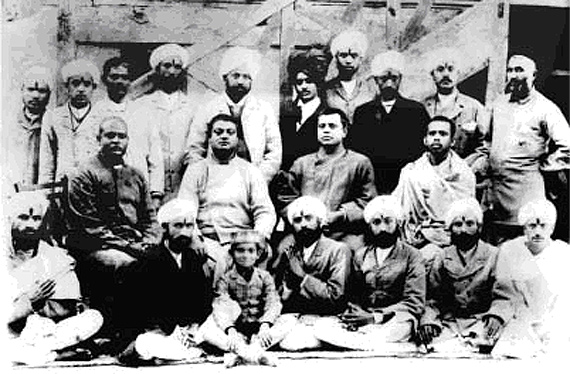
Sitting on chairs, left to right: Swamis Sadananda, Vivekananda, Niranjanananda, and Dhirananda.[Kashmir, 1897]
Though Swami Vivekananda wrote these poems in different circumstances and for different purposes, an undercurrent of Swamiji’s passionate concern for the political bondage of his country and a deeply embedded sense of the need for preparing India for political freedom are perceptible to a careful reader. The poems under discussion have oblique reference to India’s struggle to seek an identity.

“TO THE AWAKENED INDIA”
This poem was composed by Swami Vivekananda at Srinagar (Kashmir) in June 1898 and was written to the journal Prabuddha Bharata or Awakened India, in August 1898, when the journal was transferred from Madras to Almora, Himalayas, into the hands of the Brotherhood founded by Swami Vivekananda. Sister Nivedita writes: “The Swami always had a special love for this paper, as the beautiful name he had given it indicate… Day after day, he would talk of the forthcoming first number, under the new editorship of Swami Swarupananda. And one afternoon, he brought to us, as we sat together, a paper, on which he said, he had “tried to write a letter, but it would come this way”.
 

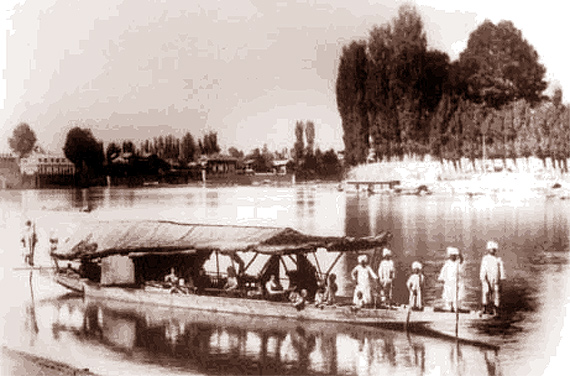
Swami Vivekananda on a houseboat in Kashmir, 1898
Read at one level, the title of the poem may point to the name of the journal, and at another, it may be taken as a reference to the resurgence of “the sleeping Leviathan i.e. India.
“Once more awake!
For sleep it was, not death, to bring thee life anew”.

When we reach the last stanza, the poet extends his meaning.

“Awake, arise, and dream no more”.
“Be bold, and face the truth! Be one with it!”

He exhorts the world to dream truer dreams, which are eternal love and service free. The poet in fact addresses the motherland. Here he says: “The Mother that resides in all as power and Life…Makes of one the World…and shows the One in All”.

“TO THE FOURTH OF JULY”

Vivekananda wrote this poem on the 4th of July 1898, when he was traveling with some of his western disciples in Kashmir. He had a tailor make a replica of the American flag together with branches of evergreen. It was nailed to the prow of the dining room boat, where a tea was arranged. As part of a ‘domestic conspiracy’ for the celebration of the day…the anniversary of the American Declaration of Independence…he composed this poem and told the disciples accompanying him to read the poem aloud at the time of breakfast. Mrs. Ole Bull, one of the disciples of Swamiji, preserved this poem. It is significant to note that Swami Vivekananda gave up his mortal frame on the same day four years later.
 
Behold, the dark clouds melt away
That gathered thick at night and hung
So like a gloomy pall above the earth!
Before thy magic touch the world
Awakes. The birds in chorus sing.
The flowers raise their star-like crowns,
Dew-set, and wave thee welcome fair.
The lakes are opening wide, in love
Their hundred thousand lotus-eyes
To welcome thee with all their depth.
All hail to thee, thou lord of light!
A welcome new to thee today,
O sun! Today thou sheddest liberty!
Bethink thee how the world did wait
And search for thee, through time and clime!
Some gave up home and love of friends
And went in quest of thee, self-banished,
Through dreary oceans, through primeval forests,
Each step a struggle for their life or death;
Then came the day when work bore fruit,
And worship, love, and sacrifice,
Fulfilled, accepted, and complete.
Then thou, propitious, rose to shed
The light of freedom on mankind.
Move on, O lord, in thy resistless path,
Till thy high noon o'erspreads the world,
Till every land reflects thy light,
Till men and women, with uplifted head,
Behold their shackles broken and know
In springing joy their life renewed!

“It is not the actual Fourth of July that is portrayed, but a blending of the concrete and the abstract responses to a national event and to eternal concepts,” says Carebanu Cooper. Image and idea, symbol and thought are integrated in the poem.

Vivekananda uses two words “Liberty” and “Freedom” in this poem. In a letter written to Mrs. Bose, Vivekananda defines “liberty” as “full right to their body, wealth etc” and “freedom” as “advance towards Mukti” in all matters.

“KALI THE MOTHER”

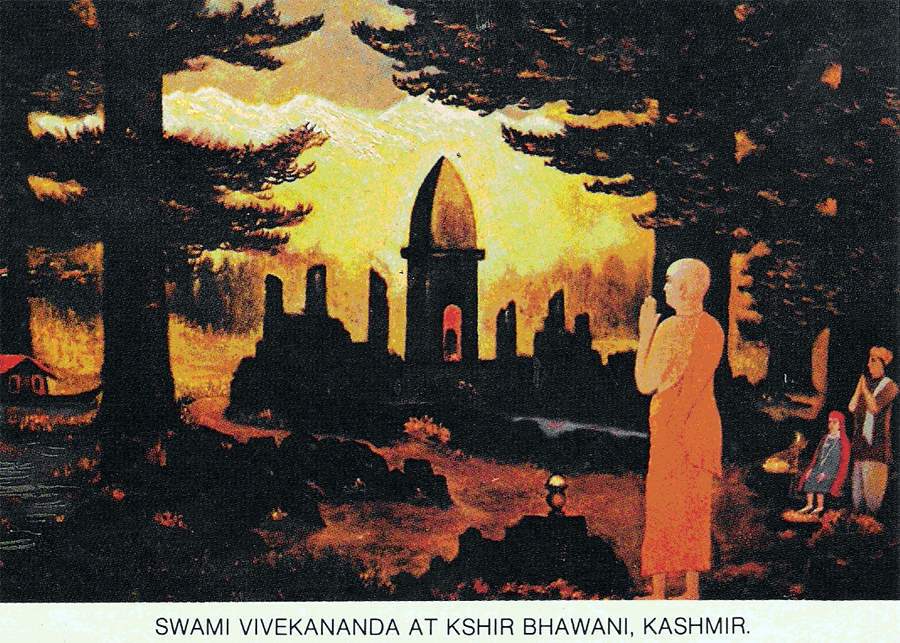
This poem was written or forced itself into writing, when, during the days of pilgrimage to Kshir Bhawani (Kashmir) in 1898; the Swami was in such a high spiritual state that it seemed indeed as if his physical frame could not bear it for long.
 
Sister Nivedita who accompanied the Swami on that pilgrimage says: ‘His brain was teeming with thoughts, he said one day, and his fingers would not rest till they were written down. It was that same evening that he came back to our house-boat from some expedition, and found waiting for us, where he had called and left them, his manuscript lines on Kali the Mother. Writing in a fever of inspiration, he had fallen on the floor, when he had finished…as we learnt afterwards…exhausted with his own intensity.’
 
The stars are blotted out,
The clouds are covering clouds,
It is darkness, vibrant, sonant;
In the roaring, whirling wind
Are the souls of a million lunatics,
Just loose from the prison-house,
Wrenching trees by the roots,
Sweeping all from the path.
The sea has joined the fray
And swirls up mountain-waves
To reach the pitchy sky.
The flash of lurid light
Reveals on every side
A thousand thousand shades
Of death, begrimed and black.
Scattering plagues and sorrows,
Dancing mad with joy,
Come, Mother, come!
For terror is Thy name,
Death is in Thy breath,
And every shaking step
Destroys a world for e'er.
Thou Time, the All-destroyer,
Come, O Mother, come!
Who dares misery love,
And hug the form of death,
Dance in Destruction's dance —
To him the Mother comes.

This poem glorifies the power behind manifestation. The Swami worships the terrible here. The universe provides a stage for the enactment of the Mother’s frenzied dance. According to Ms. Cooper, “Kali destroys those traits in man that hinder him from an awareness of his divinity”. The supreme must be thought of either as Infinite Being or as Infinite Power. Here the poet sees Her as Infinite Power.

“Kali the Mother” had inspired great patriots like Sri Aurobindo and Netaji Subhash Chandra Bose. It served as a model for Sri Aurobindo’s Bhawani Mandir manifesto. About the primordial energy personified in the Mother worship, Sri Aurobindo says: “The Shakti we call India. Bhawani Bharati is the living unity of the Shaktis of three hundred million people; but she is inactive, imprisoned in the magic circle of Tamas, the self-indulgent inertia and ignorance of her sons. Strength can only be created by drawing it from the eternal and inexhaustible reservoirs of the spirit, from the Adya-Shakti of the Eternal which is the fountain of all new existence”. Dr. Radhakrishnan says that Vivekananda give “articulation and voice to that eternal spirit of India”.
 
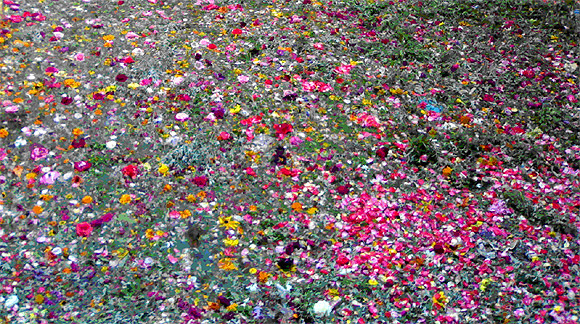
Holy Spring filled with flowers at Kshir Bhawani, Tullamulla, Kashmir
That Vivekananda always considered Mother worship as a means of uplift India and Indians is clear from his statement that follow:

“I can only say, every blow I had in this life, every pang, will become joyful sacrifice if Mother becomes propitious to India once more”.

“But saviors, books, prophets, ceremonials etc. have their places. They may help many, as Kali worship helps me in my secular work”.

Without Shakti (Power) there is no regeneration for the world. Why is it that out country is the weakest and the most backward of all countries…because Shakti is held in dishonour there?”

Swami Vivekananda had a clear vision of the resurgent India. He was himself the harbinger of India’s renaissance. He had declared that India is awakening after a long period of slumber, which he described as the longest night in India’s history. He had predicted that no power on earth can stop India from emerging as a strong and powerful country and occupying her rightful place among the comity of nations. It is only such an India that can effectively preach the message of universality and tolerance to the rest of the world. It is the mission of India to do that.
 
*Chander M. Bhat Born on March 20th 1960 in village Murran, Pulwama, Kashmir. Poems written in English published in various newspapers and magazines. Articles on various subjects also stand published. Two book in English “MURRAN …MY VILLAGE” and “OCEAN BY DROPS” stands published. Research papers on “Vitasta…. The Sacred River of Kashmir” and “The Splendour that is Amarnath” stand published in leading magazines. A book “Jammu and Kashmir…Origin and History” underway.
Presently working as Assistant Supdt. Posts and posted as Asstt Supdt. Posts (HQ), UDAMPUR.


POSTED BY .........VIPUL KAUL..............EDITED BY..............ASHOK KAUL

News in Pictures

News in Pictures
Exclusive news in pictures are for the month of May 2009 by Shehjar’s Photo Journalist, *Raman Raina from Jammu. Copyrights © Shehjar online. Please email us at editor.shehjar@gmail.com in case you want to use any of the images.
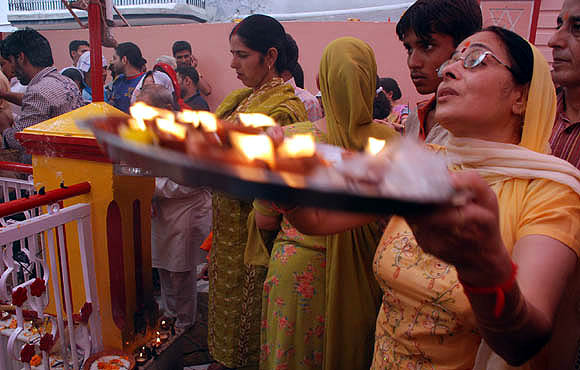
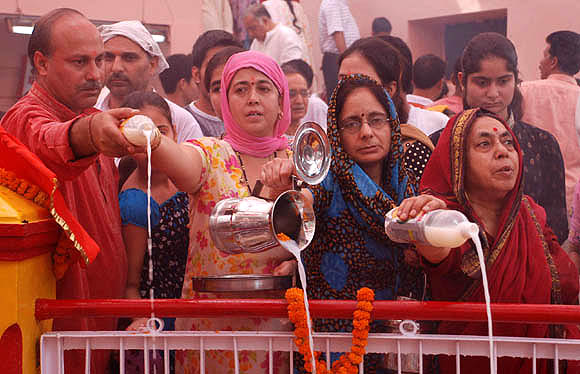
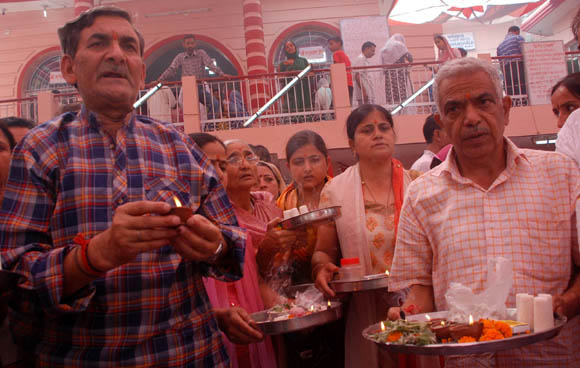
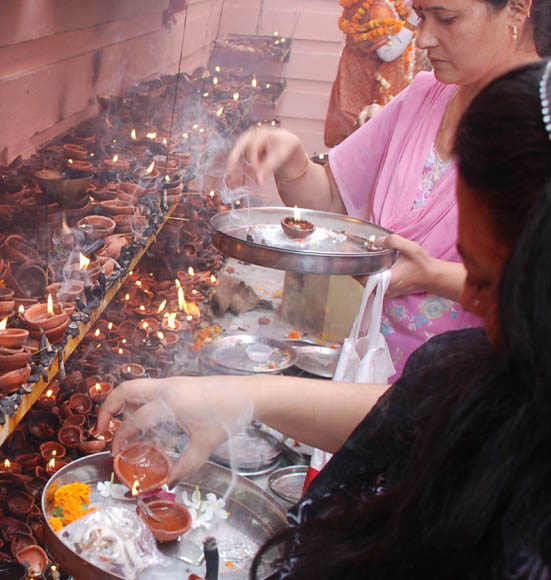
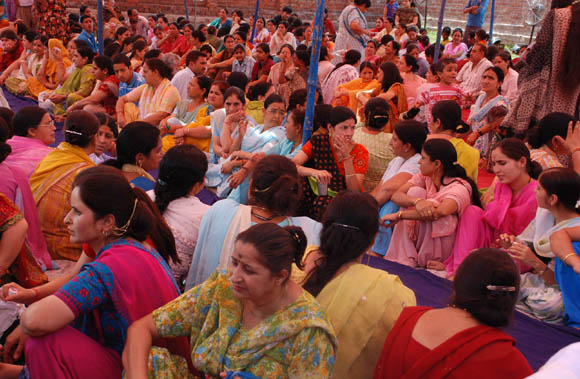
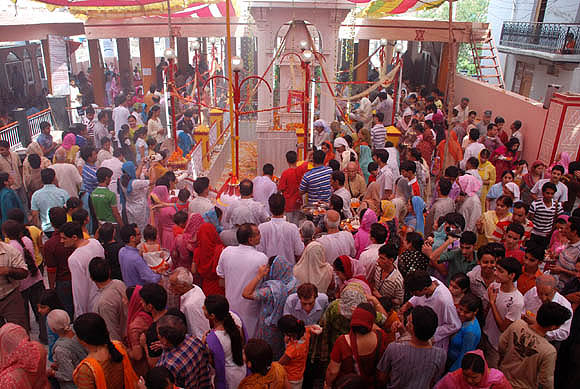
May 31, 2009 Jammu: -Kashmir Pandits lighting the traditional earthen lamps at the Kheer Bhawani temple at Janipur in connection the celebrations of Zeshtha Astami in Jammu on Sunday. The temple is the replica of the original famous Kheer Bhawani temple of Kashmir popularly known as Tulmula constructed by Kashmiri Pandits after the mass exodus of the community in 1990.


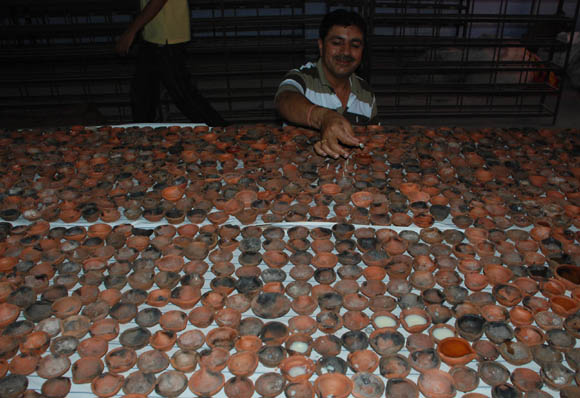
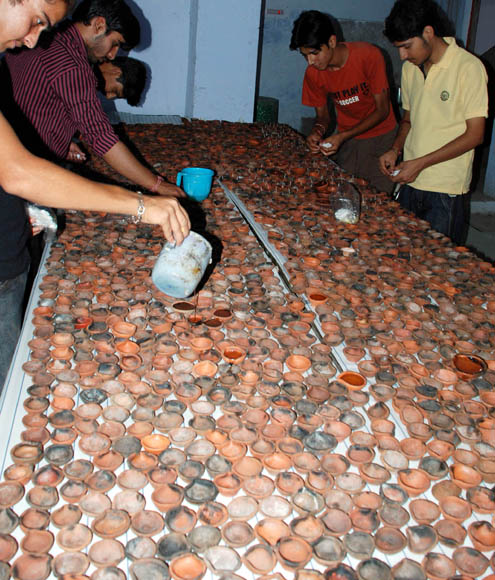
MAY 30, 2009: Jammu: A Kashmiri Pandit arranging traditional earthen lamps at the replica of historic Kheer Bhawani temple as part of the preparations for the 'Jyeshthaashtami' annual congregation in Jammu

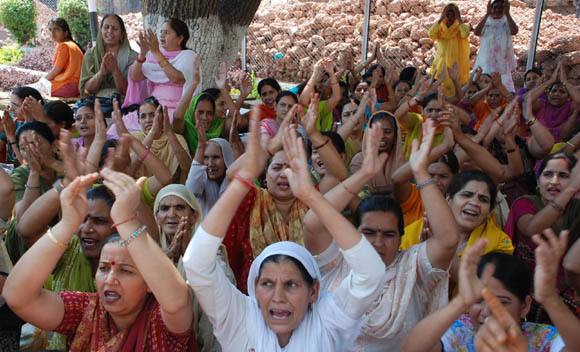
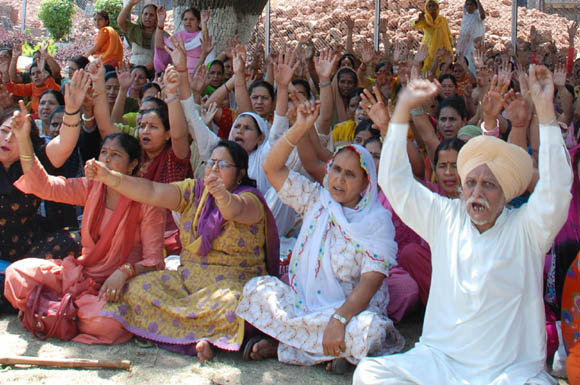
MAY 28, 2009:Jammu: Anganwari workers staged a protest demonstration against the state government in front of Divisional Commissioners office in favor of their long pending demand of regularization of services in Jammu .


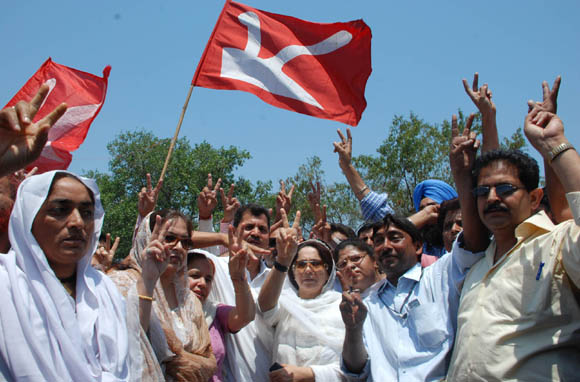
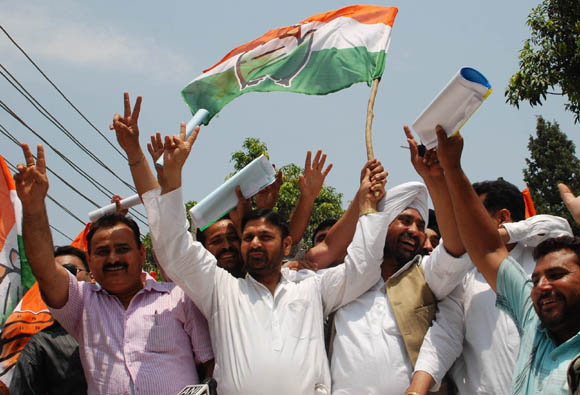
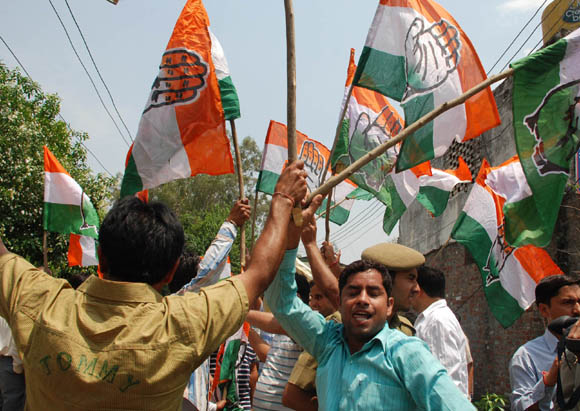
MAY 28, 2009: Jammu: Members of National Conference celebrate the induction of Dr. Farooq Abdullah into the Union Cabinet, in Jammu


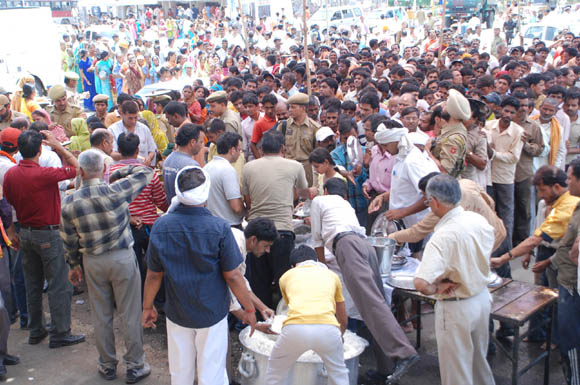
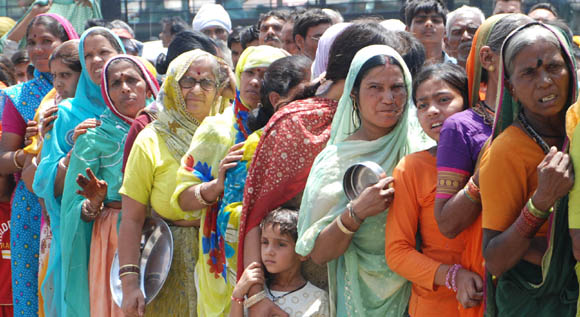
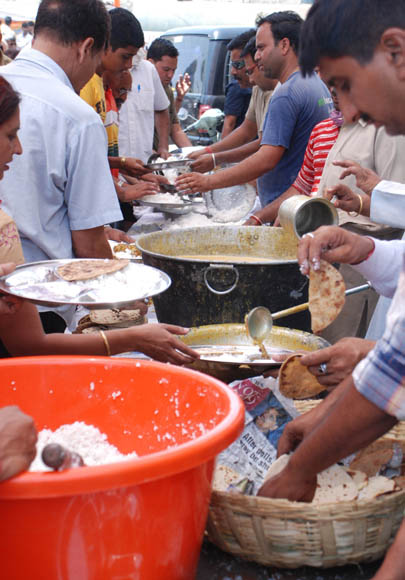
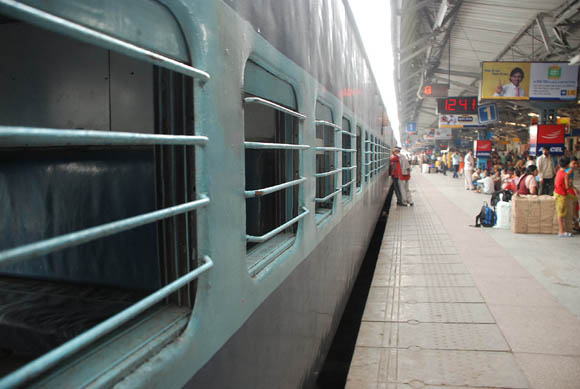
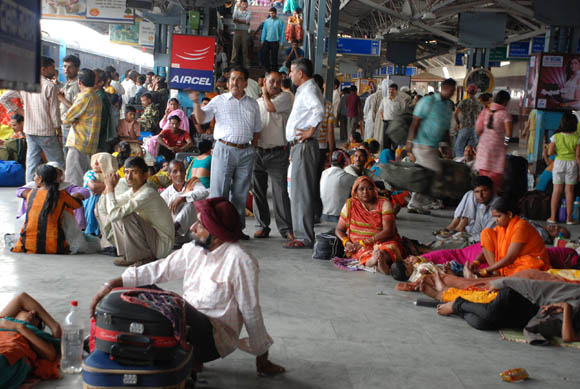
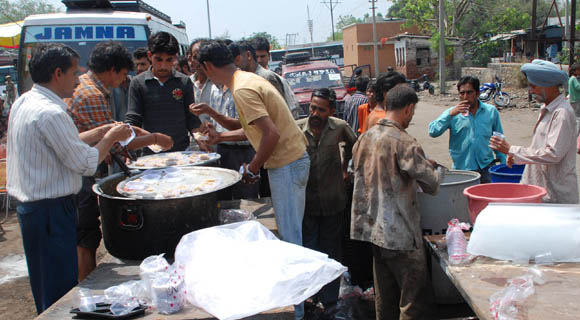
MAY 26, 2009 - JAMMU: Thousands of stranded railway passengers being provided free food at a mass langer set up by various social organizations as the rush of passengers is swelling by the day due to violence in Punjab and cancellation of trains .


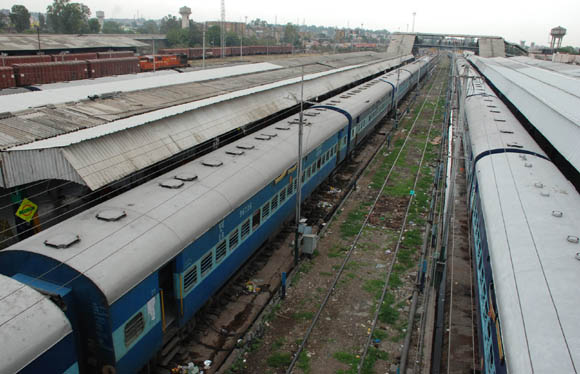
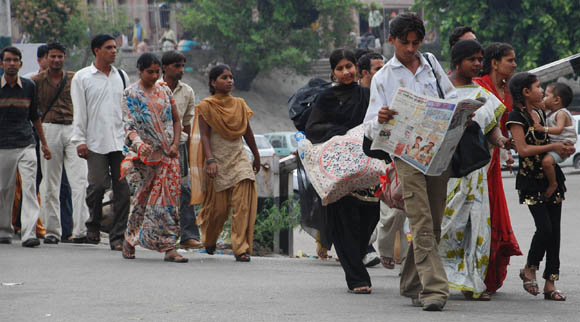
MAY 25, 2009 - Jammu: Stranded passengers at Jammu railway station on Monday after protestors burnt down Jammu-Tawi Express while protesting against the attack on Dera Sachkhand chief Niranjan Dass and his follower Ramanand in Viena, Austria.


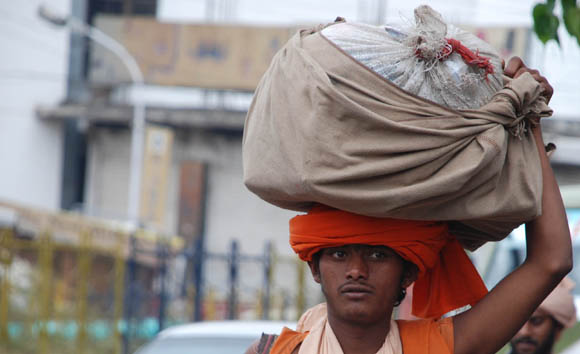
MAY 25, 2009 - JAMMU: Ram Dass Giri from Madhya Pradesh carrying his belongings on his head moving towards the holy cave shrine of Baba Amarnath covering all the distance on foot from his native place to have ‘darshan’ reached Jammu.

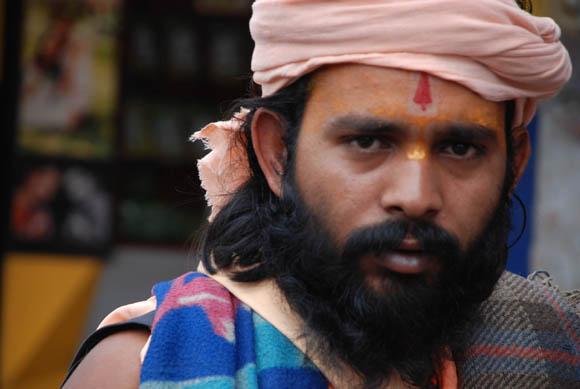
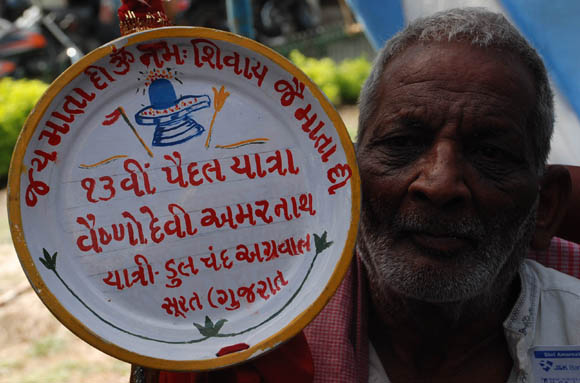
MAY 25, 2009 - JAMMU: A sadhu waiting at a registration counter for his onwards journey to the holy cave shrine of Baba Amarnath in Jammu.

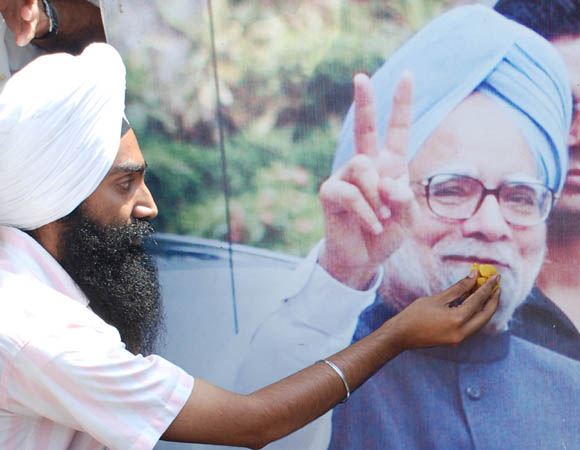
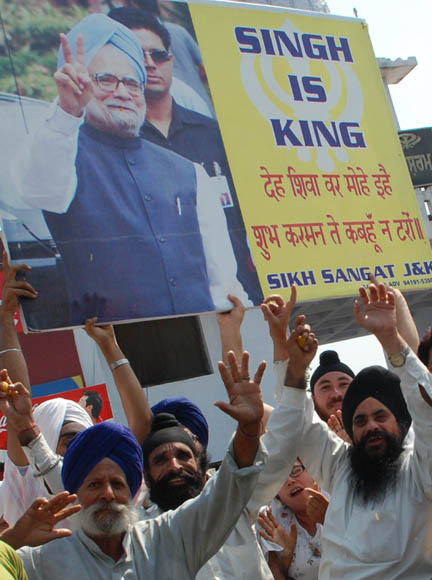
MAY 24, 2009 - JAMMU: Members of Sikhs Committee offering sweets to a poster of Manmohan Singh prior to his swearing in as the Prime Minister for the second time, at Digiana Ashram in Jammu .


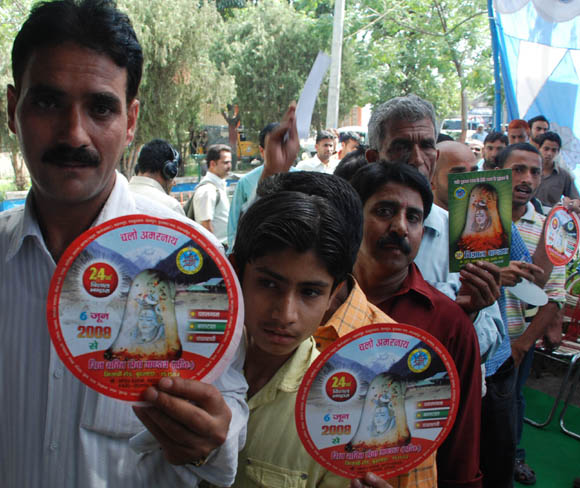
MAY 20, 2009: JAMMU: Two Month long historic Baba Amarnath Yatra began amid huge rush of pilgrims and sadhus who have started converging for formal registration for onward journey in Jammu.


MAY 19, 2009 - Jammu Home Guards demonstrating against J&K Chief Minister Omar Abdullah led government outside Divisional Commissioners office in support of their demand seeking regularization of jobs in view of the end of Model Code of Conduct in Jammu .

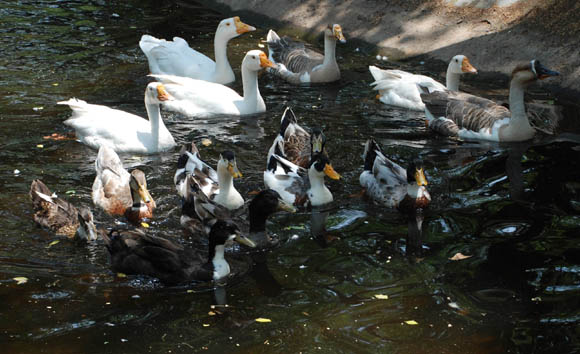
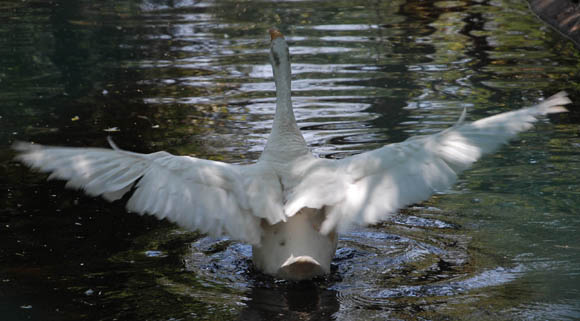
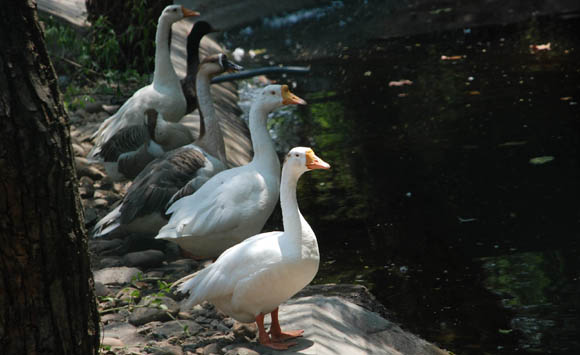
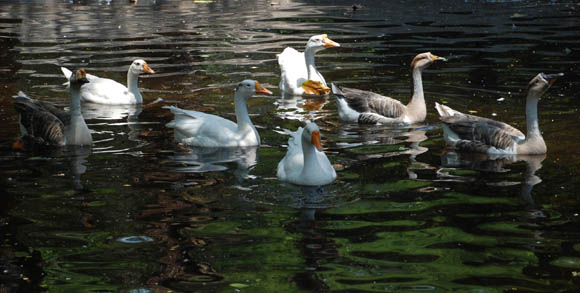
MAY 18, 2009 - Jammu: Ducks cooling off to beat the sweltering heat in Manda Zoological Park on the hottest day of the season recording maximum temperature at 42.6c.in Jammu.


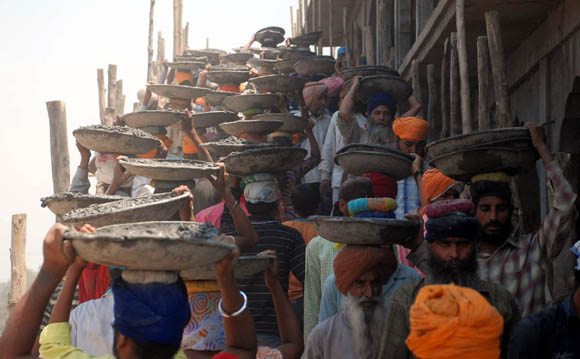
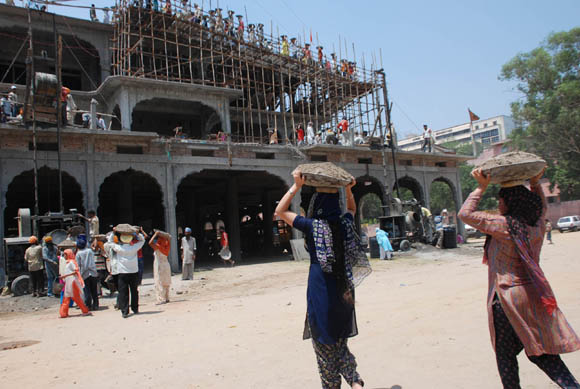
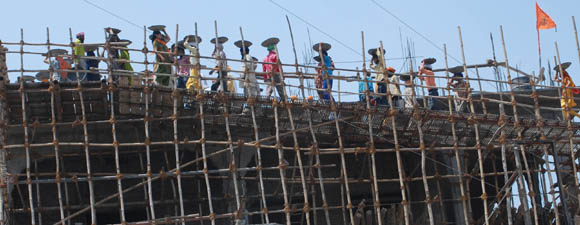
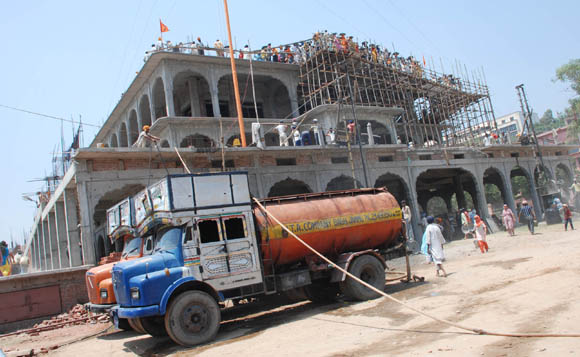
MAY 17, 2009 - Jammu: Thousands of Sikh devotees from Punjab thronged Bibi Chand Kour Gurudwara to participate in mass’Kar Sewa’to complete the construction of the biggest Gurudwara in Jammu and Kashmir.


MAY 16, 2009 - Jammu: Sitting Congress MP Madan Lal Sharma after victory sign after getting re-elected from Jammu-Poonch Lok Sabha constituency in Jammu


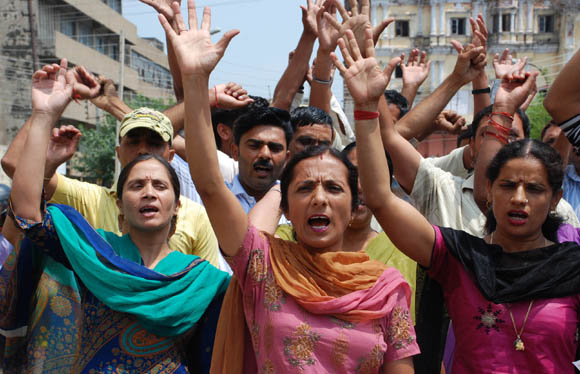
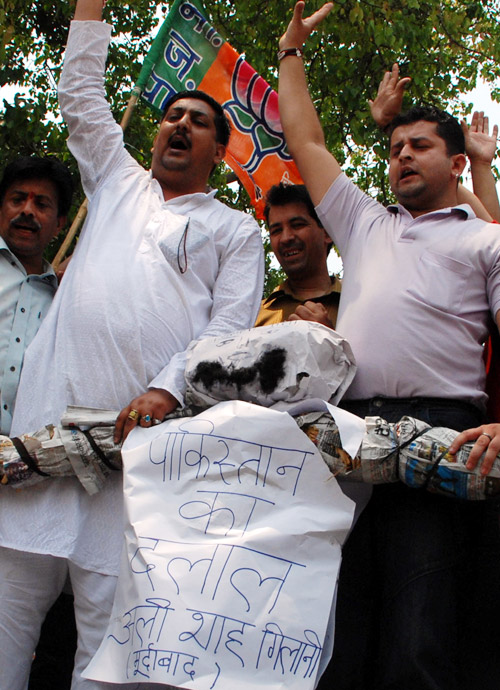
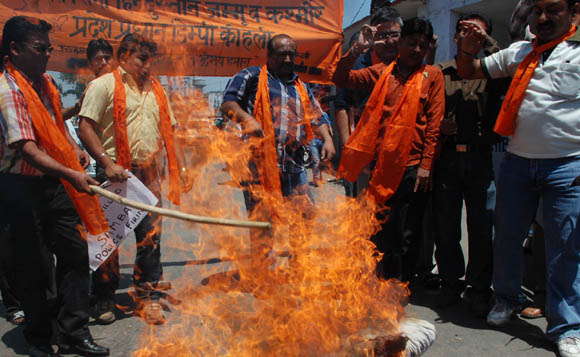
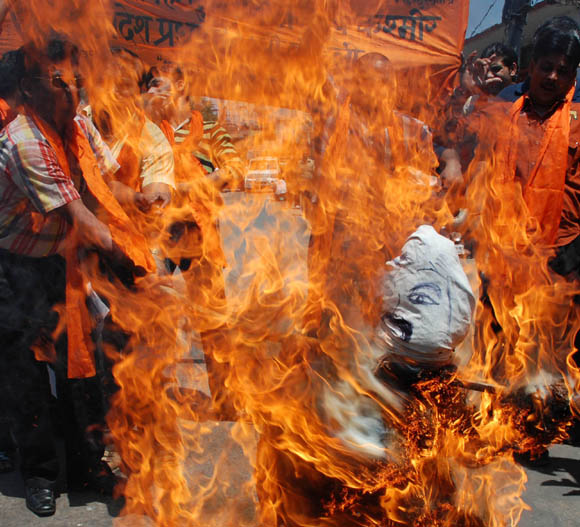
MAY 15, 2009 - Jammu: BJP activists staged a protest demonstration outside Raj Bhawan and burned effigy of Hurriyat leader Sayed Ali Shah Geelani who raked up the Amarnath Yatra controversy by demanding 15 days yatra instead of two months.


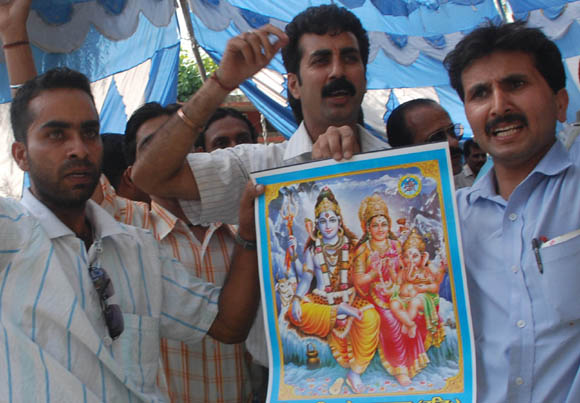
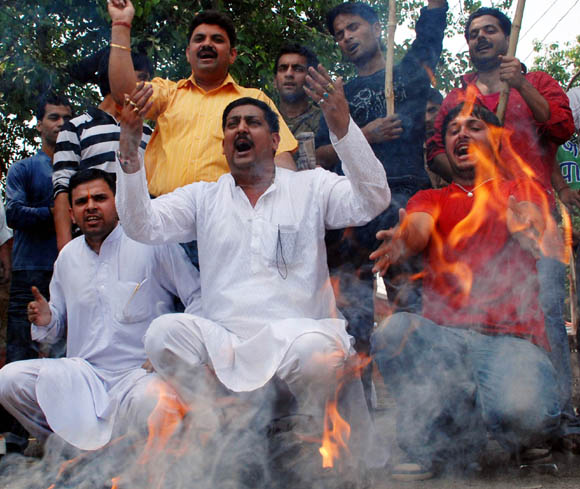
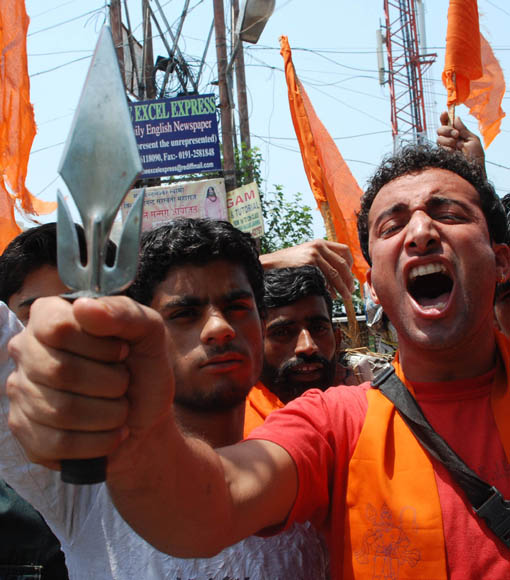
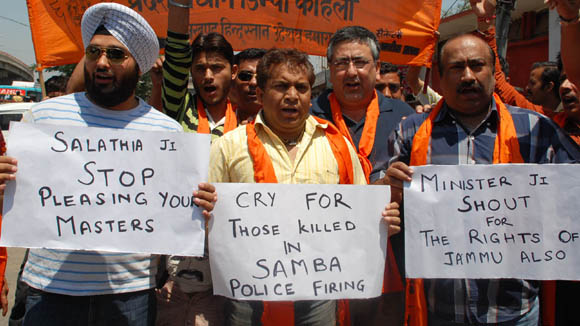
MAY 14, 2009: Jammu: Activists of VHP and Bajrang Dal protesting against coalition government for sheltering Gujjar Muslim encroachers of forestland and harassing police men who removed their illegal hutments. They also burnt effigy of government in Jammu .


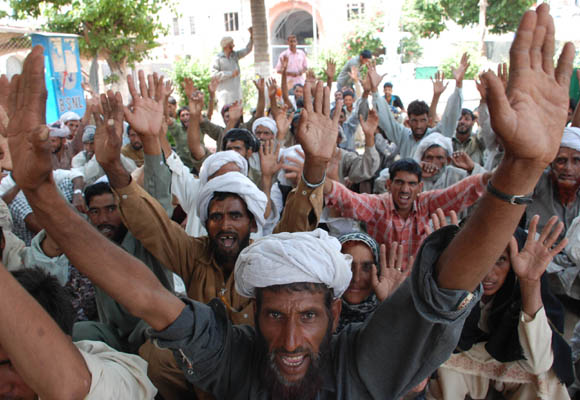
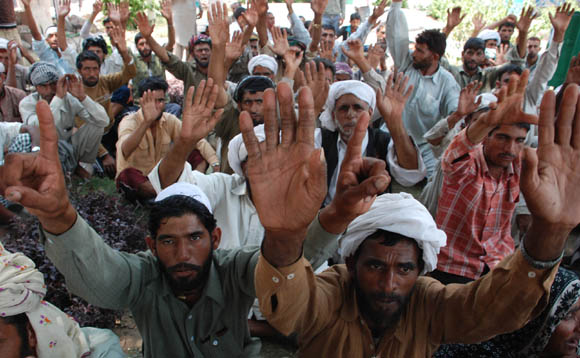
MAY 14, 2009: Jammu: Gujjar Muslim encroachers of forest land protesting against J&K Police action at Flai Mandal over alleged torching of their illegal hutments by policemen and demanded action against cops in front of Divisional Commissioner’s office in Jammu


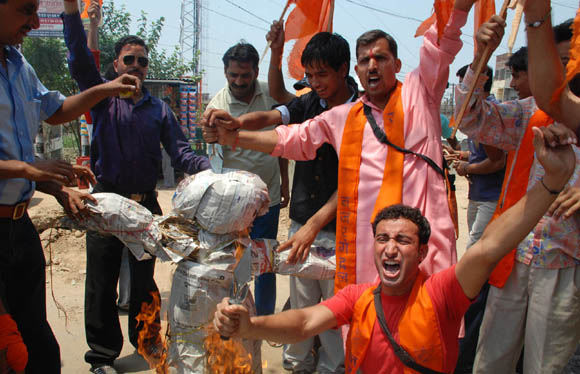
MAY 12, 2009 - Jammu: Activists of Shiv Sena Hindustan protested against the coalition government of J&K by burning an effigy condemning the police action on nomad Gujjars by burning their hutments to remove encroachments from forestland in Flai Mandal area .


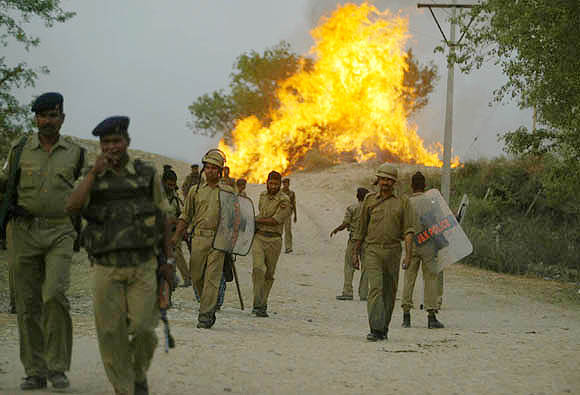
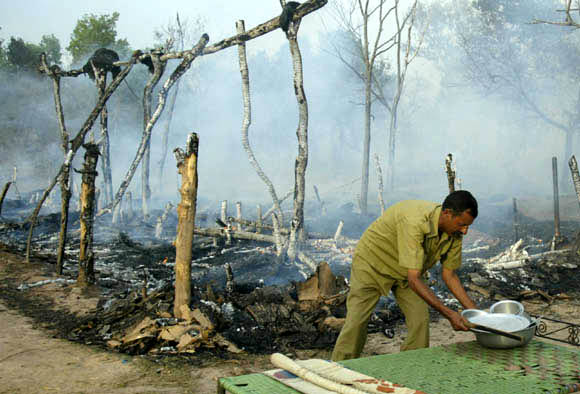
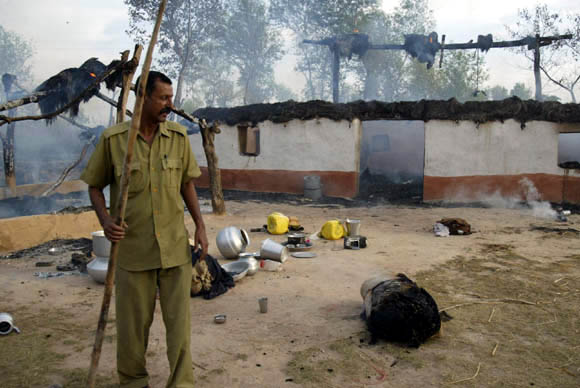
MAY 9, 2009 - Jammu: A kullah (temporary house) was set on fire by the police in village Karnaila Chak on Nikki Tawi area outskirts of Jammu as the police was evacuating state forest land illegally captured by the gujjars on the directions of the State Government.


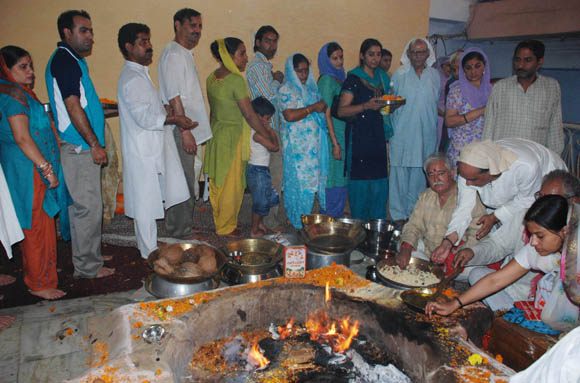
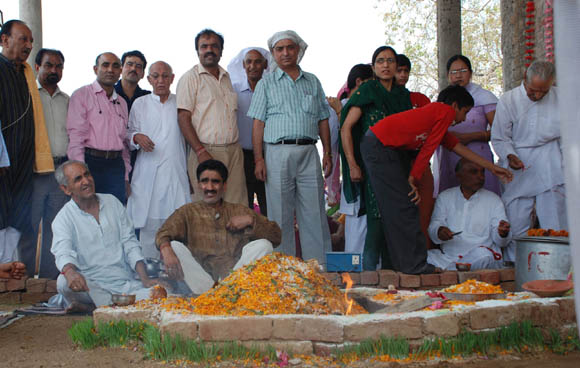
May 9, 2009 Jammu: Large number of Kashmiri Pandits participated in Purna Ahuti at Ganesh Bal temple at Akalpur during the fourth consecutive Hawan organized by the Shree Mahaganesh Ji Charitable Foundation of Ganesh Bal Hanad-Chawlgam of Kashmir Valley in Jammu.

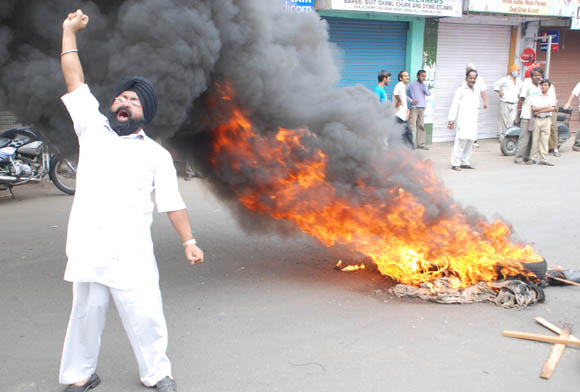
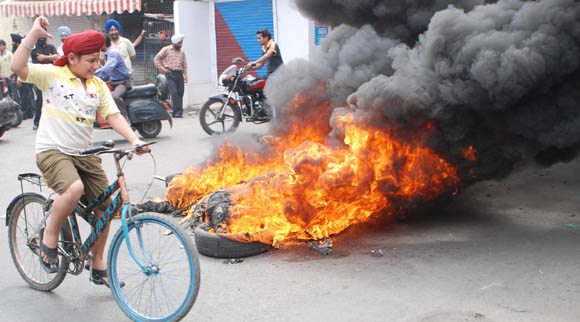
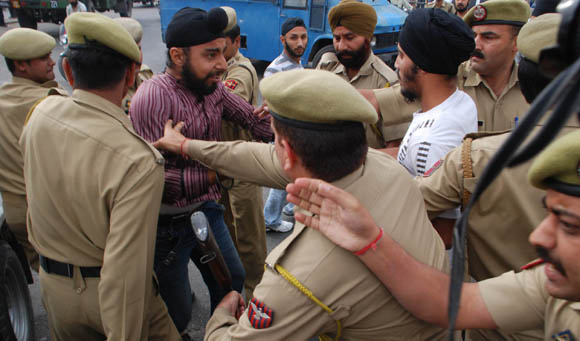
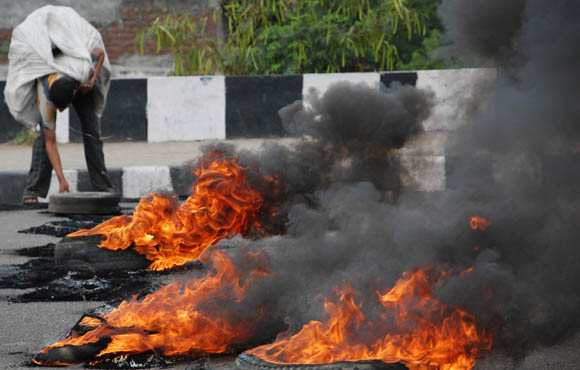
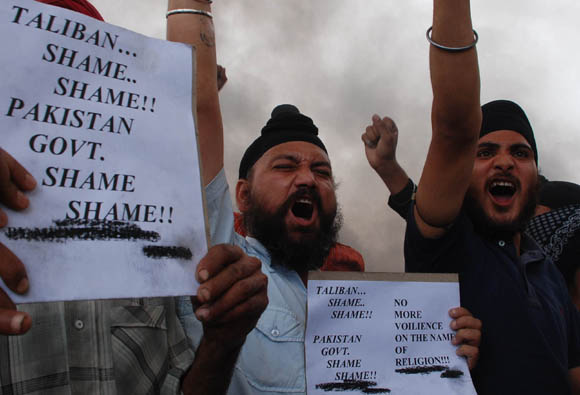
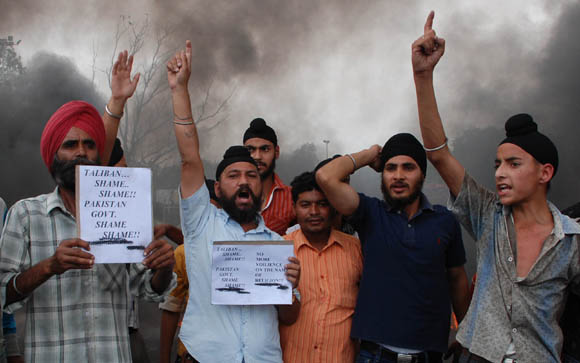
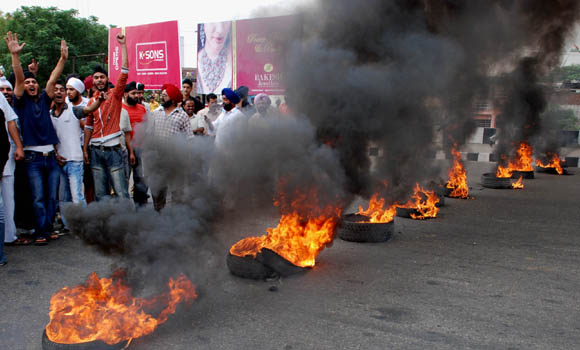
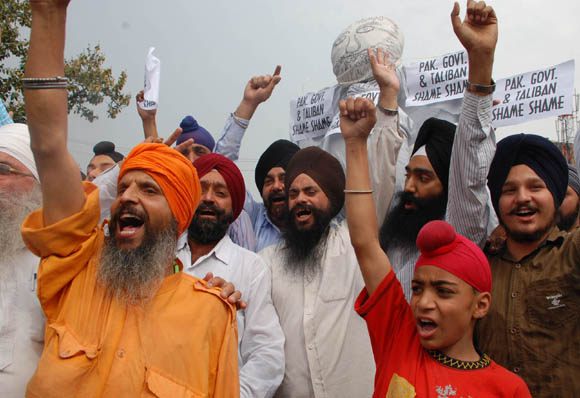
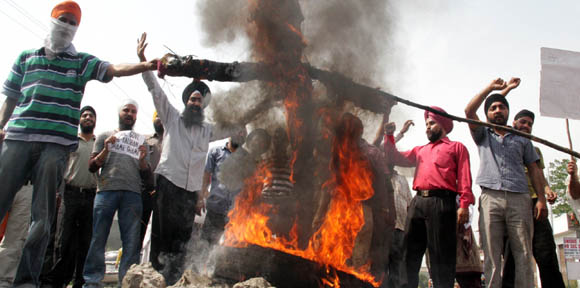
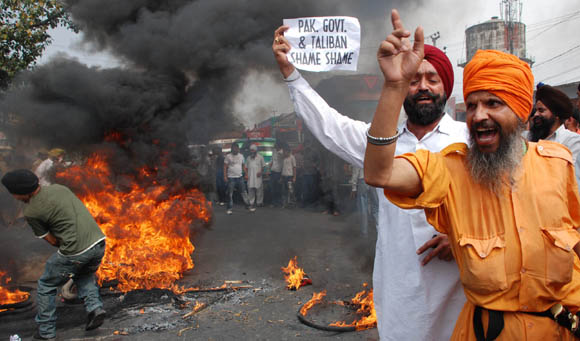
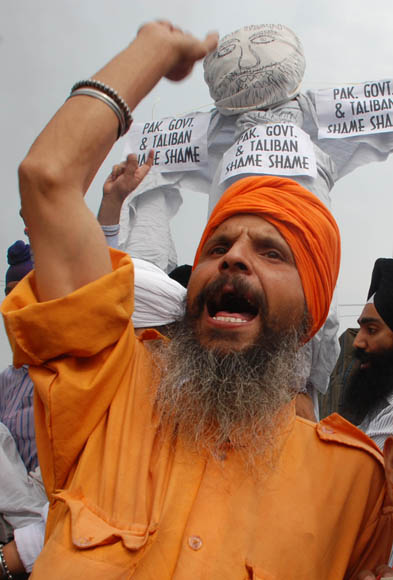
MAY 08, 2009: Jammu: Police cane charging Sikh, VHP and BJP protestors during complete shutdown and Chaka Jaam in Jammu in protest Pakistani Government and Taliban during protest over alleged harassment of Sikhs and Hindus and forcible extortion of jazia from them by Taliban in Pakistan,.


MAY 08, 2009: Jammu: Activists of Shiv Sena Hindustan protest during the complete shutdown and Chaka Jaam in Jammu in protest Pakistani Government and Taliban during protest over alleged harassment of Sikhs and Hindus and forcible extortion of jazia from them by Taliban in Pakistan.


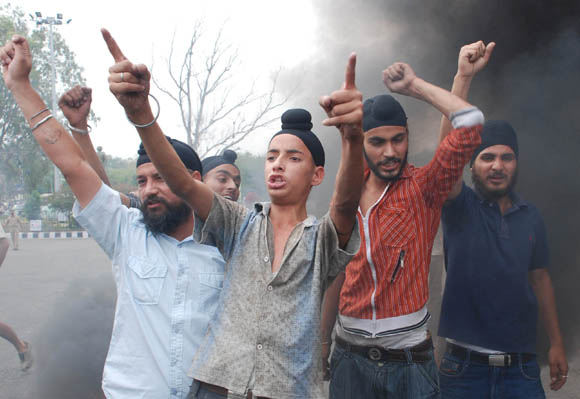
MAY 08, 2009: Jammu: Sikh activists protest during the complete shutdown and Chaka Jaam in Jammu in protest Pakistani Government and Taliban during protest over alleged harassment of Sikhs and Hindus and forcible extortion of jazia from them by Taliban in Pakistan.


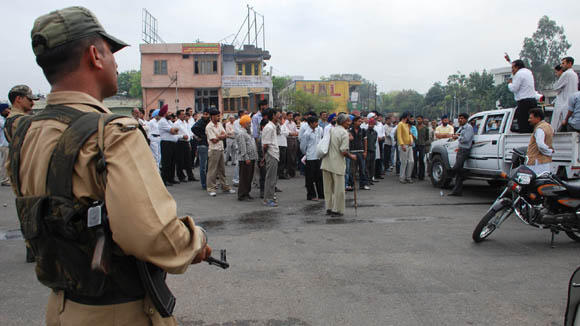
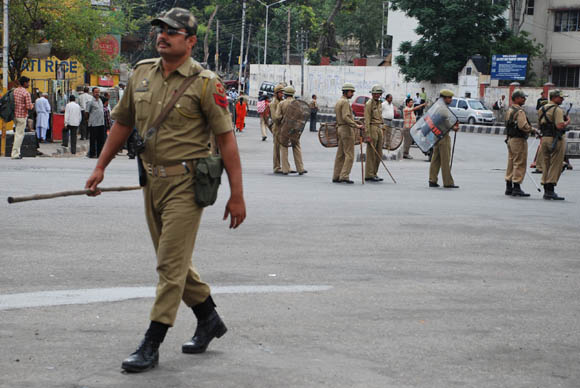
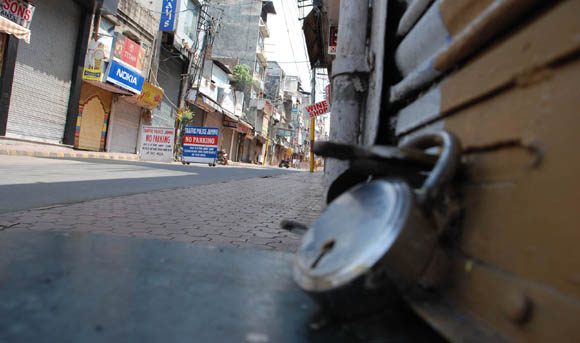
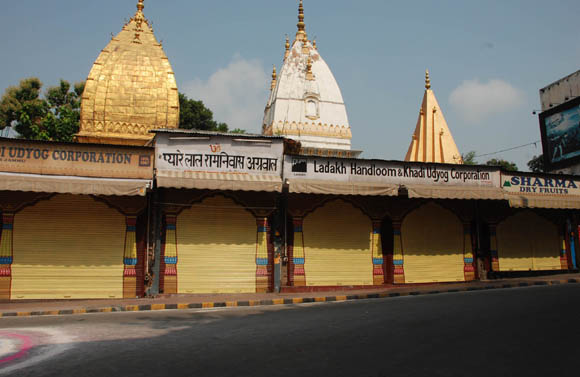
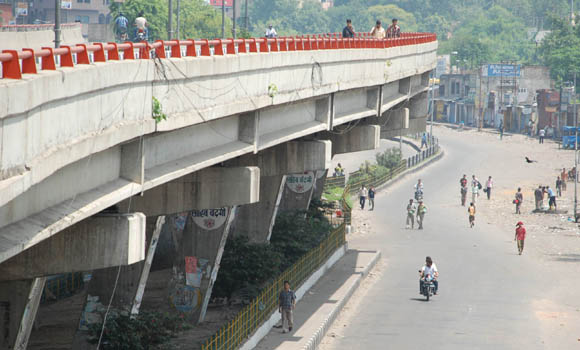
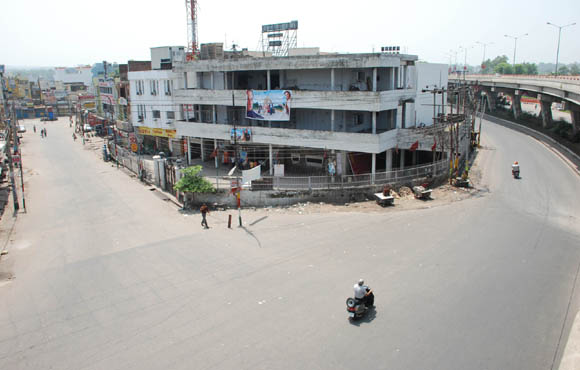
MAY 08, 2009: Jammu: Complete shutdown in Jammu on the call of Vishwa Hindu Parishad and BJP who had called for total Chaka Jaam in protest Pakistani Government and Taliban during protest over alleged harassment of Sikhs and Hindus and forcible extortion of jazia from them by Taliban in Pakistan.


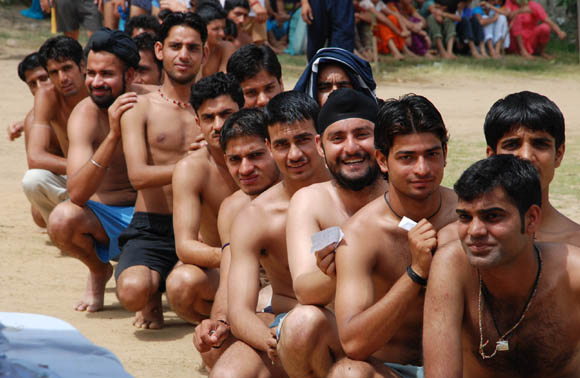
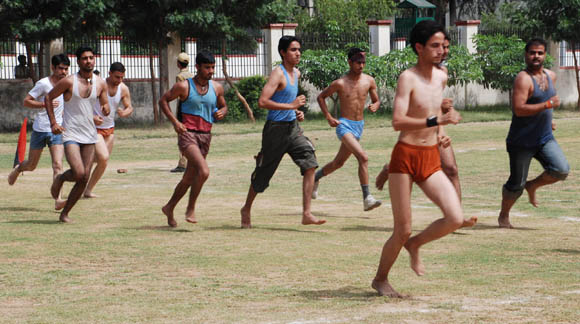
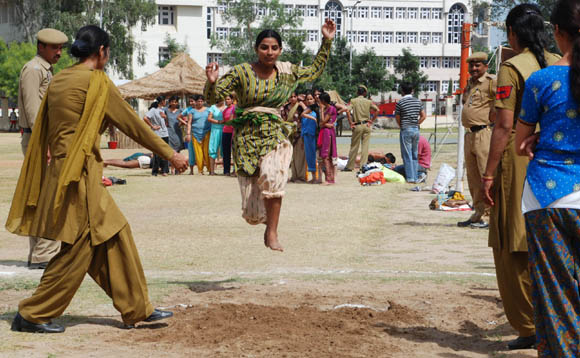
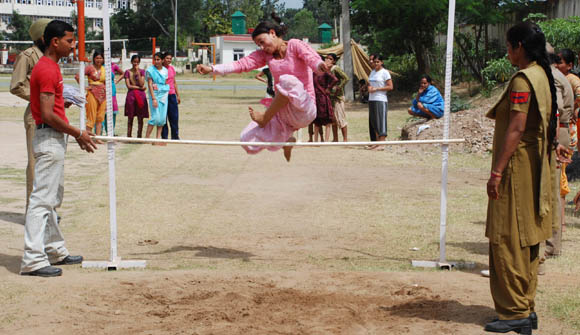
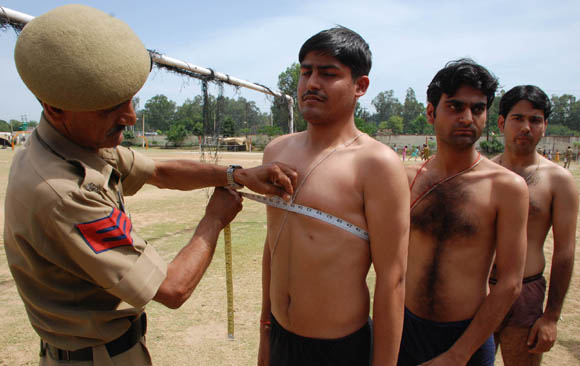
MAY 06, 2009 - Jammu: Kashmir migrant boys and girls thronged Gulshan Grounds at police Lines for the special recruitment drive launched by Police department to absorb Migrant unemployed youth in IRP in Jammu .


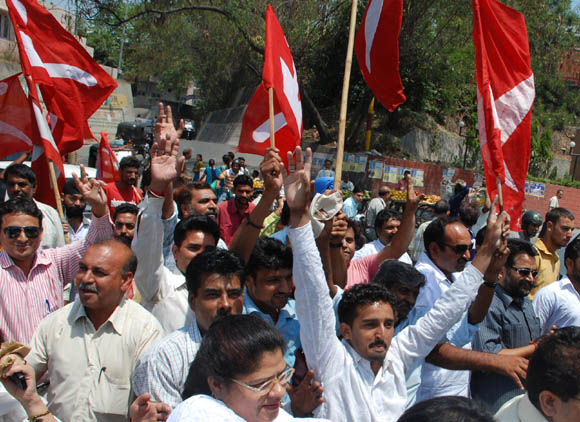
MAY 1, 2009 – Jammu: Labour organizations a mass distribution of food and sweets at General Bus Stand among labourers on May Day to celebrate World Labour Day in Jammu.