NDA government’s Padma Vibhushan to Jagmohan Malhotra pushed
Kashmir back to his stint in 1990s’, reliving the days and nights of
horror and terror. Masood Hussain uses
the contemporary texts and the first hand experience of the people
across diverse sectors of society to report the 127 days when the
right-winger presided over a process that changed Kashmir
 The ‘news break’ that J&K
 Police’s
walkie-talkies’ aired on January 20, 1990 noon about the chopper flying
His Excellency, the governor, to Srinagar has returned after failing to
cross the cloud-shrouded Banihal Pass was literally back-breaking for
two IPS officers – state police chief J N Saksena and IGP CRPF Joginder
Singh. With SKIMS alone getting 20-bullet hit casualties a day, the duo,
Aditya Sinha, the biographer of Dr Farooq Abdullah recorded, was
insisting the security grid had hands tied behind their backs.
“They were among that section of administration which thought that
Farooq’s approach to militancy had been all wrong, and that now that
Jagmohan was coming, he would set things right, and fight militancy on
what they perceived as its own terms,” Sinha wrote in
Farooq Abdullah: Kashmir’s Prodigal Son. “Being members of the IPS, they saw things through the narrow prism of law and order.”
In literal frustration, an excited Saksena (died in December 2010
after surviving crippling bomb blast in Police Headquarters Srinagar on
January 24, 1992), left for Jammu to brief his new boss, Jagmohan
Malhotra. J&K Police’s ITBP-guarded boss, was an “uptight
intelligence agent” pitch-forked for the sensitive job by the Home
Minister. He trusted nobody and believed the force he commanded
comprised Pakistani agents.
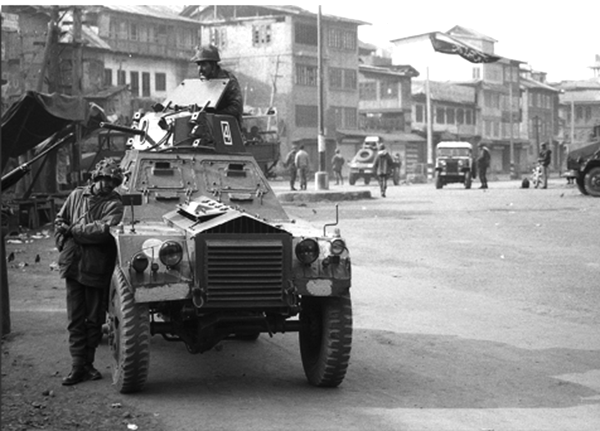
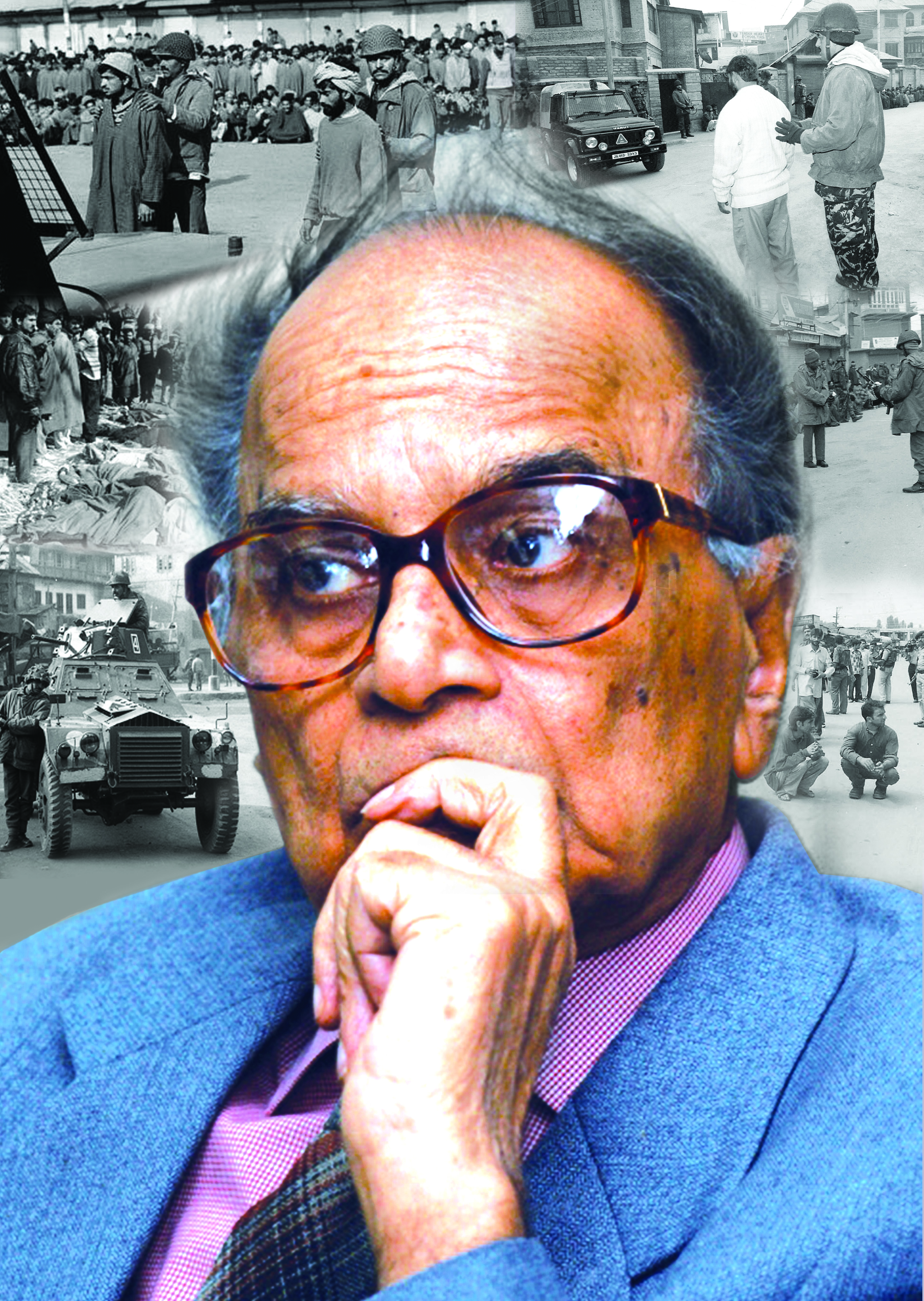
Armoured vehicles Patrolling in old Srinagar a day after Gaw Kadal Massacre.
Leaving Srinagar in hurry, Saksena offered no suggestion to Singh
about how to manage the aftermath of the season’s worst
cordon-and-search nocturnal operation in Chotta Bazar – Guru Bazar belt
where nearly 300 men, mostly teenagers, were detained during January 19
night, hours after Jagmohan took oath of office in Jammu. Accusing
residents of storing huge provisions, CRPF men mixed their rice reserves
for winter with sand and left sugar pots filled with chili power.
The subsequent night, Srinagar did not sleep.
Jago Jago Subeh Huie
(awake, the morning has dawned) rented the air, forcing a headless
security grid to make massive deployments. “That night (in Jammu) that
followed was the strangest night that I have ever lived,” Jagmohan wrote
in his
My Frozen Turbulence in Kashmir. “Hardly had I gone to
bed when the two telephones at my bedside started ringing, almost
continuously. At the other end, there were voices of alarm, of concern,
of fright, sometimes muted voices of men too terror-stricken to speak.”
They were Kashmiri Pandits, some of them even holding the phone
receivers to help him listen the “terrible slogans and exhortations
emanating from hundreds of loudspeakers fitted on the mosques.”
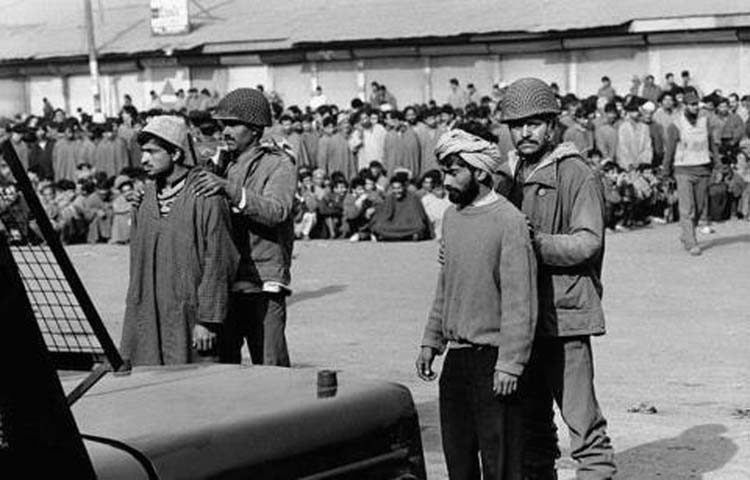
Crackdown and Parade during 1990s.
Skipping the helicopter, next morning Jagmohan and Ved Marwah (later
appointed his adviser), took the normal flight and landed in Srinagar. A
changed Kashmir made Jagmohan feel “virtually shipwrecked on a lonely
but known land”. They were driven in “heavy armed escort” to a desolate
Raj Bhawan. Immediately, Lt Gen M A Zaki, the commander of Srinagar’s 15
corps, joined him.
“We have hardly any time for discussion,” Jagmohan told them. “Within
a few minutes, we must act or suffer being overwhelmed.” Action was
soon on. Soon after the “curfew which existed in name began to be
implemented,” he wrote. “The crowds that had gone berserk…had to be
disciplined… firing had to be resorted to by the security forces.”
A massive curfew defying procession was on its way to Chotta Bazar
when state forces opened fire on the Basant Bagh culvert killing 52
people as hundreds were injured. Cops traced “living dead” in the huge
pile of corpses that were driven to the police control room (PCR).
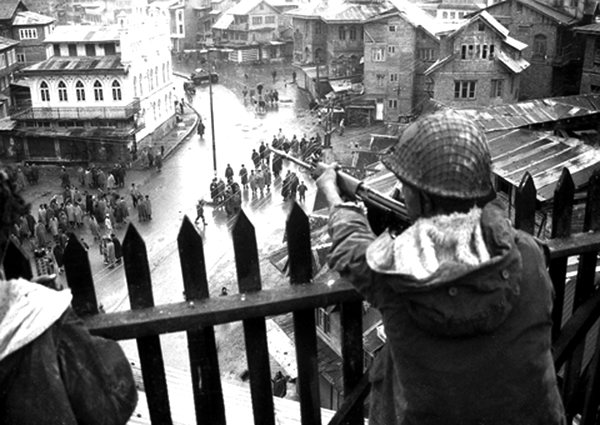
Army keeps vigil during a curfew deal in old Srinagar a day after Gaw Kadal Massacre.
“By the evening the city had become quiet,” recorded Jagmohan on the
second night of his 127-days “terrific” stint. “Order has been restored.
The curfew restrictions began to be respected.” The shooting that
opened Jagmohan’s bloodiest account in Kashmir only marked the beginning
of a new disorder. Marwah termed it an “inauspicious start”.
The Turkman Gate Khalnayak who gave family
planning a new connotation, Jagmohan was no stranger to Kashmir. He had
barely been away from Raj Bhawan for six months. In his earlier stint
(September 26, 1984 – July 11, 1989) when Congress picked him to replace
B K Nehru for toppling Dr Farooq Abdullah in 1984, the “nurse” had
worked so impressively on urban development and against corruption that
many thought he had an image-makeover.
“When he toppled Dr Farooq’s government, he was hated but by his
governance he had started being seen differently,” says Naeem Akhter,
then an officer and now PDP leader. “But the day he banned mutton on
Janam Ashtami, the perceptions about him changed fast and people restored their belief that he was what he actually was.”
Jagmohan sacked five employees in February 1986 for being
anti-national. One of them was Prof Abdul Gani Bhat, who later founded
Muslim United Front (MUF). Akhter believes mutton ban was key factor in
emergence of MUF that triggered a new insecurity in NC and Congress, led
to rigged polls and resulted eventually in militancy.
To undo the crisis he had contributed to, V P Singh government’s Home
Minister Mufti Mohammad Sayeed, a Kashmiri himself picked him only.
Akhter says Mufti regretted the choice later.
Jagmohan’s ‘ab tak ki kahani’ consuming
significant portion of his book was part of his legacy as head of the
state. In fact, when the first two bombs ripped the Central Telegraph
Office (CTO) and Srinagar Club apart during the intervening night of
July 31 and August 1, 1988 he knew what was happening. As Delhi’s most
senior man in Srinagar, he might not have been completely ignorant about
the happenings around LoC. It was a complete role shift that made his
second stint different. Fearing centre’s new man would repeat 1984, Dr
Farooq Abdullah resigned the same night (January 18-19).
On day first, he offered the job of adviser to Chief Secretary Moosa
Raza, who declined. His second offer went to Peer Ghulam Hassan Shah,
the former police chief. Initially he confirmed, but later he also
declined.
With security grid handling the situation, Jagmohan started effecting
changes in the laws to help them. After appointing Hamidullah Khan
Banhali and made him Chief Secretary (law and order), he amended Section
10 of the Public Safety Act and omitted the words “in the state’ to
facilitate transfer of detainees to far off locations in adverse weather
conditions, far away from their families and defence. Almost every day,
BSF planes would fly out with prisoners to far away states.
By Governor’s Act 8 of 1990, Jagmohan amended the criminal law
amendment act and dispensed away with the requirement of the Tribunal
under section 4. Law knowing people said the idea was to ban all kind of
politics. On February 19, when he dissolved the assembly, many people
felt vindicated.

Yusuf Jameel
If Kashmir was the news-den, there was just one
major collector, processor and user – ‘Yousuf Jameel, Srinagar’, the man
nobody in Kashmir would sleep listening without. “He might have been a
good administrator but situation was such that he could not have
achieved anything,” Jameel said. “His problem was that he felt
everything in Kashmir was hostile to him. Had he tried taking people on
board, the situation might have been slightly different.” In his entire
127-day tenure, Jagmohan never tried to use BBC to put his point across!
Within a few days, Jagmohan asked his staff to revive his
public-interactions, a system he had introduced earlier. “Once, we
permitted a large group of people and they all had cases regarding
arrests, killings and issues related to security forces,” one officer
who was posted in the Raj Bhawan said. “Next day when the photo appeared
in some newspapers, it started creating insecurity for them. Later, if
somebody would come, he or she would hide the face to ensure his/her
security outside.”
With curfew, strikes and the processions keeping the life jammed,
governance was restricted to interacting with top cops and the generals.
“It is a weird game that is being played out in Kashmir,” reported
Shiraz Sidhva in
Sunday (Calcutta) on May 13, 1990. “At the end
of the each violent day, the administration gathers at Jagmohan’s
well-fortified Governor’s House in Srinagar and, over cups of steaming
Qahwa,
discuss how well the security forces have succeeded in countering
terrorism. A headcount is even taken of the “militants” eliminated.
Every one present agrees with governor Jagmohan that the administration
certainly has the “upper” hand in the battle for Kashmir.”
Another officer, now retired, said once when he insisted on reviving
the public interactions, “I said, lot of water has flown down the Jhelum
since then (his last stint).” His insistence on being strict with
situation once coerced a senior police officer, incidentally a Muslim
from plains, to say: “Are we here, just to collect the dead bodies?”
What made his tenure distinct, officers say, was while everything that
would happen in Raj Bhawan would somehow reach Lal Chowk, the power
centre lacked any idea of what was happening outside. Many officials
felt that on occasions the governor would drive to 15 corps for the
night rest.
His freedom to security forces to be ruthlessness in dealing with
common people, cracking down on media, being highly concerned about the
minority Kashmiri Pandits and contributing to a self carved image of
being totalitarian were the key ingredients of his rule. On February 3,
he drove deep into Habba Kadal to mourn the murder of Satish Tickoo. He
was genuinely moved by his family requesting to move out.
Six days later, when BSF killed Bhupinder Puri and the only son of Dr
Yousuf while retaliating to an LPG cylinder blast in Lal Chowk,
governor could not afford a drive to uptown Barzalla. He wrote a letter
to Dr Yousuf, instead.

Altaf Hussain
“He might not have sponsored the migration but he definitely
encouraged and facilitated the exodus,” said Altaf Hussain, a former BBC
journalist. Hussain had reported, earlier in
The Times of India,
how M N Sabarwal, who became State Police Chief in 1993, had differed
with governor on migration issue. “His (Jagmohan’s) idea was that
Pandits will be back within next six months after he brings Kashmir back
to rails.”
There are evidences of Raj Bhawan sending official vehicles to the
minority homes and getting them out to Jammu. “One morning, I saw a
police truck parked and the cops taking out the household items of two
of my colleagues who were living here,” one journalist who has been
living in Partap Park for nearly three decades said. “Earlier, governor
had offered them as well as me to operate from TRC where he would make
necessary arrangements. I refused and the plan was shelved.”
Ali Mohammad Sofi worked for the PTI for most of the turmoil. “My bureau chief and his UNI counterpart, besides

Ali Mohammad Sofi
correspondents of
The Indian Express, Hindustan Times and
The Times of India
were told by governor to move out to Jammu,” Sofi said. “Initially,
they ignored but when he insisted, they sent communication to their
Delhi offices suggesting them to take governor’s suggestion seriously.
They were driven out in an army one-toner on March 1, 1990 and dropped
at Jammu.” While one of them returned within a week, two others returned
after a month and for two others it proved the last drive to Jammu.
Jagmohan hated media. He cancelled January 26
function simply because he believed militants had planned to takeover
the Radio Kashmir and Doordarshan Kendra to announce independence. As
foreign media was camping in Srinagar, he thought they had assembled to
report the takeover. That is why he barred nearly 30 Indian and foreign
reporters from coming out of Srinagar’s Broadway Hotel. As he managed
“foiling this attempt”, he thought the militants will now do it on
February 11, the anniversary of Maqbool Baht. In run up to that he
banished six foreign journalists Doughlas Curran (AFP), Jonathan Landay
(UPI), Dieter Ludwig (Newsweek), Ms Costa Sakellariou (Time), Ms Sheila
Tafft (Christian Science Monitor) and Ian MacWilliam on January 28,
1990.
“Only Mark Tully stayed back,” Jameel said. “To ensure that we do not
work, Raj Bhawan ensured my both telephone lines are cut but we shifted
to Zafar Meraj’s residence and operated from there.” When a reporter
asked the governor why he tried to immobilize BBC, Jagmohan said: “Would
Margret Thatcher be happy if you created trouble in Northern Ireland?”
Since curfew was invariably in place, governor ordered that no curfew
passes would be honoured after 8 pm. This literally immobilized most of
the reporters.
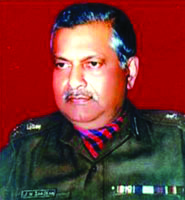
J N Saksena
On February 2, 1990 he created a new record. He sent a BSF posse to
raid a weekly English (it stopped publishing almost instantly) newspaper
that seized the dummy of its upcoming issue. Surinder Singh Oberoi (now
with ICRC) was arrested, driven to Raj Bhawan where Jagmohan asked him
to reveal the funding of his newspaper. The copy was returned censored
and Singh was freed 10 hours later, after interrogation!
In April, he sealed four printing presses and banned four major
newspapers. Cases under TADA were registered against the editors. Those
not banned ceased publications (if any) in protest.
Everyday, however, Kanhia Lal Dhar, the then Director Information
would drive a select group of reporters for a personal briefing by the
governor. “It would normally be a dull affair,” one reporter who used to
be in this special briefing said. “He would list the incidents, count
the dead bodies and say the government had the upper hand.” Rarely, he
said, would he respond to a question.
Jagmohan entangled with popular media thinking it
will help him win the battle. But he was losing the war that CRPF, BSF
and the army had unleashed on people. On the eve of Republic day he
decided against to attend the Jammu function, BSF fired on a procession
in Handwara – protesting against Gaw Kadal killings, on January 25,
1990, mowing down 26 civilians.
In Srinagar, people started defying curfew or used the relaxations in
curfew to protest. Most of these processions resumed in last two weeks
of February. There were processions coming from south or north. On
February 26, Kashmir witnessed a three-wheeler procession for
Azaadi
and three days later all the buses from south and north came to city
and these were not empty, they carried people. On February 24, when Ved
Marwah was on way to airport, he was scared by the number of people and
the buses that were on way to Charar-e-Sharief.
March 1, the day “top journalists” representing India’s main media
were travelling to Jammu in an army one-ton; Srinagar witnessed a
million-plus
Azaadi seeking procession outside UNMOGIP’s
Srinagar office. In the evening, army intervened at Zakura and Tengpora
killing 32 civilians. It marked the end of processions.
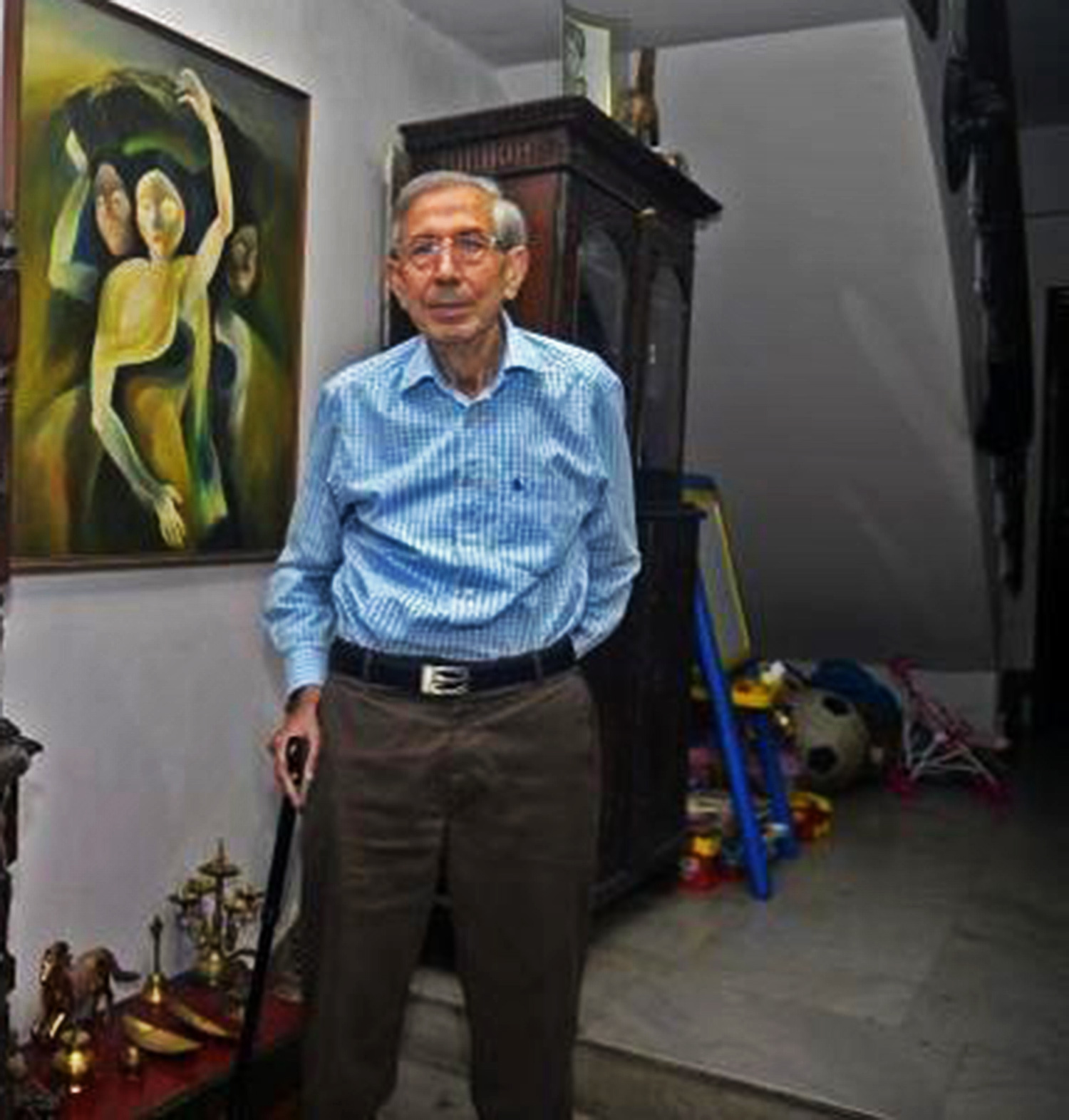
Ved Prakash Marwah
Every day, the hit and run militancy would add to
Raj Bhawan’s crises. After JKLF assassinated Lassa Koul, the DD
director, the news units of the twin institutions migrated. DD started
operating from an ITDC room in Jammu and Radio Kashmir Srinagar started
hunting for news readers.
On April 6, when militants kidnapped Kashmir University VC Mashir ul
Haq and HMT General Manager Khera, Jagmohan put Srinagar under severe
curfew for door-to-door searches. Marwah said he wanted to barter for
the hostage release but was unwilling to relax curfew! SJKLF killed
hostages
provoking governor for a harsher restriction of curfew
for 17 days amid coercive crackdowns. He even ordered seizure of
hundreds of truckloads of rice and vegetables that would come to
Srinagar from the countryside. Garrisons consumed it.
“I spent my time those days sending these bodies (of IB men) down to
Delhi. They were grim days,” records Amarjit Singh Dulat, who headed
the IB in Kashmir between January 21 and March 7, 1990, in his
Kashmir: The Vajpayee Years. “During that killing spree of IB officials, there came a day when I was sort of
gheraoed
by my IB colleagues in my office. The staff came out, all twenty of
them, and they told me they felt very insecure in Srinagar.”
Unlike IB, by then, all the central government employees had fled
Kashmir. “Nobody trusted anyone, nobody relied on anyone,” Dulat
remembers. “Srinagar was like a ghost city.”
Jagmohan’s most public face was Banhali, whom TV
would usually show visiting peripheral ration stores, checking quality
and quantity. One day he was caught in a crowd near UNMOGIP office when
paramilitary guards of an UN official opened fire, killing six
civilians. “He came out of his car and told the crowd that he too was a
Kashmiri and is feeling the pain,” one journalist who witnessed the
event said. “He had barely finished his sentence that a
Kangri landed on his head and I did not see how he managed to leave.”
Then, best of governance would mean keeping hospitals operational and
fully equipped as post-Jagmohan casualties jumped to around 200 per
day. As doctors were adjusting handling “war-like-casualties” they
lacked both budget and supply of antibiotics, and anti-coagulants. The
only oxygen producing unit in Srinagar was closed and supplies of
nitrous oxide from Delhi had ceased. Even air careers refused to fly
medical staff.
“However (Chief Secretary R K) Thakkar was not impressed,” Civil Rights activist Tapan Bose wrote in his report
India’s Kashmir War.
“He dismissed our arguments with the comment that some of the hospitals
have turned into ‘dens of militants’ and we had become victims of their
deliberate disinformation.”
Then, Naeem Akhter had a relative admitted in SKIMS and somehow he
managed getting medicines from Jammu. “I sent a police officer to
deliver the medicine but the paramilitary men who had besieged the
hospital did not permit it in,” Akhter said. The humiliating
body-frisking of female staff by CRPF had forced two lady doctors Dr
Shugra Kaul and Dr Vijay Tikku to leave their jobs. “I took an SSP with
me to deliver the medicine with the help of local police.”
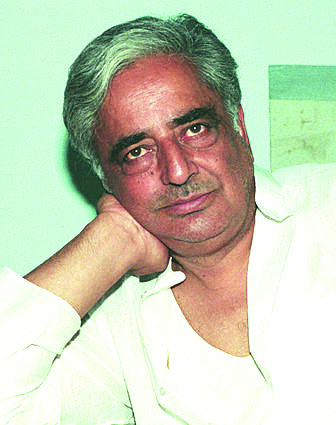
Mufti Mohammad Sayeed
Situation had helped Jagmohan to understand that he
may not last long. Raj Bhawan apart, two other people were influencing
decision-making – Mufti Sayeed and George Fernandes, the Kashmir affairs
Minister since March 11. Seriousness of India politics was at display
when Deputy Prime Minister Devi Lal led an All Party delegation to
Srinagar on March 9.
Flown in two special planes, the delegation included Rajiv Gandhi and
Ministers George Fernandes and Dinesh Goswami. Shafi Bhat, who had won
Central Kashmir seat in Lok Sabha polls 1989 for NC unopposed, was in
the delegation, too.
“Some of them, who had not visited Srinagar in the last few months,
were visibly shocked,” Marwah who escorted them in a bus to the Centaur
Hotel recorded. “Hearing about the happenings in the valley was one
thing, but seeing the situation on ground with their own eyes was an
entirely different experience.”
At the airport itself, Rajiv rejected Jagmohan’s invitation, that
Marwah extended, to play his personal host. Governor’s absence at the
airport became an issue. In full media glare, Rajiv asked governor why
he was not at the airport to receive the Deputy Prime Minister. As he
tried to explain, he raised another query: why Devi Lal’s chair is “on
your left and not on your right”, as protocol demands. As Jaswant Singh
started interrupting, media was shunted out and the proceedings resumed
in-camera.
The Indian Express reported that the mess began with Rajiv
asking governor if Kashmir had no newspaper. Bhat responded saying:
“Jagmohan has brought a halt to every activity.”
Then Rajiv attacked him again saying should I disclose what you told
me on Article 370 (in his earlier stint as governor)? To this, Jagmohan
responded: “I can also speak out, what you had told me then.”
Rajiv wanted to visit the city and somehow he was convinced that it
was impossible. Eventually, he wished for a select audience of citizenry
that Shafi Butt arranged.
Jagmohan remembers sitting in the corner of the hotel lobby when he
heard slogans. “We found that Rajiv Gandhi and his party colleagues and
NC MP Butt and Handoo were being shouted upon. On inquiry, it was
gathered that Butt had brought to Rajiv Gandhi a group who he thought
would favour him,” he wrote later. “Instead, they turned hostile and
poured their wrath on him. They said to Butt: “How have you become our
representative, we never elected you? Who do you think you are? You can
not face anyone here? You sit in your cozy bungalow in New Delhi. You
issue statements. You think our problems are solved like that. Is that
your task? Whom do you think, you are fooling.”
Jagmohan further wrote: “And you Mr Rajiv Gandhi, you never came here
when you were at the helm of affairs at New Delhi. You thought your
prince, Farooq, was ruling in your name. He is a nut, a pleasure
seeking, golf playing monarch. He fooled us, he tricked us. He butchered
us when he wanted to do so. Today he and his mentor, namely you Mr
Gandhi are shedding crocodile tears. Just go away. Get lost. This was
followed by a chorus of slogans: ‘Indian dogs go back’. The hotel staff
also joined the group and shouted similar slogans.”
In this confusion Goswami, the law minister interacted with the media
suggestion Delhi was willing to talk to militants. Jagmohan was unhappy
and a broken man.
The all party meeting had its own impact on Jagmohan
but there was nothing much he could do. “Watching the situation at the
airport, Devi Lal had told Rajiv Gandhi:
Pata Nahi, Yeh Governor Hum Kou Wapus Bej Bi Sakta Hai Ki Nahin (I
do not know if this governor has the capacity to send us back),” Naeem
Akhter said he was informed by well placed sources. “Once back to Delhi,
Jaswant Singh had met Mufti and asked him:
Koi Rasta Hai, Kashmir Kou Sath Rakhnay Ka?” (Is there a way out to keep Kashmir (with India)).
“Jagmohan exhibited his communal mindset from the day one both in
handling police, civil administration and the media,” Jameel says. “He
sidelined local sleuths and cops who could help him better and same was
the case in media. He pitted Pandits versus Muslim and pushed everybody
to wall.” Eventually, he was alone as all systems he was supposed to
command were on auto-pilot. Once, he accused state police for being
responsible indirectly for in killing of IB men.
May 21, 1990 was his D-day. “I was posted to Raj
Bhawan but I could not attend my duties because of the curfew
restrictions,” one KAS officer, now retired, said. “That day I had gone
to see him and secure the release of a 14-year-old boy whose father, our
Mohalla Imam, had crossed over to Pakistan.” A tense Jagmohan
was alone and suddenly the phone rang. “He felt shocked and dropped the
receiver asking me: who this Molvi Farooq is?” the officer said. “As I
smiled in surprise, he broke the news of the assassination and then he
his colour faded.”
For the next two hours, he was trying to get in contact with the
army, the CRPF, the police – nobody picked his phone. Then phone rang up
again and somebody broke the news of firing on funeral procession near
Hawal. Angry, he rang up his adviser Jamil Qureshi, whom he had
reluctantly accepted as an adviser. The reply was shocking: “Adviser’s
personal assistant told him that adviser would talk to him later!” The
situation was getting melancholic and then a differently-colour phone
rang up and he started explaining things.
“I could feel, it was his boss on line so I left the chamber,” the
officer said. “But I told his staff to pack his (Jagmoahn’s) bags as it
is time for his departure.” Then Anil Goswami, who was sacked by
Narindra Modi as India’s Home Secretary, was his personal secretary.
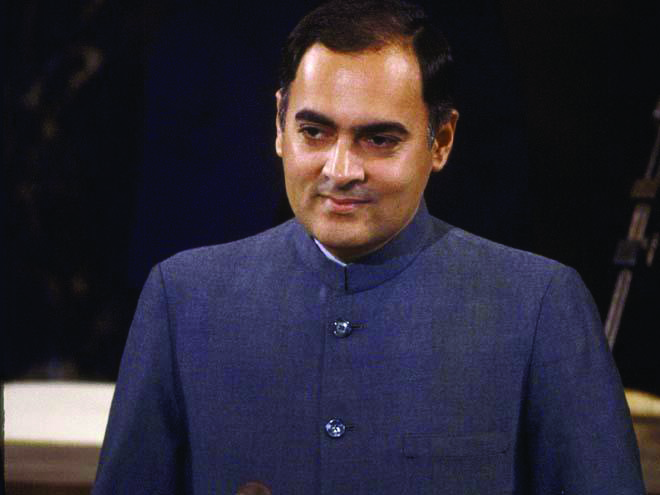
Rajiv Gandhi
Sofi was one of the first reporters who reached
Molvi Farooq’s Nigeen mansion. Then he drove to SKIMS and followed
mourners. Near Hawal, he found no scope to move through the wailing
crowd and returned to Nigeen. By then CRPF had opened fire and resorted
to yet another massacre.
Marwah, who was on a city tour the day Molvi was assassinated, says
there were “reports of unruliness” by the mourners. “The panic-stricken
leadership responded by imposing curfew in the entire area. No thought
was given to how this curfew order would be enforced without use of
force. It was a tragic mistake,” Marwah recorded. “It was left to a CRPF
picket comprising a head constable and eight constables at Hawal near
Islamia College to disperse the frenzied mourners. The CRPF picket
panicked when they saw the huge procession menacingly advancing towards
them. Sensing danger they fired indiscriminately, killing many of the
mourners.” Marwah says the incident could have been used for alienating
the people from militancy. “…it was allowed to be used by the militants
to spread terrorism in the state,” he regretted.
Sofi rushed to his office and flashed the story. He reported 37
killings (eventually the toll was 55 plus) and the world media picked it
up. “In the evening interaction, Jagmohan accused me of being a
militant who is always around,” Sofi said. “As I argued, he said: I will
kill you and I lost my temper.”
Sofi remembers saying the governor that he will be packed off from
Srinagar well before he would kill me. An angry Jagmohan sent Dhar to
formally protest with the PTI. “He rang up my boss saying as Director
Information I am putting on record my protest over the misreporting you
have done,” Sofi quoted his boss later telling him about Dhar’s
conversation. “Before the phone hanged, Dhar told him: as a citizen and a
private person I am telling you, you reported everything correctly.
That is why I respect Dhar.”
On May 24, a sullen and angry Jagmohan was summoned by Home Secretary
for a “discussion” with Home Minister. Initially, Jagmohan said he is
preoccupied but the Home Secretary insisted and sent him a special
plane. “That was the last we saw of Jagmohan in Srinagar,” Marwah wrote.
“He did come to Jammu to relinquish his charge, but did not come again
to Srinagar.”
As Jagmohan was seeking appointment with Home Minister, it took its own time. By May 25, morning his aide got him
The Times of India
that reported: “Jagmohan asked to step down”. He knew the summons, only
formalities were left. As Home Minister graced him an audience, B G
Deshmukh, Principal Secretary to Prime Minister met him at his
residence, suggesting him that he is now going to the Rajya Sabha. A
“betrayed” Jagmohan dictated his resignation to the PS of Home Minister,
whom he found “apologetic and helpless”.
Flying in the chartered Avro with his wife and three staffers on May
25, Banihal Pass came again between Jagmohan and Kashmir. He returned to
Jammu that sponsored a three day strike against his dismissal. Saksena
dispatched his luggage from Raj Bhawan to Jammu. Since then, people talk
about Jagmohan whenever Zulchu is remembered.


 Janmashtami is celebrated to to propagate goodwill and discourage evil in the world. (Source: Express photo by Pradip Das)
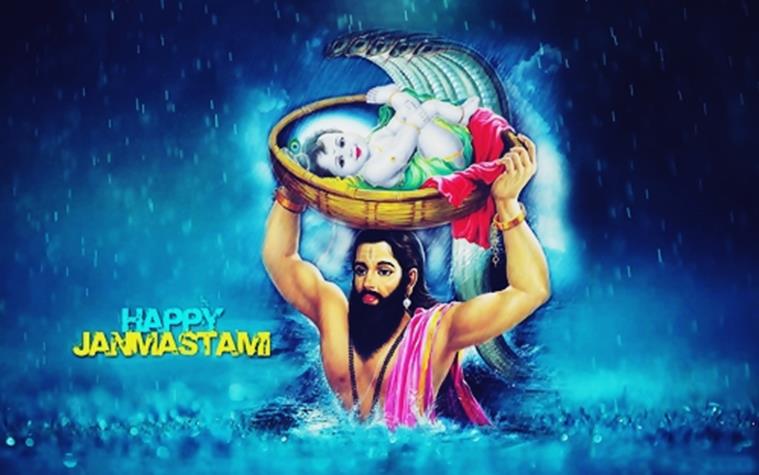 According to popular belief, Krishna was born on this day to fight evil.
 Lord Krishna believed in Karam Yoga.
 Lord Krishna served humanity without expecting rewards.