Redeeming the power to think beyond…
-
 New Day, New Year
-
 Libya: The Other Side of the Story
-
 Of the Women, By the Women, For the Women
-
 The Diversity of Prophet Mohammed’s Birthday
-
 Who is the real Jesus Christ?
-
 Book review: 1st Century Radical – The Shadowy Origins of the man who became known as Jesus Christ
-
 UK government’s tightening of Immigration laws clear violation of basic human rights
-
 Diwali: The Festival of Lights
-
 Wood Carving – Uzbekistan’s Cherished Treasure
-
 5 Reasons the US lost the War in Afghanistan
Kashmir Diaries: Divine Ways of Healing
Can faith heal deadly diseases and resolve problems of serious
nature? Some say if faith is strong, nothing is impossible, it can move
the mountains, let alone resolution of problems…

Fresh smell of Izband (Harmal/Wild Rue Seeds) adorn the mureeds (devotees) in a light-filled hall at a Sufi shrine. The
harmonious blend of Quranic recitations and laying on and off of hands,
claimed to implore divine intervention in initiating literal
physical and mental healing, creates scintillating and soothing aura in
these divine sanctuaries.
In one of the most renowned shrines of Srinagar, a boy in his early 20’s is lying on the main entrance of the Saint’s grave. His arms are open and eyes closed, just like a frail dead body. A number of houseflies are lying on his face to one’s utter surprise but still he won’t react.
It was perfectly clear to me what I ought to do. I stepped in and stood a few steps away from the boy. As I approached him to talk and get my queries answered, a person nearby suggested to wait and not disturb his rhythm. Instead of waiting and interrupting this brief silence, I left the spot with unanswered questions…
I moved around and finally perched on the stairs of the shrine. Here I saw many traditional Tilla-pheran (traditional Kashmiri gown with famous handwork) clad ladies sat beside me. They lifted their hands up towards the shrine and yelled: “Hyo mayne dasteegiro kaasti saeri parayshaani, chae siwa koet gaech” (O my beloved saint! brush off all my worries, where should I go to plead instead of your Khanqah [hospice]?)

The fumes of burning Harmal are whirling and wobbling in
a shaft with light coming from within the shrine premises where the
Kashmiri Sufi saint had been laid to rest. All the devotees have stories
to tell, their perturbed tranquility suggesting stories
of faith and healing under the shade of the holy saint.
Mostly on Thursdays, the shrine of Kashmir’s famous Sufi saint Makhdoom Sahib or Hazrat Sultan is flocked with countless devotees. They throng the place for serenity. “A person’s belief in spiritual healing can be much more powerful than scientific cures,” yells a dervish.
The shrine is located on the southern side of Hari Parbat Hill in Srinagar; name after Sufi saint Makhdoom Sahib. Also known as Hazrat Sultan, the saint is believed to have divine powers, as scores of devotees from all faiths visit his place throughout the year.
“My son met a road accident in Qazigund. His leg got seriously injured. The incident shattered all our hopes,” says Rehati, a resident of Srinagar. “When he was hospitalised, I sacrificed a sheep and silver leg chain to the majesty of Makhdoom sahib. Thanks to Allah, my son’s leg was healed,” the woman added.
Many devotees at Makdhoom Sahab’s shrine narrated miracles that happened as a result of the prayers of believers. Miraculous recoveries had been attributed to the saint by myriad of devotees commonly put together as faith and healing.
Rehati’s faith gained momentum when her son was able to walk again without any grievance within six months.
Shah-e-Hamadan (RA) is the Sufi saint who laid the foundations of Islam in Kashmir some 700 years ago.

‘‘Whenever I visit this shrine, I bow my head and feel that God will
help me brave any eventuality of life and not to succumb,” says a
wrinkly faced Abdul Rajab, 70, mustering his courage all the way from
Ganderbal to visit the shrine. His daughter had lost interest in
studies and household chores and fell prey to strange activities.
The shrine, situated on the banks of River Jhelum in Srinagar city, is revered and people throng daily to offer prayers. Thousands of devotees congregate on the 6th of Zilhaj, to celebrate the birth anniversary of Shah-e-Hamdan.
“We took our daughter to many doctors but nothing worked. They failed to treat her. One of our neighbours suggested us to visit this shrine and seek blessings of the Pir (saint) and I came here with many expectations,” Rajab said.
The devotees at various shrines seek the help of saints in dealing with their problems and beseech them to help facilitate the return of their lost happiness.
Rajab said: “We have been visiting the shrine on every Thursday from the past three months. After regularly taking part in recitation of hymns and prayers, my daughter finally recovered. Now she is back to normal and once again taking keen interest in studies.”
From kissing floors to filling of bottles and from revered spring to handing out of sweets called shereen and sweeping staircases, the devotees feel shrines as safe places to exorcise their pain, keeping in view two decades-old conflict.
I met a group of foreign tourists visiting another shrine in Srinagar. They seemed busy in trying different efforts to get their problems resolved. Reluctantly, few of them took their shoes off, placed under a carpet and entered the mausoleum. While imitating rest of the devotees, they also kissed the surface as a mark of respect. They came here all the way from Europe to visit the shrine and get their wishes fulfilled. Faith-healing to them is that God will grant their every whim if advocated by the saint.
Nausheen Mushtaq, 22, is another person who firmly believes in faith and healing. She prays with her hands raised and tears roll down her cheeks. She walks bare-footed all the way from Hawal to the Makhdoom Sahib shrine every Thursday morning, to vent her emotions and to pray that she succeeds in her studies to become a doctor.

“I feel relieved as this helps me vent my feelings. I plead in the
shrine. I believe he (my pir) listens to me and will come to my rescue
during hard times,” she says.
For Nausheen, faith and healing enhances peace of mind, reduces stress, relieves pain and anxiety and strengthens the will to live.
There are people who have absolute faith that whatever worry strikes them is by the will of God, so they don’t give up, as their faith in God and deep-rooted Sufi traditions keep them going.
An elderly figure got up in the crowd and sat with me and proclaimed how she was healed from a disease and how God can heal everyone who has enough faith. She believes that praying at the shrine cures illness and brings prosperity.
“My family doesn’t allow me to visit the shrine as I have a weak eye-sight. Besides all scolding from my elder son, I keep on visiting the shrine apart from the month of Ramadhan,” says Mughli, 75, a resident of Lal Bazar, Srinagar. “I have a strong faith that the courage and strength to visit this shrine is only endowed for the devotion towards saint.”
Tears of mercy are like charity as they come forth from a living and sensitive soul, least they are shed in vain.
“He will wipe every tear from our eyes. There will be no more pain, for the phase of worries has passed away,” she murmurs.
The elderly figure was beseeching in low tune with her hands cuddled towards her face. “God does not pick people to cure, but he cures anyone who has strong faith,” she whispered while I closed my eyes during prayers.
Dressed in a white school uniform, a student is sitting on her knees and filling a disposable bottle from the shrine’s spring and smearing a handful of dust on her face and belly. Each time she visits the shrine, she takes home a container of water. She sprinkles water around her house and on cooking items.
The shrines attract devotees of all religions and sects, as many visit the place for mental peace.
Mohammed Rafiq and Shazia Qasim are two such devotees. Formerly known as Rajkumar and Sahdeep Kour respectively, they come from Poonch to untie their votive rag – Daesh in Kashmiri. They tied it after marriage to get their wish of a son fulfilled. Tying the knot three years ago, the couple was deeply inspired by faith healing. According to the young couple, the process evoked divine powers that solved their problems and changed their religion from Hindu Pundits to Muslims.
“After exodus, we moved to Jammu and my family was killed. I was living with my uncle but his tyranny was becoming so unbearable that I moved back to Kashmir,” Rafiq said with a chuckle.
He was so inspired by Islam that he embraced it and got married to Shazia.

“I was basically from a Sikh family and when I got married to Rafiq, I
didn’t change my religion for about a year. There was no obligation
either,” she said hesitantly.
Shazia too was inspired by her husband, and embraced Islam with open arms. The new Muslim couple is now blessed with a son which they craved for. “We have come today to untie the knot of our votive rag. All my small and big wishes have been fulfilled since I visited this shrine. We really want to express our devotion and say thanks to God,” said a cheerful mother with her few months old son in the lap.
It is pertinent to mention that shrines are endowed with splendour held in high esteem by people belonging to all faiths and communities. Due to centuries-old established practice of visiting a shrine for different reasons, these sacred places are in fact, symbols of human ability and brotherhood.
Zamrooda Begum, a resident of Budgam is another believer of faith and healing. Her lips are parted, echoing a deep wound in her soul. She sat silent with secrets burning in her heart. I looked sideways for some time and was surprised to find a woman sitting beside me, holding a pencil in her hand and drawing a graffiti on the marble walls of the shrine.
Puzzled, I asked: “What are you writing?” She leaned towards the wall and read out the graffiti. She was torn in pain and wandering in melancholic contemplation. After visiting the shrine, all the tension ebbed out of her body. She believed that the saint took her pain and reassured her.
“My son disappeared three years ago and is yet to be found. I moved from pillar to post but to no avail. I come here to address my plea in the court of this saint,” the grief-stricken mother said in a painful tone. Her watery and love-drenched eyes have the date of disappearance written in them. She is not sure whether her beloved son is dead or alive…
Shrines dotted at various places across Kashmir valley have stood as beacons of peace and humanism for centuries and have had a deep impact of Sufism on social, religious and cultural life of the people. The poor folk mostly gather, recite Fatiha (special prayers) and distribute ‘tabarruk’ (sacred sweets). Pigeons fly in the lawns after feasting on feed that visitors throw hoping their wishes will get fulfilled.
The great mystic saints and rishis preached the eternal message of universal humanism, compassion and peace. These spiritually uplifted souls carved out special places in the hearts of innumerable followers not only in Jammu and Kashmir region but across the Indian subcontinent.
Renown Sufi saints who have blessed the people with their eternal message of spiritualism in the region are Hazrat Bulbul Shah, Amir-e-Kabir Shah-e-Hamdan, Noor-uddin Wali, Lal Ded, Baba Rishi, Baba Budhan Shah, Roshan Ali Shah, Peer Mitha and Panj Peer. Their pristine life set a glowing example before the society and helped people move on the right spiritual track.
Aliya Bashir is a freelance journalist based in Srinagar, Indian-controlled Jammu and Kashmir. She regularly covers womens issues and human rights violations in the disputed territory.


Burning Izband (Harmal/Wild Rue Seeds) inside Kangri. Photo - SearchKashmir.org
In one of the most renowned shrines of Srinagar, a boy in his early 20’s is lying on the main entrance of the Saint’s grave. His arms are open and eyes closed, just like a frail dead body. A number of houseflies are lying on his face to one’s utter surprise but still he won’t react.
It was perfectly clear to me what I ought to do. I stepped in and stood a few steps away from the boy. As I approached him to talk and get my queries answered, a person nearby suggested to wait and not disturb his rhythm. Instead of waiting and interrupting this brief silence, I left the spot with unanswered questions…
I moved around and finally perched on the stairs of the shrine. Here I saw many traditional Tilla-pheran (traditional Kashmiri gown with famous handwork) clad ladies sat beside me. They lifted their hands up towards the shrine and yelled: “Hyo mayne dasteegiro kaasti saeri parayshaani, chae siwa koet gaech” (O my beloved saint! brush off all my worries, where should I go to plead instead of your Khanqah [hospice]?)
A Kashmiri woman praying at the Makhdoom Sahib shrine in Srinagar, Indian-administered Jammu and Kashmir. Photo - wn.com
Mostly on Thursdays, the shrine of Kashmir’s famous Sufi saint Makhdoom Sahib or Hazrat Sultan is flocked with countless devotees. They throng the place for serenity. “A person’s belief in spiritual healing can be much more powerful than scientific cures,” yells a dervish.
The shrine is located on the southern side of Hari Parbat Hill in Srinagar; name after Sufi saint Makhdoom Sahib. Also known as Hazrat Sultan, the saint is believed to have divine powers, as scores of devotees from all faiths visit his place throughout the year.
“My son met a road accident in Qazigund. His leg got seriously injured. The incident shattered all our hopes,” says Rehati, a resident of Srinagar. “When he was hospitalised, I sacrificed a sheep and silver leg chain to the majesty of Makhdoom sahib. Thanks to Allah, my son’s leg was healed,” the woman added.
Many devotees at Makdhoom Sahab’s shrine narrated miracles that happened as a result of the prayers of believers. Miraculous recoveries had been attributed to the saint by myriad of devotees commonly put together as faith and healing.
Rehati’s faith gained momentum when her son was able to walk again without any grievance within six months.
Shah-e-Hamadan (RA) is the Sufi saint who laid the foundations of Islam in Kashmir some 700 years ago.

The
Shah Hamdan Mosque stands beside the Jhelum River in Srinagar. Beside
the mosque, stand traditional Kashmiri houses. Photo - Earl & Nazima
Kowall/Corbis
The shrine, situated on the banks of River Jhelum in Srinagar city, is revered and people throng daily to offer prayers. Thousands of devotees congregate on the 6th of Zilhaj, to celebrate the birth anniversary of Shah-e-Hamdan.
“We took our daughter to many doctors but nothing worked. They failed to treat her. One of our neighbours suggested us to visit this shrine and seek blessings of the Pir (saint) and I came here with many expectations,” Rajab said.
The devotees at various shrines seek the help of saints in dealing with their problems and beseech them to help facilitate the return of their lost happiness.
Rajab said: “We have been visiting the shrine on every Thursday from the past three months. After regularly taking part in recitation of hymns and prayers, my daughter finally recovered. Now she is back to normal and once again taking keen interest in studies.”
From kissing floors to filling of bottles and from revered spring to handing out of sweets called shereen and sweeping staircases, the devotees feel shrines as safe places to exorcise their pain, keeping in view two decades-old conflict.
I met a group of foreign tourists visiting another shrine in Srinagar. They seemed busy in trying different efforts to get their problems resolved. Reluctantly, few of them took their shoes off, placed under a carpet and entered the mausoleum. While imitating rest of the devotees, they also kissed the surface as a mark of respect. They came here all the way from Europe to visit the shrine and get their wishes fulfilled. Faith-healing to them is that God will grant their every whim if advocated by the saint.
Nausheen Mushtaq, 22, is another person who firmly believes in faith and healing. She prays with her hands raised and tears roll down her cheeks. She walks bare-footed all the way from Hawal to the Makhdoom Sahib shrine every Thursday morning, to vent her emotions and to pray that she succeeds in her studies to become a doctor.

A
Kashmiri Muslim woman kisses her fingers after touching a pendulum tied
to the gate of the shrine of Mir Syed Ali Hamdani, a Sufi saint, during
a religious festival in Srinagar. Thousands of Kashmiri Muslim Sufi
devotees thronged to the shrine of Shah Hamdan, who travelled to Kashmir
from Iran to spread Islam in the region. Photo - Danish Ismail/Reuters
For Nausheen, faith and healing enhances peace of mind, reduces stress, relieves pain and anxiety and strengthens the will to live.
There are people who have absolute faith that whatever worry strikes them is by the will of God, so they don’t give up, as their faith in God and deep-rooted Sufi traditions keep them going.
An elderly figure got up in the crowd and sat with me and proclaimed how she was healed from a disease and how God can heal everyone who has enough faith. She believes that praying at the shrine cures illness and brings prosperity.
“My family doesn’t allow me to visit the shrine as I have a weak eye-sight. Besides all scolding from my elder son, I keep on visiting the shrine apart from the month of Ramadhan,” says Mughli, 75, a resident of Lal Bazar, Srinagar. “I have a strong faith that the courage and strength to visit this shrine is only endowed for the devotion towards saint.”
Tears of mercy are like charity as they come forth from a living and sensitive soul, least they are shed in vain.
“He will wipe every tear from our eyes. There will be no more pain, for the phase of worries has passed away,” she murmurs.
The elderly figure was beseeching in low tune with her hands cuddled towards her face. “God does not pick people to cure, but he cures anyone who has strong faith,” she whispered while I closed my eyes during prayers.
Dressed in a white school uniform, a student is sitting on her knees and filling a disposable bottle from the shrine’s spring and smearing a handful of dust on her face and belly. Each time she visits the shrine, she takes home a container of water. She sprinkles water around her house and on cooking items.
The shrines attract devotees of all religions and sects, as many visit the place for mental peace.
Mohammed Rafiq and Shazia Qasim are two such devotees. Formerly known as Rajkumar and Sahdeep Kour respectively, they come from Poonch to untie their votive rag – Daesh in Kashmiri. They tied it after marriage to get their wish of a son fulfilled. Tying the knot three years ago, the couple was deeply inspired by faith healing. According to the young couple, the process evoked divine powers that solved their problems and changed their religion from Hindu Pundits to Muslims.
“After exodus, we moved to Jammu and my family was killed. I was living with my uncle but his tyranny was becoming so unbearable that I moved back to Kashmir,” Rafiq said with a chuckle.
He was so inspired by Islam that he embraced it and got married to Shazia.
Upper-caste
Hindus known as Pandits pray at the Vichar Nag shrine, in Srinagar,
Indian-administered Jammu and Kashmir. Photo -
Pakistanhindupost.blogpost.com
Shazia too was inspired by her husband, and embraced Islam with open arms. The new Muslim couple is now blessed with a son which they craved for. “We have come today to untie the knot of our votive rag. All my small and big wishes have been fulfilled since I visited this shrine. We really want to express our devotion and say thanks to God,” said a cheerful mother with her few months old son in the lap.
It is pertinent to mention that shrines are endowed with splendour held in high esteem by people belonging to all faiths and communities. Due to centuries-old established practice of visiting a shrine for different reasons, these sacred places are in fact, symbols of human ability and brotherhood.
Zamrooda Begum, a resident of Budgam is another believer of faith and healing. Her lips are parted, echoing a deep wound in her soul. She sat silent with secrets burning in her heart. I looked sideways for some time and was surprised to find a woman sitting beside me, holding a pencil in her hand and drawing a graffiti on the marble walls of the shrine.
Puzzled, I asked: “What are you writing?” She leaned towards the wall and read out the graffiti. She was torn in pain and wandering in melancholic contemplation. After visiting the shrine, all the tension ebbed out of her body. She believed that the saint took her pain and reassured her.
“My son disappeared three years ago and is yet to be found. I moved from pillar to post but to no avail. I come here to address my plea in the court of this saint,” the grief-stricken mother said in a painful tone. Her watery and love-drenched eyes have the date of disappearance written in them. She is not sure whether her beloved son is dead or alive…
Shrines dotted at various places across Kashmir valley have stood as beacons of peace and humanism for centuries and have had a deep impact of Sufism on social, religious and cultural life of the people. The poor folk mostly gather, recite Fatiha (special prayers) and distribute ‘tabarruk’ (sacred sweets). Pigeons fly in the lawns after feasting on feed that visitors throw hoping their wishes will get fulfilled.
The great mystic saints and rishis preached the eternal message of universal humanism, compassion and peace. These spiritually uplifted souls carved out special places in the hearts of innumerable followers not only in Jammu and Kashmir region but across the Indian subcontinent.
Renown Sufi saints who have blessed the people with their eternal message of spiritualism in the region are Hazrat Bulbul Shah, Amir-e-Kabir Shah-e-Hamdan, Noor-uddin Wali, Lal Ded, Baba Rishi, Baba Budhan Shah, Roshan Ali Shah, Peer Mitha and Panj Peer. Their pristine life set a glowing example before the society and helped people move on the right spiritual track.
Aliya Bashir is a freelance journalist based in Srinagar, Indian-controlled Jammu and Kashmir. She regularly covers womens issues and human rights violations in the disputed territory.
This article was written by Aliya Bashir on Friday, November 18, 2011 at 12:22 am. You can follow any responses to this entry through the RSS feed. You can leave a response, or trackback from your own site.
Tags: islam jammu and kashmir sufism







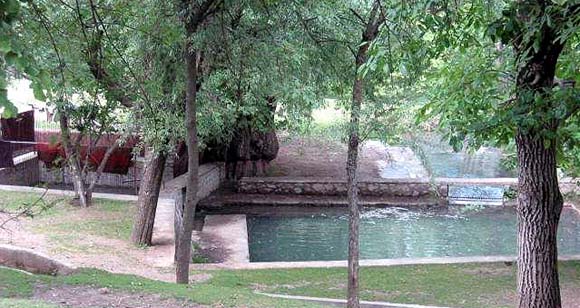

 --tarpaṇa –the water oblations to their ancestors . After morning
oblations,they would bring water from Vitasta in a Gadha,which is a
small pitcher of copper or brass to be offered to the Murtis and on the
Shiva Lingam at the temples constructed on the banks / Ghats, popularly
known as the
--tarpaṇa –the water oblations to their ancestors . After morning
oblations,they would bring water from Vitasta in a Gadha,which is a
small pitcher of copper or brass to be offered to the Murtis and on the
Shiva Lingam at the temples constructed on the banks / Ghats, popularly
known as the
 --yārabala in the Kashmiri language. People were seen going to
the temples from Shurah Yaar near the Durga Nagh-Badami Bagh area, which
is the first temple of the Srinagar city,upto the Safakadal temple.
Famous Hanuman Mandir of Kashmir is situated on its bank, near Amira
Kadal. The water oblations were offered at the Dubji Ghat, where the
water from the Dal lake merges with the Vyeth. It is the Gaw Kadal area
in close proximity with the Anandishwar Bhairava Nath at Miasuma. Then
the Hindus from the area of Badiyar, Nai Sarak, Gundi –Ahalmar, Sathoo
Shital Nath, Chonda Pora, Breyi-Kuja, MallaYaar and the adjoining areas
would go to the banks of the Ganapatyar for their daily prayers.
--yārabala in the Kashmiri language. People were seen going to
the temples from Shurah Yaar near the Durga Nagh-Badami Bagh area, which
is the first temple of the Srinagar city,upto the Safakadal temple.
Famous Hanuman Mandir of Kashmir is situated on its bank, near Amira
Kadal. The water oblations were offered at the Dubji Ghat, where the
water from the Dal lake merges with the Vyeth. It is the Gaw Kadal area
in close proximity with the Anandishwar Bhairava Nath at Miasuma. Then
the Hindus from the area of Badiyar, Nai Sarak, Gundi –Ahalmar, Sathoo
Shital Nath, Chonda Pora, Breyi-Kuja, MallaYaar and the adjoining areas
would go to the banks of the Ganapatyar for their daily prayers.



Fatal error: Uncaught Exception: 12: REST API is deprecated for versions v2.1 and higher (12) thrown in /nfs/c04/h07/mnt/80175/domains/outernationalist.net/html/wp-content/plugins/seo-facebook-comments/facebook/base_facebook.php on line 1273