Kashmiris
کٲشُر لُکھ
कॉशुर लुख
| Regions with significant populations |
 India India |
5,527,698 (2001)*[1] |
 Pakistan Pakistan |
132,450 (1998)*[2] |
| Languages |
Kashmiri
Hindustani (Hindi, Urdu), also spoken widely as second language[3] |
| Religion |
Predominantly:
Islam
Minorities:
|
| Related ethnic groups |
| Other Dard people |
*The population figures are only for the number of speakers of the
Kashmiri language. May not include ethnic Kashmiris who no longer speak
Kashmiri language. |
Political Map: the Kashmir region districts, showing the
Pir Panjal range and the
Kashmir Valley.
The
Kashmiris (
Kashmiri:
کٲشُر لُکھ / कॉशुर लुख) are an ethnic group native to the
Kashmir Valley, in the Indian state of
Jammu and Kashmir, who speak
Kashmiri, an Indo-Aryan
Dardic language.
[4] The bulk of Kashmiri people predominantly live in the
Kashmir Valley–which is the 'actual' Kashmir and does not include the other territories of the former
princely state of Jammu and Kashmir (i.e.
Jammu,
Gilgit-Baltistan,
Azad Kashmir and
Ladakh).
[A] Other ethnic groups living in the
Jammu and Kashmir state include
Gujjars,
[5] Dogras[6] Paharis, Baltis and Ladakhis.
[7]
While Kashmiris are native to the Kashmir Valley, smaller populations of Kashmiris also live in the remaining districts of
Jammu and Kashmir. Ethnic Kashmiris can be found in the
Chenab region's Doda,
Ramban,
Bhadarwah and
Kishtwar districts and in the
Neelam Valley and
Leepa Valley of northern
Azad Kashmir. Since 1947, many ethnic Kashmiris are also found in Pakistan.
[B] Many ethnic Kashmiris from the
Kashmir Valley migrated to the Punjab region during the
Dogra,
Sikh and
Afghan rule of Kashmir.
[C][D] Most Kashmiris today are Sunni
Muslim[E] but a sizeable
Hindu community also exists. Most ethnic
Kashmiri Muslims are
descended from
Kashmiri Pandits and
Buddhists,
[10] some also use the prefix 'Sheikh'.
[F][G][H] Common surnames among these people include
Bhat/Butt,
Dar,
Lone,
Malik etc.
[I][J][11]
Although all residents of
Azad Kashmir call themselves 'Kashmiri', most residents of
Azad Kashmir are not ethnic Kashmiris.
[K]
Origins
Scholars
have proposed various theories concerning the origins of Kashmiris.
According to scholar Pandit Anand Koul, Kashmiris descend from
Indo-Aryan people from Central Asia, and he sees their fair complexions
as an indication of that. Some believe they were immigrants from "India proper," c.q. "the more southern regions of India." Other scholars reject the Aryan origin theory of Kashmiris and believe them to belong to the race of Pishachas and Nagas. The presence of Nagas in ancient Kashmir has been contested in historical scholarship.
[14]
Some scholars and Kashmiri historians, such as R.K. Parmu, believe
that the Kashmiri people have a Jewish origin, due to several
similarities between Kashmiris and Israelites. This theory holds that
Kashmiris descend from one of the
Lost Tribes of Israel which settled in Kashmir after the dispersal of the Jews, and were "forcibly converted to Islam prior to the 12th century." According to Bhat, this theory has been refuted by most scholars.
According to Dar, Kashmir being at crossroads of India, China,
Afghanistan and central Asia, was settled by several waves of migrants.
Central Asians and Brahmins from India pursuing studies who either mixed
with or removed the earlier Nagas. Dar also includes the arrival of
Sufis from Iran and Iraq among these migratory waves.
Several historians have argued that the Kashmiris migrated directly
from central Asia, citing similar customs, lifestyle and complexion as
evidence for their stance.
History
Hindu and Buddhist rule
The Hindu
caste system of the Kashmir region was influenced by the influx of Buddhism from the time of
Asoka, around the third century BCE, and a consequence of this was that the traditional lines of
varna were blurred, with the exception of that for the Brahmins, who remained aloof from the changes.
[18]
Another notable feature of early Kashmiri society was the relative high
regard in which women were held when compared to their position in
other communities of the period.
[19]
A historically contested region, Northern India was subject to attack from
Turkic
and Arab regimes from the eighth century onwards, but they generally
ignored the mountain-circled Kashmir Valley in favour of easier pickings
elsewhere. It was not until the fourteenth century that Muslim rule was
finally established in the Valley and when this happened it did not
occur primarily as a consequence of invasion so much as because of
internal problems resulting from the weak rule and corruption endemic in
the Hindu
Lohara dynasty.
[20][21] Mohibbul Hasan describes this collapse as
The Dãmaras
(feudal chiefs) grew powerful, defied royal authority, and by their
constant revolts plunged the country into confusion. Life and property
were not safe, agriculture declined, and there were periods when trade
came to a standstill. Socially and morally too the court and the country
had sunk to the depths of degradation.[21]
The Brahmins had something to be particularly unhappy about during
the reign of the last Lohara king, for Sūhadeva chose to include them in
his system of onerous taxation, whereas previously they appear to have
been exempted.
[22]
Arrival of Islam and Shah Mir Dynasty (1320–1580s)
Islam arrived in Kashmir starting with the conversion in 1320 of Kashmir's Buddhist ruler,
Rinchan,
at the hands of the saint, Sayyid Bilal Shah (also known as Bulbul
Shah). After conversion to Islam he called himself Malik Sadur-ud-Din
and became the first Muslim ruler of Kashmir. In 1339,
Shah Mir established the
Shah Mir dynasty in Kashmir. Islam grew in the 14th century under the Shah Mir dynasty and numerous Muslim
ulama from Central Asia came to preach in Kashmir. Some of the famous
ulama
who propagated Islam in Kashmir included Sayyid Jalaluddin, Sayyid
Tajuddin, Sayyid Ḥusayn Simani, Sayyid Ali Ḥamadani, Mir Muḥammad
Hamadani, and Shaykh Nuruddin.
[L] Sayyid Ali Hamadani
(also known as Shah-yi Hamadan), alongside hundreds of his followers,
converted thousands of Kashmiris to Islam and also imparted Persian
influences on the local Kashmiri culture.
[23] His son, Sayyid Muḥammad Hamadani, encouraged Kashmir's Muslim ruler
Sikandar Butshikan (who reigned from 1389–1413) to enforce
Islamic law and establish the office of
Shaykh al-Islam i.e. the chief religious authority. By the late 1400s the majority of the population had embraced Islam.
[M] During the rule of Sultan Sikandar Butshikan (1389–1413), who has been referred as an
iconoclast, there were mass migrations of
Kashmiri Pandits to other parts of India.
[24]
Chak Rule
In 1540, the
Mughal governor of
Kashgar and a cousin of Emperor
Babur by the name of
Mirza Muhammad Haidar Dughlat
conquered Kashmir. He ruled until 1551, when he was killed in an
outbreak of revolt by Chaks, who became the main force by this time.
[26] The Chaks are believed to have been naturalised Kashmiris of Dardic ancestry from
Chilas. Today their tribe is based in trehgram and other parts northern
Kashmir valley.
[27] In 1557 they overthrew the Shah Miri dynasty and came to power.
[28][29]
The Chak rulers, being Shias, persecuted their Sunni subjects, causing
Sunni scholars to flee to safer environs. Some disenchanted Sunnis, such
as notable Sunni scholar, Sheikh Yaqub Sarfi, went to the court of
Akbar
and invited the Mughals to conquer Kashmir and overthrow Chak rule on
certain conditions. These conditions included a guarantee of Kashmiri
rights such as freedom of religion for all of Kashmir's population.
[30]
Shaikh Yaqub Sarfi also forbade Sunnis from carrying out any reprisal
against Shias and he devoted his life to restoring peace and communal
harmony between the Sunnis and Shias of Kashmir. Initially after being
defeated by kashmiri forces twice,
[31]
In 1586 the Mughal imperial army finally entered the valley of Kashmir
taking advantage of the disunity among Kashmiris (Shia-Sunni sectarian
violence).
[32]
Mughal rule (1580s–1750s)
Kashmiri historians see
Mughal rule as the beginning of the end of Kashmiri independence. The Mughal Emperor
Akbar succeeded in invading the
Kashmir Valley, despite tough Kashmiri resistance,
[N] due to internal
Sunni–
Shia divisions amongst Kashmiris.
[34]
The anti-Shia policies of Mirza Haidar Dughlat and the anti-Sunni
policies of the Chaks had broken Kashmiri unity, thus paving the way for
the Mughal occupation of Kashmir.
[35] Akbar's victory brought an end to indigenous Kashmiri Muslim rule.
[O] Christopher Snedden states that the
Mughals
began a process of psychological warfare against Kashmiris to strip
them of their martial capabilities. After this, neighbouring ethnic
groups started stereotyping Kashmiris as a 'cowardly' and 'non-martial'
race.
[36]
Conversely, Akbar also reduced the land revenue demand from two-thirds, as it was earlier, to one-half of the produce.
[37] Kashmiri Hindus also felt a respite from the severe persecution they faced under the earlier Kashmiri Muslim rule.
[38]
The Mughals maintained a large military presence in the valley and
were not interested in developing the productive sectors although they
patronised art and constructed some pleasure gardens and a few mosques.
While many histories of Kashmir consider the Kashmir Valley's
incorporation into Mughal India as a decline of Kashmiri independence
and cultural identity, Chitralekha Zutshi argues that Kashmiri poets
began to consciously articulate their sense of regional belonging during
the Mughal rule. According to M.J. Akbar, the clash of cultures between
Delhi and Kashmir resulted in Kashmiris wishing for nothing more than
to be left alone.
[P]
Afghan Rule (1750s–1819)
In 1751, the
Afghans, ruled by
Ahmad Shah Durrani, absorbed Kashmir into the
Durrani Empire. The
Afghans were cruel, especially to Kashmir's Hindus. However, Kashmiri historians state that the
Afghans were brutally repressive to all Kashmiris, regardless of religion.
[Q] The Afghans extorted money from the locals and both Kashmiri men and women lived in fear of their lives. The
Afghans sent many Kashmiris as slaves to
Afghanistan.
During Afghan dominance, the shawl industry declined, probably due to
heavy taxes. According to scholars Chitralekha Zutshi and Janet Rizvi,
the Afghan brutality caused many Kashmiri shawl-weavers to flee to
Punjab.
[R][S] However, due to the administrative experience of
Kashmiri Pandits, the Afghans utilised their services.
Kashmiri Pandits
were not prevented from entering into government service. George
Foster, who visited Kashmir during the Afghan rule, documented the
oppression of Kashmiris by Afghans. He writes:
The Afghans would never issue an order without a blow of the side of
hatchet (battle axe). Karim Dad Khan in a mood of enjoyment would tie up
the inhabitants by back in pairs and drop them in the river.
By 1819 the
Sikh Empire's
Maharajah Ranjit Singh finally succeeded in taking
Kashmir. Initially, Kashmiris felt relieved as they had suffered under the Afghans.
[T]
Sikh Empire (1820–1846)
In 1819 Kashmir came under
Maharajah Ranjit Singh's Sikh Empire and
Sikh rule
over Kashmir lasted for 27 years till 1846. These 27 years of Sikh rule
saw 10 Governors in Kashmir. Of these 10 Governors five were Hindus,
three were Sikhs and two were Muslims. Due to the fact that Kashmiris had suffered under the Afghan rulers, they initially welcomed the Sikh rule.
[U] However, the Sikhs oppressed the population. Scholar
Christopher Snedden states that the Sikhs exploited Kashmiris regardless of religion.
[42]
During the Sikh rule the mostly illiterate Muslim population suffered
under heavy taxation, rural indebtedness and discrimination.
[V]
The Sikhs had enacted a number of anti-Muslim policies, thus subjecting
the Muslim majority population of the Valley to a number of hardships
in the practice of their religion. The central mosque,
Jama Masjid, was closed for 20 years and Muslims were prohibited from issuing the
azan
(call to prayer). If a Sikh murdered a Hindu the compensation amount
allowed was four rupees. However, if a Sikh murdered a Muslim the
compensation amount allowed was only two rupees. According to Prem Nath
Bazaz the effect of the Sikh rule was that the people of the valley came
to be known as 'zulum parast' (worshippers of tyranny), forgot their
glorious martial traditions and became timid and cowardly.
[W]
During the Sikh rule, Europeans who visited the Valley documented the
deprivation and starvation and also wrote of the abject poverty of the
peasantry and the exorbitant taxes under the Sikhs. According to
European traveller Moorcraft, no more than one-sixteenth of the
cultivable land surface was under cultivation and due to starvation many
people had fled to India.
[X]
Kashmiri histories also emphasise the wretchedness of life for common
Kashmiris during the Sikh rule. According to them, the peasantry became
mired in poverty and migrations of Kashmiri peasants to the plains of
Punjab reached high proportions. Several European travellers' accounts from the period agree and provide evidence for such assertions.
[Y] When Moorcroft left the
Valley in 1823, about 500 emigrants accompanied him across the Pir Panjal Pass.
[Z] The Sikhs lost their independence with the Battle of Subraon. In 1846 Kashmir came under the rule of
Gulab Singh, a Hindu Dogra Maharajah under the British suzerainty.
[42]
1833 Famine
The 1833 famine caused many people to leave the
Kashmir Valley and migrate to the
Punjab, with the majority of weavers leaving Kashmir. Weavers settled down for generations in the cities of Punjab such as
Jammu and Nurpur.
[AA] Due to the famine, the Punjabi city of
Amritsar witnessed a large influx of Kashmiris.
[AB][AC]
Thousands of people died during the famine of 1833 and both the famine
and emigration reduced the population to one-fourth by 1836. Hindus were
not much affected but Muslims were and had to leave in large numbers.
[AD]
Dogra Regime (1846–1947)
The
Muslim population suffered severe oppression under Hindu rule and were
subjected to heavy taxation, discriminatory laws and forced unpaid
labour.
[AE] The 100 year Dogra regime was a disaster for the
Muslim peasantry of
Kashmir Valley.
[AF] Walter Lawrence described the conditions of the
Valley's peasantry as being 'desperate' and noted that the
Valley's
peasantry attributed their miseries to the Maharajah's deputies rather
than the rulers themselves. The state officials apparently kept the
rulers from knowing the conditions of the
Muslim peasantry in the
Valley.
Lawrence in particular criticised the state officials who belonged to the
Kashmiri Pandit community.
Lawrence provided evidence that while many of the
Kashmiri Pandit officials may have been ''
individually gentle and intelligent, as a body they were cruel and oppressive.'' Scholars have noted that during the Hindu monarchy, a Hindu elite heavily exploited the Kashmiri Muslims.
[44][45][34]
Kashmiri Pandits had entered the state administrative machinery during
the Afghan period and by the Dogra period they had become entrenched in
the lower levels of the state bureaucracy. However, the Pandits were,
like all Kashmiris, excluded from the upper sections of the bureaucracy,
although they continued to exercise control in the countryside.
Wingate and
Lawrence
spent many months in the rural hinterland of Kashmir and in an
unprecedented manner brought to the fore the tensions that underlay
Kashmiri society between the interests of the Hindu
Pandit community and the numerically preponderant
Kashmiri Muslim cultivators. However, while both acknowledged the oppression of
Kashmiri Muslims, the solutions offered by
Lawrence and Wingate differed from each other. While both acknowledged the responsibility of the
Kashmiri Pandit
community in exacerbating the situation of the Muslim cultivating
classes, Wingate was far more uncompromising in demanding that the
privileges of the
Pandit community be eliminated. However,
Lawrence proposed to provide relief to Kashmir's cultivating class without eliminating the privileges of the
Kashmiri Pandits.
[AG]
Gawasha Nath Kaul described the poor conditions of the
Valley's Muslim population in his book
Kashmir Then And Now
and in it he wrote that 90 percent of Muslim households were mortgaged
to Hindu moneylenders. Muslims were non-existent in the State's civil
administration and were barred from officer positions in the military.
[AH]
Prem Nath Bazaz, one of the few
Kashmiri Pandits who joined the movement for change, described the poor conditions of the Valley's Muslim population as such:
The poverty of the Muslim masses is appalling. Dressed in rags and
barefoot, a Muslim peasant presents the appearance of a starved
beggar...Most are landless laborers, working as serfs for absentee
landlords.
1878 Famine
There
was a famine in Kashmir between 1877-9 and the death toll from this
famine was overwhelming by any standards. Some authorities suggested
that the population of
Srinagar had been reduced by half while others estimated a diminution by three-fifths of the entire population of the
Valley. During the famine of 1877-9 not a single
Pandit died of starvation during these annihilative years for the
Muslim cultivators, according to reports received by
Lawrence. During the famine the office of Prime Minister was held by a
Kashmiri Pandit, Wazir Punnu, who is said to have declared that there
was no real distress and that he wished that no Musulman might be left alive from Srinagar to Rambhan (in Jammu).[AI]
Despite the ban on leaving the state, everyone wanted to leave the
Valley either temporarily or permanently. Lawrence described the
situation when the government of the day lifted the ban on free movement
after the deadly famine.
[citation needed]
The lifting of the ban witnessed a stampede, it appeared as if a bund
had suddenly collapsed, for a sea of humanity, drawn from every town
and village, was moving towards the snow clad passes, on their way to
the land of hope – the British India...the migration was so extensive
that according to the 1891 census Report of Punjab, 1,11,775 Muslims
born in Kashmir were counted as having settled in the Punjab.[49]
When lands fell fallow temporarily during the famine,
Pandits took over substantial tracts of them claiming that they were uncultivated waste. Numerous
Kashmiri Muslim cultivators who had left the
Valley for
Punjab
to escape the devastation of those years found upon their return that
they had been ousted from lands that they had cultivated over
generations.
[AJ]
The Dogra administration's attempts to revive the crippled shawl
weaving industry failed as after the famine many weavers left the Valley
permanently and settled in the Punjabi towns of Amritsar, Lahore,
Ludhiana, Nurpur, Gujrat, Gurdaspur, Sialkot, Chamba, Kangra and Simla.
The weavers introduced their art to the towns they settled in.
[AK][AL][AM][AN]
Thus, in the late nineteenth
[AO] and early twentieth centuries,
[AP] there had been a significant migration of
Kashmiri Muslims from the
Kashmir Valley to the
Punjab, due to such conditions of famine in the princely state and also because of extreme poverty
[45] and harsh treatment by the
Dogra Hindu regime (according to Prem Nath Bazaz the
Kashmiri Muslims faced this harsh treatment because of their religion).
[AQ] By 1911, over 200,000 Kashmiris had migrated to
Punjab and
NWFP.
[AR]
Culture
Cuisine
Kashmiri cuisine holds a unique place among different world cuisines.
Rice is the staple food of Kashmiris and has been so since ancient
times. Meat, along with rice, is the most popular food item in Kashmir.
[AS] Kashmiris consume meat voraciously.
[AT] Despite being Brahmin,
Kashmiri Pandits also consume meat heavily.
[AU] Salted tea or
Noon Chai is the traditional drink and is cooked in a samavar, a Kashmiri tea-pot.
Kehwa,
traditional green tea with spices and almond, is served on special
occasions and festivals. Kashmiri weddings incorporate a traditional
feast known as
Wazwan,
[51] which typically includes spicy food cooked by the traditional cooks (
waz). The concept of Wazwan is 500 years old and originates in Central Asia. Rice and meat are central to the feast.
[52]
Language
Kashmiri (
) (कॉशुर, کأشُر), or
Koshur, is spoken primarily in the
Kashmir Valley and Chenab regions of
Jammu and Kashmir. The language originates from
Sanskrit although it received
Persian influence during Muslim rule.
[AV] According to many linguists, the
Kashmiri language is a northwest
Dardic language of the Indo-Aryan family, descending from
Middle Indo-Aryan languages.
The label "Dardic" indicates a geographical label for the languages
spoken in the northwest mountain regions, not a linguistic label.
[4] UCLA estimates the number of speakers as being around 4.4 million, with a preponderance in the
Kashmir Valley,
[53] whereas the 2001 census of India records over 5.5 million speakers.
[1] According to the 1998 Census there were 132,450 Kashmiri speakers in
Azad Kashmir, Pakistan.
[54] According to Professor Khawaja Abdul Rehman the Kashmiri language is on the verge of dying out in the Neelum Valley.
[55]
Kashmiri is believed to be the only one among the
Dardic languages that has a written literature.
[4] Kashmiri literature dates back to over 750 years, comparable to that of most modern languages.
[56] Kashmiri poets and writers like Mehjoor, Abdul Ahad Azad, etc. enriched the literature with their poetry.
[57]
Religious traditions
The
Kashmir Valley has a 700-year-old tradition of
Sufism. The
Kashmir Valley is known as the ‘
Pir Waer’, meaning the ‘
Alcove of Sufis and Saints’
.[58] Sufism was introduced to Kashmir almost simultaneously with the foundation of Muslim rule.
[59] Kashmiris take pride in inhabiting a cultural space between Sufi Islam and Vedic Hinduism. Both the
Pandits and Muslims of Kashmir respect the
Shaivite mystic
Lala Ded, who symbolises Kashmir's syncretic culture
[AW] and both
Kashmiri Muslims and
Kashmiri Hindus also hold the shrine of
Dastgeer Sahib in high esteem. People in Kashmir pay regular visits to the shrines of
Sufi saints for peace of mind. It has also been a centuries-old tradition in
Kashmir for
Sufi disciples to recite special 'Wazaif'.
[58]
In contrast, the introduction of
Salafism to Kashmir only goes back to a hundred years.
Salafis remained on the fringes of Kashmir's religious and cultural life since belief in the local traditions of
Sufi Islam was very strong in the
Valley.
But this has begun to change since the insurgency in Kashmir since the
late 1980s. Pakistani-trained jihadi groups hijacked the local sentiment
for freedom and transformed the Kashmiri struggle into a continuation
of their holy war for an Islamic caliphate, by playing on the fears of
the people that Kashmir's Muslim identity was under threat of erasure.
[60] However, there has also been a proliferation in the number of
Barelvi groups, claiming to be custodians of the
Valley's
Sufi moorings, which have sprung up to challenge the growing power of the
Wahhabi faith.
[61]
Salafis say that those who frequent shrines indulge in 'grave worship' (which is forbidden in Islam). But
Sufis
state that it is incorrect to assume that shrine-goers indulge in grave
worship. They say they visit shrines only to seek the blessings of
Allah as these places are said to be sacred as great scholars are buried
there.
[58]
Arts and crafts
Kashmiri children in traditional
Pheran.
The missionary saint Shah Hamadan brought
Pashm
wool to Kashmir from Ladakh and started various pashmina works. Since
then pashmina has been used in several textiles in Kashmir and the
Valley became a stronghold of pashmina. According to Moti Lal Saqi the
shawl industry in Kashmir was made prominent by Mir Syed Ali Hamadani
who was accompanied by both religious scholars and expert craftsmen and
artists from Central Asia. Hamadani encouraged the practice of shawl
weaving and cultural relations were thus established between Kashmir and
Central Asia. There is a consensus among researchers that Shah
Hamadan's arrival heralded the great advancement in the arts and crafts
of Kashmir since 713 people of various professions had entered the
Valley, accompanying Shah Hamadan. At the time it is said there were
about twelve thousand idol-makers in the valley who had been rendered
jobless since Islam does not approve idol-carving. Syed Ali Hamadani
assisted them to find earnings by encouraging them to take to
stone-carving and other arts and crafts practised by his associates who
had accompanied him to Kashmir.
[62]
Characteristics
Physical features
Ethnic Kashmiri school children from
Baramulla.
Fair skin and prominent noses are the hallmarks of Kashmiris.
[63][64] Kashmiris have been considered a good-looking race and British memoirs have commented positively on their physique and beauty. According to the 17th century French traveller,
Francois Bernier,
the Kashmiris were celebrated for beauty and considered 'well-made'
like the Europeans. He records that the Mughals would select wives and
concubines from Kashmir so that their children could be whiter than
Indians and pass for genuine Mughals.
[AX][AY] Marco Polo observed that the beauty of Kashmiri women was superb. According to Alex Drace-Francis the resemblance between the natives of Kashmir and those of France and Circassia is 'striking'.
Bhandari remarks that one is usually struck by the marked ethnic
differences between Kashmiris from other races in India and Pakistan.
[AZ]
In 2011 a survey by Gilani Research Foundation/Gallup Pakistan found
that 55 percent of Pakistanis considered Kashmiris and Pashtuns to be
the best looking people in the country. 29 percent rated Kashmiris as
the best looking people while 26 percent rated Pashtuns as the best
looking people.
[BA]
Krams (Surnames)
Kashmiri Hindus are all Saraswat Brahmins and are known by the exonym
Pandit. Their surnames (
kram)
designate their original profession or their ancestors' nicknames. Such
surnames include Hakim, Kaul, Dhar /Dar, Raina and Teng.
[BB] The Muslims living in
Kashmir are ethnically of the same stock as the
Kashmiri Pandit community and are designated as '
Kashmiri Muslims'. They are descended from the
Kashmiri Hindus and are also known as 'Sheikhs'.
[68][69][70]
After
Kashmiri Hindus had converted to Islam they largely retained their family names (
kram) which indicated their original profession, locality or community. These included surnames such as Butt/
Bhat, Pandit (
Brahmin),
Dar (
Kashmiri Pandit)[72], Tantre (Tantray), Magre (Magray), Mantu, Wain, Nayak, Parry, Rather and Yatoo etc.
[11]
Population
Kashmiri Muslims
The 1921 Census report stated that Kashmiri Muslims formed 31% of the Muslim population of the entire princely state of
Jammu and Kashmir.
[BC] The 1921 Census report also stated that Kashmiri Muslims are sub-divided into numerous sub-castes such as
Butt,
Dar,
Wain etc.
[BD] The Kashmiri Muslim population in the 1921 Census was recorded as 796,804.
[73]
The 1931 Census report also reiterated that the 'Kashmiri Muslim'
population occupied the foremost position in the State (other
communities in the princely State being
Arains,
Jats,
Sudhans,
Gujjars and
Rajputs etc.).
[BE] It recorded the Kashmiri Muslim population as 1,352,822.
[74]
The 1931 Census report explains that the 'phenomenal' increase in the
number of Kashmiri Muslims by 556,018 was due to several other castes
such as Hajjam, Hanji, Sayed being merged into the community.
[BF][BG]
The 1931 Census report stated that the
Butt,
Dar, Ganai, Khan,
Lone, Malik, Mir, Pare, Rather, Shah, Sheikh and
Wain were the most important sub-castes among Kashmiri Muslims.
[75] Below are the population figures for the various sub-castes among the Kashmiri Muslim population according to the 1931 Census.
[76]
|
Ailo |
Akhoon |
Bat |
Chaupan |
Dar |
Ganai |
Hajam |
Hanji |
Khan |
Khawja |
Lone |
Magre |
Malik |
| Population in entire Jammu and Kashmir State |
|
|
|
|
|
|
|
|
|
|
|
|
|
| Male |
5807 |
2715 |
90477 |
6045 |
64446 |
32441 |
10371 |
2334 |
18195 |
3236 |
34312 |
4523 |
31211 |
| Female |
4622 |
2383 |
77751 |
5208 |
53906 |
26800 |
8504 |
1780 |
15770 |
2669 |
30055 |
4145 |
26743 |
| Population in Kashmir Province |
|
|
|
|
|
|
|
|
|
|
|
|
|
| Male |
4934 |
2608 |
80444 |
5758 |
61512 |
31327 |
10010 |
2165 |
18017 |
2227 |
29593 |
4806 |
17458 |
| Female |
4280 |
2211 |
69286 |
5025 |
51418 |
25957 |
8154 |
1648 |
15672 |
1679 |
25870 |
3788 |
15604 |
|
Mir |
Pandit |
Parai |
Pirzada |
Raina |
Rather |
Rishi |
Syed |
Shah |
Sheikh |
Tantrei |
Wain |
Others |
| Population in entire Jammu and Kashmir State |
|
|
|
|
|
|
|
|
|
|
|
|
|
| Male |
55092 |
1911 |
8317 |
4452 |
2111 |
21765 |
5672 |
6756 |
10333 |
40264 |
6158 |
39670 |
222655 |
| Female |
47155 |
1673 |
7180 |
3995 |
1762 |
17960 |
4626 |
5821 |
9027 |
34711 |
6095 |
32443 |
189269 |
| Population in Kashmir Province |
|
|
|
|
|
|
|
|
|
|
|
|
|
| Male |
49586 |
1902 |
7852 |
4444 |
2105 |
19643 |
5374 |
6059 |
10289 |
37320 |
4875 |
34080 |
196596 |
| Female |
42285 |
1670 |
6739 |
8995 |
1755 |
16572 |
4469 |
5298 |
8977 |
31787 |
4790 |
28622 |
164986 |
A few largest of the numerous Kashmiri sub-divisions in the Punjab
are as follows, as per the 1881 Punjab Census Report: Butt (24,463),
Lone (4,848), Dar (16, 215), Wain (7,419), Mir (19,855) and Sheikh
(15,902). The 1881 Census notes that the distribution of these Kashmiri
sub-divisions do not appear to follow any rule.
[77]
Kashmiri Hindus
The following data is from the 1931 Census.
[78]
|
Kashmiri Pandit |
| Population in entire Jammu and Kashmir State |
|
| Male |
35060 |
| Female |
28028 |
| Population in Kashmir Province |
|
| Male |
33590 |
| Female |
27136 |
Diaspora
Muslim
In the early twentieth century, the policies of the Dogra rulers drove many
Kashmiri Muslims to flee their native land to
Punjab.
Earlier, Afghan brutality and the oppression and poverty during the
Sikh rule had also caused Kashmiri migrations to the Punjab.
Kashmiri Muslims came to constitute an important segment of several Punjabi cities such as
Sialkot,
Lahore,
Amritsar and
Ludhiana.
[BH] Kashmiri Muslim immigrants from the Valley were a fifth of Amritsar's Muslim population in 1921.
[81]
With the integration of the Valley and British India, increasing
numbers of Muslims had begun travelling to the Punjab. It is noted in
the Census of 1921 that, 'the Kashmiri not only contributes to the
growth of population in the state, but he adds considerably to the
population of all important towns in the Punjab, which are situated
along the State border or the main railway line.' Notable Kashmiri leader
Sheikh Abdullah said of Kashmiris in Punjab;
[83]
My stay at Lahore, for other reasons, awakened me from the slumber
and made me familiar with new spirits. I saw Kashmiri Muslims in big
bands leaving their beautiful land for the hard plains of Punjab in
search of livelihood. These labourers had to cross on foot the snowy
mountains of Mari and Banihall and had to face thousands of odds in
their way. Sometimes, while crossing the mountains, these people were
perishing as a result of difficult passes, snowstorms, etc. these
unfortunate people were dying unwept and unsung. It was not easy once
reaching the plains; there they had to face numerous odds and worries.
During the day they wandered through the streets in search of work. Some
worked as wood cutters, some as helpers to the shopkeepers, some
carried heavy loads on their backs while some of them did grinding.
After doing hard work during the day, they earned very little money of
which maximum was spent on their meals. They passed their nights either
in any inn or mosque, where they were harassed like dumb driven cattle.
Scholar
Ayesha Jalal states that Kashmiris faced discrimination in the Punjab as well.
[45] Kashmiris settled for generations in the
Punjab were disqualified from taking advantage of the Punjab Land Alienation Act,
[BI] and most Kashmiri families in Punjab did not own land.
[BJ]
Historian Zutshi states that Kashmiri Muslims settled in the Punjab
retained emotional and familial links to Kashmir and felt obliged to
struggle for the freedom of their brethren in the
Valley.
[BK]
Almost the entire of East Punjab's Muslim population migrated to Pakistan after the partition of India.
[84] Kashmiris who migrated from
Amritsar in 1947 have had an extensive influence on
Lahore's contemporary cuisine and culture.
[BL] The Kashmiris of Amritsar were more steeped in their Kashmiri culture than the Kashmiris already resident in Lahore.
[BM] An exclusive research conducted by the “
Jang Group and
Geo Television Network” has shown that the Kashmiri community has been involved in spearheading the power politics of
Lahore district since 1947.
[BN] Pockets of Amritsari Kashmiri power can also be found in every major city of central Punjab in Pakistan.
[85]
Notable members of the
Kashmiri Muslim diaspora in Punjab include Pakistan's current Prime Minister
Nawaz Sharif (paternal and maternal ancestries from Anantnag and Pulwama respectively), Finance Minister
Ishaq Dar and politicians Sheikh
Rasheed &
Khawaja Asif.
[BO] Other famous members of the
Kashmiri Muslim diaspora in
Punjab included
Muhammad Iqbal (who was attached to his Brahmin ancestry
[BP] and whose poetry displayed a keen sense of belonging to the
Kashmir Valley)
[BQ] and famous writer
Saadat Hasan Manto.
[BR][BS]
The But/Butt of Punjab were originally Brahmin migrants from Kashmir during 1878 famine.[86]
— The Journal of the Anthropological Survey of India, Volume 52
Since the 1990s approximately 35,000
Kashmiri Muslims from Indian administered Kashmir have fled to
Azad Jammu and Kashmir.
[BT]
Hindu
160,000-170,000
[BU] Kashmiri Pandits have also fled to India and to other parts of
Jammu and Kashmir
since 1989. A number of Kashmiri organisations have been existence for
over half a century in Delhi, including Kashmiri Pandit Sabha, Panun
Kashmir, Vyeth Television, and N. S. Kashmir Research Institute.
[citation needed] Notable members of the
Kashmiri Pandit diaspora in India include former Indian Prime Ministers
Jawaharlal Nehru and
Indira Gandhi.
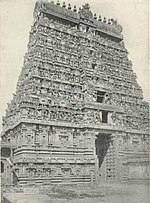
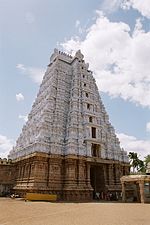 Srirangam is famous for its Sri Ranganathaswamy Temple, a major pilgrimage destination for Hindus (especially Srivaishnavites) and the largest temple complex in India.
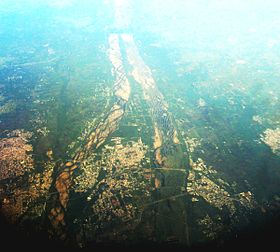 The nearest airport is Tiruchirappalli International Airport.
 Trichy Central bus stand has direct services to most parts of Tamil
Nadu. From the bus stand, tourists can avail local buses, taxi, auto
rickshaw to reach Srirangam.
Trichy Central bus stand has direct services to most parts of Tamil
Nadu. From the bus stand, tourists can avail local buses, taxi, auto
rickshaw to reach Srirangam.


