Saturday, October 20, 2018

Operation Blue Star — the untold story

A fortification used in Operation Blue Star on the sides of the parikrama abutting the Dukh-Bhanjani Beri (tree) that covers the entrance to Shri Harmandir Sahib. File photo A fortification used in Operation Blue Star on the sides of the parikrama abutting the Dukh-Bhanjani Beri (tree) that covers the entrance to Shri Harmandir Sahib. File photo  
Almost three decades after Operation Blue Star — the army operation that cleared the Golden temple complex in Amritsar of Sikh militants in 1984 — a journalist has spoken to some of the surviving dramatis personae of the event to recreate almost hour by hour what happened during those fateful six days. The documentary Operation Blue Star — the untold story currently being aired by Chandigarh-based television station Day and Night News run by veteran Punjab journalist Kanwar Sandhu has uncovered startling new evidence about the operation and the conduct of the militants and the security agencies since then.
Perhaps the most significant disclosures are by Balwant Singh Ramoowalia, a former Union Minister for Social Welfare, then with the Shiromani Akali Dal, who was present in the Guru Ram Das Sarai along with then Akali Dal president Harchand Singh Longowal and SGPC president Gurcharan Singh Tohra.
He relates how at around 6 p.m. on 5th June, Mr. Longowal and Mr. Tohra were coerced almost at gunpoint to declare the formation of Khalistan and how they wriggled out of it.
“Five Sikh youth with self-loading rifles (SLRs) and a metallic box that was possibly a transmitter came to us and placed their SLRs with their barrels pointing towards all of us. They told us that the ‘box’ is connected with Gen Zia-Ul-Haq in Pakistan. They told Jathedar Tohra and Sant Longowal to declare the formation of Khalistan, so that the Pakistani Army can launch an attack. Both Tohra and Longowal are not alive today, so I am saying this under a solemn oath of allegiance to the tenth Sikh Guru, Guru Gobind Singh, because I want to speak the truth. Sant Longowal kept completely quiet. Then Jathedar Tohra said, ‘ Dekho naujawano, eh jedi jang hai eh Hind-Punjab di jang hai. This is a battle between Sant Bhinderanwale and Mrs. Indira Gandhi and that since the former is leading the battle, it will be fair to ask him to issue the statement about the creation of Khalistan.’ He did not say that he will make the announcement for Khalistan. I don’t know how history will judge the Akali leadership but this is the truth. The youth then left the place and never came back.”

‘Outrage by Army’

Mr. Ramoowalia also sheds light on an alleged execution of some 30 Sikh youth by the army — the certainty of which has always been speculated. Talking about events in the wee hours of 6th June, when the army was combing through the complex, the narrative states that a Major of the 9 Kumaon regiment lined up some 20 Sikh youth and mowed them down with a machine gun. Recalling the incident, Mr. Ramoowalia says, “The captured Sikhs appeared to be from Kashmir and didn't look like Punjabi Sikhs. An officer waved a handkerchief and they were shot dead by the Army men with bullets which were sprayed on them from left to right and then right to left. I have never seen people being killed like that, with bullets. I have been a farmer and I have cut the crop and made its bundles. The crests of these Sikh youth collapsed similarly. No one moaned or uttered anything. I know my statement will be called into questioning, but 28 years after it happened, I am going on record on this.”
“The Army men were very angry, very abusive, mad with rage. Maybe they had lost their fellow Army men in the battle elsewhere in the Complex. This happened between 3 a.m. and 3.30 a.m., after the grenade blast nearby and after that it was my turn next as a part of the next group of Sikhs which was being queued up for killing. I was also told to sit down cross-legged and said my prayers. By chance, I remembered that I had in my pocket my identity card as an ex-Member of Parliament, of Lok Sabha. I flashed it and raised my hand and said, I am Ramoowalia, a former Member, Lok Sabha. I and all these persons, who are under your custody, belong to Sant Harchand Singh Longowal. We are non-violent people, [have] nothing to do with the armed struggle, we are here, just as a part of Akali Dal’s peaceful morcha.’ He asked me, ‘what is your name?’ I said, ‘my name is Ramoowalia.’ He asked me once again. I told him, ‘I am not misguiding. Not misleading. This is my identity card. Please check it up.’ God knows, the Army man was so angry, he could have just shot and killed me. But he said, ‘stop’. The other Army men lowered their guns. And two to three of them came up to me… and pushed me to a side. Then the officer again asked me, ‘Are you really Ramoowalia?’ I said, ‘I am really Ramoowalia.’ He said, ‘how are you here? You are not supposed to be here.’ I said, ‘why’? He said, ‘you are supposed to be with Sant Longowal.’ I said, ‘Sant Longowal is sitting in the adjoining room. I have come out’.”
Brigadier (retd.) Onkar Singh Goraya, who was then Col Admn in HQ 15 Corps corroborates the incident saying that Bhan Singh the then SGPC secretary also told him something similar. “He said the Army men in Darbar Sahib have done something awful. He said that some Sikh youth were lined up against a wall in the Golden Temple Complex and killed with a machine gun. He also showed me the wall in the Complex which had the bullet marks, when I went back for the second time in the afternoon,” he is quoted as saying in the documentary.
Mr. Sandhu has pieced together the account with the help of interviews with some 100 eyewitnesses and officials, records from army archives, interrogation reports of captured militants and also the actual Op Instructions issued by Maj Gen Brar on the eve of the operation. Says he, “This is an honest attempt to put the events in perspective and tell the story as it happened. If in the process it upsets any one, it cannot be helped.” Already the television station is getting hate mail from the Sikh diaspora in particular which is angry with its portrayal of Jarnail Singh Bhindranwale as a militant who fortified the golden temple complex with arms and ammunition.

Militants stockpiled weapons

In 2010 the BBC had done a one-hour documentary “1984- A Sikh story”, which was never shown in India. Speaking to The Hindu, Mandeep Bajwa a consultant for the BBC documentary said, “This is the most authentic and credible account yet and I can see that the passage of time has emboldened many eyewitnesses to speak the truth. It exposes many fallacies like the one about arms and ammunition being planted in the temple complex by the Army. Mr. Sandhu has not only provided a rough inventory of the military hardware stockpiled inside but also detailed some instances of how they were smuggled in.”
Another revelation is that Maj Gen Shahbeg Singh (retd.), the disgraced army man who joined Bhindranwale’s group and organized the defences died on the evening of 5th June, before the actual battle began. He was killed by a sniper’s bullet and quoting Balwinder Singh Khojkipur a close associate of Bhindranwale who survived the operation, the documentary states that he was taken to the basement of Akal Takht where he died with his head on Bhindranwale’s lap. His covered body lay in a room there for a whole day until the armymen entered and cleared it the next day.
As for Bhindranwale himself —the Sikh seminary Damdami Taksal that he headed refused to accept his death for many years — he died at 8.45 am on 6th June after being shot at from an armoured vehicle as he was moving towards the ‘Darshni Deodi’ to offer his prayers to Guru Ram Das. His body, contrary to reports of that time, was not identified by his brother Harcharan Singh Rode then serving as the subedar major in 61 Engineers Regiment in Jalandhar, but by the police and army doctors. Says Rode, “This is totally wrong. I did not issue any contradiction because I had got to see him and paid my last respects.”
Much has been written and said about the pilgrims trapped inside the complex many of who died in the crossfire. This series documents that they were actually discouraged from responding to the announcements being made by the district administration outside asking the pilgrims to come out. Apparently when five or six of them tried to come out with their hands in the air, they were shot down by militants from inside the temple complex. Their bodies lay near the ghanta ghar —where pilgrims wash their feet — on the morning of 5th June.

Golden Temple

The Golden Temple, also known as Sri Harmandir Sahib ("abode of God") or Darbar Sahib (Punjabi pronunciation: [dəɾbɑɾ sɑhɪb], "exalted holy court"), is a Gurdwara located in the city of Amritsar, Punjab, India. It is the holiest Gurdwara and the most important pilgrimage site of Sikhism.
The temple is built around a man-made pool (sarovar) that was completed by Guru Ram Das in 1577. Guru Arjan – the fifth Guru of Sikhism, requested Sai Mian Mir – a Muslim Pir of Lahore to lay its foundation stone in 1589. In 1604, Guru Arjan placed a copy of the Adi Granth in Harmandir Sahib, calling the site Ath Sath Tirath (lit. "shrine of 68 pilgrimages"). The temple was repeatedly rebuilt by the Sikhs after it became a target of persecution and was destroyed several times by the Muslim armies from Afghanistan and the Mughal Empire. The army led by Ahmad Shah Abdali, for example, demolished it in 1757 and again in 1762, then filled the pool with garbage. Maharaja Ranjit Singh after founding the Sikh Empire, rebuilt it in marble and copper in 1809, overlaid the sanctum with gold foil in 1830. This has led to the name the Golden Temple.
The temple is spiritually the most significant shrine in Sikhism. It became a center of the Singh Sabha Movement between 1883 and 1920s. In the early 1980s, the temple became a center of conflict between the Indian government led by Indira Gandhi, some Sikh groups and a militant movement led by Jarnail Singh Bhindranwale seeking to create a new nation named Khalistan. In 1984, Gandhi sent in the Indian Army as part of Operation Blue Star, leading to deaths of over 1,000 militants, soldiers and civilians, as well as causing much damage to the temple and the destruction of Akal Takht. The temple complex was rebuilt again after the 1984 damage.
The Harmandir Sahib is an open boat of worship for all men and women, from all walks of life and faith. It has a square plan with four entrances, has a circumambulation path around the pool. The temple is a collection of buildings around the sanctum and the pool. One of these is Akal Takht, the chief center of religious authority of Sikhism. Additional buildings include a clock tower, the offices of Gurdwara Committee, a Museum and a langar – a free Sikh community run kitchen that serves a simple vegetarian meal to all visitors without discrimination Over 100,000 people visit the holy shrine daily for worship. The temple complex has been nominated as a UNESCO World Heritage Site, and its application is pending on the tentative list of UNESCO.

History

A moment at Golden Temple
According to the Sikh historical records, the land that became Amritsar and houses the Harimandar Sahib was chosen by Guru Amar Das – the third Guru of the Sikh tradition. It was then called Guru Da Chakk, after he had asked his disciple Ram Das to find land to start a new town with a man made pool as its central point. After Ram Das succeeded Guru Amar Das in 1574, and given the hostile opposition he faced from the sons of Guru Amar Das, Guru Ram Das founded the town that came to be known as "Ramdaspur". He started by completing the pool with the help of Baba Buddha (not to be confused with the Buddha of Buddhism). Guru Ram Das built his new official centre and home next to it. He invited merchants and artisans from other parts of India to settle into the new town with him.
Ramdaspur town expanded during the time of Guru Arjan financed by donations and constructed by voluntary work. The town grew to become the city of Amritsar, and the pool area grew into the Golden Temple complex. The construction activity between 1574 and 1604 is described in Mahima Prakash Vartak, a semi-historical Sikh hagiography text likely composed in 1741, and the earliest known document dealing with the lives of all the ten Gurus. Guru Arjan installed the scripture of Sikhism inside the new temple in 1604. Continuing the efforts of Guru Ram Das, Guru Arjan established Amritsar as a primary Sikh pilgrimage destination. He wrote a voluminous amount of Sikh scripture including the popular Sukhmani Sahib.

Construction

Guru Ram Das acquired the land for the site. Two versions of stories exist on how he acquired this land. In one based on a Gazetteer record, the land was purchased with Sikh donations of 700 rupees from the owners of the village of Tung. In another version, Emperor Akbar is stated to have donated the land to the wife of Guru Ram Das.
In 1581, Guru Arjan initiated the construction of the Gurdwara. During the construction the pool was kept empty and dry. It took 8 years to complete the first version of the Harmandir Sahib. Guru Arjan planned a temple at a level lower than the city to emphasize humility and the need to efface one's ego before entering the premises to meet the Guru.He also demanded that the temple compound be open on all sides to emphasize that it was open to all. The sanctum inside the pool where his Guru seat was had only one bridge to emphasize that the end goal was one, states Arvind-Pal Singh Mandair. In 1589, the temple made with bricks was complete. Guru Arjan is believed by some later sources to have invited Sufi saint Mian Mir of Lahore to lay its foundation stone, signaling pluralism and that the Sikh tradition welcomed all. This belief is however unsubstantiated According to Sikh traditional sources such as Sri Gur Suraj Parkash Granth it was laid by Guru Arjan himself. After the inauguration, the pool was filled with water. On August 16, 1604, Guru Arjan completed expanding and compiling the first version of the Sikh scripture and placed a copy of the Adi Granth in the temple. He appointed Baba Buddha as the first Granthi.
Guru Arjan called the site Ath Sath Tirath which means "shrine of 68 pilgrimages". The temple complex marks the place of this announcement with a raised canopy on the parkarma (circumambulation marble path around the pool). The name, state W. Owen Cole and other scholars, reflects the belief that visiting this temple is equivalent to 68 Hindu pilgrimage sites in the Indian subcontinent, or that a Tirath to the Golden Temple has the efficacy of all 68 Tiraths combined.[31][3 The completion of the first version of the Golden Temple was a major milestone for Sikhism, states Arvind-Pal Singh Mandair, because it provided a central pilgrimage place and a rallying point for the Sikh community, set within a hub of trade and activity.

Mughal Empire era destruction and rebuilding

The growing influence and success of Guru Arjan drew the attention of the Mughal Empire. Guru Arjan was arrested under the orders of the Mughal Emperor Jahangir and asked to convert to Islam.He refused, was tortured and executed in 1606 CE. Guru Arjan's son and successor Guru Hargobind left Amritsar and moved into the Shivalik Hills to avoid persecution and to save the Sikh panth. For about a century after Guru Arjan martyrdom, state Louis E. Fenech and W. H. McLeod, the Golden Temple was not occupied by the actual Sikh Gurus and it remained in hostile sectarian hands. In 18th century, Guru Gobind Singh and his newly founded Khalsa Sikhs came back and fought to liberate it. The Golden Temple was viewed by the Mughal rulers and Afghan Sultans as the center of Sikh faith and it remained the main target of persecution.
The Golden Temple was the center of historic events in Sikh history:
  • In 1709, the governor of Lahore sent in his army to suppress and prevent the Sikhs from gathering for their festivals of Baisakhi and Divali. But the Sikhs defied by gathering in the Golden Temple. In 1716, Banda Singh and numerous Sikhs were arrested and executed.
  • In 1737, the Mughal governor ordered the capture of the custodian of the Golden Temple named Mani Singh and executed him. He appointed Masse Khan as the police commissioner who then occupied the Temple and converted it into his entertainment center with dancing girls. He befouled the pool. Sikhs avenged the sacrilege of the Golden Temple by assassinating Masse Khan inside the Temple in August 1740.
  • In 1746, another Lahore official Diwan Lakhpat Rai working for Yahiya Khan, and seeking revenge for the death of his brother, filled the pool with sand. In 1749, Sikhs restored the pool when Muin ul-Mulk slackened Mughal operations against Sikhs and sought their help during his operations in Multan.
  • In 1757, the Afghani ruler Ahmad Shah Durrani, also known as Ahmad Shah Abdali, attacked Amritsar and desecrated the Golden Temple. He had waste poured into the pool along with entrails of slaughtered cows, before departing for Afghanistan. The Sikhs restored it again.
  • In 1762, Ahmad Shah Durrani returned and had the Golden Temple blown up with gunpowder. Sikhs returned and celebrated Divali in its premises. In 1764, Jassa Singh Ahluvalia collected donations to rebuild the Golden Temple. A new main gateway (Darshani Deorhi), causeway and sanctum were completed in 1776, while the floor around the pool was completed in 1784. The Sikhs also completed a canal to bring in fresh water from Ravi River for the pool.

Ranjit Singh era reconstruction 


Ranjit Singh founded the nucleus of the Sikh Empire at the age of 21 with help of Sukerchakia Misl forces he inherited and those of his mother-in-law Rani Sada Kaur. In 1802, at age 22, he took Amritsar from the Bhangi Sikh misl, paid homage at the Golden Temple and announced that he would renovate and rebuild it with marble and gold. The Temple was renovated in marble and copper in 1809, and in 1830 Ranjit Singh donated gold to overlay the sanctum with gold foil.[10]
The management and operation of Darbar Sahib – a term that refers to the entire Golden Temple complex of buildings, was taken over by Ranjit Singh. He appointed Desa Singh Majithia to manage it, and made land grants whose collected revenue was assigned to pay for the Temple's maintenance and operation. Ranjit Singh also made the position of Temple officials hereditary.

Description

The Golden temple complex map
The Golden Temple's architecture reflects different architectural practices prevalent in the Indian subcontinent, as various iterations of temple were rebuilt and restored. The Temple is described by Ian Kerr, and other scholars, as a mixture of the Indo-Islamic Mughal and the Hindu Rajput architecture.
The sanctum is a 12.25 x 12.25 metre square with two-storeys and a gold foil dome. This sanctum has a marble platform that is a 19.7 x 19.7 metre square. It sits inside an almost square (154.5 x 148.5 m2) pool called amritsar or amritsarovar (amrit means nectar, sar is short form of sarovar and means pool). The pool is 5.1 metre deep and is surrounded by a 3.7 metre wide circumambulatory marble passage that is circled clockwise. The sanctum is connected to the platform by a causeway and the gateway into the causeway is called the Darshani Ḍeorhi (from Darshana Dvara). For those who wish to take a dip in the pool, the Temple provides a half hexagonal shelter and holy steps to Har ki Pauri. Bathing in the pool is believed by many Sikhs to have restorative powers, purifying one's karma. Some carry bottles of the pool water home particularly for sick friends and relatives.[42] The pool is maintained by volunteers who perform kar seva (community service) by draining and desilting it periodically.
Left: Causeway to the sanctum with people, behind the pool is Ath Sath Tirath; Right: Entrance view
The sanctum has two floors. The Sikh Scripture Guru Granth Sahib is seated on the lower square floor for about 20 hours everyday, and for 4 hours it is taken to its bedroom inside Akal Takht with elaborate ceremonies in a palki, for sukhasana and prakash. The floor with the seated scripture is raised a few steps above the entrance causeway level. The upper floor in the sanctum is a gallery and connected by stairs. The ground floor is lined with white marble, as is the path surrounding the sanctum. The sanctum's exterior has gilded copper plates. The doors are gold foil covered copper sheets with nature motifs such as birds and flowers. The ceiling of the upper floor is gilded, embossed and decorated with jewels. The sanctum dome is semi-spherical with a pinnacle ornament. The sides are embellished with arched copings and small solid domes, the corners adorning cupolas, all of which are covered with gold foil covered gilded copper.
The floral designs on the marble panels of the walls around the sanctum are Arabesque. The arches include verses from the Sikh scripture in gold letters. The frescoes follow the Indian tradition and include animal, bird and nature motifs rather than being purely geometrical. The stair walls have murals of Sikh Gurus such as the falcon carrying Guru Gobind Singh riding a horse.
The Darshani Deorhi is a two-storey structure that houses the temple management offices and treasury. At the exit of path leading away from the sanctum is the prasada facility, where volunteers serve a flour-based sweet offering called karah prasad. Typically, the pilgrims to the Golden Temple enter and make a clockwise circumambulation around the pool before entering the sanctum. There are four entrances to the gurdwara complex signifying the openness to all sides, but a single entrance to the sanctum of the temple through a causeway.
Left: Akal Takht illuminated; Right: One of the entrance gates

Akal Takht and Teja Singh Samundri Hall

In front of the sanctum and the causeway is the Akal Takht building. It is the chief Takht, a center of authority in Sikhism. It is also the headquarters of the main political party of the Indian state of Punjab, Shiromani Akali Dal (Supreme Akali Party). The Akal Takht issues edicts or writs (hukam) on matters related to Sikhism and the solidarity of the Sikh community. Its name Akal Takht means "throne of the Timeless (God)". The institution was established by Guru Hargobind after the martyrdom of his father Guru Arjan, as a place to conduct ceremonial, spiritual and secular affairs, issuing binding writs on Sikh Gurdwaras far from his own location. A building was later constructed over the Takht founded by Guru Hargobind, and this came to be known as Akal Bunga. The Akal Takht is also known as Takht Sri Akal Bunga. The Sikh tradition has five Takhts, all of which are major pilgrimage sites in Sikhism. These are in Anandpur, Patna, Nanded, Talwandi Sabo and Amritsar. The Akal Takht in the Golden Temple complex is the primary seat and chief.[45][46]
The Teja Singh Samundri Hall is the office of the Shiromani Gurdwara Parbandhak Committee (Supreme Committee of Temple Management). It is located in a building near the Langar-kitchen and Assembly Hall. This office coordinates and oversees the operations of major Sikh temples.[4][47]

Clock Tower

A 1860s photo of the Golden Temple with the Gothic clock tower under construction during the colonial British era. This clock tower was demolished later.
The Clock Tower did not exist in the original version of the temple. In its location was a building, now called the "lost palace". The officials of the British India wanted to demolish the building after the Second Anglo-Sikh war and once they had annexed the Sikh Empire. The Sikhs opposed the demolition, but this opposition was ignored. In its place, the clock tower was added. The clock tower was designed by John Gordon in a Gothic cathedral style with red bricks. The clock tower construction started in 1862 and was completed in 1874. The tower was demolished by the Sikh community about 70 years later. In its place, a new entrance was constructed with a design more harmonious with the Temple. This entrance on the north side has a clock, houses a museum on its upper floor, and it continues to be called ghanta ghar deori.
The historic Dukh Bhanjani Ber tree inside the courtyard, next to Ath Sath Tirath.

Ber trees

The Golden Temple complex originally was open and had numerous trees around the pool. It is now a walled, two storey courtyard with four entrances, that preserve three Ber trees (jujube). One of them is to the right of the main ghanta ghar deori entrance with the clock, and it is called the Ber Baba Buddha. It is believed in the Sikh tradition to be the tree where Baba Buddha sat to supervise the construction of the pool and first temple.
A second tree is called Laachi Ber, believed to the one under which Guru Arjan rested while the temple was being built. The third one is called Dukh Bhanjani Ber, located on the other side of the sanctum, across the pool. It is believed in the Sikh tradition that this tree was the location where a Sikh was cured of his leprosy after taking a dip in the pool, giving the tree the epithet of "suffering remover". There is a small Gurdwara underneath the tree. The Ath Sath Tirath, or the spot equivalent to 68 pilgrimages, is in the shade underneath the Dukh Bhanjani Ber tree. Sikh devotees, states Charles Townsend, believe that bathing in the pool near this spot delivers the same fruits as a visit to 68 pilgrimage places in India.

Sikh history museums

The ceiling of Harmandir Sahib is covered with gold foil and studded with precious stones.
The main ghanta ghar deori north entrance has a Sikh history museum on the first floor, according to the Sikh tradition. The display shows various paintings, of gurus and martyrs, many narrating the persecution of Sikhs over their history, as well as historical items such as swords, kartar, comb, chakkars. A new underground museum near the clock tower, but outside the temple courtyard also shows Sikh history. According to Louis E. Fenech, the display does not present the parallel traditions of Sikhism and is partly ahistorical such as a headless body continuing to fight, but a significant artwork and reflects the general trend in Sikhism of presenting their history to be one of persecution, martyrdoms and bravery in wars.
The main entrance to the Gurdwara has many memorial plaques that commemorate past Sikh historical events, saints and martyrs, contributions of Ranjit Singh, as well as commemorative inscriptions of all the Sikh soldiers who died fighting in the two World Wars and the various Indo-Pakistan wars.

Guru Ram Das Langar

Harmandir Sahib complex has a Langar, a community-run free kitchen and dining hall. It is attached to the east side of the courtyard near the Dukh Bhanjani Ber, outside of the entrance. Food is served here to all visitors who want it, regardless of faith, gender or economic background. Vegetarian food is served and all people eat together as equals. Everyone sits on the floor in rows, which is called pangat. The meal is served by volunteers as part of their kar seva ethos.[32] A simple meal is served round the clock.

Daily ceremonies

Left: A palanquin being prepared for the daily sukhasan ritual to carry the scripture to a bedroom; Right: A Sikh pilgrim. Some Sikh take a dip in the pool.
There are several rituals performed everyday in the Golden Temple as per the historic Sikh tradition. These rituals treat the scripture as a living person, a Guru out of respect. The rituals include:
  • Closing ritual called sukhasan (sukh means "comfort or rest", asan means "position"). At night, after a series of devotional kirtans and three part ardās, the Guru Granth Sahib is closed, carried on the head, placed into and then carried in a flower decorated, pillow-bed palki (palanquin), with chanting. Its bedroom is in the Akal Takht, on the first floor. Once it arrives there, the scripture is tucked into a bed.
  • Opening ritual called prakash which means "light". About dawn everyday, the Guru Granth Sahib is taken out its bedroom, carried on the head, placed and carried in a flower decorated palki with chanting and bugle sounding across the causeway. It is brought to the sanctum. Then after ritual singing of a series of Var Asa kirtans and ardas, a random page is opened. This is the mukhwak of the day, it is read out loud, and then written out for the pilgrims to read over that day.

Influence on contemporary era Sikhism

Singh Sabha movement

The Singh Sabha movement was a late-19th century movement within the Sikh community to rejuvenate and reform Sikhism at a time when Christian, Hindu and Muslim proselytizers were actively campaigning to convert Sikhs to their religion. The movement was triggered by the conversion of Ranjit Singh's son Duleep Singh and other well known people to Christianity. Started in 1870s, the Singh Sabha movement's aims were to propagate the true Sikh religion, restore and reform Sikhism to bring back into the Sikh fold the apostates who had left Sikhism. There were three main groups with different viewpoints and approaches, of which the Tat Khalsa group prevailed by early 1900s. Before 1905, the Golden Temple had idols and images for at least a century. In 1905, with the campaign of the Tat Khalsa, these idols and images were removed from the Golden Temple.

Jallianwala Bagh massacre

As per tradition, the Sikhs gathered in the Golden Temple to celebrate the festival of Baisakhi in 1919. After their visit, many walked over to the Jallianwala Bagh next to it to listen to speakers protesting Rowlatt Act and other policies of the colonial British government. A large crowd had gathered, when the British general Reginald Dyer ordered his soldiers to surround the Jallianwala Bagh, then open fire into the civilian crowd. Hundreds died and thousands were wounded. The massacre strengthened the opposition to the colonial rule throughout India, and particularly Sikhs. It triggered massive non-violent protests. The protests pressured the British government to transfer the control over the management and treasury of the Golden Temple to an elected organization called Shiromani Gurudwara Prabandhak Committee (SGPC). The SGPC continues to manage the Golden Temple.

Operation Blue Star

The Golden Temple and Akal Takht were occupied by various militant groups in early 1980s. These included the Dharam Yudh Morcha led by sikh fundamentalist Jarnail Singh Bhindranwale, the Babbar Khalsa, the AISSF and the National Council of Khalistan. In December 1983, the Sikh political party Akali Dal's President Harcharan Singh Longowal had invited Jarnail Singh Bhindranwale to take up residence in Golden Temple Complex. The Bhindranwale led group under military leadership of General Shabeg Singh had begun to build bunkers and observations posts in and around the Golden Temple. They organised the armed militants present at the Harmandir Sahib in Amritsar in June 1984 The Golden Temple became a place for weapons training for the militants.[68] Shabeg Singh's military expertise is credited with the creation of effective defences of the Temple Complex that made the possibility of a commando operation on foot impossible. Supporters of this militant movement circulated maps showing parts of northwest India, north Pakistan and eastern Afghanistan as historic and future boundaries of the Khalsa Sikhs, with varying claims in different maps. In June 1984, Prime Minister Indira Gandhi ordered Indian Army to begin Operation Blue Star against the militants. The operation caused severe damaged and destroyed Akal Takht. Numerous soldiers, civilians and militants died in the cross fire. Within days of the Operation Bluestar, some 2,000 Sikh soldiers in India mutinied and attempted to reach Amritsar to liberate the Golden Temple.Within six months, on 31 October 1984, Indira Gandhi's Sikh bodyguards assassinated her.
In 1986, Indira Gandhi's son and the next Prime Minister of India Rajiv Gandhi ordered repairs of the Akal Takht Sahib. These repairs were removed and Sikhs rebuilt the Akal Takht Sahib in 1999.[72]

Celebrations

One of the most important festivals is Vaisakhi, which is celebrated in the second week of April (usually the 13th). Sikhs celebrate the founding of the Khalsa on this day and it is celebrated with fervour in the Harmandir Sahib. Other important Sikh religious days such as the birth of Guru Ram Das, martyrdom day of Guru Teg Bahadur, the birthday of the Sikh founder Guru Nanak, etc., are also celebrated with religious piety. Similarly Diwali is one of the festivals which sees the Harmandir Sahib beautifully illuminated with Diyas (lamps); lights and fireworks are discharged.
SOURCES  : WIKIPEDIA
POSTED BY : VIPUL KOUL 
 

Friday, October 19, 2018

Ali Mardan Khan's Shiva Persian Poem

The story goes that Ali Mardan Khan, the Kurdish governor of Kashmir appointed by Shah Jahan, the governor who built Chameshahi Garden, the supposed owner of a philosopher stone got from a dead snake woman, was one night strolling around Shalimar Garden when his eyes suddenly fell on Mahadeo peak and saw something, believed he saw Shiva himself. He went on to write a poem on his experience. No one was to later claim that he must have been smoking or drinking Shiva stuff that night.

I find the story interesting not just because of the obvious 'Muslim Man singing Hindu Hosanna' thing but because in this particular story and the poem associated with the story, the whole unique Hindu concept of 'Darshan' and the concept of God having physical attributes is also adopted.

I have read the story and reference to the poem in a lot of 'our great culture' writing on Kashmir. But never was the poem presented in entirety. The usual - someone knows 30% about something, he shares 15%, someone else is happy copying 10%,  and in the end you get only 5% but that doesn't matter cause you get a lazy 'our great culture' kick even in that 5% and that's how the matter remains. In my case, OCD causes me all kind of pirablems. I need to know more even if I don't understand it. Even if it is all Persian to me.

Last month, I found the poem in an Hindi-Kashmiri Aarti /Bajan book dated 1993 lying among my grandmother's god books collection. Here's the complete poem, in what may or may not pass for Persian, with what may or may not pass for translation:

Huma Aslay Maheshwar Bood
Shabshahay Ki Man Didam
Gazanfar Charam Dar Barbood
Shab Shahay


I saw him at night, I am sure it was Maheshwar
wearing a Lion skin on him, that night


Zee Bhasamsh Jam-e-Bar Tan
Zonarsh maar bar gardan
Ravansh gang bar sar bood
Shab Shahay


His body covered in ash, a snake around the neck
Ganga was flowing down from his hair, that night

Say Chashmash bar jabeen Darad
Zee mehroy roshan tar
Say Karan Dast Bastah bood 
Shab Shahay


Three eyes on his face, his face all illuminating
for that reason, my hands paid him respect, that night

B-dastash Aab-e-Kosar
V-bekh Nakusee Nilofar
Hilalash Taaj bar sar bood
Shab Shahay


Water of bounty, a lotus conch in hand
his head was lit by moon, that night

Uma Az Soi-la-Bingar 
Zi Sad Khursheed Taban tar
Svarash Kulib-e-nar bood
Shab Shahay


Uma to his left, bright like a thousand suns
their ride was a Bull, that night

Ajab Sanyaas-e-didam
Namo Narayan Guftam
E-Khakay paye bosidham 
Shab Shahay


I saw a strange renouncer, my lips uttered - Namoh Narayan
I kissed the dust flying off his feet, that night

Nigahay bar manay Miskeen
Namood Az Chashim Tabaan Tar
Makanash Laamkan tar bood
Shab Shahay


He looked deep into me with his shining eyes
I saw his house in the uninhabitable infinite, that night

Manam Mardaan Ali Khanam 
Gulam Shah-e-Shaham
Ajab Israar may Beenam 
Shab Shahay

I, Ali Mardan Khan, server of King of Kings
I witnessed something very strange, that night

Chashme Shahi.................Rupa Bhawani.........Huma Aslay Maheshwar Bood


Chasme Shahi
The Royal Spring
Type Mughal garden
Location Srinagar, Kashmir
Coordinates 34°5′10.14″N 74°53′13.79″ECoordinates: 34°5′10.14″N 74°53′13.79″E
Area 1 acre
Opened 1632
Founder Shah Jahan
Owned by Jammu and Kashmir Tourism Department
Operated by Jammu and Kashmir Tourism Department
Visitors 100,000
Status Open March–November
Website
Chashme Shahi or Chashma i Shahi (translation: the royal spring), also called Chashma Shahi, is one of the Mughal gardens built in 1632 AD around a spring by Ali Mardan Khan, a governor of Mughal emperor Shah Jahan as per the orders of the Emperor, as a gift for his elder son Prince Dara Shikoh. The garden is located in the Zabarwan Range, near Raj Bhawan (Governor‘s house) overlooking Dal Lake in Srinagar, Kashmir, India.

History

Chashme Shahi originally derives its name from the spring which was discovered by the great female saint of Kashmir, Rupa Bhawani, who was from the Sahib clan of Kashmiri Pandits. The family name of Rupa Bhawani was 'Sahib' and the spring was originally called 'Chashme Sahibi'. Over the years the name got corrupted and today the place is known as Chashme Shahi (the Royal Spring)

Establishment

Chasme Shahi
The garden was constructed around the spring by the Mughal Governor Ali Mardan Khan in 1632. It was commissioned by the Mughal emperor Shah Jahan for his eldest son, Dara Sikoh. In the east of Chashma Shahi the Pari Mahal (Fairy Palace) lies where Dara Sikoh used to learn astrology and where he was later killed by his brother Aurengzeb.The garden is 108 m long and 38 m wide and is spread over one acre of land. It is the smallest garden among the three Mughal gardens of Srinagar; the Shalimar garden is the largest and the Nishat garden is the second largest. All the three gardens were built at the right bank of the Dal Lake, with Zabarwan mountains (Zabarwan Range) at the backdrop.

Architecture and the spring

The garden presents Mughal architecture as used in different Mughal gardens. The artistically build garden has Iranian influence in its art and architecture and the design is based on the Persian gardens. It is built around a fresh water spring, discovered by Rupa Bhawani, which flows through its centre in terraces. The topography and the steepness of the land has led the formation of the garden. The main focus of the garden is the spring which flows down in terraces and is divided into three sections: an aqueduct, waterfall, and fountains. A two-storey Kashmiri hut stands at the first terrace which is the origin of the spring. The water then flows down through a water ramp (chadar) into the second terrace. The second terrace serves as a water pool and a large fountain stands at its centre. The water again flows down through a water ramp into the third terrace, which is a square five-fountain pool. It is the lowest pool at the entrance of the garden. The visitors are received through a flight of stairs on both sides of the terraces which leads up to the origin of the spring. The English writer and traveler Amit Kumar wrote about the garden that "the little Chashma Shahi is architecturally the most charming of the gardens near Srinagar". The water of the spring is believed to have some medicinal properties. The former Premier of India, Pandit Jawahar Lal Nehru, used to get the water of the spring to Delhi.

Access

The Chashme Shahi is located within the jurisdiction of Srinagar city, 14 kilometres (9 mi) in the northeast from the Srinagar Airport. It is adjacent to Rajbhawan (Governor's house). The garden is connected by the Boulevard Road which passes along the banks of the Dal lake. There are many hotels and restaurants available for boarding and lodging near the garden. The garden remains open for tourists from March to November. The best time to visit the garden is from April to October. The garden is at full bloom during May and June.
 Ali Mardan Khan, the Kurdish governor of Kashmir appointed by Shah Jahan, the governor who built Chameshahi Garden, the supposed owner of a philosopher stone got from a dead snake woman, was one night strolling around Shalimar Garden when his eyes suddenly fell on Mahadeo peak and saw something, believed he saw Shiva himself. He went on to write a poem on his experience. No one was to later claim that he must have been smoking or drinking Shiva stuff that night. Huma Aslay Maheshwar Bood Shabshahay Ki Man Didam Gazanfar Charam Dar Barbood Shab Shahay I saw him at night, I am sure it was Maheshwar wearing a Lion skin on him, that night Zee Bhasamsh Jam-e-Bar Tan Zonarsh maar bar gardan Ravansh gang bar sar bood Shab Shahay His body covered in ash, a snake around the neck Ganga was flowing down from his hair, that night Say Chashmash bar jabeen Darad Zee mehroy roshan tar Say Karan Dast Bastah bood Shab Shahay Three eyes on his face, his face all illuminating for that reason, my hands paid him respect, that night B-dastash Aab-e-Kosar V-bekh Nakusee Nilofar Hilalash Taaj bar sar bood Shab Shahay Water of bounty, a lotus conch in hand his head was lit by moon, that night Uma Az Soi-la-Bingar Zi Sad Khursheed Taban tar Svarash Kulib-e-nar bood Shab Shahay Uma to his left, bright like a thousand suns their ride was a Bull, that night Ajab Sanyaas-e-didam Namo Narayan Guftam E-Khakay paye bosidham Shab Shahay I saw a strange renouncer, my lips uttered - Namoh Narayan I kissed the dust flying off his feet, that night Nigahay bar manay Miskeen Namood Az Chashim Tabaan Tar Makanash Laamkan tar bood Shab Shahay He looked deep into me with his shining eyes I saw his house in the uninhabitable infinite, that night Manam Mardaan Ali Khanam Gulam Shah-e-Shaham Ajab Israar may Beenam Shab Shahay I, Ali Mardan Khan, server of King of Kings I witnessed something very strange, that night
 Ali Mardan Khan, the Kurdish governor of Kashmir appointed by Shah Jahan, the governor who built Chameshahi Garden, the supposed owner of a philosopher stone got from a dead snake woman, was one night strolling around Shalimar Garden when his eyes suddenly fell on Mahadeo peak and saw something, believed he saw Shiva himself. He went on to write a poem on his experience. No one was to later claim that he must have been smoking or drinking Shiva stuff that night.
Huma Aslay Maheshwar Bood

Shabshahay Ki Man Didam Gazanfar Charam Dar Barbood
Shab Shahay
posted by  :  vipul koul


Manam Marde Musalmanam
Ali Khanam Hami Danam
Manam Marde Musalmanam
Ali Khanam Hami Danam
Khudaye Banda Parvar bood
Shab Shahe Ki Man Didam....
 by.............vipul koul
  1. 1950s :: Fortified Wall (Revetment ) Made of Baked Bricks , Constructed In 2nd Century B.C For Defence of Ancient City of Kaushambi . Kaushambi Was Capital of Vatsa Janpada and Was an Important Centre During Mahatma Buddha's Period .
  2. 1920 :: Ravana Dahan During Vijayadashami Festival In Quetta, Balochistan (Photo- Nigel Dobinson/ )
  3. Ramayana Scene , 9th Century A.D , Prambanan Temple , Indonesia
  4. Ram Raja Temple In Orcha, Only Temple Where Lord Ram Is Worshipped as King. Madhya Pradesh Police Daily Gives Gun Salute to Bhagwan Ram Before Puja
  5. King Ravana Shaking Kailash Mountain of Lord Shiva Meenakshi Sundareshvara Temple, Madurai (Photo - )
  6. 1950 :: Image of Lord Ram , Goddess Sita and Laxman In Original Copy of Indian Constitution
  7. 1956 :: Dussehra Celebrations , Effigies of Ravana, Kumbhakarna and Meghnad at Ramlila Grounds , Delhi (Photo Division)
  8. 1950s :: Dargah of Kwaja Moinuddin Chisti In Ajaymer . Ajaymer City Was Founded by King Ajay Pal Chauhan In 7th century A.D. Ajaymer Got Its Name From Ajay Meru
  9. In 1947 Vikram Sarabhai Founded Physical Research Laboratory In Karnavati , Gujarat
  10. 1880s :: Intricate Tracery In Form of Tree Stem And Branches In Sidi Sayyid's Mosque In Karnavati , Gujarat (Photo -British Library)
  11. 1954 :: Kumbh Mela at Prayagraj ( Photo - LIFE )
  12. 1952 :: Eleanor Roosevelt ( Wife of Former USA President Franklin D. Roosevelt ) Giving Lecture In Delhi
  13. Jean-François Allard , French Soldier and Trusted General of Maharaja Ranjit Singh . General Allard Trained Khalsa Army and Was Awarded The 'Bright Star of The Punjab' by Maharaja Ranjit Singh
  14. Replying to
    Baijnath Temple, Kangra, Himachal pradesh with snow clad mountains in background.
  15. Clay votive tablet with Buddhist triad (8th c), commissioned by an eminent eunuch of the Tang Dynasty. The inscription on the back calls it "An Indian Buddha Image." Hence it was likely based on a model brought back from India by the renowned monk & pilgrim Xuanzang in mid 7th c.
  16. 8th Century A.D :: Monk Amoghavajra Composed Xiuyao jing 宿曜經, ( Lunar Mansions and Planets Sūtra ) In Chinese . Amoghavajra Became One of The Most Powerful Monk During Reign of Emperor Suzong of Tang Dynasty of
  17. Ancient City of Ratnagiri Dating Back to 5th Century A.D , Near Jajpur , Odisha ( Photo - )
  18. 1960s :: Young Abdul Kalam Assembling Test Rocket In Thumba
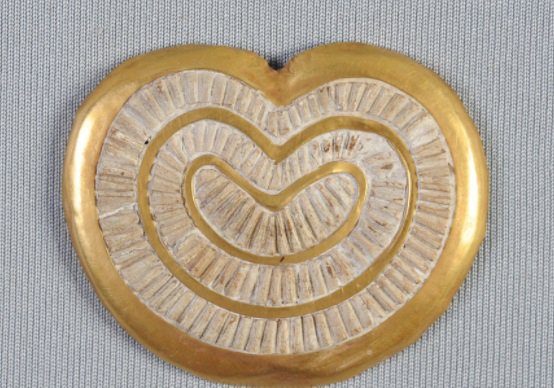
  19. 5000 Years Old Gold Pendant From Harappa , Indus Valley Civilization ( Photo - National Museum Delhi )
  20. 1845 :: Battle of Moodkee ( Mudki In Punjab ) Was Fought Between British Forces and Sikh Khalsa Army . British Troops Won But After Suffering Heavy Casualties
  21. Bulls and Cart , 1st Century B.C , Bharhut , Madhya Pradesh
  22. 1st Century A.D :: Bird Carved In Rock Crystal , Taxila ( Photo - )
  23. 1st Century A.D :: Mara's Temptation of Gautam Buddha (Peshawar Museum )
  24. King On an Elephant , Shunga Period , 2nd Century B.C ( National Museum , Delhi )
  25. 2500 B.C :: Workmen's Platform Near Great Granary , Harappa
  26. 1950s :: Audition of Girls In Bollywood
  27. 1950s :: Screen Test of Girls In Bollywood
  28. 1985 :: Journalist MJ Akbar Talking to PM Rajiv Gandhi
  29. 1980s :: Aerial View of Golden Temple , Amritsar
  30. Haveli of Sardar Jawala singh, husband of Jind Kaur’s eldest sister, Padhana village This haveli was damaged in1965 war before war the family lived here but had to leave for few years because of war & when they returned it was completely damaged beyond repair.
  31. Bhadrabahu Cave On Chandragiri Hill In Shravanabelagola Where Great Emperor Chandragupta Maurya Died In 297 B.C
  32. Kanchan Gupta Retweeted indianhistorypics
    Let's see. Amit Bose went on to become a big gun at Nestle. Shovan Thakur is in Oz running TCS (?) Ops, Sanjoy Ghosh is an entrepreneur who never made money, Abhijeet and the other lad joined Indian Airlines, Gautam met with a terrible accident and now lives a vegetable's life.
    Kanchan Gupta added,
  33. St Xavier's College, Calcutta, Kids Hanging Out In 1980
  34. 1900 :: Swami Vivekananda (Second Row , Centre ) Travelling In Cable Car In Mount Lowe , Pasadena , USA
  35. 11th century: :Elgandal Fort was established by the Kakatiya Dynasty and later occupied by the Qutub Shahi’s, Mughal’s and Nizam’s each improving its fortifications. In its heyday it was protected by a crocodile filled moat. cc.
  36. Read today in Hindustan Times a very interesting article by Paramita Ghosh on our celebrations of 100 years of regaining the Independence
  37. 2200 Years Old ( 2nd Century B.C) Sun Dial Adjusted to Latitude of City of Ujjain Was Found at Ai Khanoum , . City of Ai Khanoum Was Founded In 3rd Century B.C During Seleucid Empire
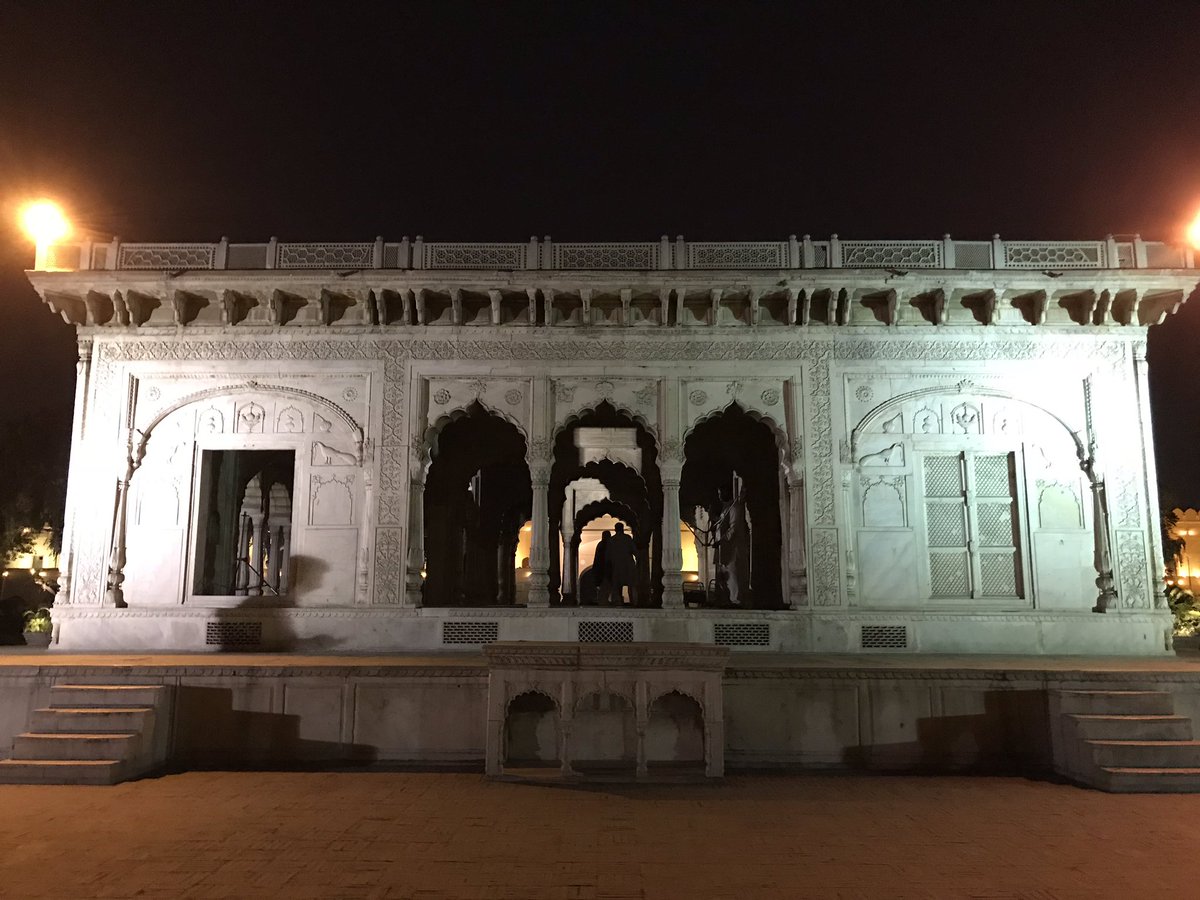
  38. Hazuri Bagh Baradari is a white marble Baradari located in the Hazuri Bagh between Lahore fort and Badshahi Mosque It was built by Maharaja Ranjit Singh, in 1818 to celebrate his capture of the Koh-i-Noor diamond from Shuja Shah Durrani in 1813.
  39. 1950s :: Audition of Young Actress In Bollywood
  40. Your thoughts become your words. Your words become your behavior. Your behavior becomes your habits. Your habits become your values. Your values become your destiny. —Mahatma Gandhi
  41. 1950s :: Audition of Girls In Bollywood ( Photo - )
  42. 1950s :: Screen Test of Girls In Bollywood
  43. 1905: :The original Town Hall in Warangal which is set within the Hamamkonda Public Gardens. cc.
  44. Two travelling ivories: one from Begram, a woman standing on a makara (Photo © Thierry Ollivier), the other, goddess Lakshmi or Yakshi (?) recovered at Pompeii. Equally beautiful!
  45. 1930s :: Bird's Eye View of Karachi
  46. 1940s :: Vitaminised DALDA , Sold Only In Sealed Tins " From Where Does He Get All His Energy "
  47. A good king of Gujarat: Between 1942-46, a thousand Polish children were given shelter by the Nawanagar maharaja. On the 100th year of Poland’s independence, many of them returned to relive that story. By Paro_ghosh
  48. Goddess Durga as Mahishasurmardini , 8th Century A.D , Abhaneri Stepwell , Rajasthan ( Photo - )
  49. 2nd Century A.D :: Condenser Found In Sirkap , Taxila
  50. Dhruv Gangadharan Retweeted indianhistorypics
    It’s , the is testimony to how best we’d cherish our archives. Is the space where Marx spent years churning his matchless passages also the one that treasures the Bruhadeshwara Temple? - “mothership of the human mind” as aptly put it ♥️
    Dhruv Gangadharan added,
  51. 200 Temples Dating Back 7th to 9th Century A.D In Bateshwar Near Morena , Madhya Pradesh . Temples Were Built During Gurjar-Pratihara Dynasty
  52. 2nd Century B.C :: Fasting Buddha ( Lahore Museum )
  53. Replying to
    Mahishasuramardini at Durga temple Aihole Karnataka
  54. 1950s :: Film Audition of Girls In Bollywood ( Photo - )
  55. 7th or 8th century Kishakeshwari Temple of Goddess Chamunda (Kali), made of chlorite, is architecturally brilliant and well carved from its outer surface. This temple is one of the most impressive temple of Kalinga architecture. Located at Khiching, Odisha.
  56. King Ajatashatru Visits Mahatma Buddha , 3rd Century A.D , Ikshavakus Dynasty , Nagarjunakonda , Andhra Pradesh ( Photo - ASI Museum , NagarjunaKonda )
  57. 3rd Century B.C :: Remains of Mauryan Era City of Pataliputra at Bulandi Bagh . Excavation Was Done by American Archaeologist David Brainard Spooner In 1912-13
  58. 1904: :Ross Hill Chapel also know locally as Church of Mary Martha in Visakhapatnam succeeding an earlier chapel on the same site since 1850. The church/hill is named after the British army officer the land was purchased from to establish the church. cc. – at Ross Hill Chapel
  59. 1975 :: Shri Jayprakash Narayan Leading March to Parliament
  60. 5th Century A.D :: Gold Coin Showing Emperor Kumaragupta as an Archer ( Photo - )
  61. 3rd Century B.C :: Inscription of Mauryan Dynasty In Mahasthan , (Now In Bangladesh) About Storage of Oil , Tree , Paddy & Coins
  62. 1950s :: Gandhara Gallery In Lahore Museum
  63. 1950s :: Gangavataran (Descent of The Ganges ) , 7th Century A.D , Pallava Dynasty , Mahabalipuram , Tamil Nadu
  64. 1940s :: Archaeological Survey Class at Taxila
  65. 1948 :: Tank Bund Road , Hyderabad ( Photo - LIFE )
  66. Burial Cave of Iron Age , Kandanassery Near Thrissur , Kerala
  67. Gol Gumbaz , Bijapur , Karnataka . It Is The Mausoleum of Mohammed Adil Shah, Sultan of Bijapur Who Ascended to Throne In 1627 A.D
  68. Ancient Cave In Dengfeng , Henan Province In Where Indian Monk Bodhidharma Did Meditation For 9 Years and Founded Shaolin Kung Fu by Teaching Monks
  69. 1970s :: Mount Road , Madras
  70. 1970s :: Car Parking at Flora Fountain , Bombay
  71. Parinirvana of Mahatma Buddha , Ajanta Caves , Maharashtra
  72. Brihadeshwara Temple , Tanjore It Was Built by Great Chola Emperor Raja Raja - 1 In 1010 A.D (Photo - British Library )
  73. 3000 B.C :: Pottery From Indus Valley Civilization (National Museum Delhi )
  74. 1943 :: Famine In Bengal
  75. July 1970 :: Bengal Police Free to Enter University Campuses to Curb Naxalite Student Menace
  76. 1880s :: Kedarnath Temple
  77. Goddess Durga as Mahishasur Mardini (Photo - Lahore Museum )