Friday, September 4, 2020

An effort to preserve and record Hindu cultural and religios heritage of Kashmir


Forgotten Temples of Kashmir
Photo series Part-7

An effort to preserve and record Hindu cultural and religios heritage of Kashmir

Kotitirtha….Holiest of Holy Shrine
Exclusive images and report from a remote village in Kashmir provided for Shehjarby Chander M. Bhat

ashmir valley is traditionally divided into two parts Maraz and Kamraz. Maraz was southern part of Kashmir while as Kamraz comprised northern part of Kashmir. Srinagar was central point of both the divisions. Anantnag was the Headquarter of Maraz division while as Baramulla was the seat of attraction for Kamraz division.

Baramulla has its origin to the era of Kashyapa Rishi. The water of Satisar was drainaged from a place through a deep valley between two hills at Sheeri Narvaw resembling the mouth of Varah, The Boar. This Varah Moh changed its identity as Varmul and started to be called as Varamulla.

Varamulla is the entrance point to the valley through Muzzafarabad Uri Road and is 55 km away from Srinagar. There is another story as to how Baramulla came to be known as Varahmul. There was a shrine of Lord Vishnu and was called Adi Varaha. The shrine was located on Eastern bank of Vitasta near Kotitirth. The name Varamulla is also probably related to the shrine place of Adi Varah, the Boar. It is held in great esteem since ancient times and has repeatedly mentioned by Kalhan Pandit in Rajtarangni. The temple was vandalized by Afghan ruler Sikander Buthshikan. The ancient Shiv Linga and some stone images in Kotitirth is said to be belonging to the shrine of Adi Varah at the same bank of Vitasta.

The town of Baramulla faced the ire of tribal invaders in 1947 and a large scale damage was done to Hindu and Sikh fraternity falling into their hands. Sh. Jawahar Lal Nehru wanted to rename Baramulla as Maqboolabad to commemorate the martyrdom of the nationalist Sherwani. However Baramulla retained its identity.

On the left bank, close to Baramulla, is the ancient site of Hushkapur (present Ushkur). Hushka had built a vihara, a stupa and a Vishnu Temple. As per local tradition, Heun Tsang, on arrival in the Valley, stayed here for the first night. Later, he said that some copper plates, on which the proceedings of Kanishka’s council were engraved, lay buried here.

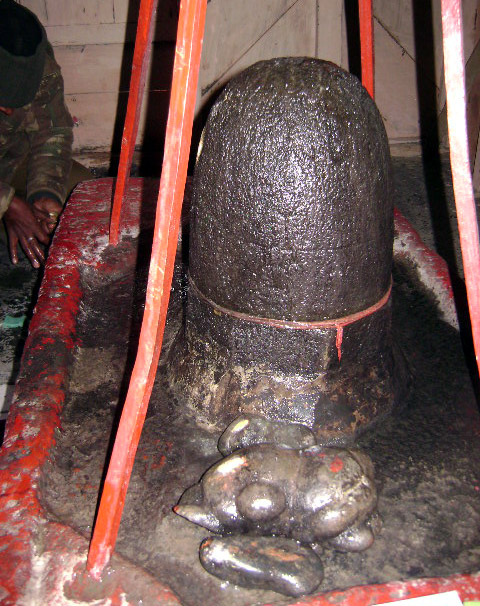
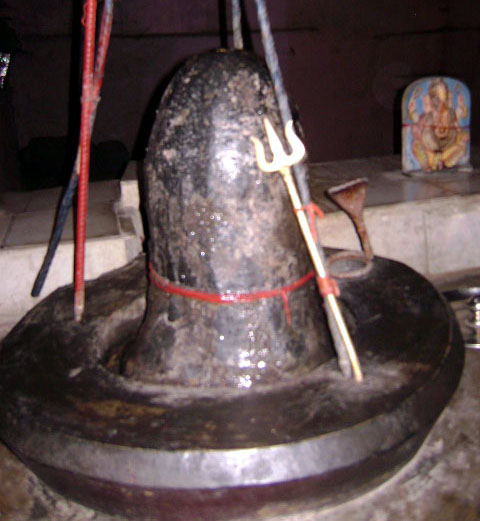
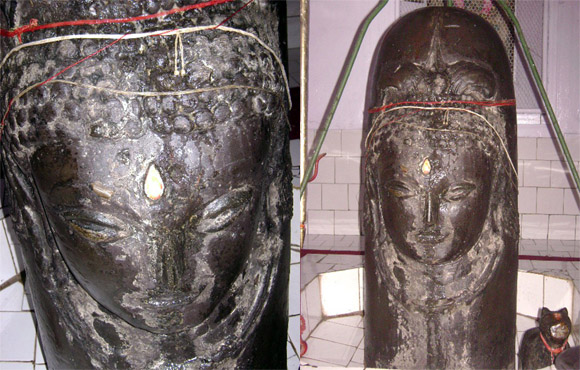
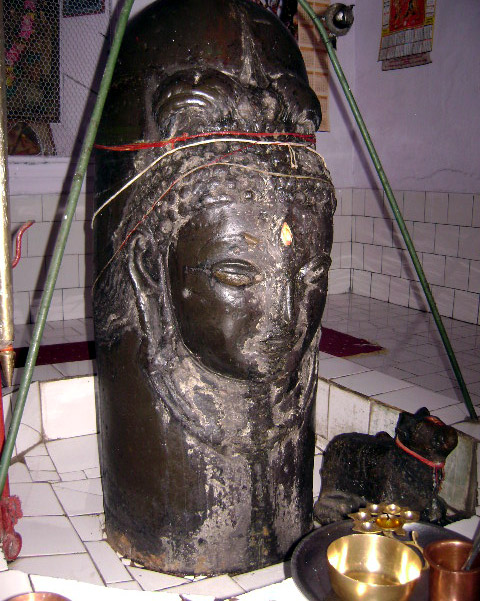
The importance of this shrine is described in Kotitirthamahatmya [part of Bhringisha Samhita]. Presently, the shrine is known for the Shiva temple, inside the sanctum sanctorum of which stands a unique five feet Shivlinga with a face. The shrine has a dharamshala and a holy spring. The water of the holy spring is cold in summer and hot in winter. At present dharamshala is occupied by CRPF and its maintenance is being done by them.

Right above this temple there is another temple which is called Ganganor. Ganganor is a holy spring at Mohalla Rajghat. A small temple has been built on this sacred spring. It is said that the spring receives water from seven springs existing above at an elevation on the small hillock called Gousain Teng. There are seven springs on Gousain Teng with a temple. Each spring has its name viz. Ram Kund, Sita Kund, Laxhman Kund etc. Simultaneously, water from all the springs with independent out lets combine to form a brook and passing into a phase of journey. It is believed that it belongs to the Lord Rama’s period.

There was a number of Kashmiri Pandits living in Baramulla. After invasion of tribal invaders, many Kashmiri Pandits of Baramulla choose to migrate to other parts of the country and many more were killed by tribal invaders. Before migration some 536 Kashmiri Pandit families were living in Baramulla and had their households scattered in Rajghat, Dewan Bagh, Khowja Bagh, Kanlibagh, Jetty Road and Ramghat. After mass exodus only one Kashmiri Pandit namely Sh. Mohan Lal stayed back braving all odds. Some Kashmiri Pandits families from Jammu have returned back and are staying in a temple. They are doing small trades in Baramulla now. Two families staying at Khowja Bagh did not migrate and are still residing there.

The shrine topography described above remains incomplete without getting mention of Ram Mandir of Ramghat. A Janki was always taken from this temple on occasions of Ram Navmi and Dussehra. Another temple near Kotitirth is the temple of Bhairav known as Bhairav sund [Bharaiv Bagh]. Shushnoor was offered on dates of festivals specializing the occasions in the honour of the deity.

Near Kotitirth there was a ghat on river Vitasta called Kotighat. This place was used for the purpose of 10th day Kriya of the departed souls. The ashes of the dead were immersed in Vitasta at Kotighat. Adjacent to Kotighat is cremation ground comprising of five kanals of land.

All these things are there but the people whose presence once thrived on the face of Varamul are now few and far between.

References
Place Names in Kashmir by B.K.Raina and S.L.Sadhu published by Bharatiya Vidya Bhavan, Mumbai and Indira Gandhi National Centre for the Arts, New Delhi

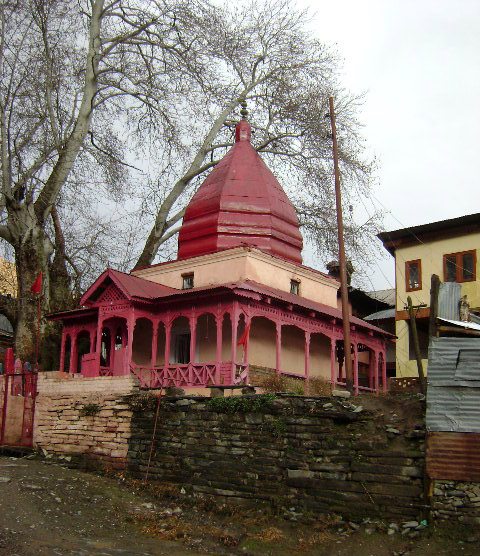
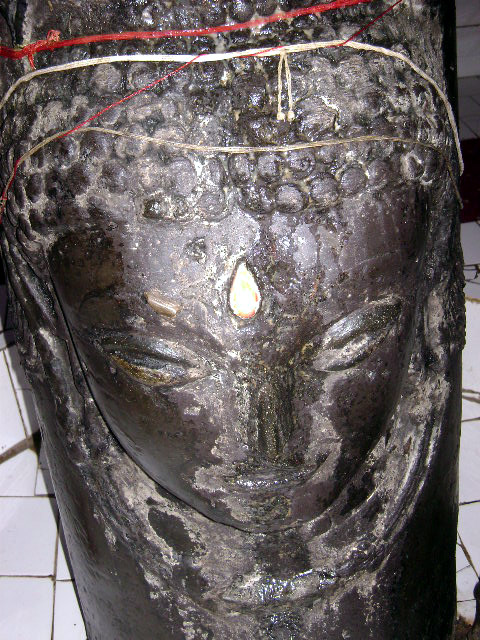
Main temple a Kotitirth


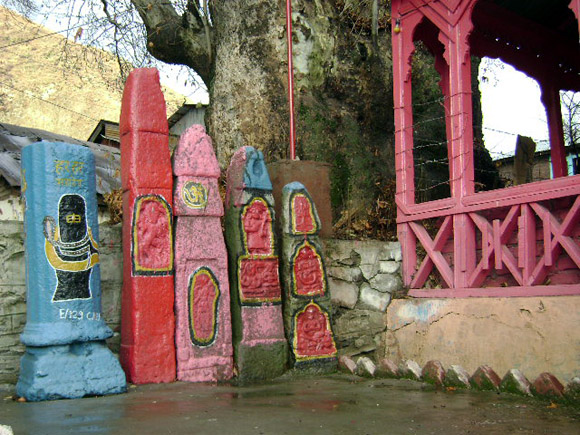
Icons outside Kotitirth Shrine. Colors have not changed the concept of these icons


a Parkama of the temple. Path of salvation


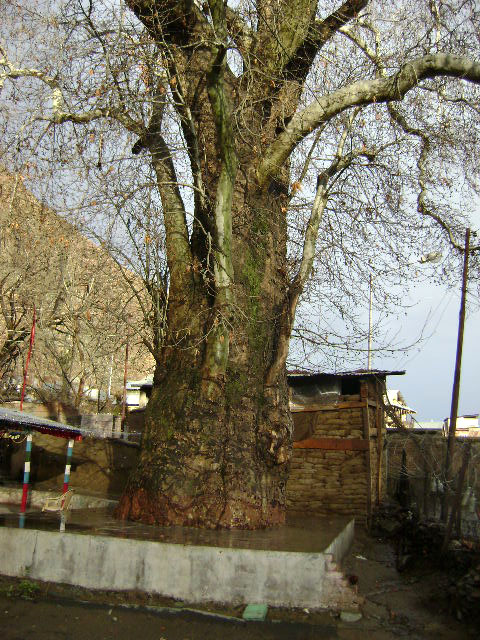
Chinar near the temple shading the faith of the devotees

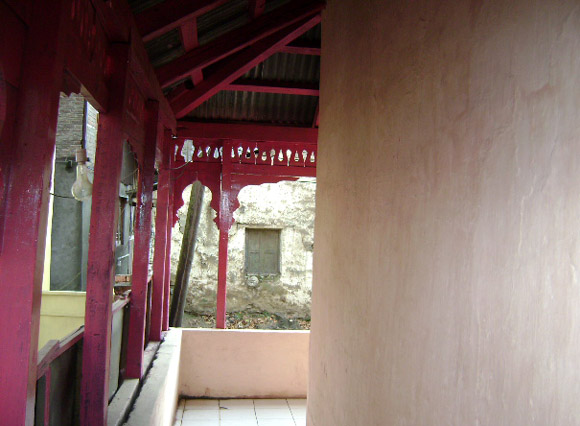
Dharamshala in Kotitirtha. Ruins and remains of the resting place of devotees


a Shiv Lingam inside small Shiv Mandir near Kotitirth


Shiv Lingam at Bairav Bagh teaching meditation to devotees.


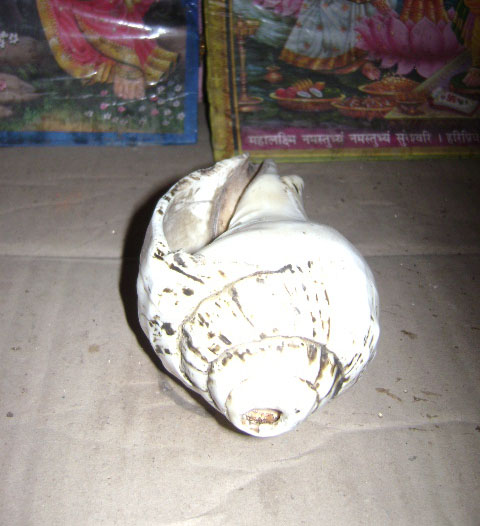
Shankh [Conch Shell] inside the temple waiting for blower since last 21 years


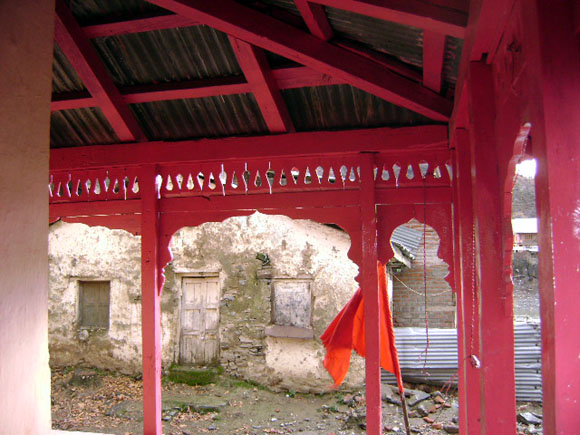
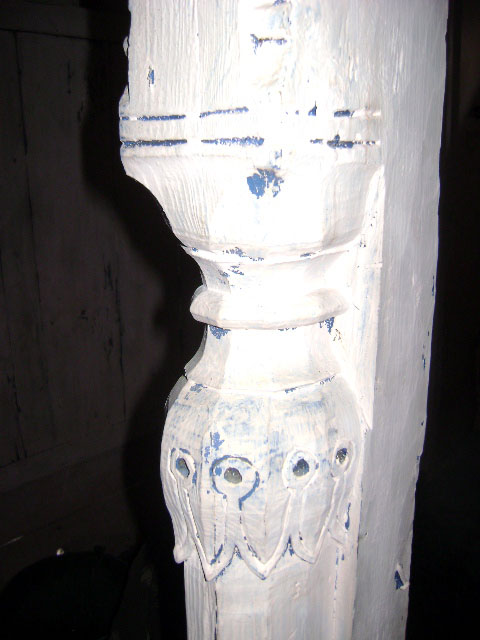
Wooden Pillar inside the temple. How long will it bear the weight of the faith without the strength of devotees?


Unique Shiv Linga inside the main temple..JPG


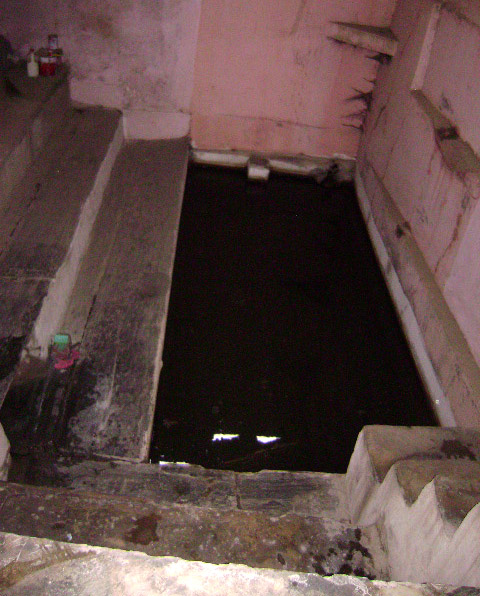
Holy spring inside the temple known as Ganga Noor. Sacred waters of Ganga giving darshan over here


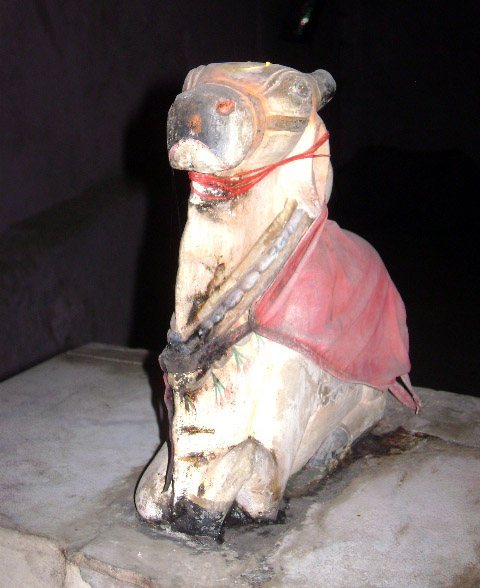
Brashib guarding the temple saying Koti Koti Pranam to the founder of the Universe


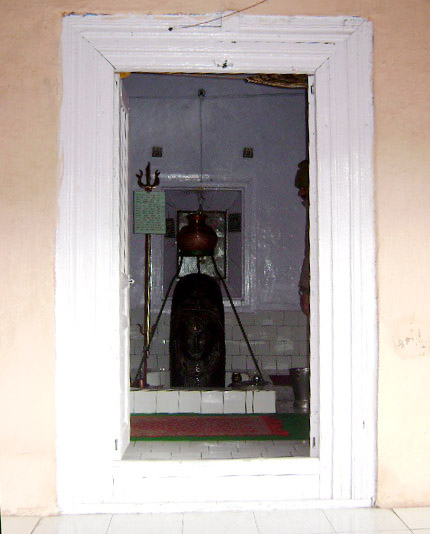
Main entrance of the temple. Door to the Nirvana


Goosain Teng. Tower of faith


Shail Putri temple just opposite Kotitirth trans Vitasta

*Born on 20th March, 1960 in Murran a village in North Kashmir, Chander M. Bhat is presently working as an Assistant Supdt. Posts, in Department of Posts, Govt. of India. His articles regarding Posts and of non-political nature stand widely published in various papers and magazines of the country. A booklet 'How to Collect Stamps" published by the Department of Posts, has earned him genuine accolades. He worked on the project of tracing the roots of his co-villagers and of the village Murran, resulting into the culmination of a widely acclaimed book "Murran -My Village". Man with depth, Chander M. Bhat has also another book, "Ocean by Drops" (collection of poems) in his vase having colorful poems. His book "Ancient History of Jammu and Kashmir", confirms his researching capability. Various research papers like "The Splendor that is Amarnath" and "Vitasta" The Sacred River of Kashmir" are valuable additions to his works that has proved very fruitful and guiding force in the exile period of Kashmiri Pandits community of which the author is also a member.

Presently the author is working on "OOL - THE NEST" a six volume project on all the 595 (each volume of about 2500 pages)Kashmiri Pandit villages of Kashmir.

Copyrights © 2007 Shehjar online and KashmirGroup.com . Any content, including but not limited to text, software, music, sound, photographs, video, graphics or other material contained may not be modified, copied, reproduced, republished, uploaded, posted, or distributed in any form or context without written permission. Terms & Conditions.
The views expressed are solely the author's and not necessarily the views of Shehjar or its owners. Content and posts from such authors are provided "AS IS", with no warranties, and confer no rights. The material and information provided iare for general information only and should not, in any respect, be relied on as professional advice. Neither Shehjar.kashmirgroup.com nor kashmirgroup.com represent or endorse the accuracy or reliability of any advice, opinion, statement, or other information displayed, uploaded, or distributed through the Service by any user, information provider or any other person or entity. You acknowledge that any reliance upon any such opinion, advice, statement, memorandum, or information shall be at your sole risk.


Shailputri, Baramulla


Shailputri, Baramulla

by Chander M. Bhat  

Vande Vanchhitalabhay Chandrardhakritshekharam ! 
Vrisharudham Schooldharam Shailputreem Yashasvineem !! 

[Shailaputri is one of many names of goddess Parvati. She is called Shail-Bala or Shail-Putri because she was born as Himalaya’s Daughter. Himalaya, being a mountain (Parvat or Shail), She is called Parvati or Shail-Putri. Navratra’s first day is devoted to Mata Shailputri. She rides on Vrash (Bull), she has Shool (Trident) in one of her hands, there is half-moon on her crown, and she is beneficial for whatever one wishes.] 

Shaktaism (Mother Worship) represents advancement in the Shaivism. It accepts Shakti as Mother, Who is the Absolute Power behind every act of manifestation. She is worshipped as Mother. The worship of the Mother, in the form of Uma is the most ancient form of worship in Kashmir. There are many shrines associated with Mother Goddess. The shrine of Ragyna Devi is located at Tullamulla; in North Kashmir some 18 km from Srinagar. The shrine dedicated to the worship of Uma Devi is located at Uma Nagri (Brari Aangan) some 18 km from Anantnag. The shrine dedicated to Zyestha Devi is located atop the eastern spur of Shankaracharya hill, on the left bank of Dal Lake. The ruins of the shrine dedicated to Bhima Devi are lying in village Theid near Mughal garden Nishat. The shrine dedicated to Bhaderkali lies deep in forest among tall pine trees on a slope of a hillock, 4 km away from village Wadipora north of Handwara. The shrine dedicated to the worship of Sharika Devi is located at Chakrishor on the western slope of Hari Parvat hill in Srinagar. The shrine dedicated to the worship of Sharda Devi is located in village Shardi in Muzaffarabad now in Pakistan Occupied Kashmir. The shrine dedicated to the worship of Brari Maej is located in village Murran some 4 km to the west of Pulwama town. Bhuvaneshwari (Mata Bhuvaneshwari, is one of the seven sister-divinities and the youngest of them, the other six being Ragyna, Sharika, Jwala, Zyestha, Uma and Sharda) is another shrine in Kashmir at village Chandpora near Harwan. The shrine of Jwala Devi is situated on top of a hillock overlooking village Khrew. The shrine dedicated to the worship of Shiva Bhagwati is in village Akingam near famous Mughal garden Achabal. The shrine dedicated to the worship of Bala Devi is in village Balhama (Bala Devi is the Isht Devi of Dogra rulers). The shrine dedicated to Bedi Devi in near village Keller in Pulwama District. The shrine dedicated to Shailputri is in Baramulla town. 
 
There are many more shrines dedicated to Mother Goddess in Kashmir as Kulwagishori Shrine at village Kulgam, Ragyna Shrine at village Zainapora, Barga Shakha on a hillock at village Mattan, Ksheer Bhawani at village Manzgam, The shrine of Chandika Devi at village Sagam, the shrine of Jaya Bhagwati on a Karewa in village Bijbehara, Katyayani Devi at village Kakran, the shrine of Tripurasundri at Khanbarnen, Mangla Devi at village Wuchi near Zainapora,Gauri Shrine in village Baugam (Anantnag), Ragyna Shrine in village Logripora (Loketpur) near Ashmuqam, Devibal at village Raithan, Devibal at Badipora near Chadura, Sharda Shrine in village Yachhkot, Bhimashori Devi at village Zoonipora, Bumai, Sopore, the shrine of Ganga Mata in village Handwara, Ragyna shrine at village Tikker (Kupwara), Gaurishori Bhagwati at village Geeru, Tral, the shrine of Pingla Devi at village Pinglana near Pulwama, Ragyna Devi shrine at village Trisal (Pulwama), Chandika Devi at village Tengpuna near Pulwama, Devibal at village Ratnipora, the shrine of Tutla Devi at village Wahibugh, Lokeshwari Devi at Maharaj Gunj, Srinagar, Durga Mandir, Kharyar, Maha Kali Asthapan at Feteh Kadal, the shrine of Tripuraganga at village Triphar close to Harwan. 
 
After the self-immolation as Goddess Sati, Goddess Parvati took birth as the daughter of Lord Himalaya. In Sanskrit Shail means the mountain and due to which Goddess was known as Shailputri, the daughter of the mountain.
Goddess Shailputri is worshipped on the first day of Navratra’s.
It is believed that the Moon, the provider of all fortunes, is governed by Goddess Shailputri and any bad effect of the Moon can be overcome by worshipping this form of Adi Shakti.  

The mount of Goddess Shailputri is bull and because of that she is also known as Vrisharudha. Goddess Shailputri is depicted with two hands. She carries Trident (Trishul) in the right hand and the lotus flower in the left hand. The shrine of Shailputri is situated in Baramulla town in Kashmir.

55 km from Srinagar, Baramulla is situated on both the banks of Vitasta. Baramulla is an ancient town sprung around the shrine Vishnu Adi-Varaaha which is located at the lower, i.e. northern, end of the town on the Jhelum near the present Kotitirth. Apart from its strategic importance, being in control of the route leading from the valley to the outside world, especially Hazara, Gilgit, Gandhara, the town enjoyed distinction for being a cultural centre for the Hindus (at Varahakhetra) and the Buddhists at Hushkapora (present Vushkor) were Huien Tsang stayed for two nights. Later he said that some copper plates, on which the proceedings of Kanishka’s council were engraved, lay buried here. The name Varahamula is obviously derived from the Tirtha of the Adi-Varaha, the Boar incarnation. It has been generally referred to as Varahakshetra which includes the shrine and its neighbourhood. Varahamula contracted into Varamul which non-Kashmiri scribes turned into Baramulla.  

There were about 1200 Kashmiri Pandit families in Baramulla prior to mass exodus and was considered second town in Kashmir Valley having such a big population of Kashmir Pandits after Anantnag town. Pandits were mainly residing at Kanli Bagh, Ushkura, Rangwar, Dewan Bagh, Rajghat, Ramghat, Khawja Bagh and Jatti. All the families migrated to other parts of the country on outbreak of militancy in the valley in the year 1990. 
 
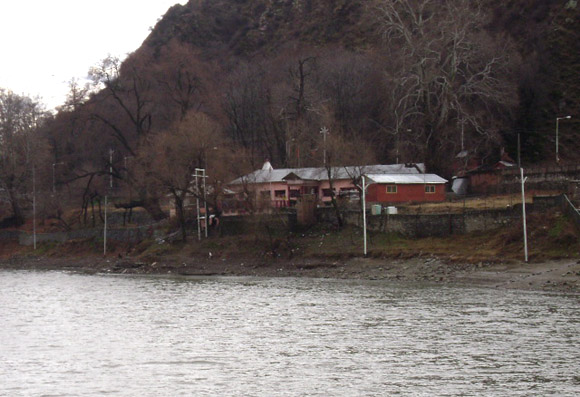
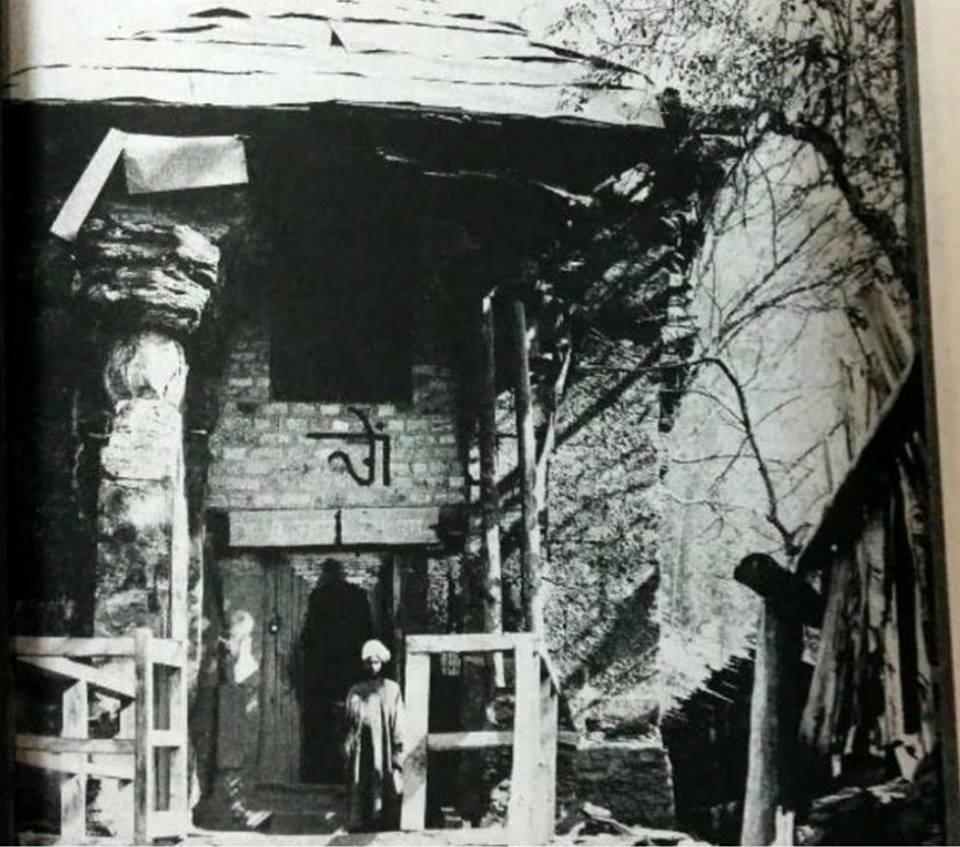
Devibal, popularly known as Shailputri or Shaila Devi, is located on the left bank of Vitasta on the National Highway, just 1 km from Baramulla on Baramulla-Uri road at Anapur (present day Khanpur). The shrine is nearly 1000 years old which can be testified from the remains found at the site, placed on the left side under a big Chinar inside main entrance of the shrine. These are six in number and include a unique Shiv Lingam. The main entrance of the shrine is close to the road. One has to step down eight stairs by using staircase to reach the temple premises laid with dressed stones. This beautiful temple is surrounded by four mighty Chinar trees. Some big wild trees also form the part of this complex and it is said that in entire Kashmir valley these types of wild trees are only seen in Shailputri Shrine. There are two walnut and 15 popular trees in the premises of this temple comprising about seven kanals of land. One has to turn right after walking eight yards to reach the main entrance of the sanctum sanctorum and then there is ascend of seven steps to enter. Within the premises is a holy spring, inside which stands a marble temple like the one at Ksheer Bhawani, with a marble icon of Mother Shailputri facing towards south. The premise is 105 feet long and 47 feet wide and has space for circumbulating (Parikrama), with the floor laid with marbles, around it. Holy spring is sixty feet in length and twenty feet in width having crystal clear water?  Water oozes on the right hand side top corner of the holy spring. Kashmiri Pandits hold this Ashthapan in high esteem and consider it next to Ksheer Bhawani. One has to step down seven steps to reach Vitasta Ghat. There is one Dharamshala within the temple premises. Security forces are occupying this Dharamshala at present. 
  
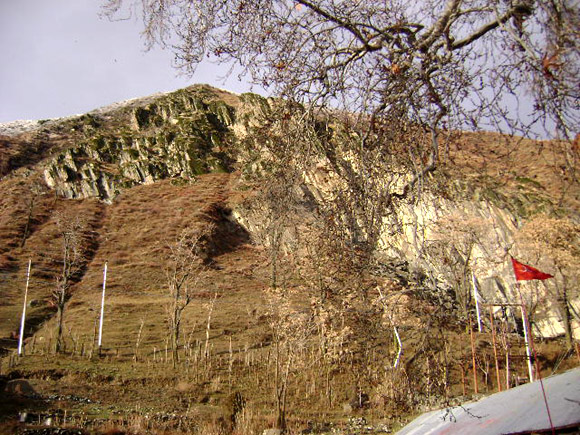
On the other side of the road opposite to Shailputri Shrine there is a big mountain called Bhairav Bal. A small temple has been constructed on the opposite to the main entrance of Shailputri shrine at the foot of this hill near a Shilla. 
 
After mass exodus of Pandit from the valley, the shrine remained without any care and started to wither from its pristine glory. The shrine was burnt to ashes in October 1990. I was posted in Baramulla and I saw with my open eyes the flames in the sky. It was about 8 p.m. Other day there was complete curfew in the town and I enquired from a police personal who was guarding the Dak Bunglow, where we the employees of Postal Department were residing that what had happed. He told that Shailputri temple has been burnt by some miscreants and the icon of Mother Goddess has been shifted to Police Lines. It was later confirmed that the main idol of the Shailputri riding on an ox was attacked and its arms and legs axed. I visited this shrine after some days when curfew was relaxed. The temple was having a devastated look. The Chinar trees which had lost their leaves due to fire were themselves reflective of the grief and sorrow of this shrine. History will not spare the generations of Kashmiris who wrought such havoc to this land. The temple was again constructed by Rashtriya Rifles and was re-opened on 28th November 1995. Master Anoop Singh told me that the temple located at the foot of Bhairav Bal opposite Shailputri temple was also attached and was set on fire but the temple does not catch fire and the same temple is lying intact at present. Two persons who axed the main idol later died due to road accident and by high tension electric shock. 
 
I have visited this temple during my school days alongwith my respect father Pandit Dina Nath Bhat who often used to tell me the stories associated with Shailputri. 
  
The biggest congregation of devotees at the shrine takes place on Ram Navami. People from nearby towns like Sopore, Kupwara, Handwara, Seer Jagir etc. used to come and join the congregation. Koti Tirth (Holiest of Holy Shrine), Bhairav Mandir (amidst an almond orchard at the foot of Gosainteng), Gosainteng (abode of seven springs and a temple sacred to the memory of the heroes of Ramayana, including that of Sita) and Chhatipadshahi (Sixth Sikh Guru has visited this place) are located on the right bank of Vitasta, opposite to Shailputri Shrine. Replica of Shailputri has been constructed by the devotees of the Mother at Munshi Chek, Jammu. 

In dark nights, under the shade of the Chinar, the sacred place present an atmosphere where one becomes one with God and in moonlit nights, devotees experienced something mystic all over in the shrine of Shailputri. 

Notes and References  

  • Place Names in Kashmir by B.K.Raina and S.L.Sadhu, published by Bharatiya Vidya Bhavan, Mumbai and Indira Gandhi National Centre for the Arts, New Delhi. 

  • Encyclopaedia: Kashmiri Pandit Culture and Heritage by Shri C. L. Kaul, published by Ansh Publications and Distributors, Vasant Kunj, New Delhi.

  • Interview dated: 16.07.2013 with Shri Ramesh Kumar Bhat son of Shri Triloki Nath Bhat resident of Rangpath, Baramulla at present Trilok Pur, Gole Gujral, Jammu 

  • Interview dated: 16.07.2013 with Shri Soom Nath Mantoo son of Shri Shamboo Nath Mantoo resident of Ramghat, Baramulla at present 66 D/C, Gandhi Nagar, Jammu. 

  • Interview dated: 01.09.2013 with Master Anoop Singh son of Sardar Deva Singh resident of Noor Bagh, Baramulla. 

  • On the spot reporting from Shailputri Shrine, Baramulla by Shri Harbinder Singh son of Shri Jagjit Singh resident of village Chandusa, Baramulla. 


SHARDA PEETH- Perspective


SHARDA PEETH- Perspective
Ravinder Pandita

Sharda Peeth or the Sharda Temple in POK is considered to be the basic seat of learning of Hindus in India and Asia. The dialect of Sharda oftenly called Sharda lipi (a form of Hindi) was the fundamental dialect of Brahmin scholars for a long time, till Hindi (Devnagiri) took over, finally. Kashmiri Pandits are not naïve to this seat of learning. In the post partition era we see Swami Nand Lal Ji as on the Saints of Kashmir who carried some of the idols during the War of partition and salvaged some of the whole lost. In fact, at the time of partition Swami Nand Lal Ji migrated on horses carrying idols from Sharda to Tikker and a few of these stone idols are lying at Devibal in Baramulla besides Tikker in Kupwara. The pilgrimage those days would be organised by Mela Ram a renowned forest lesse in Kupwara for Swami Lal Ji of Kashi- Mathura fame. Recently a Pakistan based scholar Ms Rukhsana Khan has undertaken the archaeological part of it and tried to go deep into the historical facts. It takes us back to Maharaja Ranbir Singh’s era and the fact that Jammu Haveli’s still exist there besides other temples and natural carvings like Ganesh Ghati . The year 2015 was marked as rewriting of history when Rukhsana Khan and her team unearthed antiques and has eversince worked on preservation of culture on Sharda Project. It used to be a University once upon a time, set up by Adi Shakracharya . Although it is not clear as to when the construction of this temple was done, however in Emperor Lalitaditya ‘s period the present style of temple was built in 724 AD.

After Vajpayee-Musharaf meeting at Islamabad during SAARC conference from 4 to 6 January 2004 a number of CBMs between the two parts of Kashmir were initiated to normalize the situation, create friendly relations and encourage the peace process. These include the cease fire on LOC, opening of two roads across the LOC via Poonch-Rawalakote and Uri-Srinagar, meeting of divided families, and start of trade ventures etc. Accordingly Kashmiri Pandits and other religious organizations of state demanded for the opening of Sharda Shrine of POK for religious tourism so that they could have Darshan of this old temple and annual yatra of the Shrine could be revived as it was conducted before partition in the month of August. The then president of Pakistan Parvaiz Musharaf accepted the demands of the minorities of J&K in principle and sanctioned Rs. 8 crores in 2006 for creation of infrastructural facilities near the Shrine so that pilgrims could be allowed to visit. As per the information received through internet, POK government constructed some tourist huts, community centres, youth hostel and cafeteria near the Shrine but no attention was paid towards the revival of the Shrine which is in deteriorating condition. The Muslim natives of the village Sharda and adjoining areas still call the monument as Sharda Mai (Sharda Goddess). Dr. Ghulam Azhar a noted historian of POK writes in one of his research article that Sharda Shrine is the oldest monument of POK which needs preservation and restoration. The Shrine was an important pilgrim centre in the past. The ruins of the old monuments are sufficient to narrate the old glory and glamour of this Shrine.

Sharda Shrine is about 207 kilometers in the north of Muzafarabad in POK. The Shrine is situated in between 340.48’latitude and 740.14′ longitude. The spot is linked with motorable road leading from Muzafarabad via Neelam valley, Kundal Shai, Jagran Valley, Athmaquam, Neelam township and Dwarian. The Sharda Temple is located near the confluence of Kishan Ganga river (Neelam river) and Madhumati stream in an open ground. It is a breath taking spot with full greenery, multicolour flowers, springs, forest belt surrounded by snow clad peaks of Sharda and Narda hills of Nanga Parbat range which divides POK from Galgit-Baltistan.

Before independence the annual Yatra of Sharda Temple was conducted from the ancient time. During Dogra rule after 1846 this Yatra had become a regular feature. The Yatra of Sharda Devi was started on Shukal Pakash during the month of August (Bhadun). The devotees would start their yatra on 4th Bhadun and on 8th they were taking dip in the Sharda Kund on the bank of Madhumati River and after giving Sharad of their Pitras (died relatives) they were having the Darshan of Sharda Goddess. Mostly Kashmiri Pandits were conducting the Yatra after traveling hundreds of miles on foot. Mr. C.E Bats, the author of the Gazetter of the Kashmir who had visited the spot in 1872 AD writes that the Sharda Tempe is situated in the confluence of river Madhumati and Kishan Ganga. The temple is approached by a stair case about nine feet wide of steep stone steps some 63 in numbers having on either side a massive balustrade. The entrance was through a double porch way at the south-west corner of enclosure. The walls of the enclosure are about 30 feet high. In the middle of the walls in the north side is an arched recess which contains Lingum. The Cella about 23 feet square stands on the elevated plinth about four feet from the present level of ground. The entrance is on the west side facing the porch way. On each of the other three sides of Cella, a single roof has y been erected over the building for the protection by the order of Colonel Gundu, the Late Zaildar of Muzafarabad. The interior of the temple is square and perfectly plain. On the ground lies a large rough slab of unpolished stone which is said to have been disturbed by Raja Manzoor Khan of Karnah in search of treasure. In those days the Shrine was venerated by both Hindus and Muslims. There was also a fort constructed by Dogras with 60 Dogra Constables stationing for the protection of Shrine and defence of the area. The ancient Shrine is about 400 yards in the south of the fort. The temple was also renovated by Colonel Gundu, the Zaildar of Muzafarabad in 1867 AD.

In the ancient time Sharda was famous in all over India. The historic facts reveal that near the Shrine there was a Budhist University established during the period of Emperor Ashoka (273BC) known as Sharda Peeth, to spread the teachings and thoughts of Budhism in Kashmir and other hilly regions. The foundation of Sharda Peeth was laid on the bank of Madhumati River. The fourth Budhist council was summoned at this place by Emperor Kanishka in 141 AD. In Sharda University, a Sharda script was invented by the Budhist monks and scholars which was the amalgation of local dialects and understandable to the common people. Therefore with the help of this script Budhism was spreaded in Kashmir, Himachal, Tibet and Nepal. However with the downfall of Budhism in India the glory and glamour of Sharda Peeth got also vanished and it became a part of the history.

Kalhana writes in Raj Tringani that in 11th century AD it was a temple of Sharda Goddess. Historian Belhana writes in Vikrama Chiriter that he has been educated only due to the blessings of Sharda Goddess whose crown was formed with the gliterring gold collected from the river Madhumati. Al Bruni who had visited India in 1036 AD writes in his book ‘India’ that there is a great image of Sharda and devotees assemble here for the pilgrim. Abu-ul-Fazal in Aain-e-Akbari writes that on the bank of Madhumati in Drava area of Muzafarabad there is a stone temple of Sharda Devi. Every month on the Shukal Pakash the image of the Sharda starts showing miracles. The temple is respected by large population. Therefore it appears that upto 16th century AD this temple was having great religious importance.


Juna Raj the writer of Raj Tringani Juna Raj written during the rule of Sultan Zain-ul-Ab Din of Kashmir (1420-1472 AD) records in his book that Sultan Zain-ul-Ab Din was undertaking religious pilgrim to Hindu Shrine and participating in Hindu rituals. Juna Raj also recorded that Sultan had visited Sharda temple in 1422 AD along with the Yatris. After taking bath in Madhumati stream he entered the temple but he felt annoyed on the wickedness of the priest and devotees and lost faith in the Goddess Sharda. The Goddess Sharda did not manifested herself. Sultan also slept in the temple during the night hours. But he could not see the miracles of the Goddess.

C.E Bats writes that during his visit of Sharda Devi in 1772 AD there was a Lingum and not image of Goddess Sharda. Maharaja Gulab Singh had got the temple renovated during 1846-1856 AD. He had also appointed a Brahmin priest to look after this historic temple, constructed a fort near the temple and posted 60 constables for the protection of Sharda Shrine and the area. Therefore the devotees started visiting the Shrine regularly and the ancient Yatra was revived. The devotees start their Yatra on 4th Bhadun and on 8th Bhadun they were taking dip in the Sharda Kund in the Madhumati stream and have the Darshana of the temple. This Yatra remained in vogue during Dogra period upto 1947. After the turmoil of 1947 when Kashmir was divided into two parts this important Shrine had gone under the occupation of Pakistan. For the last 62 years the Shrine remains unattended and is in ruins. But now there is a great demand from the minority population of Jammu and Kashmir state for the restoration of Sharda temple and start of the Yatra. This will be another CBM between the two parts of the Kashmir.

APMCC ( All Parties Migrants Co-ordination Committee) , a frontline organisation of Kashmiri Hindus has been well acclaimed for reclamation of Temples and shrines across the valley numbering about 600, besides reviving pilgrimages / yatras to Gangbal, Dineshwar, Kaunsar Nag etc. In the trouble torn valley. In its 6 point charter the first 2 demands are Reopening of Sharda Pilgrimage and Setting up of Sharda University in J&K state. APMCC organised a seminar on 8th. Jan’2016 at Press Club of India, New Delhi and held deliberations with Rukhsana Khan on video conferencing. Other participants spoke on Sharda Re-opening were Retd. Lt. Gen. Ata Hasnain, Journalist Awadhesh Kumar, Utpal Koul Historian, Vinod Pandit Chairman APMCC and the seminar was anchored and moderated by Ravinder Pandita. Some protests for re-opening at Jantar Mantar were also held later. In this regard Ravinder Pandita also met Central Cabinet ministers Dr. Jitender Singh, Gen. V K Singh, MOS Home Haribai Parthabai and requested their intervention for Re-opening of Sharda and allow a pilgrimage on the lines of Nankana Sahib, where Sikhs are allowed to take a jatha every year in Lahore. Several seminars , protests in this regard were held in New Delhi and other places to highlight this demand.

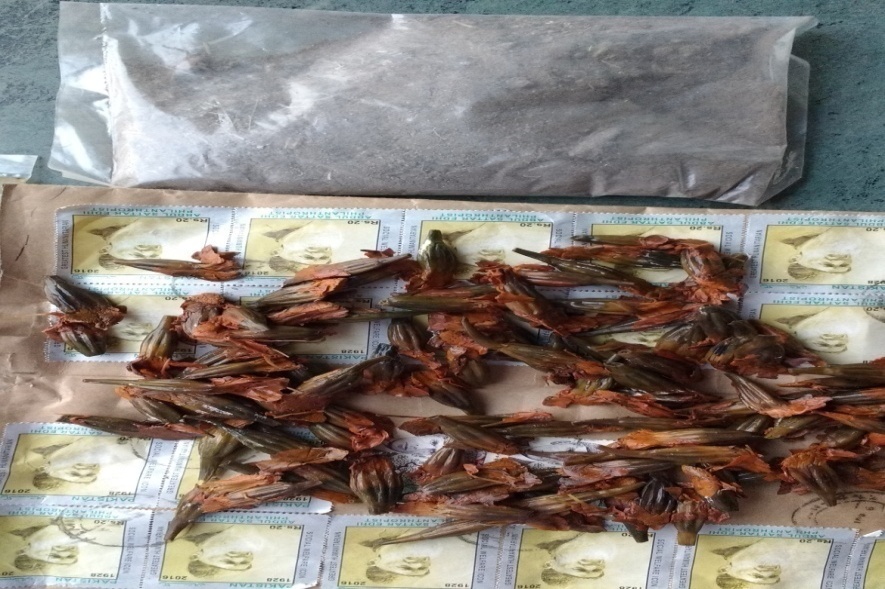
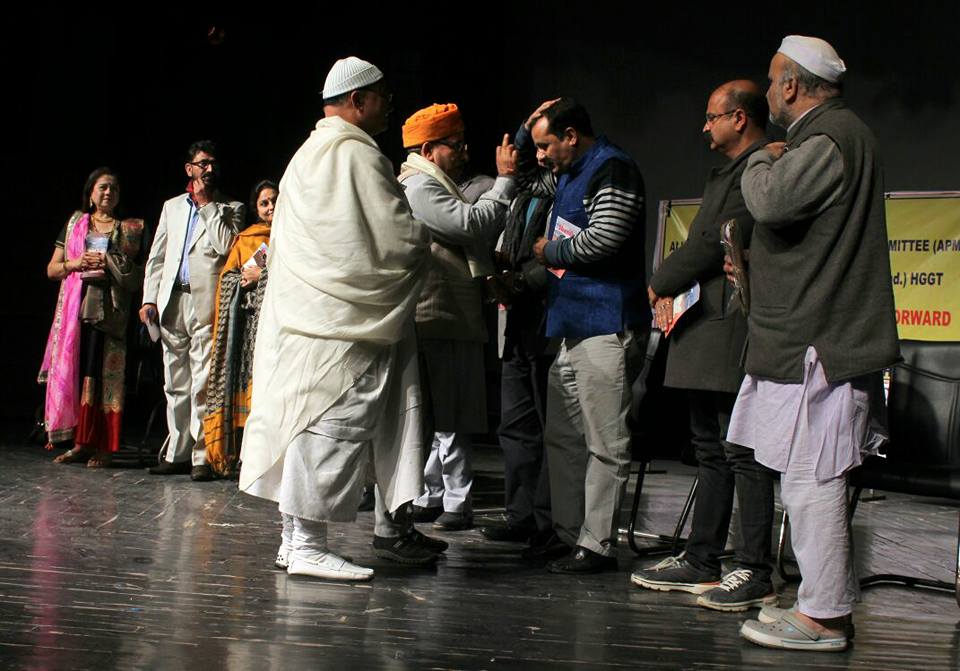
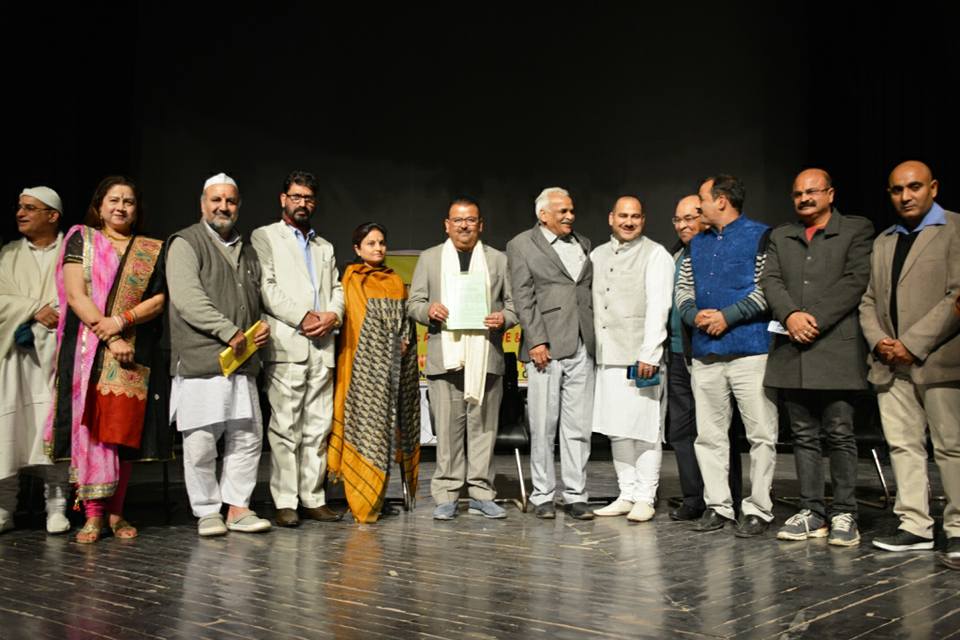
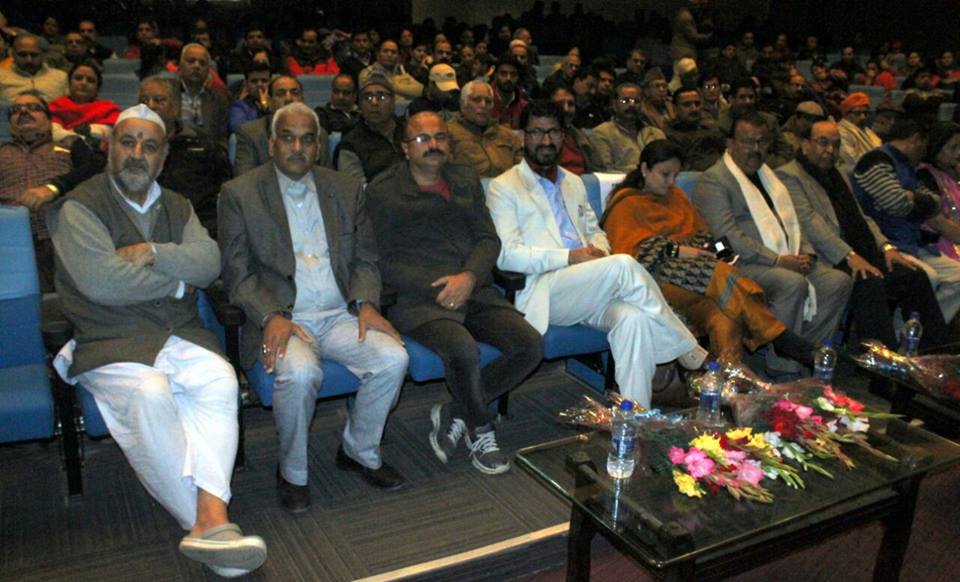
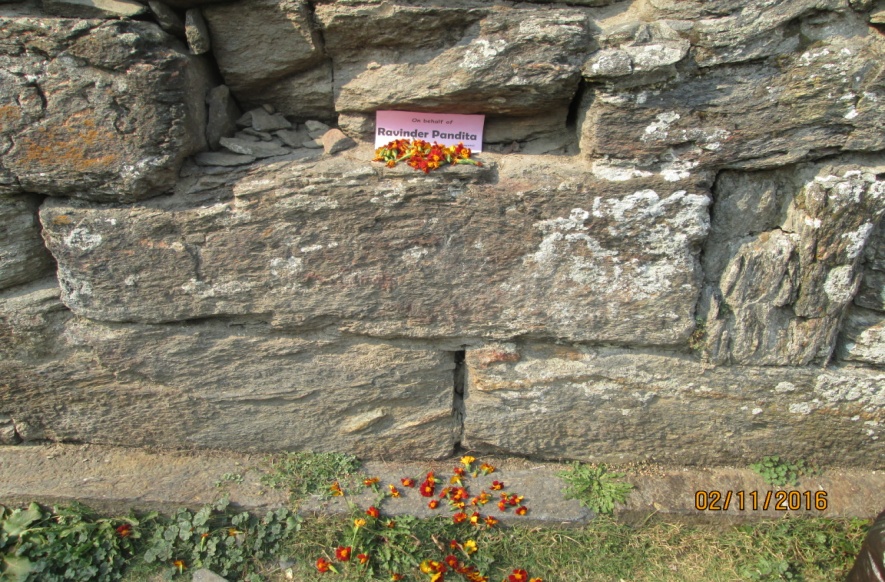
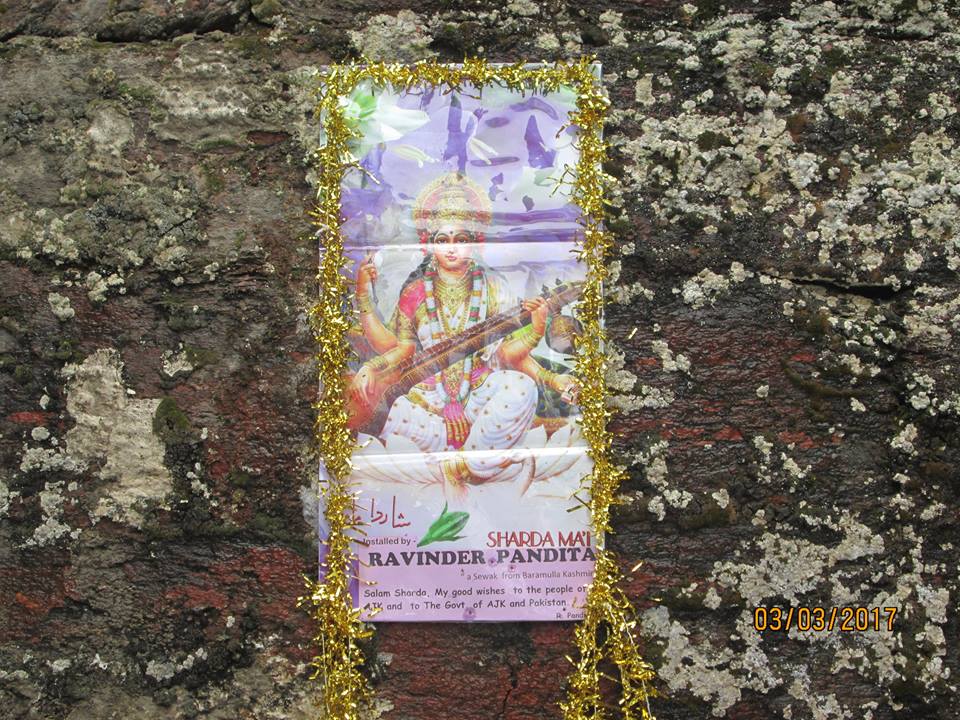
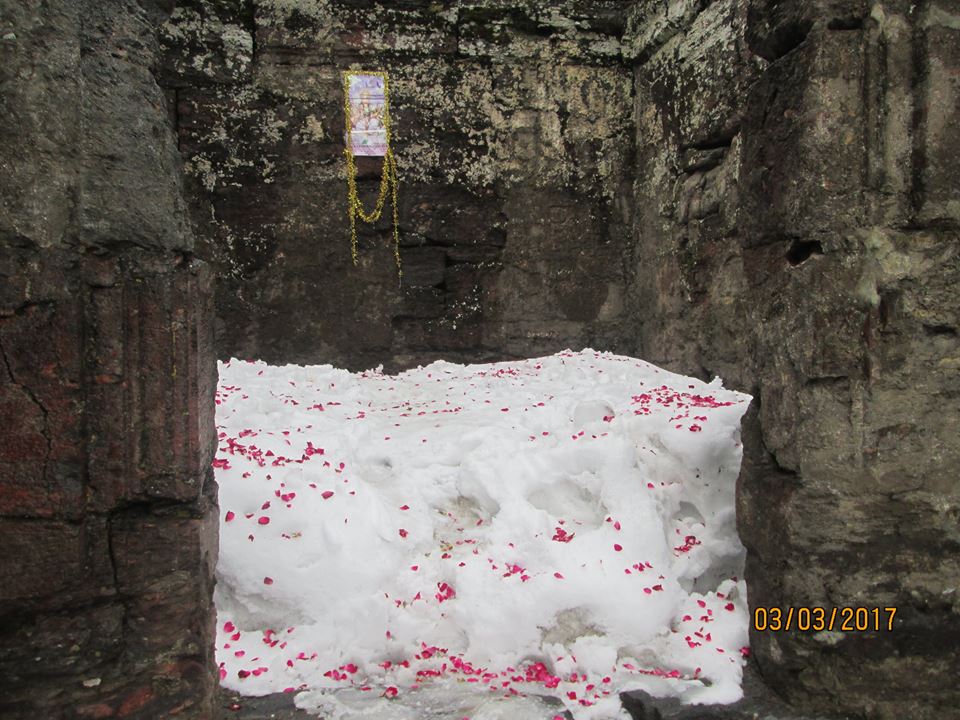
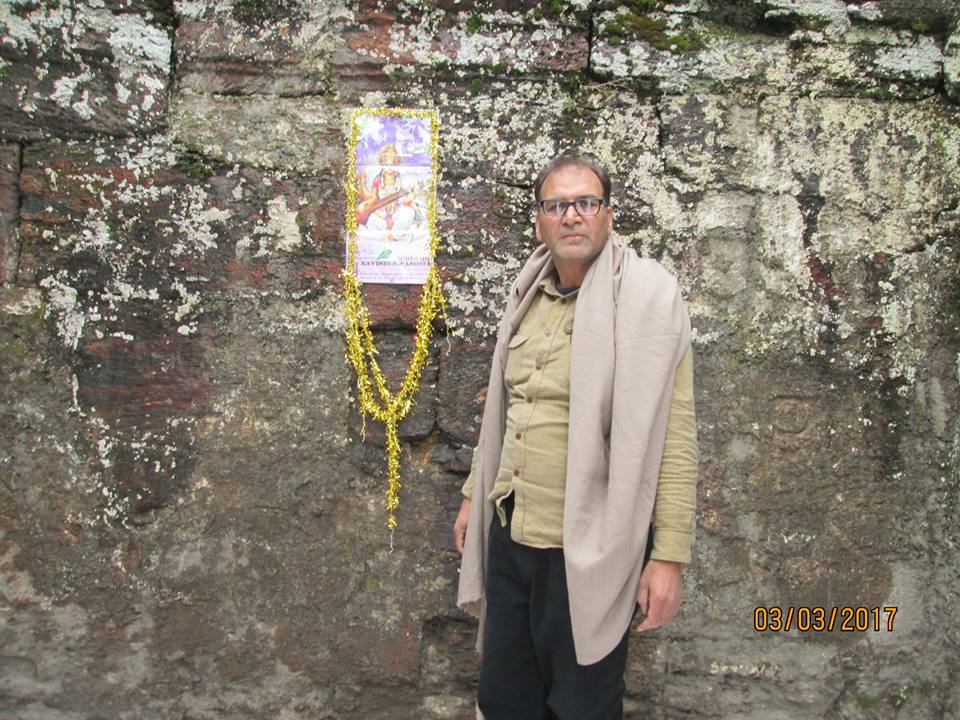
It was by efforts of Ravinder Pandita Head APMCC Delhi and Save Sharda Committee Kashmir with Civil society of Neelum Valley and Sharda residents that recently flowers were offered on 2nd. Nov. There at the the revered shrine with the help of locals ,first time since 1947. APMCC a frontline Kashmiri pandit organistaion has been demanding Re-opening of Shrine as well as setting up of Sharda University in J&K since long. The local Save Sharda Committee was approached by Ravinder Pandita and Photo of Mata Sharda will be installed there soon. Mohammed Rayees , Arif Khan , local Sarpanch and Principal Sharda School have been instrumental in getting us the lost glory of ‘Sharda Mai’ commonly known and called by local populace. This effort between 2 civil societies will go along way in confidence building, interaction and preservation of culture. The soil and flowers received from Sharda were recently displayed at Abhinav Thetre Jammu on 8th. January during Annual APMCC awards function. The function was chaired by ChanderPrakash Ganga Hon’ble minister for Industries and commerce, Ms Priya Sethi Minister for tourism, Bollywood actress Preeti Sapru, Hon’ble MLCs Surinder Ambaradar and Ramesh Arora and Retd. Lt. Gen, Ata Hasnain, debator and orator. Ms. Laxmi Kaul a prominent activist of UK also attended the function. On the occasion tilak was applied to all the participants of the soil brought from Sharda by Regd. Post sent by Rayees Mohammed, a Kashmiri settled there. It was a poignant and a emotional scene that Sharda soil has been received and obeisance paid first time after the partition in 1947.

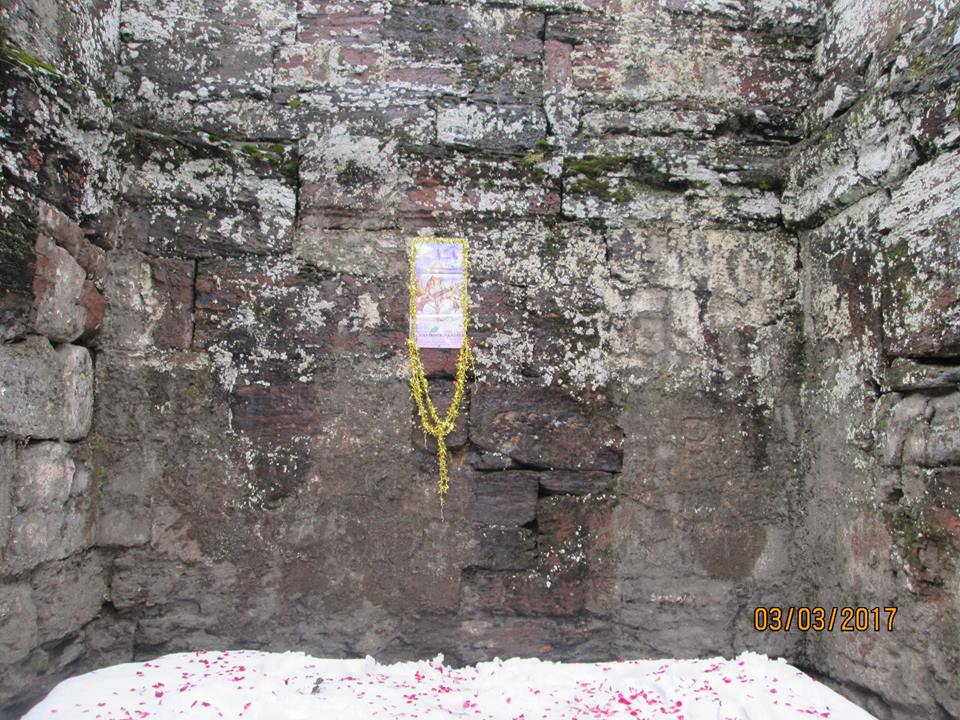
It was a historical moment on 3rd. March ‘2017 that Save Sharda Committee(Regd.) managed to install Photo with frame of Sharda Mai in the temple premises through the Civil Society members of POK. This has been done first time since independence and needs be applauded. Now that SAVE SHARDA COMMITTEE KASHMIR (regd.) has come into being since 2017, things have started rolling for the early Re-opening of pilgrimage. The Committee headed by Ravinder Pandita has taken up the issue with all concerned ministries and Ruling Govt. heads in New Delhi and things have started progressing. The Committee is demanding ratification of LOC permit rules for facilitating travel of J&K hindus and an annual pilgrimage to Sharda Peeth on the lines of Nankana Sahib yatra by Sikhs to Lahore, every year. Save Sharda Committee Kashmir (Regd.) has approached Govt. of Pakistan as well as AJK Government and also Supreme courts of both the governments. The issue has been taken up at all the Shankracharya Mutts in India and the committee has presented the pious soil & flowers got from Sharda Peeth in Pakistan to all mutt heads. The committee has met Minister of Social Justice & Empowerment Sh. Vijay Sampla, Minister of skill development Sh. Anant Kumar Hegde, Minister of minorities Sh. Mukhtar Abbas Naqvi, MoS PMO Dr. Jitendra Singh, NSA Sh. Ajit Doval, former Foreign minister Sh. Salman Khurshid, former water resources minister Prof. Saifuddin Soz and many other ministries and briefed them about the issue and it may not be out of place to mention here that all the dignotries have acclaimed the move to re-open Sharda Peeth again ! The recent landmark judgement by Supreme court of POK for preservation of Sharda peeth received here last month has set the ball rolling officially from the other side. Jai Sharda !!

Points to ponder:
FACILITATION OF DIALOGUE WITH PAKISTAN GOVT. FOR PILGRIMAGE TO SHARDA TEMPLE IN POK.
  • 1. If a permit is valid for a Kashmiri to undertake trade,meet relatives and friends and vice-versa , why a VISA for Kashmiri Hindu to make a pilgrimage. It seems to be a clear discrimination with same nationals and state subjects.
  • 2. APMCC has applied amongst various kashmiri pandit organizations for pilgrimage to Sharda Peeth , despite Pakistani Govt. having no objection in allowing the pilgrims, why does Govt. Of India have the objection.
  • 3. Why hasn’t a pilgrimage been allowed since partition i.e, 1947, despite requests by kashmiri Hindus to allow pilgrimage once in a year as allowed in the case of Sikh community, where a Jatha ( Group) is allowed to do pilgrimage in Nankana Sahib, Gurdwara in Pakistan.
  • 4. Will the Govt. of India under the leadership of PM Modi allow such a pilgrimage, once Bus route to Lahore, Train via Wagah border near Amritsar and trade routes at 5 locations in J&K allow such facilitation.

SETTING UP OF SHARDA UNIVERSITY IN J&K

Setting up of Sharda University in J&K on the lines of Baba Ghulam Shah University in Rajouri-Poonch belt and Islamic University in Avantipora in the Kashmir valley. Why will Govt. not allow setting up of Sharda University, considered to be fundamental seat of learning despite persistent demand by APMCC and Save Sharda Committee. Revival of Sharda pilgrimage and setting up of Sharda University would be foundation for rehabilitation of displaced kashmiri pandits, keeping in view their socio-religious and economic aspirations in mind.


Thursday, September 3, 2020

Ten Magical Health Benefits of Lotus Stem “Kashmiri Nadru

Ten Magical Health Benefits of Lotus Stem

Ten Magical Health Benefits of Lotus Stem “Kashmiri Nadru “

Health Benefits of Nadur

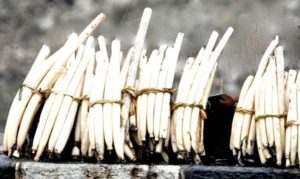
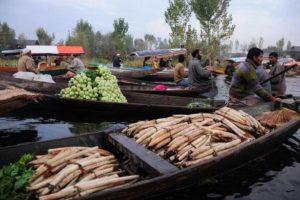
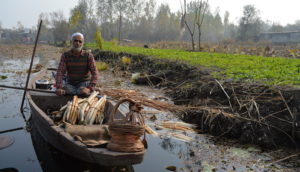
Lotus stem, locally known as “ Nadur” grown in shallow parts of water bodies like ponds and lakes is a vastly enjoyed ingredient in Kashmiri cuisine.


Nadur is used in many Kashmiri dishes famous among which is “Nadur Palak” (lotus stem with Spanish). In most of the Asian countries almost every part of this plant is consumed but in Valley, only the stem and its seed are in demand.

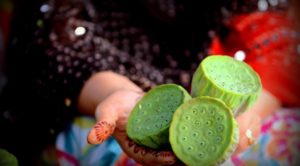
The distinctive dried seed heads resemble the spouts of watering cans and they are famous in Kashmir by the name of “Pambach”.


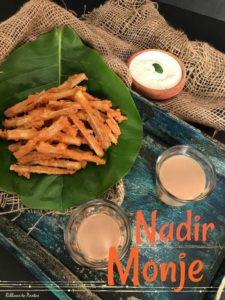
Apart from its uses in Kashmiri dishes, lotus stems are also consumed as snacks. Fried lotus stem locally known as Nadir Monji, are available across the valley and people enjoy it along with Noon chai.


Nutritional Significance of Lotus Stem:

The nutritional value of lotus stem/ Nadru is remarkable. It is rich in dietary fibre, vitamin C,  Vitamin B, Vitamin E, potassium, thiamin, riboflavin, vitamin B6, phosphorus, copper, and manganese, while as very low in saturated fat.

Brief Description about the concentration of minerals and vitamins:

100 grams of lotus stem contains around 74 calories, 17 grams of carbohydrates, 2.5 grams of protein, 5 grams of fiber, 0.1 grams of fat, 0.39 mg of zinc, 0.261 mg of potassium, 23 mg of magnesium, 1.16 mg of Iron, 0.25 mg copper, 556 mg of potassium, 40 mg of Sodium, 44 mg of Vitamin C and Niacin, pyridoxine, selenium and Thiamine.


Health Benefits:

  1. Can give you relief from Constipation: Lotus or Koshur Nadur is rich in fibre content which can help you in passing the stool easily. Many of us do not take the constipation problem seriously but it can have a sombre negative effect on the quality of our life, as well as your physical and mental health. You can eat Lotus Stem once a week to avoid constipation.

2.  Keeps your heart happy and healthy: Lotus Stem is rich in calcium content which works impressively in influencing the heart functions. Calcium plays a vital role in maintaining heartbeat and muscle contraction. So people enjoy the delicious cuisine of lotus stem and keep your heart happy and healthy

3. Contributes to Bone Strength: As already mentioned above lotus stem or your Nadru is the best source of calcium which influences the bone strength and bone density in our body.

4. Keeps you healthy in a polluted world:


Lotus stem can increase your intake of antioxidants. While some antioxidants are produced within the body, most of them can be obtained from a delicious lotus stem dish.

Edible lotus stem is proved to contain tryptophan, which is an amino acid that stimuli antioxidant activity in our body. The main role of antioxidants is to safeguard the cells of our body from free radicals compounds found in the environmental toxins that can actually damage cells. Enjoy your meal with kosher nature and keep your body away from environmental toxins.

  1. Regulates Blood Pressure and Blood sugar:

Lotus stem is rich in potassium which helps in regulating the blood pressure of the body effectively. Besides this, it is very much useful for patients who are diabetic, as it aids in maintaining the blood sugar level of the body.

6. Beautify yourself With Kashmiri Nadru:

As we all know Kashmir is the most beautiful place on this planet earth and so are its products. Kashmiri Nadur is highly rich in vitamin c, which is an excellent antioxidant and helps to remove dead and damaged skin cells. Besides, it also helps in collagen production, which is very important for healthy skin, hair as well as bones. You can find a good quantity of iron in lotus stem which is another source for beautiful hair.

  1. Can help you in reducing your weight:

With lotus stem, you can make weight loss procedure delicious. This food is Jim-pack with low calories, nutrient-rich, loaded with fiber. It is a perfect food which you should include in your weight loss diet plan.

8.Psychological   benefits of Lotus Stem:

Our body needs the rich amount of Vitamin B, especially niacin, folate, thiamine, vitamin B6, and Pantothenic acid, as their deficiency can lead to memory loss, irritability, anxiety, stress and headaches. You can enhance mental strength by consuming vitamin B rich vegetables and lotus stem is one of them. Make your mind strong and sharp with Nadur (lotus stem)

  1. Maintains immune system:

Vitamin C present in the lotus stem is known to help in enhancing the immune system of the body and also fights against the viral infections. So with lotus stem making your immune system strong and fight with viral infections.

10 .Controls the Cholesterol :


It is known that any food that is loaded with fiber helps in lowering the cholesterol of the body and so is our Kashmiri traditional food Nadru. Fiber actually binds with the fat present in the food and thus, greatly reduces the overall absorption of fat in the body which can keep you healthy for long.


Hope this blog was informative to you; we would love to hear from you. If you know any health benefit of Nadru, kindly share.


Health Benefits of Nadur

Lotus stem, locally known as “ Nadur” grown in shallow parts of water bodies like ponds and lakes is a vastly enjoyed ingredient in Kashmiri cuisine.


Nadur is used in many Kashmiri dishes famous among which is “Nadur Palak” (lotus stem with Spanish). In most of the Asian countries almost every part of this plant is consumed but in Valley, only the stem and its seed are in demand.

The distinctive dried seed heads resemble the spouts of watering cans and they are famous in Kashmir by the name of “Pambach”.


Apart from its uses in Kashmiri dishes, lotus stems are also consumed as snacks. Fried lotus stem locally known as Nadir Monji, are available across the valley and people enjoy it along with Noon chai.


Nutritional Significance of Lotus Stem:

The nutritional value of lotus stem/ Nadru is remarkable. It is rich in dietary fibre, vitamin C,  Vitamin B, Vitamin E, potassium, thiamin, riboflavin, vitamin B6, phosphorus, copper, and manganese, while as very low in saturated fat.

Brief Description about the concentration of minerals and vitamins:

100 grams of lotus stem contains around 74 calories, 17 grams of carbohydrates, 2.5 grams of protein, 5 grams of fiber, 0.1 grams of fat, 0.39 mg of zinc, 0.261 mg of potassium, 23 mg of magnesium, 1.16 mg of Iron, 0.25 mg copper, 556 mg of potassium, 40 mg of Sodium, 44 mg of Vitamin C and Niacin, pyridoxine, selenium and Thiamine.


Health Benefits:

  1. Can give you relief from Constipation: Lotus or Koshur Nadur is rich in fibre content which can help you in passing the stool easily. Many of us do not take the constipation problem seriously but it can have a sombre negative effect on the quality of our life, as well as your physical and mental health. You can eat Lotus Stem once a week to avoid constipation.

2.  Keeps your heart happy and healthy: Lotus Stem is rich in calcium content which works impressively in influencing the heart functions. Calcium plays a vital role in maintaining heartbeat and muscle contraction. So people enjoy the delicious cuisine of lotus stem and keep your heart happy and healthy

3. Contributes to Bone Strength: As already mentioned above lotus stem or your Nadru is the best source of calcium which influences the bone strength and bone density in our body.

4. Keeps you healthy in a polluted world:


Lotus stem can increase your intake of antioxidants. While some antioxidants are produced within the body, most of them can be obtained from a delicious lotus stem dish.

Edible lotus stem is proved to contain tryptophan, which is an amino acid that stimuli antioxidant activity in our body. The main role of antioxidants is to safeguard the cells of our body from free radicals compounds found in the environmental toxins that can actually damage cells. Enjoy your meal with kosher nature and keep your body away from environmental toxins.

  1. Regulates Blood Pressure and Blood sugar:

Lotus stem is rich in potassium which helps in regulating the blood pressure of the body effectively. Besides this, it is very much useful for patients who are diabetic, as it aids in maintaining the blood sugar level of the body.

6. Beautify yourself With Kashmiri Nadru:

As we all know Kashmir is the most beautiful place on this planet earth and so are its products. Kashmiri Nadur is highly rich in vitamin c, which is an excellent antioxidant and helps to remove dead and damaged skin cells. Besides, it also helps in collagen production, which is very important for healthy skin, hair as well as bones. You can find a good quantity of iron in lotus stem which is another source for beautiful hair.

  1. Can help you in reducing your weight:

With lotus stem, you can make weight loss procedure delicious. This food is Jim-pack with low calories, nutrient-rich, loaded with fiber. It is a perfect food which you should include in your weight loss diet plan.

8.Psychological   benefits of Lotus Stem:

Our body needs the rich amount of Vitamin B, especially niacin, folate, thiamine, vitamin B6, and Pantothenic acid, as their deficiency can lead to memory loss, irritability, anxiety, stress and headaches. You can enhance mental strength by consuming vitamin B rich vegetables and lotus stem is one of them. Make your mind strong and sharp with Nadur (lotus stem)

  1. Maintains immune system:

Vitamin C present in the lotus stem is known to help in enhancing the immune system of the body and also fights against the viral infections. So with lotus stem making your immune system strong and fight with viral infections.

10 .Controls the Cholesterol :


It is known that any food that is loaded with fiber helps in lowering the cholesterol of the body and so is our Kashmiri traditional food Nadru. Fiber actually binds with the fat present in the food and thus, greatly reduces the overall absorption of fat in the body which can keep you healthy for long.


Hope this blog was informative to you; we would love to hear from you. If you know any health benefit of Nadru, kindly share.


Wednesday, September 2, 2020

*ॐ श्री परमात्मने नमः*


*ॐ श्री परमात्मने नमः*

_प्रश्न‒स्वामीजी, आप भक्तिको, सगुणको मुख्य मानते हैं, पर आपके प्रवचनोंमें ज्ञानकी, निर्गुणकी बात अधिक आती है, इसका क्या कारण है ?_

*स्वामीजी‒पहलेका स्वभाव पड़ा हुआ है ! वेदान्तकी बातें मेरेको शुरूसे ही जँचती नहीं थीं । जब सेठजी (श्रीजयदयालजी गोयन्दका)-के पास आया तो उनसे सबसे पहले यह प्रश्न किया कि अन्तमें ज्ञान है या भक्ति ? उन्होंने ज्ञान बताया । मैंने उनकी बात मान ली, जबकि भीतर भक्ति भरी हुई थी ! पहले भक्तिके संस्कार होनेसे मेरे शरीरमें अनेक लक्षण प्रकट होते थे । कभी अश्रुपात होता था, कभी तेज हँसी आती थी, जो रुकती ही नहीं थी ! पर ज्ञानकी मुख्यता माननेसे वे लक्षण लुप्त हो गये । यद्यपि सेठजीको भगवान्‌ने अपनी मरजीसे दर्शन दिये थे, फिर भी उनका स्वभाव ज्ञानका ही रहा ।*

*सेठजीने योगवासिष्ठका अध्ययन किया था और उनमें निर्गुणके संस्कार थे । पीछे उनको भगवद्दर्शन होनेसे उनके निर्गुणके संस्कार ढीले हुए । फिर भी उनके भीतर निर्गुणकी ही मुख्यता रही; क्योंकि उसीको लेकर साधन चला था । परन्तु वे यह भी मानते थे कि ज्ञानसे पूरी प्रक्रिया ठीक नहीं बैठती ! उन्होंने एक बार कहा भी कि सगुणको माने बिना काम चलता नहीं ! एक ऐसी शक्ति (प्रकृति) माननी ही पड़ेगी, जिससे सृष्टिका संचालन होता है, उत्पत्ति-स्थिति-प्रलय होता है । यदि शक्तिको स्वीकार करेंगे तो सगुणकी मुख्यता हो जाती है