Wednesday, May 11, 2016

जानिए, अपनी माता का वध क्यों किया था परशुराम ने और कहाँ मिली थी उन्हें मातृहत्या के पाप से मुक्ति -

1554
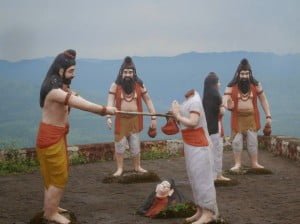
Why Parshuram cut his mother Renuka head : Hindi Story – परशुराम भगवान विष्णु के आवेशावतार थे। उनके पिता का नाम जमदग्नि तथा माता का नाम रेणुका था। परशुराम के चार बड़े भाई थे लेकिन गुणों में यह सबसे बढ़े-चढ़े थे। एक दिन  गन्धर्वराज चित्ररथ को अप्सराओं के साथ विहार करता देख हवन हेतु गंगा तट पर जल लेने गई रेणुका आसक्त हो गयी और कुछ देर तक वहीं रुक गयीं। हवन काल व्यतीत हो जाने से क्रुद्ध मुनि जमदग्नि ने अपनी पत्नी के आर्य मर्यादा विरोधी आचरण एवं मानसिक व्यभिचार करने के दण्डस्वरूप सभी पुत्रों को माता रेणुका का वध करने की आज्ञा दी। लेकिन मोहवश किसी ने ऐसा नहीं किया। तब मुनि ने उन्हें श्राप दे दिया और उनकी विचार शक्ति नष्ट हो गई।
Parashurama Cut The Head of Renuka Mata
अन्य भाइयों द्वारा ऐसा दुस्साहस न कर पाने पर पिता के तपोबल से प्रभावित परशुराम ने उनकी आज्ञानुसार माता का शिरोच्छेद कर दिया। यह देखकर महर्षि जमदग्नि बहुत प्रसन्न हुए और परशुराम को वर मांगने के लिए कहा। तो उन्होंने तीन वरदान माँगे
- See more at: http://www.ajabgjab.com/2014/07/bahgwan-parshuram-and-mata-renuka.html#sthash.UXdfUvcE.dpuf
1554
Why Parshuram cut his mother Renuka head : Hindi Story – परशुराम भगवान विष्णु के आवेशावतार थे। उनके पिता का नाम जमदग्नि तथा माता का नाम रेणुका था। परशुराम के चार बड़े भाई थे लेकिन गुणों में यह सबसे बढ़े-चढ़े थे। एक दिन  गन्धर्वराज चित्ररथ को अप्सराओं के साथ विहार करता देख हवन हेतु गंगा तट पर जल लेने गई रेणुका आसक्त हो गयी और कुछ देर तक वहीं रुक गयीं। हवन काल व्यतीत हो जाने से क्रुद्ध मुनि जमदग्नि ने अपनी पत्नी के आर्य मर्यादा विरोधी आचरण एवं मानसिक व्यभिचार करने के दण्डस्वरूप सभी पुत्रों को माता रेणुका का वध करने की आज्ञा दी। लेकिन मोहवश किसी ने ऐसा नहीं किया। तब मुनि ने उन्हें श्राप दे दिया और उनकी विचार शक्ति नष्ट हो गई।
Parashurama Cut The Head of Renuka Mata
अन्य भाइयों द्वारा ऐसा दुस्साहस न कर पाने पर पिता के तपोबल से प्रभावित परशुराम ने उनकी आज्ञानुसार माता का शिरोच्छेद कर दिया। यह देखकर महर्षि जमदग्नि बहुत प्रसन्न हुए और परशुराम को वर मांगने के लिए कहा। तो उन्होंने तीन वरदान माँगे
- See more at: http://www.ajabgjab.com/2014/07/bahgwan-parshuram-and-mata-renuka.html#sthash.UXdfUvcE.dpuf
1554
Why Parshuram cut his mother Renuka head : Hindi Story – परशुराम भगवान विष्णु के आवेशावतार थे। उनके पिता का नाम जमदग्नि तथा माता का नाम रेणुका था। परशुराम के चार बड़े भाई थे लेकिन गुणों में यह सबसे बढ़े-चढ़े थे। एक दिन  गन्धर्वराज चित्ररथ को अप्सराओं के साथ विहार करता देख हवन हेतु गंगा तट पर जल लेने गई रेणुका आसक्त हो गयी और कुछ देर तक वहीं रुक गयीं। हवन काल व्यतीत हो जाने से क्रुद्ध मुनि जमदग्नि ने अपनी पत्नी के आर्य मर्यादा विरोधी आचरण एवं मानसिक व्यभिचार करने के दण्डस्वरूप सभी पुत्रों को माता रेणुका का वध करने की आज्ञा दी। लेकिन मोहवश किसी ने ऐसा नहीं किया। तब मुनि ने उन्हें श्राप दे दिया और उनकी विचार शक्ति नष्ट हो गई।
Parashurama Cut The Head of Renuka Mata
अन्य भाइयों द्वारा ऐसा दुस्साहस न कर पाने पर पिता के तपोबल से प्रभावित परशुराम ने उनकी आज्ञानुसार माता का शिरोच्छेद कर दिया। यह देखकर महर्षि जमदग्नि बहुत प्रसन्न हुए और परशुराम को वर मांगने के लिए कहा। तो उन्होंने तीन वरदान माँगे
- See more at: http://www.ajabgjab.com/2014/07/bahgwan-parshuram-and-mata-renuka.html#sthash.UXdfUvcE.dpuf

Top 10 Wonders of The World

Top 10 Wonders of The World

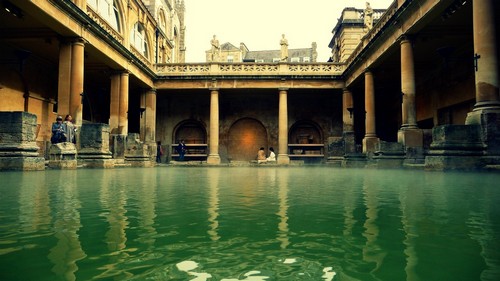
10. Roman Baths

roman baths
The famous Roman Baths complex is a site of historical interest in Somerset. The house is a well-preserved Roman site for public bathing. It’s a reconstruction of the previously destroyed baths. It was destroyed in the 6th century, reconstruction of the baths occurred over time with the last additions being done in the late 1800s.
The Baths are a major tourist attraction and, receive more than one million visitors a year. It was featured on the 2005 TV program Seven Natural Wonders as one of the wonders of the West Country. Visitors can see the Baths and Museum but cannot enter the water.

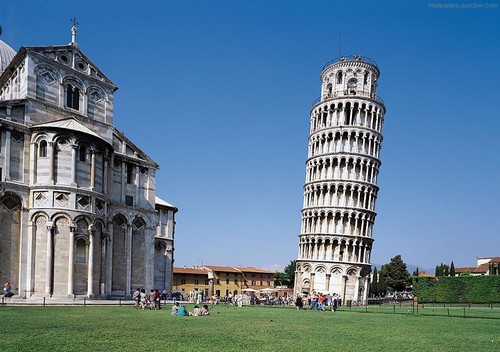
9. Leaning Tower of Pisa


This tower is constructed first in Pisa a city of Italy in August 14, 1173.It is know due to its inclinations towards right side. Till now it is stable and nothing happened to it instead of its tilt.

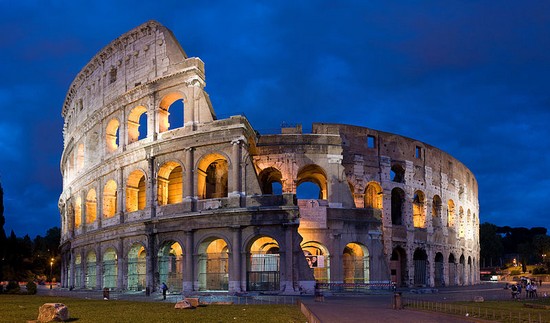
8. Colosseum


The Colosseum, or the Coliseum, originally the Flavian Amphitheatre is an elliptical amphitheatre in the centre of the city of Rome, Italy. This is one of the greatest architecture ever built in the history of Rome. The Colosseum was originally known as the Flavian Amphitheatre and is the largest amphitheater to have ever been built in the Roman Empire. It is a circular structure that occupies a site east of the Roman Forum. This Amphitheater was built to organize gladiator contests, dramas and games like hunting animals, constructing mock sea battle and the public could also view it in the open, and cheer their favorites. See also; 10 Eye-Popping Gorgeous Roman Theatres.

7. Chichen Itza


Chichen was founded by the Maya civilization in 400 AD and it is located in the north central, north of Yucatan Peninsula now called Mexico. Chichen has a history that is 1500 years old and is located 75 miles from Merida. It is said to have been the main regional point for different ceremonies. During the earlier days & time, it was governed by priests. Chichen means “At the mouth of the well of Itza”. The word Chi stands for ‘mouth’, Chen for ‘well’ and Itza for ‘the Itza tribe’. The main belief is that people were thrown from the top as a sacrifice to make their god happy and the ones who could survive were the ones who were believed to be seers.

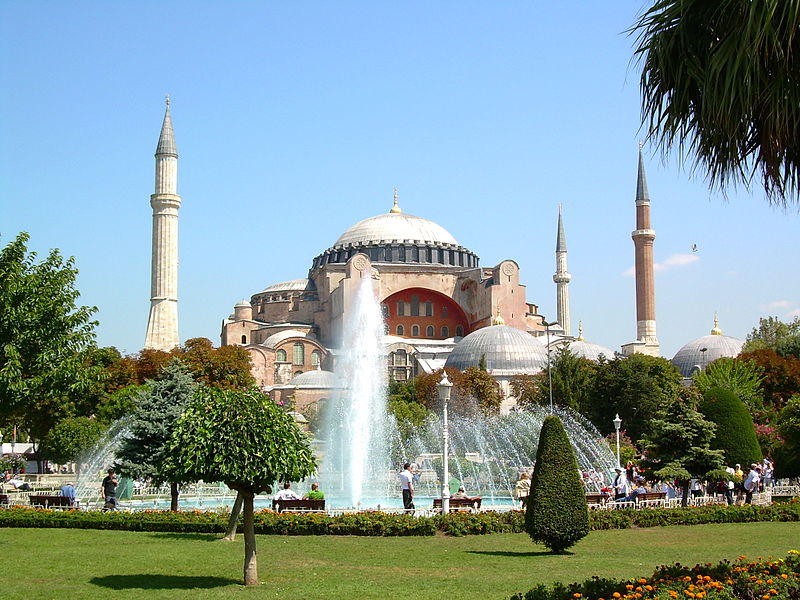
6. Hagia Sophia

Hagia Sophia
The masterpiece of construction, Hagia Sophia is a former Christian patriarchal basilica (church), later an imperial mosque, and now a museum in Istanbul, Turkey. Hagia Sophia is currently the second-most visited museum in Turkey, attracting almost 3.3 million visitors annually.
From its initial conversion until the construction of the nearby Sultan Ahmed Mosque (Blue Mosque of Istanbul) in 1616, it was the principal mosque of Istanbul. The Hagia Sophia served as inspiration for many other Ottoman mosques, such as the Blue Mosque, the Şehzade Mosque, the Süleymaniye Mosque, the Rüstem Pasha Mosque and the Kılıç Ali Paşa Mosque

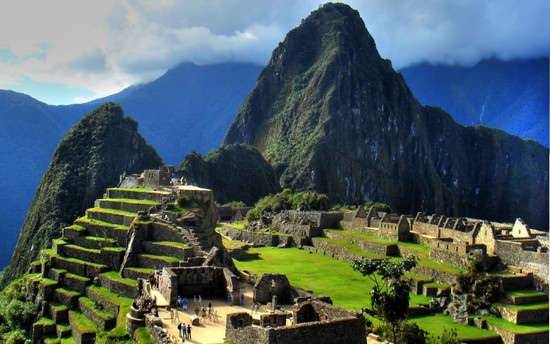
5. Machu Picchu


Machu Picchu is the pre Columbian, Inca empire site that is located almost 8,000 feet above the sea level. The site is located on a mountain ridge above the valley of Urubamba in Peru. The city is also called the “lost city of Incas”. Machu Picchu was built around 1450, at the height of the Inca Empire. It was abandoned just over 100 years later, in 1572, as a belated result of the Spanish Conquest.
Machu Picchu was declared UNESCO World Heritage Site in 1983. In 2007, it was voted one of the New Seven Wonders of the World in a worldwide Internet poll. See also; 10 Most Iconic Places to Photograph in the World.

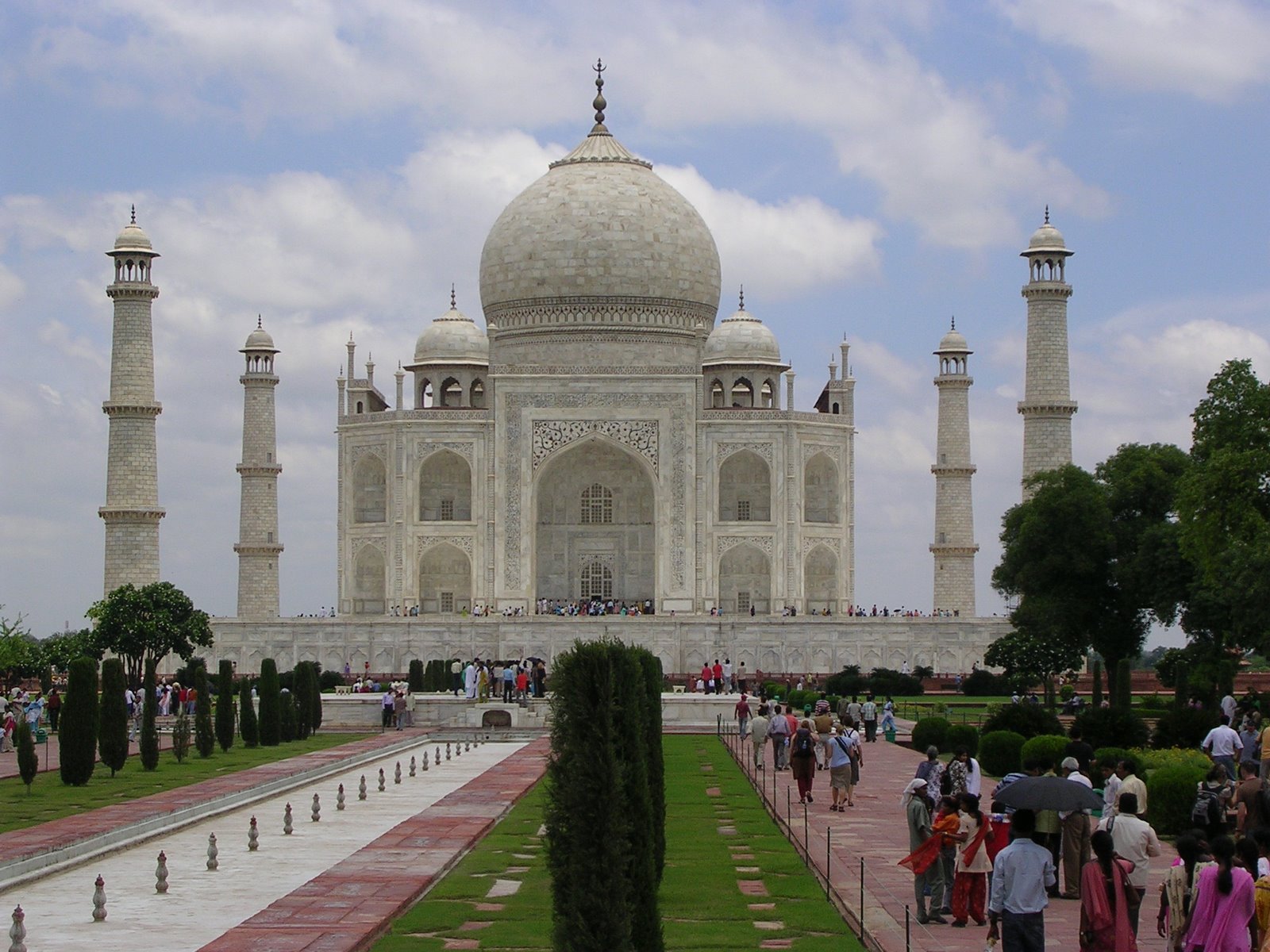
4. Taj Mahal of Agra

Taj Mehal of Agra
It was constructed by famous Mughal ruler Shah Jahan in memory of his beloved wife Mumtaz Mahal. The Taj Mahal is regarded as the best example of Mughal architecture and is widely recognized as “the jewel of Muslim art in India”. It is one of the world’s most celebrated structures and a symbol of India’s rich history. The Taj Mahal attracts more than 3 million visitors a year. In 2007 it was declared one of the top 10 Wonders of the World. See also; 10 Interesting Facts About Taj Mahal.

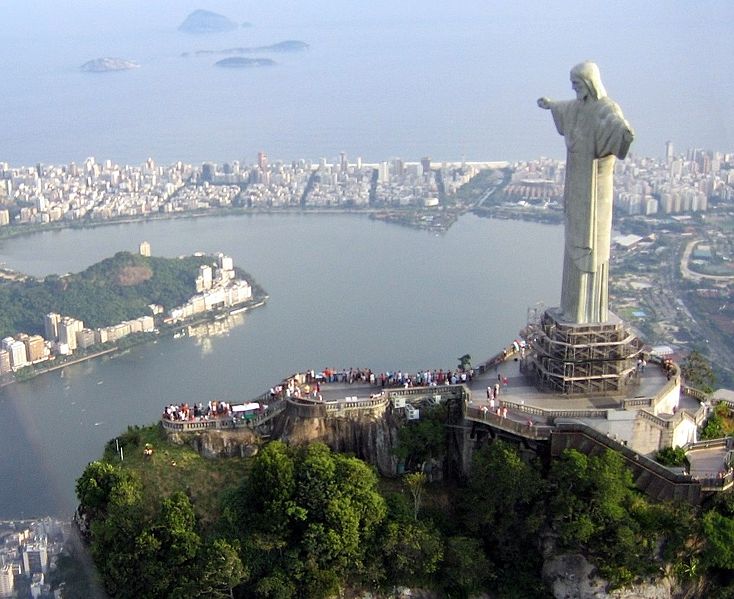
3. Cristo Redentor Statue

Cristo Rendetor Statue
It is largest Art Deco statue in the world and the 5th largest statue of Jesus in the world. A symbol of Christianity across the world, the statue has also become a cultural icon of both Rio de Janeiro and Brazil, and is listed as one of the New Seven Wonders of the World. It is made of reinforced concrete and soapstone, and was constructed between 1922 and 1931.

2. Petra

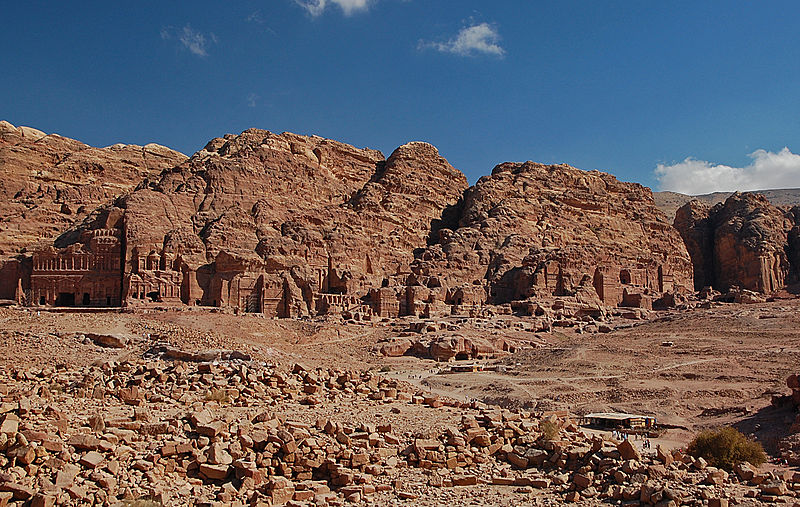
General view of Petra
It is an archeological city of Jorden that is famous for its rock-cut architecture and water conduit system. Another name for Petra is the Rose City due to the color of the stone out of which it is carved. Established during 312 BCE as the capital city of the Arab Nabataeans, it is a symbol of Jordan. It lies on the slope of Jebel al-Madhbah in a basin among the mountains which form the eastern flank of Arabah (Wadi Araba), the large valley running from the Dead Sea to the Gulf of Aqaba.
Petra was named amongst the New 7 Wonders of the World in 2007. It is Jordan’s most-visited tourist attraction and one of the “Places to See Before You Die”.

1. The Great Wall of China

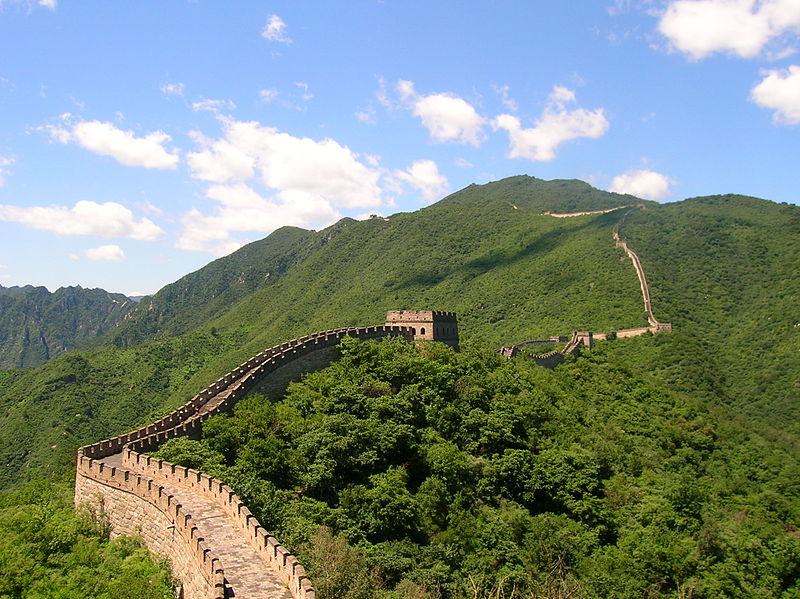
Top 10 Wonders of The World
Considered one of the New Seven Wonders of the world, the Great Wall of China was constructed 7th century BC. It is a series of fortification built to protect the Chinese states and empires against the raids and invasions of the various nomadic groups of the Eurasian Steppe.

“Valley of Love” – Lost Wonders of the World.

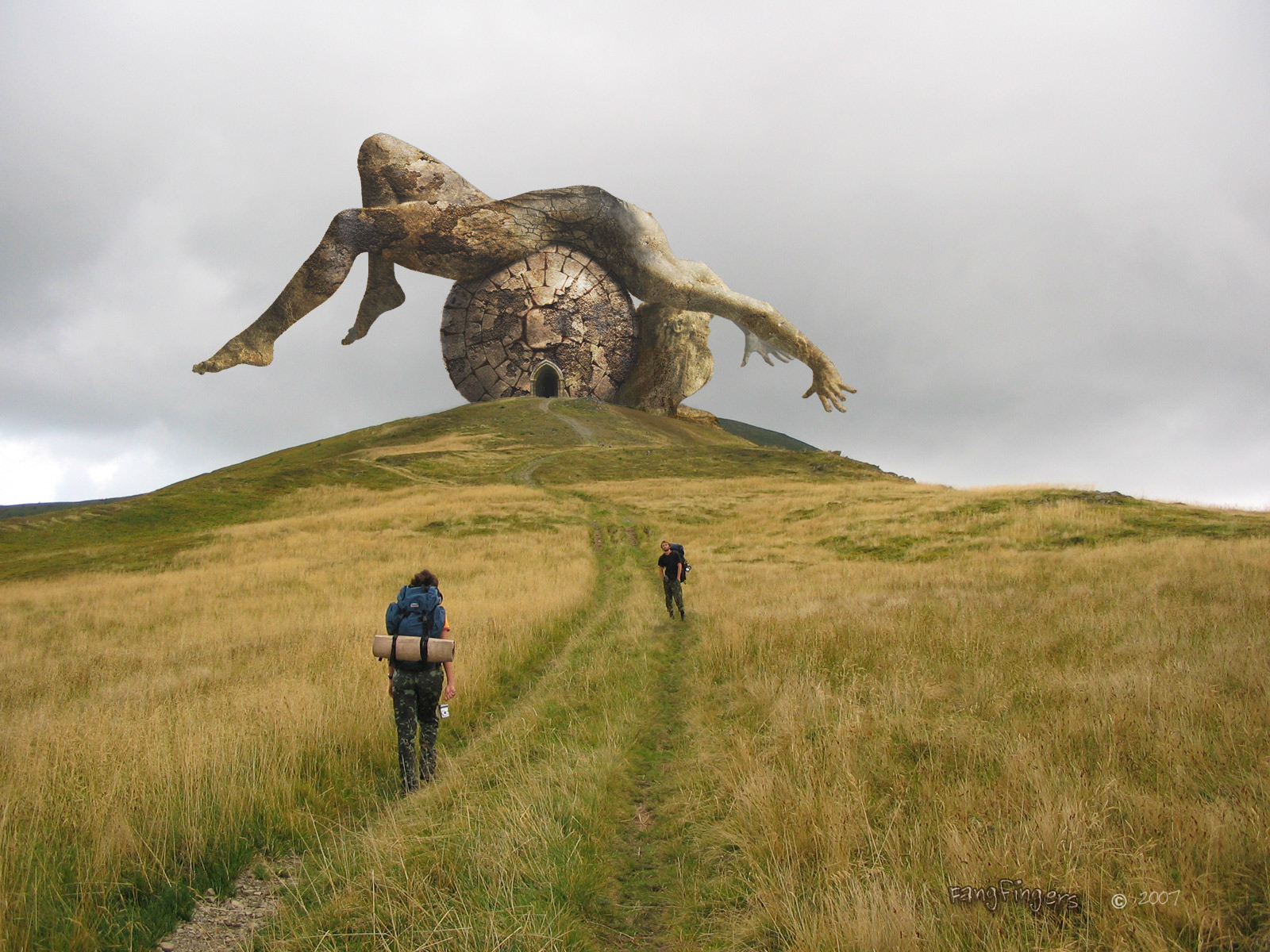
Valley of Love
Lost Wonders of the World, The “Valley of Love” was built by a mystery race that inhabited what is now a remote part of Ireland.
This ancient valley is one of the lost wonders of the earth. Valley of love is a mile wide and high. Many controversies revolves around it. It is believed that the valley remained hidden from the eyes of world for many centuries and was built by a mysterious race that now lives in a remote area of Ireland. This valley is more than 3000 years older than the pyramids of Egypt. The only intact structure in this valley referred as ‘Memorial of joy’ is awe-inspiring.  This fantastic stone structure has an equally flabbergasted interior which is fully functional to this day.


Thursday, May 5, 2016

“Starting Point of Maa Vaishno Devi Yatra”


4 of 5 stars
The temple is said to be the 1st Darshan for Vishnu Devi darshan yatra. The temple is situated between Jammu n Katra, 15 KM from Jammu, at Nagrota.


There is 1 pindi darshan and an ancient Shiv temple also. This temple is said to be built by Pandvas during their exile.

POSTED BY  ; VIPUL KOUL
EDITED  BY  : ASHOK KOUL

SOME MEMOREY


Sunday, April 24, 2016

Kashmir: The Crown of India


Kashmir: The Crown of India

Kashmir occupies a special place in India, because of its geographic location, its scenic splendour, and its great contributions to the arts and culture of India. In the history of our Republic is written another chapter on the unique issue of Kashmir. Its strategic position adds one more dimension to the overall security of this sub-continent.
cover
Geographically and climatically Kashmir is the child of the mighty Himalayas receiving in abundance the paternal grace in the form of captivating scenic beauty, lush green pastures and lofty glistening snow covered mountain peaks which capture the changing hues of the brilliant sun, in a hundred thousand ways, the ever gurgling rivers and rivulets and the great lakes of mythological fame. In her valleys grow the rarest of trees and herbs, including the most precious of all flowers - the Kesar (Saffron). In her forest are found the best pines and deodars. From her orchards come apples, apricots, pears, walnuts and cherries of different kinds. On her green meadows graze the lambs bearing the most exquisite wool fit to drape the Gods. Her Dal lake and her house boats, Gulmarg and her glaciers have made her an international tourist spot. What to talk of her temples, the dream of every devout Hindu - the Holy Amarnath where thousands and thousands trek to every year, regardless of inclement weather and a host of other dangers; the Shiva temple, the Kshir Bhawani, all with their lofty associations with great masterminds and the impeccable Shaivite philosophy. Surely the name of Kashmir should conjure up a thrill in all Indians.
Through the following web pages, we invite the attention of the readers, not only to the beauty and grandeur of this land but also the significant contributions made by it to the fine arts and culture of India.


Kashmiri Pandits and Music


Kashmiri Pandits and Music

by Onkar Aima
[Onkar Aima, himself an active innovator in performing arts, whose contribution to Kashmiri Drama and Music is remarkable, has put on focus Kashmiri Pandits' contribution to the Kashmiri Music and has traced the deep roots of Kashmiri Music to 'Samveda' and to the historical records of Kalhan's Rajtarangini. Aima is from the Film Industry and is presently a governing body member of the Kashmiri Pandits' Association, Bombay - Editor.] It is the need of the time to remind ourselves that Kashmir has a very rich cultural heritage and Kashmiri Pandits have contributed a lot in sustaining it, reviving it and developing it. Kashmir has been a grand arena of arts. There have been poets, dancers, writers, dramatists and musicians, who have attained glory in the literary and art world.
In music world, Kashmiri Pandits, from time to time, have contributed a lot to bring music of Kashmir to a more advanced and organised state. Their achievements have been remarkable and to talk about these achievements of past, gives a sense of pride and pleasure - rejuvenates the spirit.
Kashmiri Music has the distinction and fascinating pattern of its ragas. There is hardly any solo music, it being chiefly sung in chorus. Kashmiri music as we hear it today, is the result of curious mixture of many an influence, under different eras. Yet "Kashmiri WANWUN" (Wanwun hur), which appears to be an adaptation of 'ALAP' - 'Vedic chants of Samveda - has not been altered in the least. Likewise "CHHAKRI" seems to have ancient origin. As per Kalhan's Rajtarangini, it can be traced down to 12th Century A.D.
In ancient Kashmir, like other arts, music thrived under the patronage of kings. In Kalhana' s Rajtarangini - chronicle of kings of Kashmir - the first reference is about King Jalanka. He was a great lover of music. He maintained musicians. Mamma, blind musician, was employed to play music at the time of tantric worship. Next references to music are found in the time of King Lalitaditya. Alberuni mentions that great musical festival was held on second of Chet to celebrate the victory of King Lalitaditya over the Tibetans.
Rajtarangini supplies several clues to the development of music of Kashmir. In fact no student of music and dance can ignore the commentaries on Bharata's "Natya Shastra and original works of Udbhatt, Lollapata and Sankuka. Large number of young musicians have been benefited from the guidance of Bharata.
In 'History of Kashmir' by P.N.K. Bamzai, we read that King Kalasa, created taste for light Kashmiri music. His son Harsa, maintained large establishment of musicians and was himself a singer. He taught music to his courtier "Kanaka" - uncle of Kalhana, the historian. Bhimanayoka was a great musician of this time.
The instruments during this time were mostly flute, drum, lute, conch and cymbals. There is also mention of hudukka - sort of bagpipe. It is also mentioned in History of Kashmir by Bamzai that Bhiksacara, who occupied the throne for few months, indulged in playing music on earthen pots and on brass vessels.
During medieval Kashmir 1339 to 1819 A.D. - Muslim era - Zain-ul-abidin, Sultan Shah and Hassan Shah were great lovers of music. According to Srivara, author of Zaina Rajatarangini, musical festivals used to be held in Kashmir. It is during this time that Raja of Gwalior sent all standard books on Indian music, which influenced Kashmiri music. Srivara was also a reputed musician and rose to be the head of music department in King Hassan Shah's reign and did lot of service to Kashmiri music. King Hassan Shah also introduced Rabab - Persian musical instrument - to Kashmiri music. Even during this Muslim era, there were eminent and talented musicians like Sooni Bhat, Shridhar Bhat, Ajodya Bhat and Kshakara who developed Kashmiri music. It is because of their efforts that Kashmiri music shows stray resemblance to Indian and Persian music.
It was after the downfall of Chak dynasty that the music of Kashmir reeeived a setback. Kashmir after this started loosing art and cultural heritage. But music was kept alive by the genius and interest of individuals. It withstood storm, tyranny and barbarity.
Arnimal, in her own way, kept the music of Kashmir alive. It is said that Zutshi of Safa Kadal used to have regular musical "Mahfils" in his house. He, it is said, sold his large lengthwise-house by Taks (lengthwise) to continue with his musical "Mahfils" to keep the music of Kashmir alive.
Regarding recent past the names of musicians which come to mind and which I can recollect starts with Ved Lal Vakil, a great lover of music, who helped sustaining Kashmiri music. Amongst others, he taught and trained his two daughters and a son. His two daughters, Rageshwari and Jaijayvanti have made their own mark in the field of music. In early forties, a group of musicians, headed by Prem Nath Chatu, included Sarvanand, R.K. Channa, Wanchu and Mohanlal Aima. They toured villages and sang in towns and would have long musical sittings. Prem Nath Chatu later joined Radio Kashmir.
The contribution of Shamboo Nath Sopori and late Mohanlal Aima to music of Kashmir is quite enormous. The former ran a very successful academy. He taught and produced noted musicians. The latter revolutionized the Kashmiri folk music and gave it a fantastic texture and world appeal. His LP - Kashmiri rhythms and melodies - are still available abroad. He gave music to Pamposh - a short film about Kashmir and first Kashmiri film - MAINZIRAAT-which won President's Silver medal. Pandit Jagan Nath Sheopuri also holds a special place in present day musicians. He is doing a lot of service to Kashmiri music. He is doing special work on Sofiana music. 30 Bolas of Sofiana music have been transferred to notation and a book "Sofiana Kalam Kay Sargam" has been written under his guidence. One cannot overlook the contribution of Sat Lal Saytari, Ramkishen Chakkri, and Gopinath Bhat (Bacha), in their own style. In later age, Gopinath would only sing the Sufi poets.
Because of Radio Kashmir, lot of musicians came into the forefront. Nirmala Chutu was one amongst them, who sang for "Mainziraat". Onkar Raina along with well qualified musician Usha Bhagati are doing service to Kashmiri music. Amongst the latest musicians Bhajan Sopori holds a respectable position. He is a noted composer and is giving new dimensions to Kashmiri music. Along with him Kakaji Safaya, who was running an Academy in Srinagar till he was there, and Krishen Langoo are doing a lot to develop the music of Kashmir. All the three have taught a large number of persons. Bhajan Sopori and Krishen Langoo are recent trend setters of Kashmiri music and have successfully composed music for many T.V. Serials.
Today, when Kashmiri Pandits are in a helpless state, living under torn and tattered tents, in rickety camps, in shabby rooms and in vacated stables, mostly in and around Jammu, in Delhi and in other parts of the country, the recent lot of musicians are still active and their spirits have not darnpened. Rajendra Kachru, Arti Tikku, Kailash Mehra, Rita Koul, Neerja Pandit and Prerna Jailkhani are doing notable work and are keeping the music of Kashmir alive. Yet there are many more. It is difficult to keep track of all new musicians yet one cannot forget the names of Basanti Raina, Kiran Koul, Asha Koul, Lovely Chandra, Sunaina Koul, Dhananjay Koul, Neena Kapoor, Mamta Raina, Amarnath, Sushma Kala, Neena Sapru, Veena Koul Jalali, Shuhul Koul and others. Wherever they are, they are sustaining and serving the music of Kashmir in one form or the other. While they are serving music, they, in turn are being served by music. Music gives them strength and will to face the recent calamity, in calm. These dedicated musicians are giving meaning to life. Through music they are keeping the spirits of Biradari and spirits of those who had to run away from their land, high. They are imparting strength to them to put determined rebuff to the life and to the present circumstances in a heroic manner.
According to BHARATA - the author of 'Natya Shastra' - the aim of music is to express feeling and thought. The present lot of musicians express the feelings and thoughts of hometorn people in an innovative fashion, where words might differ, the pattern may not be the same, the composition might vary but the sound-the meaning-the design is the same-Live for Maej KASHEER and burning urge to go back to their homes with dignity and grace. They provide food for our spirit - elevate us - transport us to the world of tomorrow as the great poet Nadim has said:
"Me Chham aash pagahuch
Pagaah sholi duniyaah"
(I hope for tomorrow
When the world will be beautiful).
That is Music - food for spirit - transport to a beautiful world.

Friday, April 22, 2016

Remembering the warmth of the ‘daan kuth’, the camaraderie of the ‘zoon daeb’, the coolness of the ‘kaeni’ and the joy of a door without a doorbell

Remembering the warmth of the ‘daan kuth’, the camaraderie of the ‘zoon daeb’, the coolness of the ‘kaeni’ and the joy of a door without a doorbell
 BY..............

C.N. Dhar


A Kashmiri Pandit house. Photo: Waseem Andrabi/Hindustan Times
                                            A Kashmiri Pandit house
Home was in the change of seasons; in the rooms that don’t exist in my flat in Delhi; in the people I have grown distant from; in some of the rituals I no longer follow; in the nalmots (hugs, the tighter the better) I have swapped for hellos. Home was in the study desk by the first-floor window, from where I could see the Shankaracharya temple in the distance.

Downstairs, Kakeni (my grandmother) would be sitting, also by the window. If she needed to call me or my sister, she just needed to put her head out and holler our names. But she had her own system—a big, thick stick with which she would tap the wooden ceiling (one tap for this, two taps for that). Downstairs, adjoining the baithak where she sat and where the family spent most of its time, was the kitchen and the daan kuth (a small partitioned area in the kitchen with wood-fired chulhas). Sharing the wall with the daan kuth was the bathroom. It had a huge copper vessel inside a concrete casing, with a tap attached to it. Come winter, the daan would be fired up every morning to cook—usually hokh syun, vegetables dried in summer—and to replenish the kangris (a pot filled with hot embers, which you hugged like a hot-water bottle underneath your pheran. Yes, that garment that can accommodate a mini-world in its circumference). The wood stoves would warm up the room, the kitchen and the copper vessel, ensuring running hot water.
Shankaracharya Temple. Photo: Waseem Andrabi/HT
Shankaracharya Temple
On the top floor was the kaeni, a huge hall-like room, with huge windows. Above it, the braer kaeni, where we stored wood for winter. To access it, you had to place a ladder against a hatch in the ceiling. If the daan kuth kept you warm in winter, summer would see some families moving to the kaeni to beat the heat. Not that it ever got very hot; we didn’t need ceiling fans (now, I am told, you need ACs). There were systems to avoid the tiring haul up and down the stairs—a rope, with a basket attached, was suspended from the window. It was like having a summer and winter home in the same house.
And then there was the zoon (moon) daeb, a sort of covered balcony, where the women would sit and watch life unfolding on the street below. It was Twitter and Instagram rolled into one; gossip travelled faster than news ever could.

The day would start with brand fash, cleaning the area in front of the main door with water at dawn, and end with syandhya choeng, the lighting of an oil lamp at dusk. The front door had no doorbell. It would be opened in the morning and closed late in the night. All through the day, the house would embrace friends, relatives, friends of friends, relatives of relatives, even strangers. And if there was a wedding in the neighbourhood and it started raining, all the rituals, guests and hangers-on would move to your kaeni and rooms. Like the other houses in the mohalla, our house had no number, but letters never got lost and guests always found their way. You just had to take the name of the head of the family and people would escort you to your destination. Everybody had time.

When you went to a wedding, you did not go empty-handed, nor did you return empty-handed—you carried a tippan (tiffin) carrier, the bigger the better, to bring back roganjosh and maetsch. If you were a child, you stood behind the groom so that when the neighbourhood ladies showered him with nabad, shireen and toffees, you could scramble to collect as many as possible. If you were a baraati, you got to savour kabargah (deep-fried lamb ribs) and modur (sweet) pulao, which were rarely served to the rest of the guests.
Kabargah, or deep-fried lamb ribs. Photo: Hindustan Times
Kabargah, or deep-fried lamb ribs

The rest of the world was beyond the mountains. Travelling away from home meant crossing the Banihal tunnel to Jammu in winter, when schools would close for two-three months. We would come back via that same Banihal tunnel when the snow started melting. Soon spring would arrive, and tourists would start filling the shikaras, the hotels, the gardens and the Boulevard Road. They would be gone come autumn, and the same gardens and roads would be covered with chinar leaves, and then snow in winter.
 
It has been over two decades since my family crossed over to the other side of the mountains. The home that had been our world was looted. The house has new owners. My mother went back once; for a while, my father would go back on work, despite threats to his life. The front door of the house has been boarded for security reasons now—the same door at which my dad would stand waiting for us, the one that friends and relatives would stream through the whole day. The door at the back, which used to open on to a patch of land where we played sazloeng (hop, skip and jump) with our neighbours Daisy, Guggu and Pinki, used to have a small marble slab on the right that read “Prem Nivas”. I wonder if it’s still there.
Recently, a cousin went back to show his children their “hometown”. He said a house had come up behind ours. If I were to open the window today, I would see new faces, not the Shankaracharya beckoning in the distance. I would not be able to see our neighbour Rajlal’s daughter standing at the window of her house, calling out that there was a phone call from Delhi. We didn’t have a landline. So people would call up Rajlal’s house, telling them they would call back in 20 minutes. In the meantime, they would call us. Rajlal would always kiss me on the forehead and ask, “Which class are you in now?” Rajlal and her daughters loved the fritters mom made on Janmashtami, just as we used to wait eagerly for chai at their house on Eid. Besides hugs and kisses, we used to exchange dupattas, goodwill and a lot more. A decade ago, when my mom called her from Delhi, Rajlal had the same question, “Which class is Nipa in?” Sometimes, time stands still in your memory.

I have not gone back since 1990, though in my imagination I have travelled home several times, sat at my study desk, looked through the photo albums (which might have been thrown away as trash), rushed out of the front door to watch the Janmashtami procession, rustled through the fallen chinar leaves in the school grounds with friends, making our own music, thrown snowballs down my sister’s back and snuggled up next to Kakeni to hear the story of Sudama and Krishna that she used to narrate most evenings.

I remember the pain of trying to cope with the aloofness of a new city, which I call home now. There is no braer kakeni or zoon daeb here. I have not noticed the colours of spring or autumn here, only the harshness of summer and the briefness of winter. I cannot leave my front door open here. And though it has a doorbell, it does not ring that often.

I hope I can go home some day, and that we will be able to leave our front doors open, once again.