Thursday, March 11, 2021

Ketheeswaram temple


Ketheeswaram temple (Tamil: திருக்கேதீஸ்வரம் Tirukkētīsvaram) is an ancient Hindu temple in Mannar, Northern Province Sri Lanka.[2] Overlooking the ancient Tamil port towns of Manthai and Kudiramalai, the temple has lain in ruins, been restored, renovated and enlarged by various royals and devotees throughout its history. Tirukkētīsvaram is one of the Pancha Ishwarams dedicated to the Hindu deity Shiva and is venerated by Shaivas throughout the continent.[2] Throughout its history, the temple has been administered and frequented by Sri Lankan Hindu Tamils. Its famous tank, the Palavi tank, is of ancient antiquity and was restored from the ruins. Tirukkētīsvaram is one of the 275 Paadal Petra Sthalams of Shiva glorified in the poems of the Tevaram.

Literary and inscriptional evidence of the post classical period (300BC-1500AD) attests to the upkeep of the temple during the ancient period by kings of the Pallava, Pandyan Dynasty and Chola dynasties who contributed to its development up to the late 16th century. In 1575, Tirukkētīsvaram was largely destroyed by Portuguese colonials, with Pujas terminating at the shrine in 1589. Following an appeal by Arumuka Navalar in 1872, the temple was rebuilt at its original site in 190 

Early maps of Mannar
1562 Ruscelli map after Ptolemy
Ptolemy's map of Taprobana of 140 CE in a 1562 Ruscelli publication. From the Shiva footprint of Ulipada of Malea mountains (Sivan Oli Pada Malai) rises three rivers, including the Kavary-Kankai (Phalis) which flows into the place of Shiva called Thiruketheecharam at Manthottam in Mannar (positioned north here) where the temple is illustrated.
1555 Gerardus Mercator map
Hondius after Gerardus Mercator map of 1555, showing Mannar and its temples as situated on the western coast of the Tamil country.

The exact date of the Ketheeswaram temple's birth is not universally agreed upon. According to Dr. Paul E. Peiris, an erudite scholar and historian, Thirukketisvaram was one of the five recognized Eeswarams of Siva in Lanka very long before the arrival of Vijaya in 600 B.C.[1] The shrine is known to have existed for at least 2400 years,[1] with inspirational and literary evidence of the postclassical era ( 600BC – 1500AD) attesting to the shrine's classical antiquity. The buried ancient Tamil trading port of Manthottam (Mantotai/Manthai) in the Mannar District — where Ketheeswaram is located — has provided historians extant remains of the culture of the area during the ancient period. This includes the vestiges of its ancient temple tank (the Palavi tank), and the ruins of a former Hindu city built of brick, described by J.W. Bennet in 1843.[3][4] During the ancient period, Mathoddam was a centre of international trade, with Greeks, Romans, Phoenicians, Arabs, Ethiopians, Persians, Chinese, Japanese, Burmese and others vying with each other to monopolise the trade of North Ceylon with Tamil traders.[5] Mathoddam is currently viewed as the only port on the island that could be called a "buried city," with much of the ancient ruins under sand today. The existence of the Thiru-Ketheeswaram temple attests to the antiquity of the port. Mathoddam finds mention as "one of the greatest ports" on the seaboard between the island and Tamilakkam in the Tamil Sangam literature of the classical period (600 BCE – 300 CE).[6] Hugh Nevill wrote in 1887 of the illustrious city of Mathoddam "A renowned shrine grew into repute there dedicated to one Supreme God symbolized by a single stone, and in later times restored by a Saivaite after lying long in ruins. The temple was dedicated as 'Tiru-Kethes-Waram.'"[7]

One of the five ancient Iswarams of Lord Shiva on the island, Ketheeswaram joins Koneswaram (Trincomalee), Naguleswaram (Keerimalai), Tenavaram (Tevan Thurai) and Munneswaram (Puttalam) as a renowned and highly frequented pilgrimage site from before 600 BCE. In the 6th–9th century CE, the temple was glorified in the Tevaram canon, becoming one of 275 Paadal Petra Sthalams, the holiest Shiva temples on the continent.[8] The only other Paadal Petra Sthalam from Eela Nādu (the country of the temple as named in the Tamil literature) is Koneswaram.[9][10]

Chronology

Thirukeetheeswaram, The great sivan kovil of northern province of Sri Lanka
Built by Karaiyar

Thiruketheeswaram's initial installment is credited to the indigenous people of the Manthai port, the Karaiyar Naga tribe.[11][12] The Karaiyar claimed to be related to several classical period public figures hailing from the international port town, including the creator of the oldest extant Tamil literature by an Eelam Tamilian, the Sangam poet Eelattu Poothanthevanar.

6th–7th century hymn

Ketisvaram temple and the waters of the Palavi tank by its side are heralded in the Saiva work Tevaram in the 6th century CE by Sambandar.[13] Along with Koneswaram temple on Swami Rock, Trincomalee, Ketisvaram temple and its deity are praised in the same literature canon by the 8th century CE Nayanmar, Sundarar, in the Sangam period. Tirukketisvaram henceforth is glorified as one of 275 Shiva Sthalams of the continent, part of the Paadal Petra Sthalam group. The only other sthalam from Eelam is Koneswaram.[14] There is epigraphic evidence of maintenance of the temple by the Pallava and Pandyan dynasties.

10th century

Several Chola inscriptions from its medieval floruit refer to Ketisvaram and two Sinhala inscriptions of the 10th century refer to the prohibition on slaughtering cows at the town.

12th century

Dathavamsa, (12th century) speaks of a Hindu temple at Mantotai in the reign of King Meghavannan (301–328).

16th century destruction by the Portuguese

After 1505 A.C.E along with countless Buddhist and Hindu temples around the island, it was destroyed by Portuguese Catholic colonialists. The historian Do Couto recounts that the attackers encountered no resistance from pilgrims or priests while the temple was destroyed.[15] In 1589 C.E. the temple stones were used by them to build the Mannar Fort, a Catholic church and the Hammershield Fort at Kayts.

19th/20th-century reconstruction

The original site of the Temple was traced in 1894. The Shiva lingam of the old shrine together with several other finds were also unearthed in 1894. After a gap of almost 400 years in 1910s local Tamils, under the urging of Hindu reformer Arumuka Navalar, came together and built the present temple. With the restoration of the ancient and holy Palavi Teertham or pond in 1949, a major effort was made to improve the temple environs. It was in October 1948 that an intensive agitation resulted in the formation of the Thiruketheeswaram Temple Restoration Society, which renovated the temple and performed Kumbhabishekam in August 1952. The Thiruketheeswaram Temple Restoration Society did further renovation of the temple and another Kumbhabhishekam was held on 4 July 1976.

As part of the civil war that has plagued the country since the Black July pogrom of 1983 currently the temple is occupied by the Sri Lankan Army. While granite work preparations were in progress the army took over the Temple and its environs in August 1990 and continued to occupy the site for several years. Although they have left the Temple premises their occupation of its environs is a cause of concern to the Restoration Society which has been urging the Government to remove the Armed Forces completely from the environs of the Temple and declare the site a sacred area.

Legends

Mythical stories related to the Indian epic Ramayana recount that Mandothari, the wife of King Ravana was from Manthai and that Mayan, the father of Mandothari and the King of Manthai built the ancient Temple of Thiruketheeswaram to worship Shiva. According to one Hindu legend, Maharishi Bhrigu worshipped Shiva at this shrine. Another tradition holds that the Hindu planetary god Ketu worshipped Shiva at the shrine, thus creating the shrine's name "Ketheeswaram". Another legend is found in the Skanda Purana, an ancient work in Sanskrit, the antiquity of which is unknown. It consists of 2500 verses grouped into 27 Chapters and had been handed down in accordance with the traditional custom as oral discourses by the Guru to his disciples in this case by Sootha Munivar to the Naimisaraniya Munivars. Three Chapters of the Skanda Purana which have been given the title Dhakshana Kailasa Manmiam deal with historical events in ancient Ceylon. The first chapter narrates about the Puranas in general and the splendour that was of ancient Ceylon; the second chapter relates about the celebrated places of religious importance in Ceylon and the story of "Thiruketheeswaram". In this chapter is narrated the incident of how, at one time long ago, the God of Wind (Vayu) uprooted the three towers of the great mountain Maha Meru in order to keep off Athichedan — who fought against him, obstructing the great mountain with thousands of adorned summits resembling serpents’ heads — and deposited one of these towers at Thiruketheeswaram. The Lord established Himself there, at Thiruketheeswaram. According to the Manmiam, Thiruketheeswaram along with Koneswaram are two of the nine most sacred sthalams of the Hindus. The other seven are in India.

Tuesday, March 9, 2021

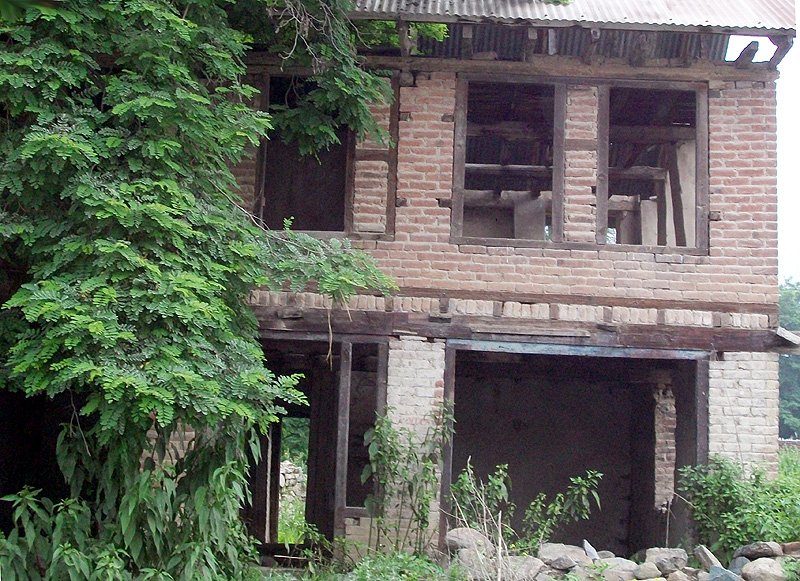
Bargshakha bhagwati........Kashmir

Sunday, March 3, 2019

Bargshakha bhagwati .Kashmir

Bargshakha bhagwati........Kashmir  IMAGES ARE OF COPY RIGHTS . PLEASE DO NOT COPY THEM .........GOVERNMENT OF INDIA


ha bhagwati

No comments:

Post a Comment


Winter 1996-97 IssueShiv Ratri

Winter 1996-97 IssueShiv RatriAshok Raina, Beltsville, MDA number of festivals are celebrated by Hindus in India and all over the world. One of the mostprominent of these festivals is Shiv-ratri. For Kashmiri Pandits, Shiv-ratri is the most importantreligious festival. Celebration of this festival has remained proverbial from ancient times. InKashmiri, Shiv-ratri is also known as Har-ratri and Herath. It is said that Lord Shiva called DeviJagatamba by the name Hairte on this day which eventually got transformed into Herath.Shiv-ratri is celebrated on the thirteenth day of the dark fortnight in the month of Phalgun. InKashmir we have maintained the ritual of Vatuk-puja, along with the worship of Shiva and Shaktion this day. A historical episode reflects the faith of Kashmiri Pandits in Shiv-ratri. It is said thatJabar Khan, the Pathan governor of Kashmir, forbade people to perform Vatak-puja in Phalgunand instead ordered them to celebrate it in July. Helplessly, people obeyed the order but toeveryone's surprise (harath) it snowed on that day in July. Since then the people of Kashmirreacite, ''Jabar Janda-Haras awu Wandha" (Jabar the rag-man, winter came in July).Lord Shiva is omnipotent and omnipresent, being beyond all emptiness, the primal source of all.He has five functions: evolution sustenance, involution, preservation and assimilation. Just as aseed evolves into a tree, and in due course of time involutes back to seed, likewise the universaldivine Shakti, the energy aspect, has to return to the absolute transcendental rest (Parma ShivaMiltsar: Kashmiri Overseas Association Newsletterfile:///D:/Websites/koanew/miltsar/Winter96/index.html1 of 109/18/2008 1:22 AMstate). An interpretation for the significance of Shiva-ratri may thus be the celebration of theunion of Shiva and Shakti, also referred to as Shiva's marriage to Parvati. The 9th centuryKashmiri saint-poet Utpaldeva describing Shiva-ratri wrote, "When the sun, the moon and all theother stars set at the same time, there arises the radiant night of Shiva spreading a splendor of itsown."The worship of Vatuka is dealt within several Tantric works. Vatuka, like Ganesha, has beendescribed as a mind bom son of the Mother Goddess. He is the deity who saves his devotees fromall sorts of misfortunes and calamities. When Kashmiri Pandits were driven out if the valley inthe first half of the fifteenth century, a few families in the remote villages stayed back. It isspeculated that these people may have started worship of Vatuka for their protection, the customhaving been continued by others when they retumed to the valley in the later part of that century.Kashmiri Pandits used to clebrate Shiv-ratri festival over a period of 23 days. First six days(hurye okdoh to hurye shayam) were devoted to cleaning of the house and buying puja articles.Next 2-3 days were the days for devotional prayers. Dyara daham was designated for givingpresents to married daughters and newly weds. Gadkah and Vager bah were special days for theworship of Bhairavas. Herath truvah is the day for Shiva worship. Herath Kharch (gift of money)is given by the eldest person to all members of the family on the following day. Herath truvah isthe day for lord Shiva's worship. On Doon mavas, the prasad of walnuts and rice cakes (tomala-chuut) are distributed, in past, this often continued until Tila ashtami. The latter day also marksthe end of winter, and is celebrated by burning kangris and singing the chorus of 'ja-tun-tn'. Onthe social side, there used to be great joy all around. People wore new and their nicest clothes,and families would sit together and enjoy the game with sea shells.Since a number of us have migrated to far off places, all over the world, it is rather diffucult toperform the Vatak-puja in the traditional way. However, we need to maintain the spirit of this,the most important festival of ours. Jotshi Prem Nath Shastriji has recently produced an audiotape for a relatively simple Vatak-puja together with a Mahimna Stotram. Offering and eatingmeat and fish on Shiv-ratri is stictly a Kashmiri Pandit ritual, probably to please 'Bhairavas'.However, there were people like Gurtus and Razdans, who observed strict vegetarinism duringthe Shiv-ratri festival. Most of us have given up the tradition of offering and eating meat onShiv-ratri day.One other practice was the celebration of salam on the day following Shiv-ratri. Muslimneighbors and friends used to visit us and wish happy Shivratri. People would also invite theirrelatives and friends for a sumptous dinner. Since for us the significance of this day is gone, wecan either do away with it or at least call it by a different name.AUM NAMAH SHIIVAYAIn writing this article, I have used information from articles written on this subject by JankiNath Kaul Kamal, Balji Pandit, Sarwanand Kaul Premi, B.L. Khar and Swami Moti Lal.Miltsar: Kashmiri Overseas Association Newsletterfile:///D:/Websites/koanew/miltsar/Winter96/index.html2 of 109/18/2008 1:22 AMArti (Tiku) Kaul gave a superb performance of Kashmiriand Hindi songs in Northern California, in June 1996.My KashmirKANCHAN AUTAR MATTOOKanchan Autar Mattoo is pursuing his masters degreein fine arts at the university of California (Irvine).She sits and waits for us,along the whitest of white peaks.She does not understandwhy we destroy her land,her children, her life.She wishes to be at peacewith the ones she borefrom the depths of her womb.Miltsar: Kashmiri Overseas Association Newsletterfile:///D:/Websites/koanew/miltsar/Winter96/index.html3 of 109/18/2008 1:22 AMNo one god holds true happiness,she cries.Allow yourselves to be one with me.For, I am she who you fight over.For, I am she who hundreds havedied over.For, I am she who has been abandoned.For, I am Kashmir,and I want my children back.KOA east-coast camp participants. About 230 people attendedthe 1996 camp held at Sunrise Resort in Connecticut.Chinar-'Boiun' of Kashmirby P.N. WanchooChinar,'Boiun' (Platanous Orientalis 'kashmiriana'), Plane tree, London Plane, Sycamore, etc. arethe various species of platanous known to the world. In Kashmir, it is aboriginally known as'Boiun', a word derived from the Sanskrit expression of 'Bawani', the Goddess who has beenworshipped in Kashmir since time immemorial. The large hollow trunks of this tree have oftenbeen used as places of meditation and these trees are regarded as being sacred. For this reason,they are usually planted at places of worship. At many places of Hindu worship in the valley ofKashmir, chinar tree trunks are painted with red oxide (sendur) and a multicolored thread(nar-i-ivan) is tied around their trunks. The trees are irrigated with milk by worshipers. Chinar isalso associated with 'Maej Bhawani'- Goddess Durga's shrines in Kashmir, such as in Tulamullaand Tikar (Kupawara district).Whether chinar is a native tree of Kashmir, or was imported from elsewhere, is unknown. Itsmention is found in Kalhana's Rajtarangni (Raj VIII-2556-2706), being present in a shrine ofSharada in 'Saradavana'- in the upper Kishen ganga valley in north Kashmir. An earlier source,the 'Sarada Mahatmya', narrating the origin of tirtha and mentioning the various stages ofpilgrim's routes reveals that at Ghausa - present day Goosu in Kupwara district of north Kashmir- a little grove of walnut trees and chinars existed by the side of Kamil river. Some foreigntravelers, who traveled into the valley before amd after the Mougul era have made mention ofthe existence of chinar trees in the valley.Miltsar: Kashmiri Overseas Association Newsletterfile:///D:/Websites/koanew/miltsar/Winter96/index.html4 of 109/18/2008 1:22 AMThere is no doubt that chinar is a beautiful and a majestic tree in its finest form. As a child I havedrawn much pleasure from climbing and hiding in the hollow trunks of manificient specimens thatexisted in the gardens, camping sites, and rural areas in Kashmir. I recall from my school daysthat the chinar with the largest circumference was about 400 years old, and existed at a camp sitein Bejbehara. At the confluence of the river Indus and Jehlum (Vetesta) at Shadipur - also knownas Priyag - a chinar tree has been known to be in existence for ages, and is used for immersion ofashes of the dead by Kashmiri Hindus.The qualities, benefits, and experience of human relationship with this majestic tree symbilized itsmagnanimous and protective nature with that of the devine 'Mother Bhavni', and thus becameknown as Bouin in KashmiriOne does not find any other species of chinar grow this large in size in other parts of the world,except in Kasmir. In general, chinar tree wood is heavy, hard and has a coarse grain. It is notmuch used for furniture making because of its heavy weight, and for the same reason it is usedextensively for making butcher blocks and grain husking mortars (kanz and mouhals). Whileburning heat index (caloric value) of chinar wood is considered one of the highest, the shade ofthese trees in summer is the coolest and the healthiest. A walk over fallen dry chinar leavesmakes a wonderful rustling and musical sound. Dry chinar leaves are burned to make lightcharcoal for use in the kangris.Havan being performed at the east-coast camp.YAGNOPAVIT CEREMONY - A PERSONALEXPERIENCERohit Wanchoo and Nishey WanchooAs the coming of age ceremony in the Hindu relegion, yagnopavit had many levels of meaningfor me and my family. It not only represents an induction into the culture, but also is a show ofresponsibility and obligation. This sense of duty was nothing short of overwhelming. From thispoint onwards, we would have to provide our best efforts to be an ideal citizen at all times. Wewould now have to resist temptation and choose the right path, without exceptions. The reasonsfor our decisions could no longer be superficial, they now have to be concrete in principle and ofsteadfast morals.Miltsar: Kashmiri Overseas Association Newsletterfile:///D:/Websites/koanew/miltsar/Winter96/index.html5 of 109/18/2008 1:22 AMBefore the ceremony itself, we had realized the magnitude of the experience of yagnopavit. Wewere aware of what was going on while sweat rolled off our folehead in front of blazing fire. Butit was not until after the ceremony that we understood the ramifications of yagnopavit and theprofound impact it would leave on our lives. It was not until after the ceremony that the emotionsbegan to set in.On May 19, 1996, it was a long day sitting at one spot in front of the havan fire. We shaved ourheads as a mark of letting our egos depart. Later, we went around and asked for bhiksha. Earlier,we had celebrated manhdirat and devgon in prepration for the grand ceremony.The day after the yagnopavit ceremony we felt different and, in some way, changed. Wesomehow felt lighter in our hearts and minds - not because of our shaven heads. We felt goodabout ourselves, even though we had not physically changed much, we felt transfonned. Thisposes a question "Was there really any difference in us?" We do not have any answers, but weknow that we had crossed a landmark event in our lives. We do not know where it may lead us.We guess only time will tell.The Sharda Peeth Rishi Model School at Battal Ballian camp isfully operational, and will soon start computer classes.Helping Our Own: KOA's Efforts In Refugee RehabilitationForced and sudden exodus of our community from Kashmir in early l990 has been a very painfulexperience for all of us. Although they were able to escape from the cycle of deleberate andtargetted violence against them, many of our unfortunate brothren had to seek shelter in therefugee camps in Jammu, Udhampur and elsewhere, and face enormous hardships in theirindividual and collective lives. In order to extend our helping hand to those in need and distress,KOA launched a number of projects. Six KOA sponsored projects currently in progress are:l) KOA medical van and local volunteer physicians visit and treat patients in the refugee camps.2) Nutrition and health maintenence program for about 150 children born in the camps isunderway.3) A school with four class rooms has been built in Udhampur.4) Educational scholorships have been awarded for 55 students for higher technical education.5) Financial-assistance is provided to persons affected with catestrophic illnesses for treatment.6) Vocational training is provided to destitute women in the camps.Miltsar: Kashmiri Overseas Association Newsletterfile:///D:/Websites/koanew/miltsar/Winter96/index.html6 of 109/18/2008 1:22 AMYoung women receiving sewing training from qualifiedteachers at Nagrota camp in Jammu.Please Donate Generously to Help YoungKashmiri Students in Need.Contact Tej N. KoulKOA medical van operated under the auspices ofShriya Bhat Medical Mission.Kashmiri Hindus and the Cast SystemBy Subhash KakIt is generally accepted that all Kashmiri Hindus belong to the same community or jati. Is thatbecause they belong to a single cast or varna resulting from conversion of other casts to Islam?Or, does this represent a vatient of Hindu religion where the caste system does not exist?Let me first deal with the designation Pandit that is applied to Kashmiri Hindus. According toMiltsar: Kashmiri Overseas Association Newsletterfile:///D:/Websites/koanew/miltsar/Winter96/index.html7 of 109/18/2008 1:22 AMHenny Sander in her book " The Kashmiri Pandits" (1988), this designation was requested by JaiRam Bhan, a Kashmiri courtier in the Moughal court of Empror Muhammad Shah (1719-1749),and the request was granted. Apparently, before this period, both Kashmiri Hindus and Muslimswere addressed as 'khuajah' in the Moughal court.Some children of Mishriwalla camp, Jammu, gatheredfor their medical check-up.Kashmiri Hindus call themselves 'Batta', which is derived from the Sanskrit word 'bhartri'meaning 'master'. Such an appellation may be a reflection of the community's self-image thatemphasizes success and excellence, and it may not have any sociologic implications. Twosubgroups that were considered separate are 'Buher' (Kashmiri for grocer) and 'Purib' (Kashmirifor easterner). It appears that these subgroupings, that have all but disappeared now, reflected theprofession or business in the case of Buher, and an ancestry that could be traced to an immigrantfrom east India, in the case of Puribs, Kashmiri Hindus also have other names that indicateancestry outside of India; for example, the name 'Turki'. The dominant philosophical andreligious current in Kashmir is that of Shaivism. According to the texts of the Shaivites, all thosewho accept the (Shaivite) 'Kula Dharma' came to be known as 'Kauls', irrespective of theirbackground.An open-air school in Battal Ballian camp, Udhampur.Sun or rain did not dampen the urge of these children to learn.The fact that Kashmiri Hinduism is universal does not mean that social inequality did not exist inKashmir. Such inequalities reflect the social and political ideas of its times, and did not springfrom any fundamental religious considerations. To return to the question: do Kashmiri HindusMiltsar: Kashmiri Overseas Association Newsletterfile:///D:/Websites/koanew/miltsar/Winter96/index.html8 of 109/18/2008 1:22 AMhave a cast system? The answer is an emphatic no. Kashmiris are brahmin in the sense of BrahmaPurana, according to which, every human being desirous of knowledge is a brahmin.KOA-Midwest region get-together camp.Internet JokesRussians space riders are called "cosmonauts', the American ones are called "astronauts"; what does one call a Kashmiri space rider?A tabakhnaut.Participants at the mid-west region KOA camp held atIndiana Dunes State Park, Indiana.Greetings and GripesAshok RainaKashmiri Overseas Association is proud to bring you another edition of Miltsar. As you know,KOA publishes KPI newsletter as well as Miltsar. The newsletter is primarily meant forMiltsar: Kashmiri Overseas Association Newsletterfile:///D:/Websites/koanew/miltsar/Winter96/index.html9 of 109/18/2008 1:22 AM


Monday, March 8, 2021

Forgotten Temples of Kashmir


Forgotten Temples of Kashmir
Photo series Part-16

An effort to preserve and record Hindu cultural and religios heritage of Kashmir
TAKSHAK NAG…ZEVAN
Exclusive images and report from a remote village in Kashmir provided for Shehjarby
Chander M. Bhat
Village Zevan is situated at a short distance beyond Pandrenthan on the Srinagar Jammu highway. This village was founded by King Kalasha (1089-1011) who, despite his confrontation with his father Ananta and mishandling of his son Harsha, appears to have attained some reputation as a strong ruler. Jayavana, as it was named by the founder, may have commemorated Kalash’s victory over his enemies of whom a ruler of his temperament could not have a few. Two persons close to him in his family bore the name Jaya. One was a concubine Jayamati who joined six of kalasha’s queens in committing self-immolation a his death. Whether she had persuaded the king to found the village in her name is not known. The second was his son Jayaraja from his favourite concubine Kayya. There is no clue to his association with Jayavan, now Zevan.1

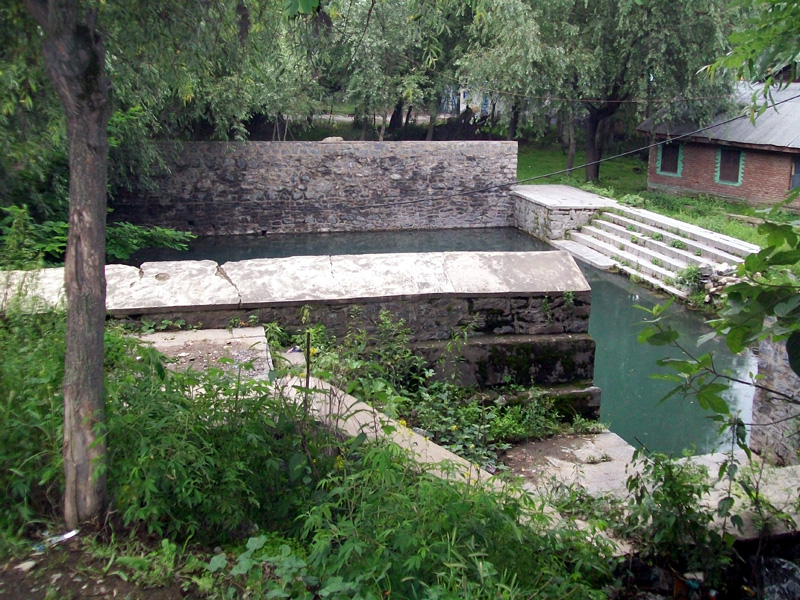
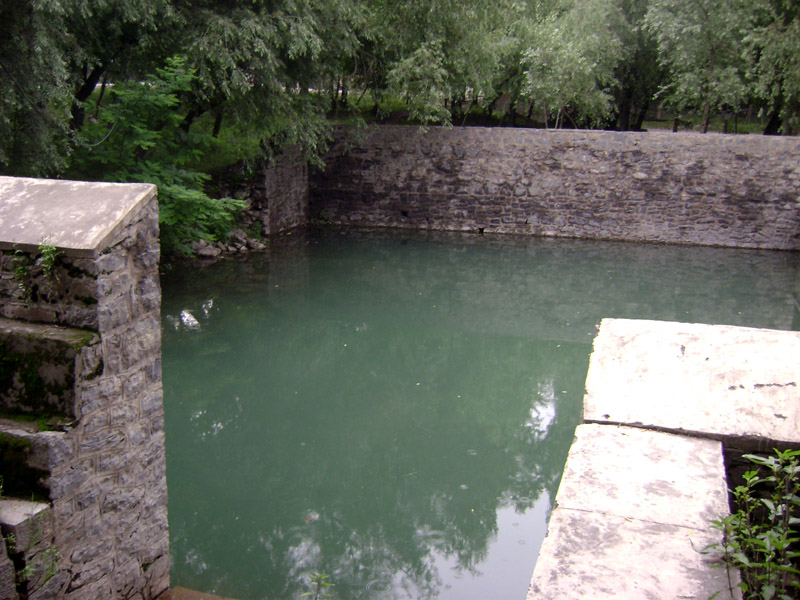
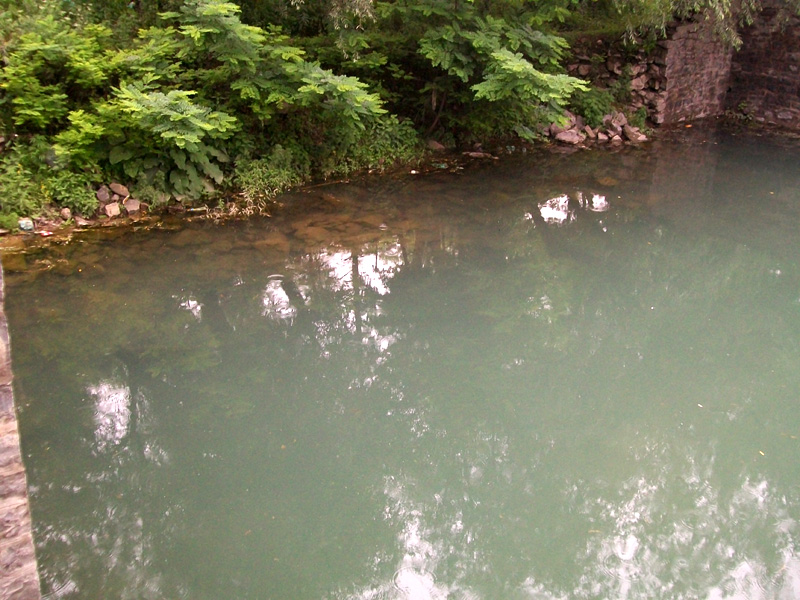
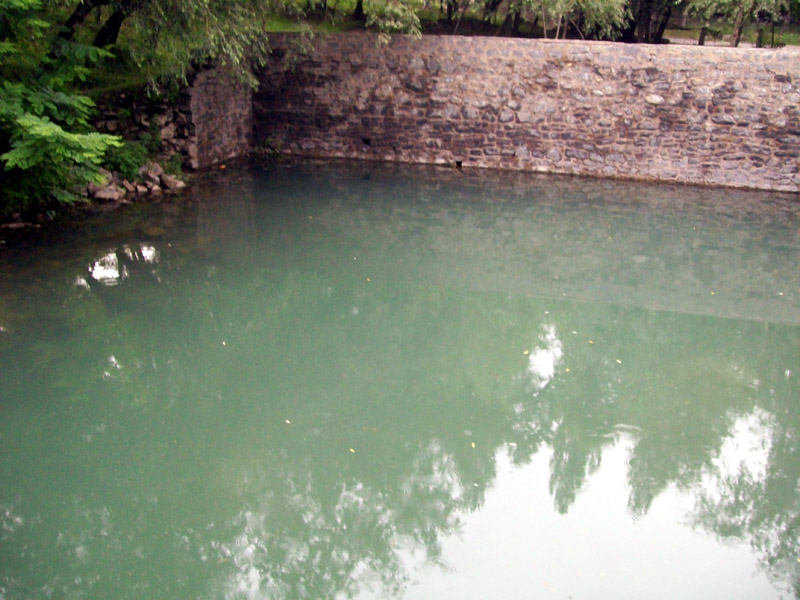
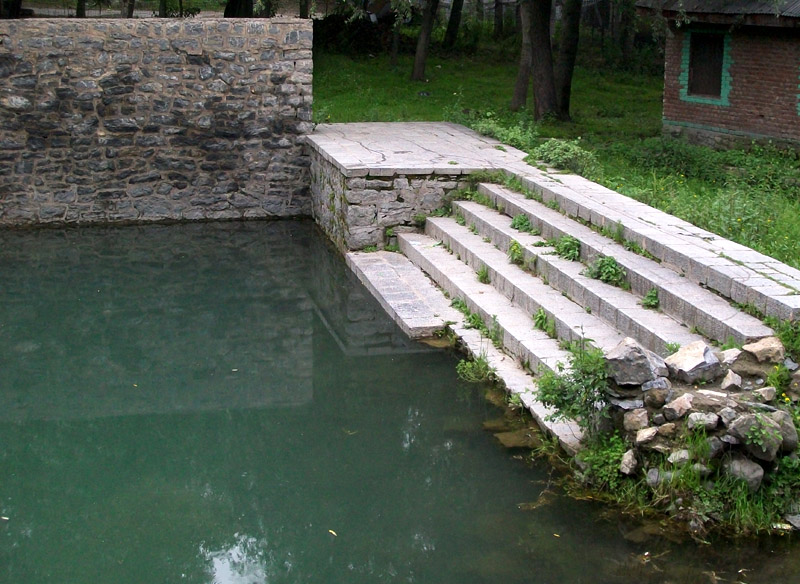
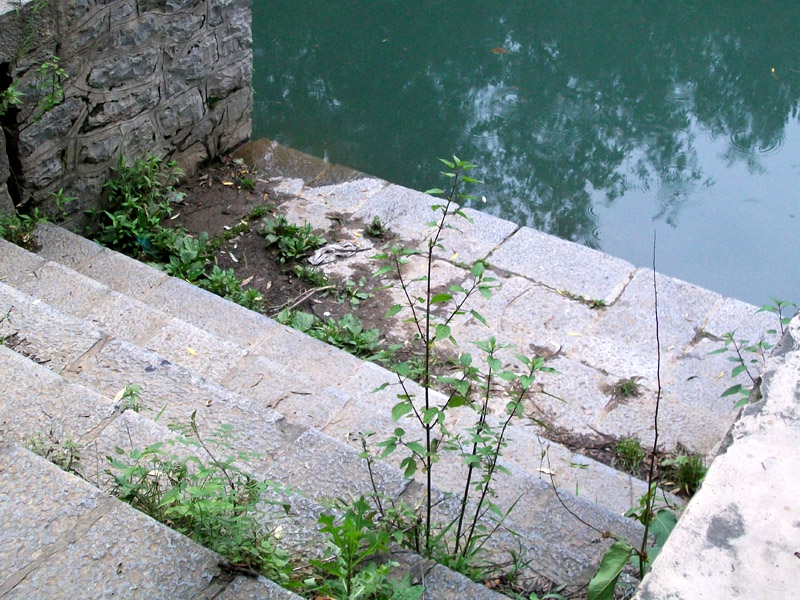
This village is famous for Takshak Nag, which is visited by pilgrims, who undertake a pilgrimage to Harishwar. The spring is situated in this village. It is said that saffron has originated from the spring and that its cultivation has spread in its neighbourhood. It is related that the Lord of the spring offered Hakim Waga Bhat, the saffron bulbs as a token of reward for curing his eye ailment. Bilhan the great Sanskrit poet, who flourished in 11th century, was born at Khunmoh (a village at a distance of 5 km. towards the east of Zewan). He described the spring as "A pool filled with pure water sacred to Takshak the Lord of Snakes"; Abdul Fazal records the facts that this spring is held to be the place where from saffron originated and flourished in the neighbourhood. In the time of Akbar, the cultivators worshipped at the spring at the beginning of each spring season. To get successful crops it was customary to pour cow's milk in it. As a local divinity Takshak Naga retained sanctity and importance for long with cultivators. Pilgrims when on their way to Harishwar cave offer Puja at the spring on the twelfth of the dark fortnight of Jeth corresponding to the month of June. Where relating the story of Chander Lekha-the beautiful Naga damsel-the great poet Historian, Kalhana mentions the name of the spring in the Rajatarangini as a place of pilgrimage. The inclusion of the spring as a Tirtha in the list of Tirthas recorded in Mahabharata signifies its antiquity. At present the spring stands intact with embankments of chiselled stones full of pure and sweet water. The spring measures 50' x 50' and has depth of 3'. The water source is in the Northeast corner of the spring.

This shrine finds a mention in Rajatarangini and the works of Bilhana and Abul Fazal. Giving reference to Bilhana, Aurel Stein says that the poet mentions in the “place of high rising monuments” the “pool filled with pure water sacred to Takshaka, Lord of Snakes”. [Some Marvels of Kashmir, Prof. C. L. Sadhu]
2.


Notes and References:

1. Place Names in Kashmir by B.K.Raina & S.L.Sadhu, published by Bharatiya Vidya Bhavan, Mumbai & Indira Gandhi National Centre for Arts, New Delhi, 2000.
2. Encyclopedia: Kashmiri Pandit: Culture & Heritage by C.L.Kaul, published by Ansh Publications, 2009.
3. Kalhan’s Rajatarangini….A Chronicle of the Kings of Kashmir, Vol: II by Stein, Aurel, published by Motilal Banarasi Dass, 1979.

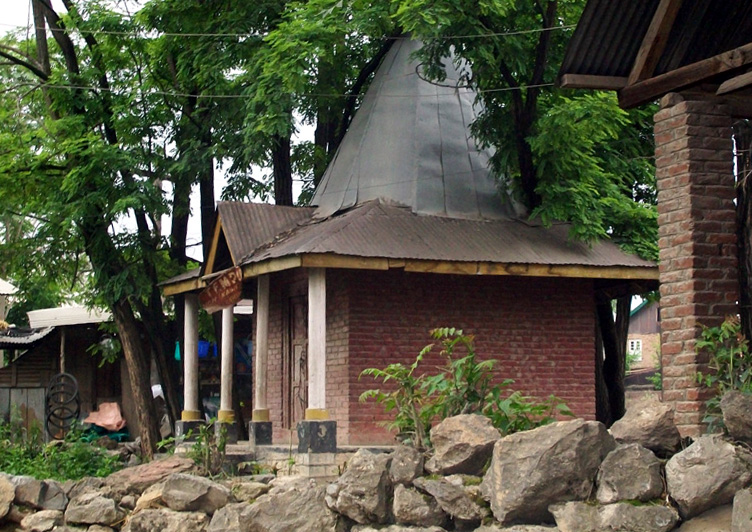
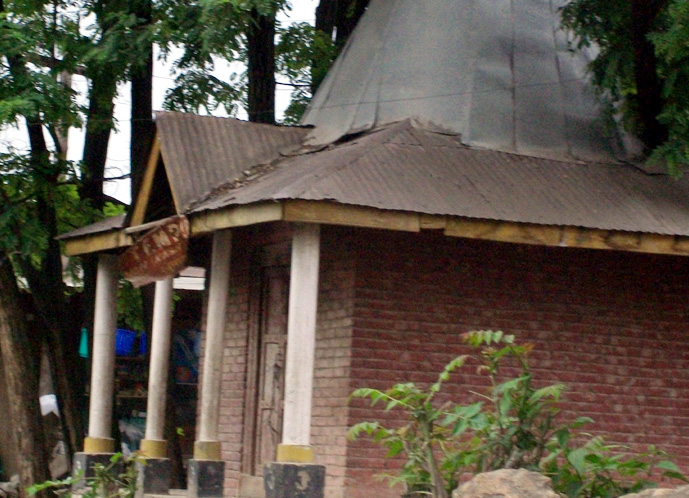
Shiv Temple


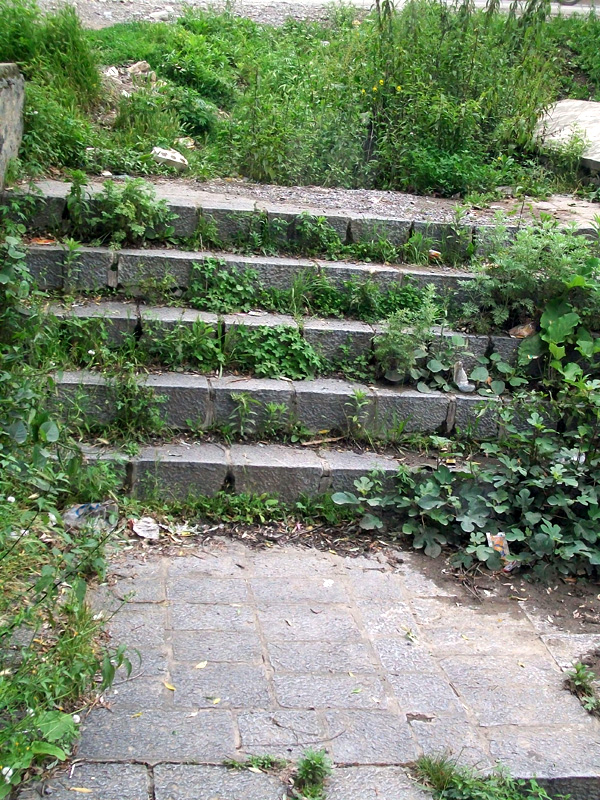
Steps leading to Takshak Nag


Steps


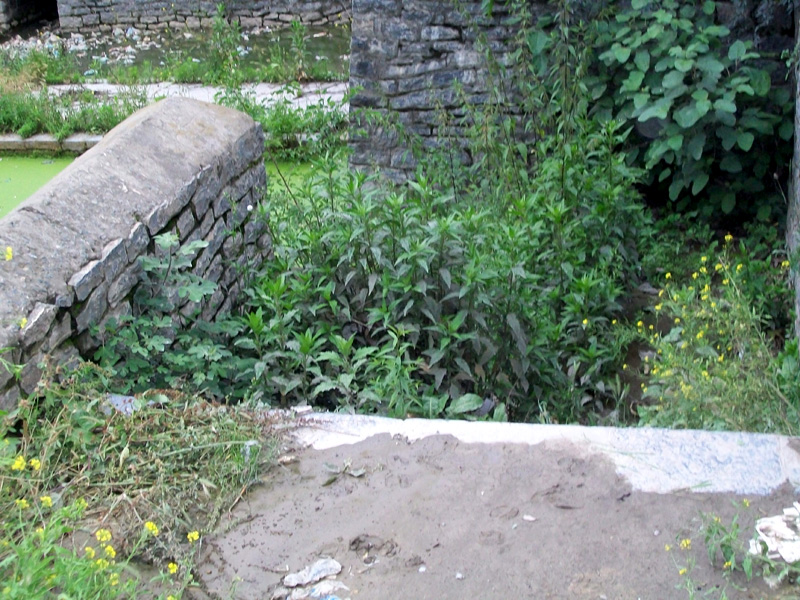
Takshak Nag

Takshak Nag


Takshak Nag


aTakshak Nag


Dharamshala


Closeup of Shiv Temple


Takshak Nag

*Born on 20th March, 1960 in Murran a village in North Kashmir, Chander M. Bhat is presently working as an Assistant Supdt. Posts, in Department of Posts, Govt. of India. His articles regarding Posts and of non-political nature stand widely published in various papers and magazines of the country. A booklet 'How to Collect Stamps" published by the Department of Posts, has earned him genuine accolades. He worked on the project of tracing the roots of his co-villagers and of the village Murran, resulting into the culmination of a widely acclaimed book "Murran -My Village". Man with depth, Chander M. Bhat has also another book, "Ocean by Drops" (collection of poems) in his vase having colorful poems. His book "Ancient History of Jammu and Kashmir", confirms his researching capability. Various research papers like "The Splendor that is Amarnath" and "Vitasta" The Sacred River of Kashmir" are valuable additions to his works that has proved very fruitful and guiding force in the exile period of Kashmiri Pandits community of which the author is also a member.

Presently the author is working on "OOL - THE NEST" a six volume project on all the 595 (each volume of about 2500 pages)Kashmiri Pandit villages of Kashmir.

Copyrights © 2007 Shehjar online and KashmirGroup.com . Any content, including but not limited to text, software, music, sound, photographs, video, graphics or other material contained may not be modified, copied, reproduced, republished, uploaded, posted, or distributed in any form or context without written permission. Terms & Conditions.
The views expressed are solely the author's and not necessarily the views of Shehjar or its owners. Content and posts from such authors are provided "AS IS", with no warranties, and confer no rights. The material and information provided iare for general information only and should not, in any respect, be relied on as professional advice. Neither Shehjar.kashmirgroup.com nor kashmirgroup.com represent or endorse the accuracy or reliability of any advice, opinion, statement, or other information displayed, uploaded, or distributed through the Service by any user, information provider or any other person or entity. You acknowledge that any reliance upon any such opinion, advice, statement, memorandum, or information shall be at your sole risk.